Turbocharger

a technology of turbocharger and turbine wheel, which is applied in the direction of machines/engines, stators, liquid fuel engines, etc., can solve the problems of loss of energy for rotating the turbine wheel, loss of energy when recovering the dynamic pressure,

US20050028523A1Inactive Publication Date: 2005-02-10KOMATSU LTD
5 Cites 13 Cited by

Patent Information

Authority / Receiving Office
US · United States
Current Assignee / Owner
Publication Date
2005-02-10
Estimated Expiration
Not applicable · inactive patent

Smart Images

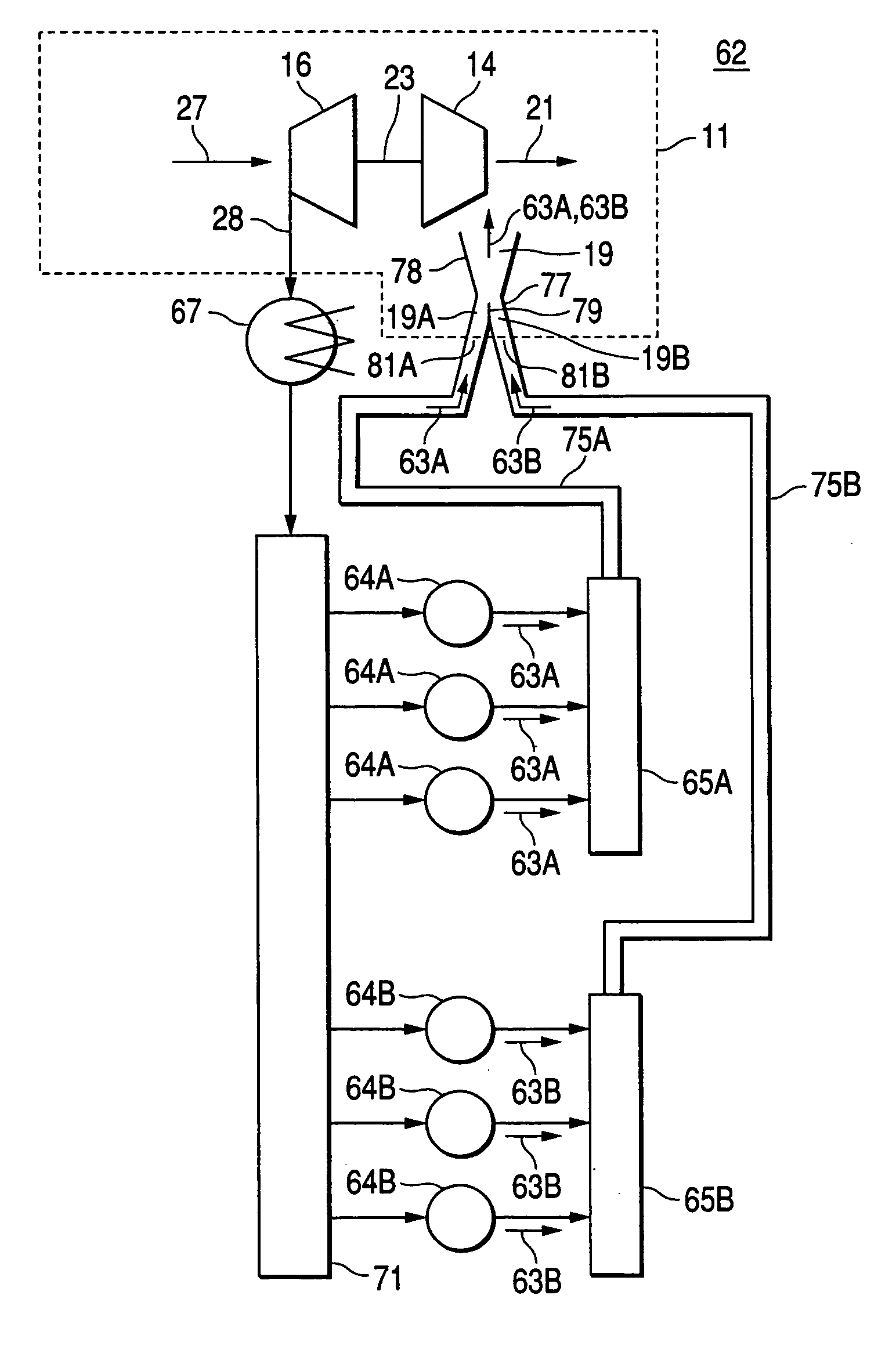
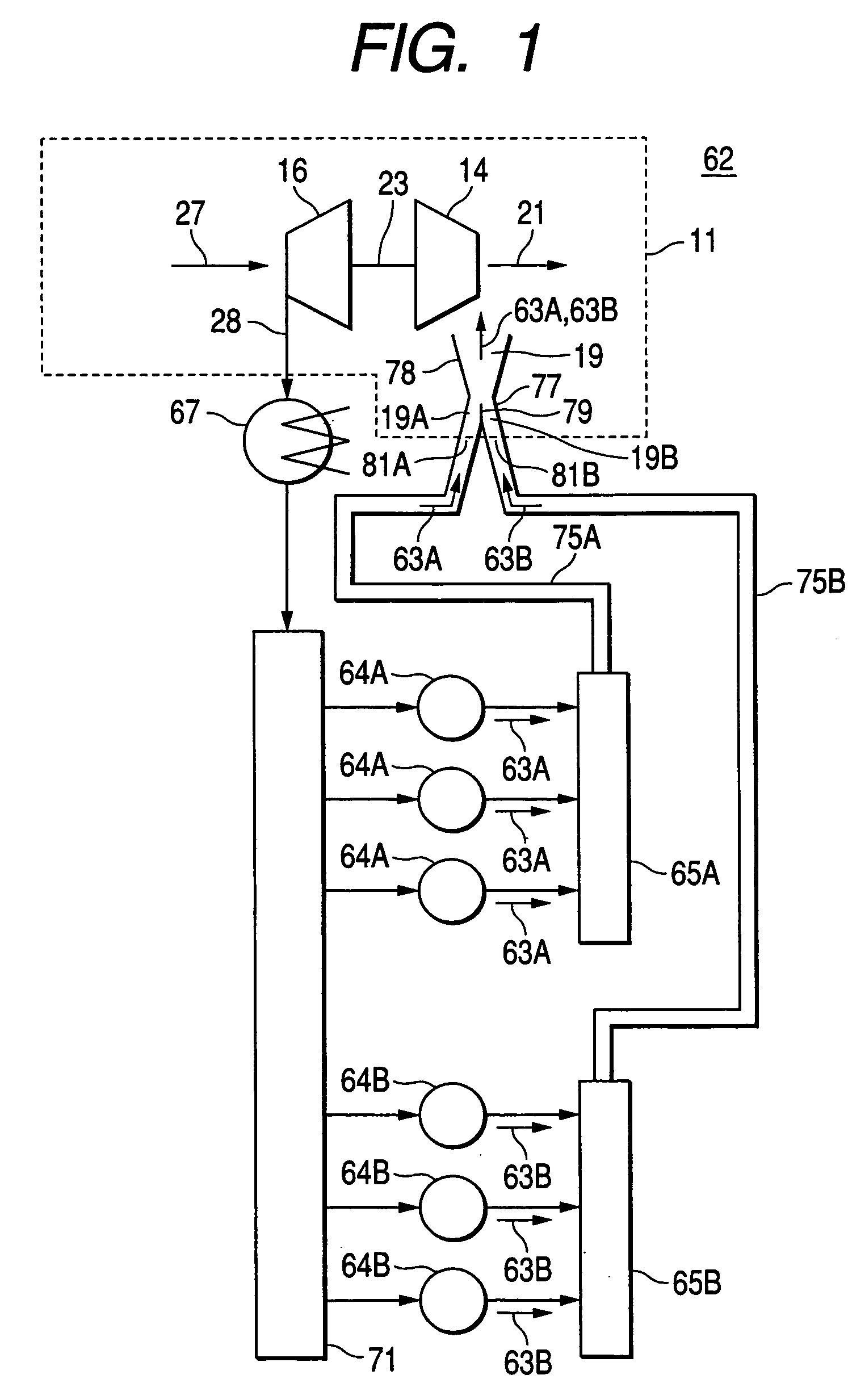
  • Figure 1
    Figure 1
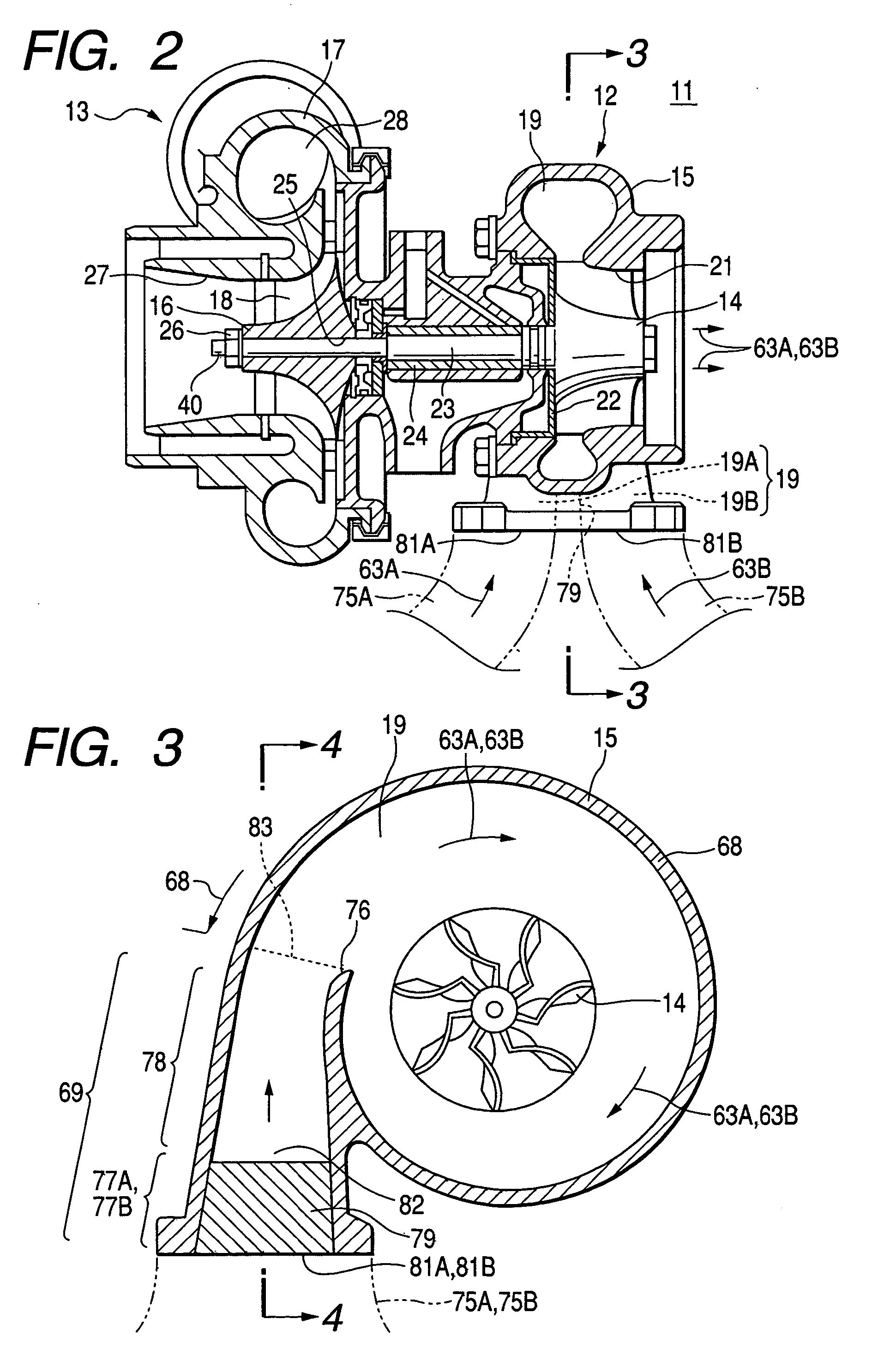
  • Figure 2
    Figure 2
  • Figure 3
    Figure 3
Patent Text Reader

Abstract

There is provided a turbocharger whose constitution is compact, in which exhaust interference seldom occurs, and which can be applied also to an EGR type engine. In the turbocharger, an introduction part of an exhaust inflow passage possesses a partition part dividing a range from an inlet to a predetermined position in a downstream of the inlet into two exhaust inflow passages, a throttle part, whose sectional area becomes gradually small, from the inlet to a position where the partition part ceases, a joining part where exhaust gases passing through the left and right exhaust inflow passages are joined, and a diffuser part, whose sectional area becomes gradually large, from the joining part to a tongue part.
Need to check novelty before this filing date? Find Prior Art

Description

BACKGROUD OF THE INVENTION

[0001] 1. Field of the Invention

[0002] The present invention relates to a turbocharger.

[0003] 2. Description of the Related Art

[0004] From old times, as means increasing a charge amount of engine, there has been known a turbocharger compressing the air and charging it to the engine by rotating a turbine wheel by utilizing an energy of exhaust gas, and driving a compressor wheel of a centrifugal type through a shaft formed monolithically with the turbine wheel.

[0005] In FIG. 7, there is shown a piping system diagram of an engine using the turbocharger concerning the prior art. It is explained with a straight 6-cylinder engine 62 being taken as an example. The engine 62 possesses six cylinders 64A, 64B linearly arranged. The six cylinders 64A, 64B are classified into the upside three cylinders 64A and the downside three cylinders 64B. The upside cylinders 64A are referred to as front cylinder group 64A, and the downside cylinders 64B are referred to as r...

Examples

Embodiment Construction

[0044] Hereunder, embodiments concerning the invention are explained in detail while referring to the drawings.

[0045] First, a 1st embodiment is explained. It is an example of an engine that does not use an EGR system. As shown in FIG. 1 to FIG. 4, the exhaust piping 75A, 75B are respectively connected to the front / rear exhaust manifolds 65A, 65B. The introduction part 69 of the exhaust inflow passage 19 is bisected from its inlets 81A, 81B to its approximately halfway part into the two exhaust inflow passages 19A, 19B by a partition part 79. And, the exhaust piping 75A, 75B are respectively connected to inlets 81A, 81B of the exhaust inflow passages 19A, 19B.

[0046] The exhaust gases 63A, 63B exhausted from the front / rear cylinder groups 64A, 64B respectively flow into the inlets 81A, 81B of the two exhaust inflow passages 19A, 19B while passing through the front / rear exhaust manifolds 65A, 65B and the front / rear exhaust piping 75A, 75B. And, the exhaust gases 63A, 63B are joined ...