
Small form factor, field-installable connector
a field-installable connector and small form factor technology, applied in the field of field-installable connectors, can solve the problems of insufficient space around the splice assembly in the connector for resilient, the structure limitation and the problem of limiting the function of the field-installable connector in the field, so as to reduce the radial dimension of the resilient member and the effect of small form factor
- Summary
- Abstract
- Description
- Claims
- Application Information
AI Technical Summary
Benefits of technology
Problems solved by technology
Method used
Image

Examples
Embodiment Construction
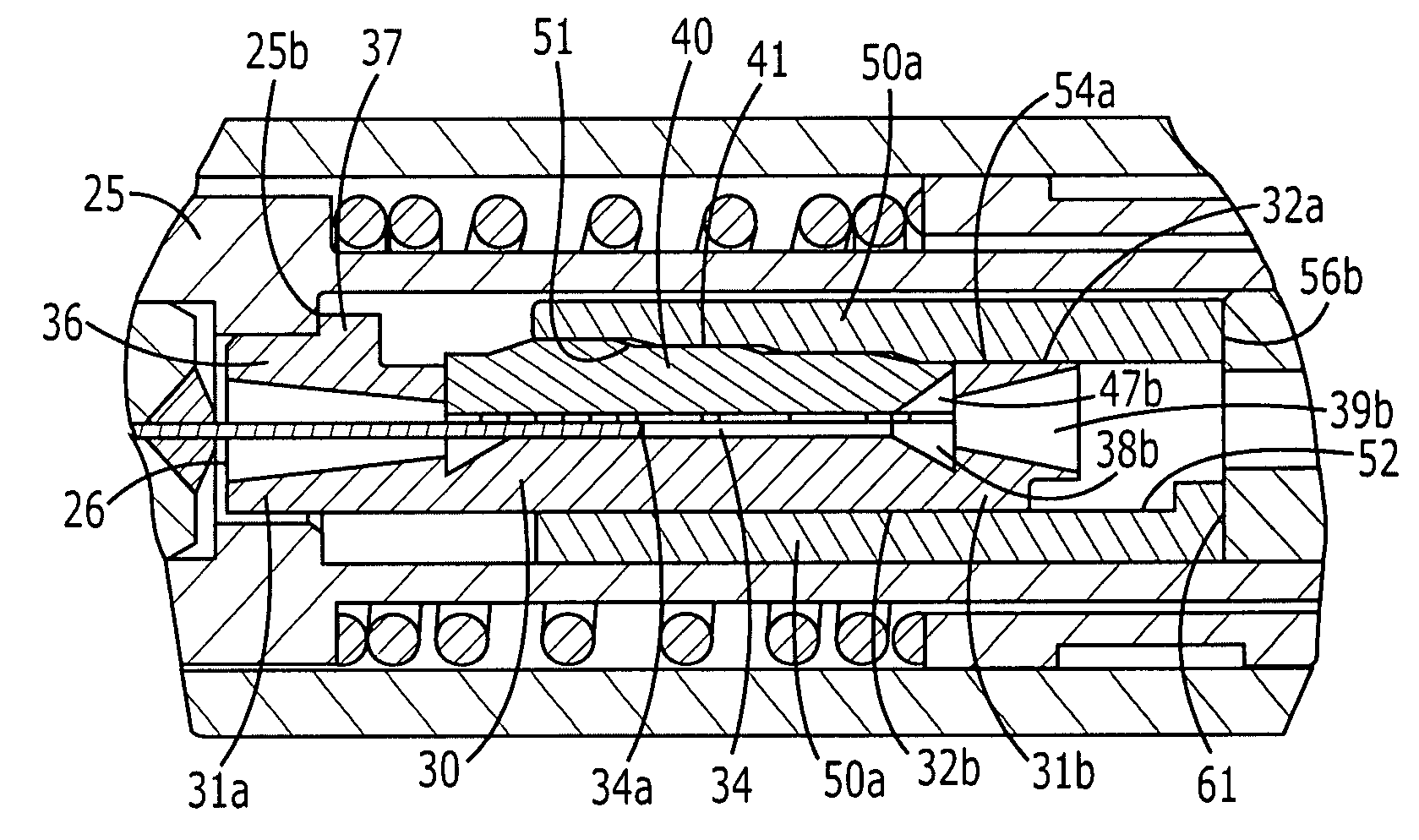
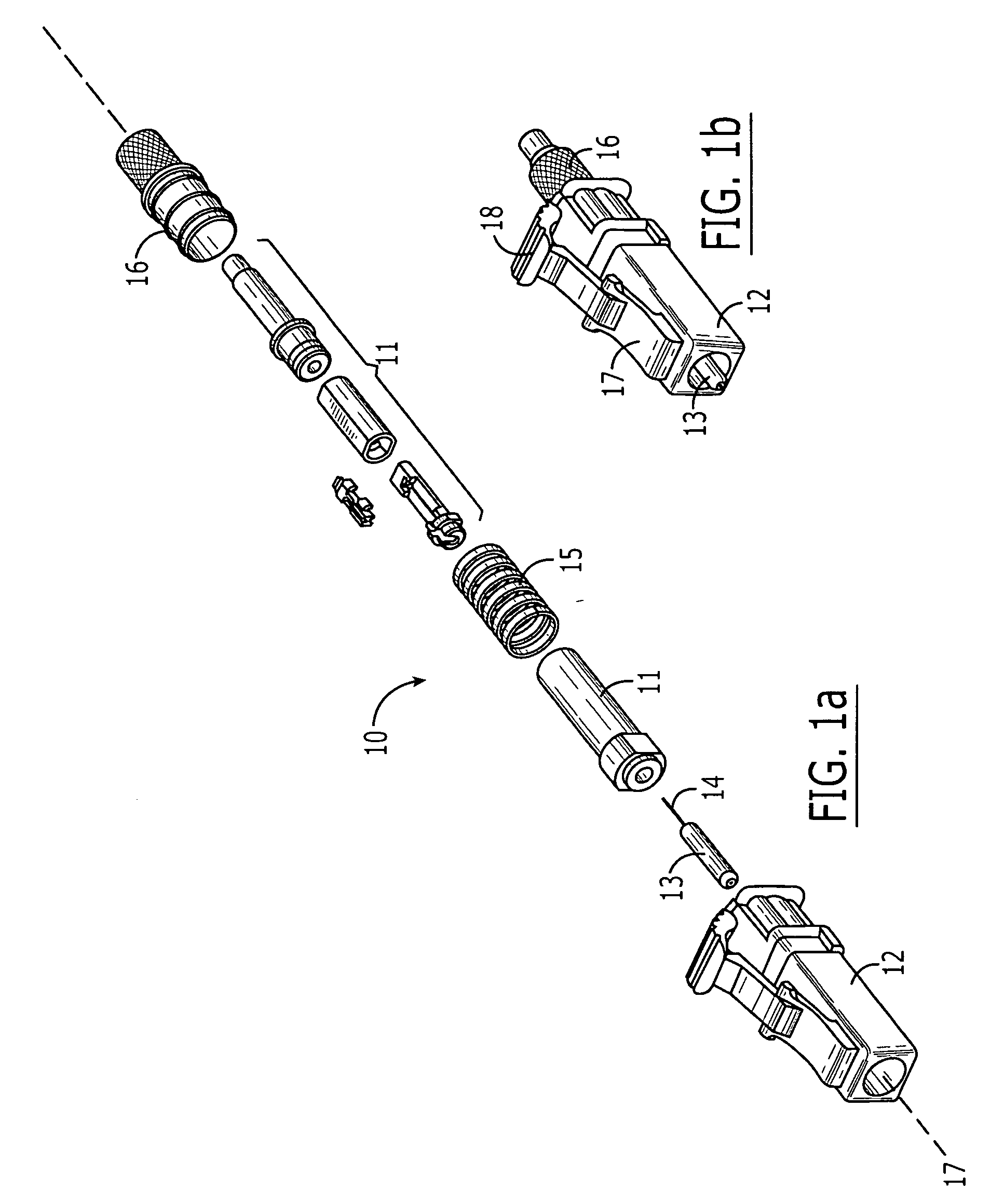
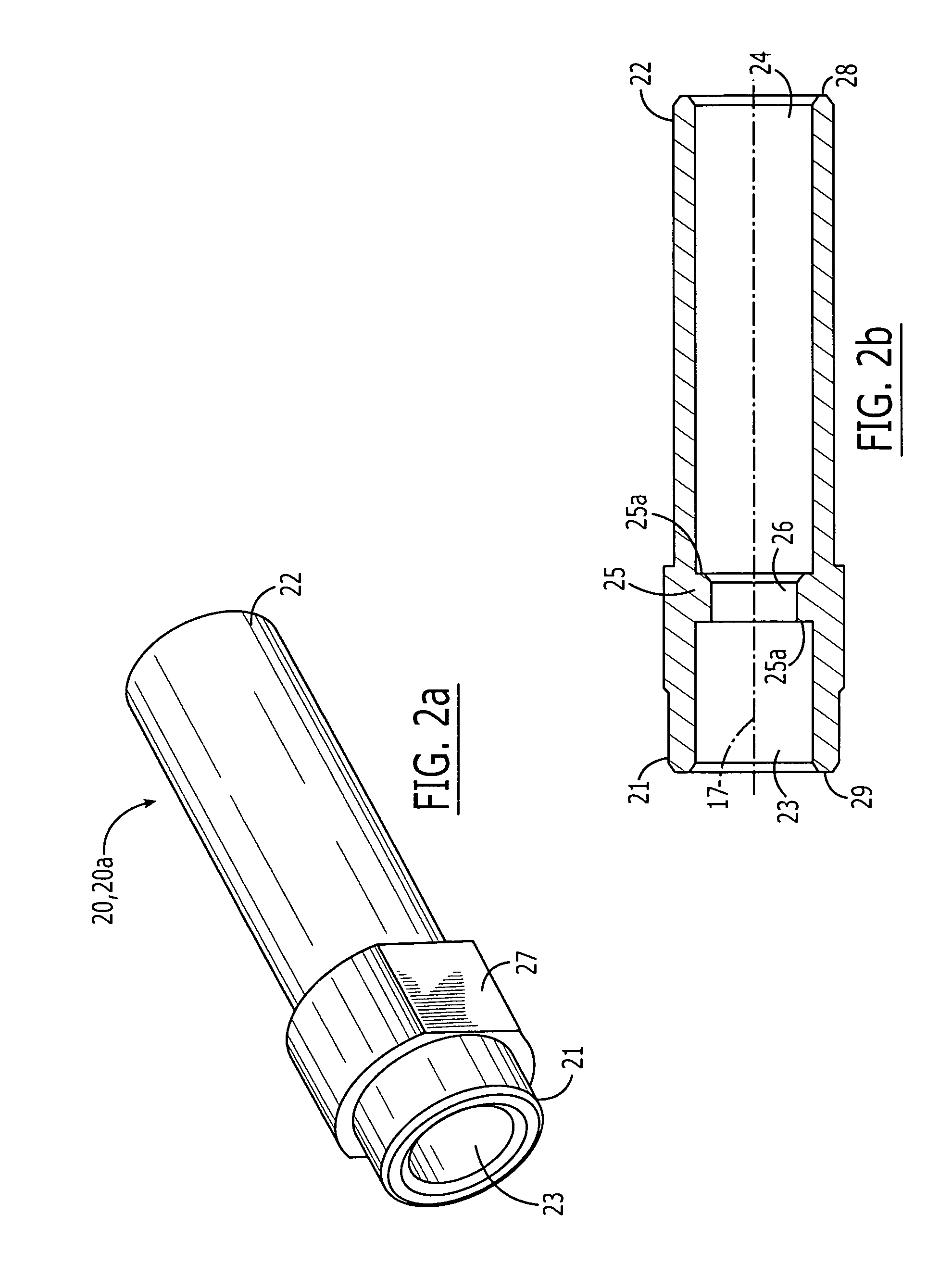
[0021] Referring to FIG. 1a, a preferred embodiment of an LC-type connector 10 comprising a clamping assembly 11 of the present invention is shown in an exploded view. The connector 10 and clamping assembly 11 are described herein with respect to a top / bottom and front / back orientation. It should be understood that reference is made to this orientation for purposes of illustration and to describe the relative position of the components within a given connector. It should be therefore understood that this orientation is not an absolute orientation and that rotating, inverting or otherwise altering the connector's position in space is possible without changing the relative position of the components of the connector. Additionally, the connector 10 has at least one optical axis 17. The optical axis 17 corresponds to the axis along which light propagates in the terminated connector. It should be understood that the connector may have more than one optical axis if the connector is used t...
PUM
 Login to View More
 Abstract
Description
Claims
Application Information
 Login to View More