
Method and apparatus for providing iterative timing recovery
a timing recovery and iterative technology, applied in the field of timing recovery, can solve the problems of low signal energy, increased noise in the system, and failure to function properly at low snrs
- Summary
- Abstract
- Description
- Claims
- Application Information
AI Technical Summary
Benefits of technology
Problems solved by technology
Method used
Image

Examples
Embodiment Construction
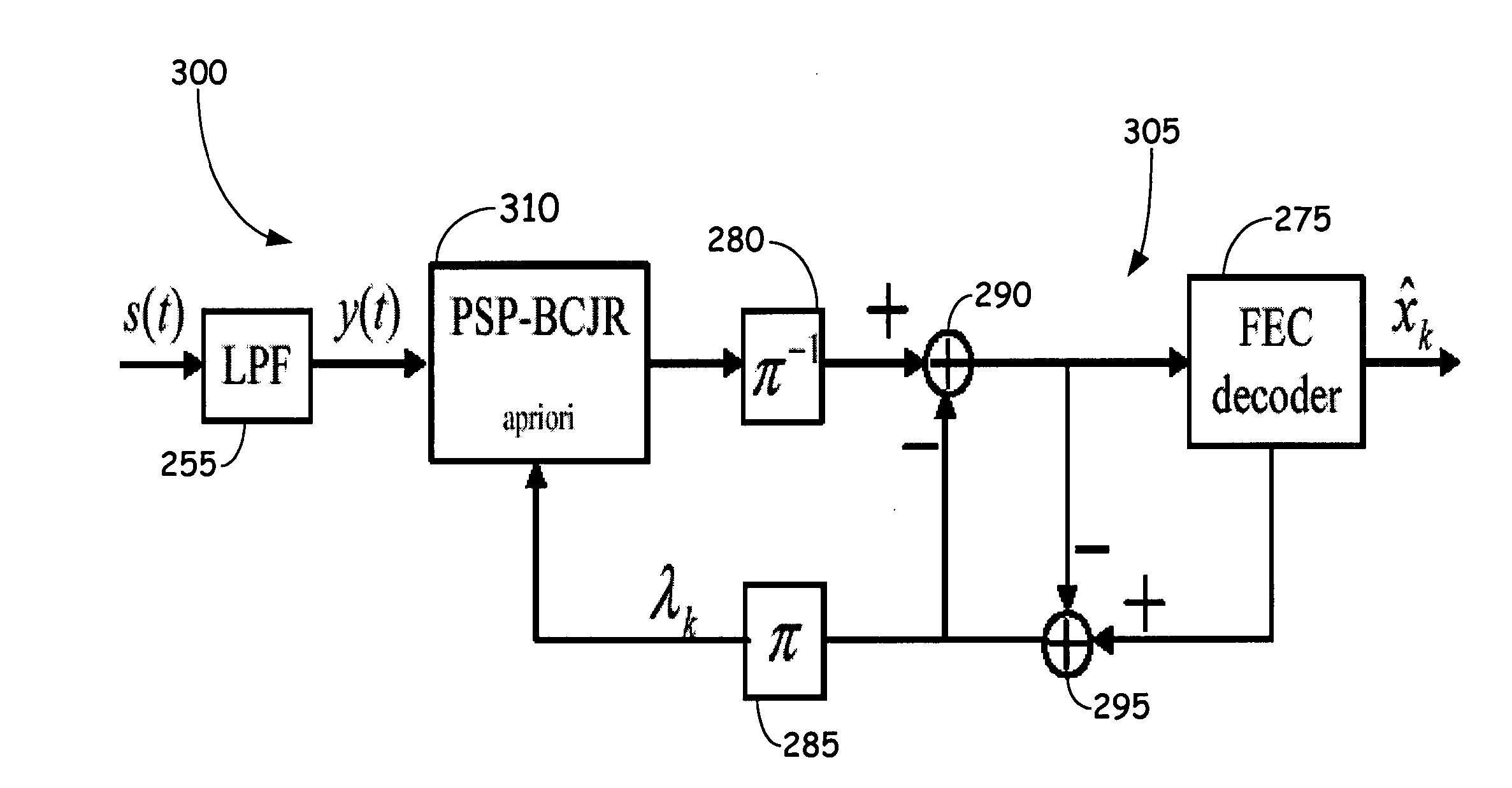
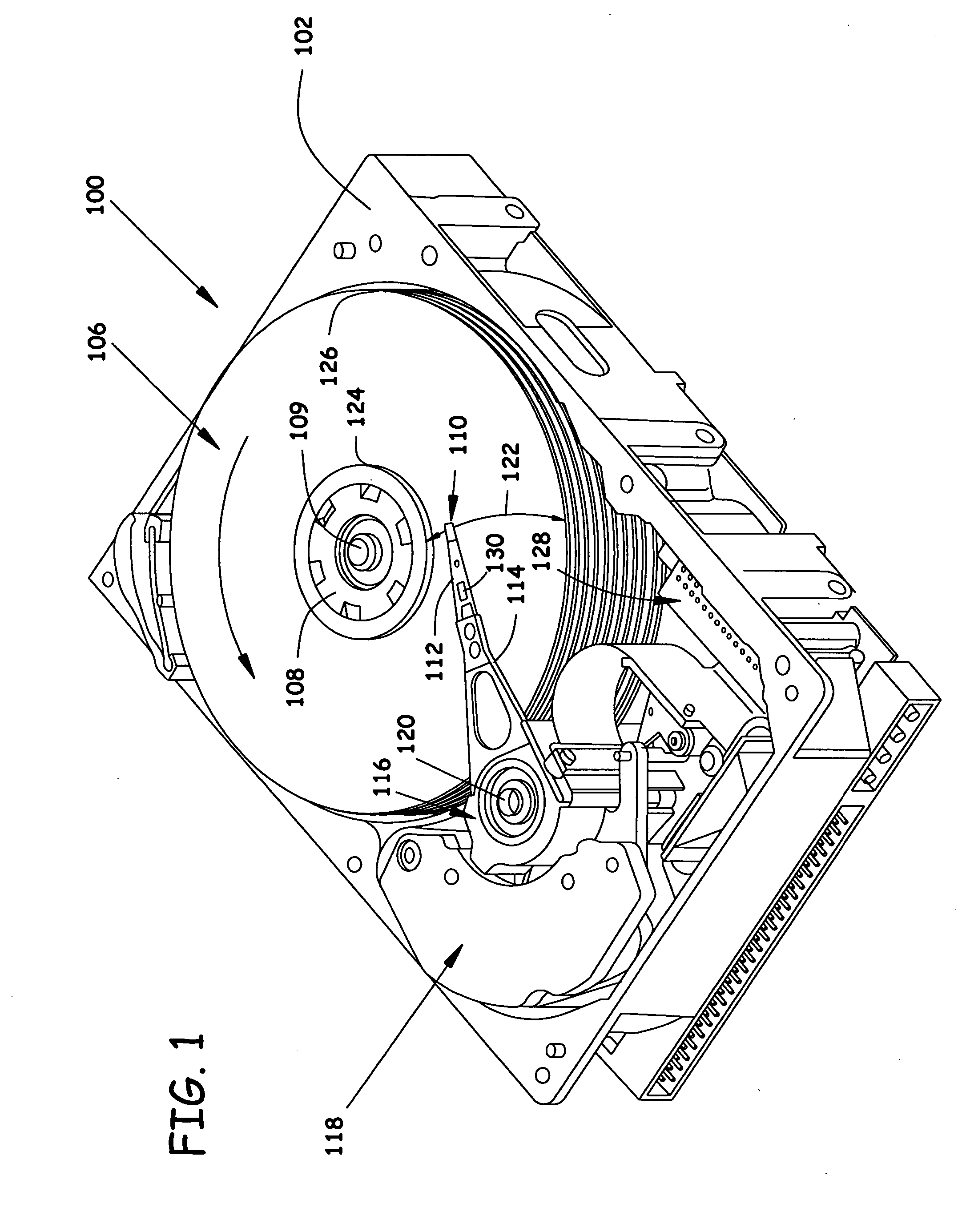
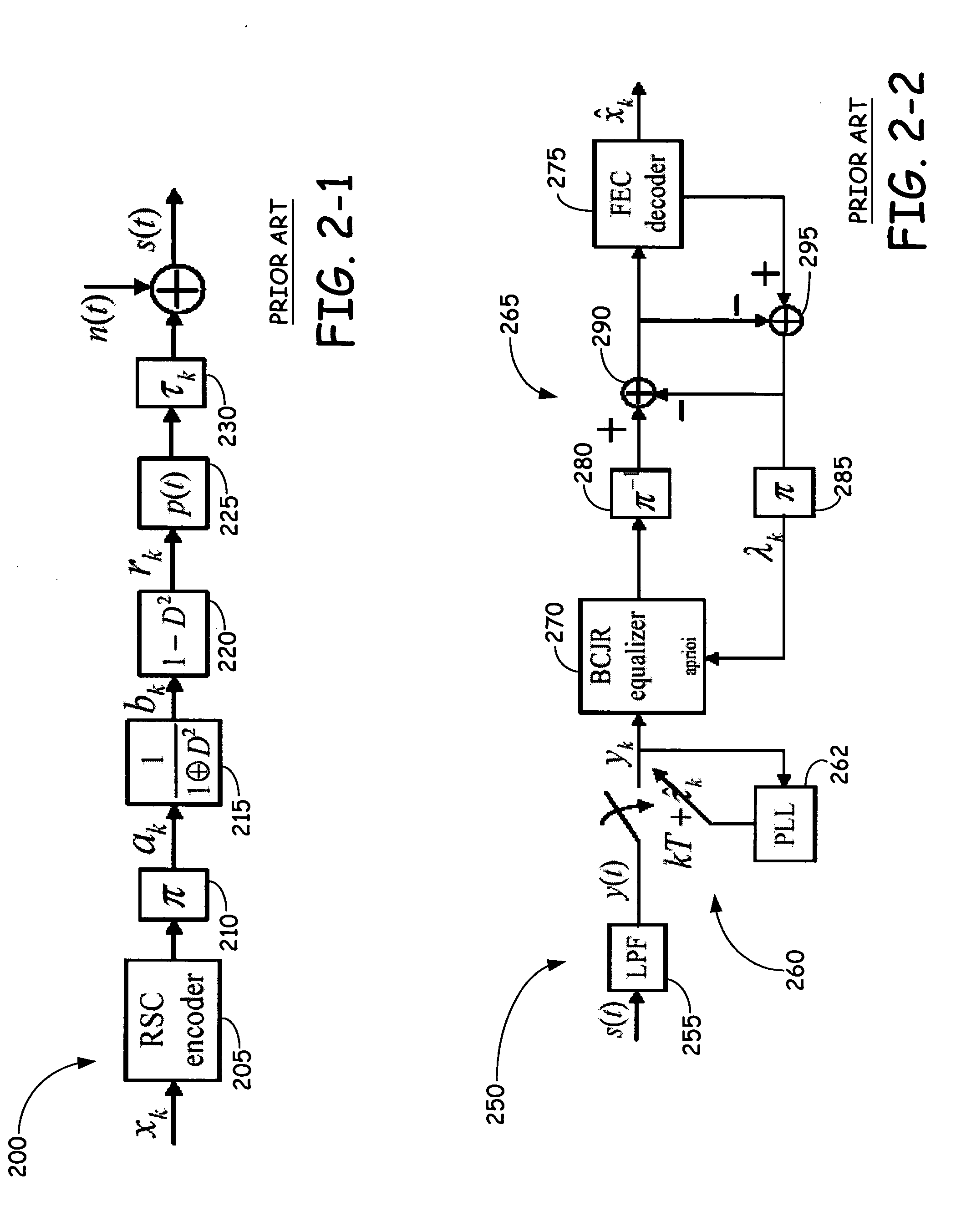
[0034]FIG. 1 is an isometric view of a disc drive 100 in which embodiments of the present invention are useful. Disc drive 100 includes a housing with a base 102 and a top cover (not shown). Disc drive 100 further includes a disc pack 106, which is mounted on a spindle motor (not shown) by a disc clamp 108. Disc pack 106 includes a plurality of individual discs, which are mounted for co-rotation about central axis 109. Each disc surface has an associated disc head slider 110 which is mounted to disc drive 100 for communication with the disc surface. In the example shown in FIG. 1, sliders 110 are supported by suspensions 112 which are in turn attached to track accessing arms 114 of an actuator 116. The actuator shown in FIG. 1 is of the type known as a rotary moving coil actuator and includes a voice coil motor (VCM), shown generally at 118. Voice coil motor 118 rotates actuator 116 with its attached heads 110 about a pivot shaft 120 to position heads 110 over a desired data track a...
PUM
 Login to View More
 Abstract
Description
Claims
Application Information
 Login to View More