This happens primarily as a result of the cesspool or
septic tank becoming filled beyond capacity, causing the waste and the fluids associated with the waste to overflow and back up through the main waste line and into the lower level of the building.
Or, in the alternative, it happens as a result of the main waste line becoming blocked anywhere close to the point where waste exits from the building.
However, even if a plumber gets to the site in a timely fashion, a substantial amount of water and waste will have spilled into the building causing a destructive, costly and unsanitary flood within.
However, if the
basement is finished and people live or work there, then the damage can be disastrous.
Every year, hundreds of thousands, if not millions, of dollars are wasted and countless property is lost due to damage caused by waste backing up, as a result of blockages in buildings' main waste line.
Such
spinning destroys lawns and creates mud bogs in wet conditions.
This means that after the second cesspool is installed the building owners, as for example the homeowners, have to incur the further cost of
tilling their
lawn, re-seeding it, fertilizing it and even having to restore the
landscaping.
Thus, not only do they have to incur the cost of installing a new cesspool, they also have to incur the cost of returning the property to its original esthetic appearance.
The relevant and material prior art has failed to directly address both the problem of waste backing up and overflowing into the lower level of a building, as a result of
septic tank overflow, and the unnecessary expense and problem of installing a second cesspool.
While there is prior art that deals with the detection of rising
sludge in building septic tanks, or with the monitoring of rising content levels in tanks, fuel tanks, vehicle cesspools, i.e., cesspools located on trucks and ships, none of them deal directly with the issue of waste backing up in the main waste line of buildings and the simultaneous alerting of the occupants before the waste overflows and spills into the lower level of the building.
It does not disclose any
system or process that alerts the owner of waste backing up in the main waste line of buildings as a result of the
septic tank being full, or even more importantly as a result of a blockage in the waste line, before the waste actually overflows into the lowest level of the building.
Nor does it disclose a
waste management and alarm
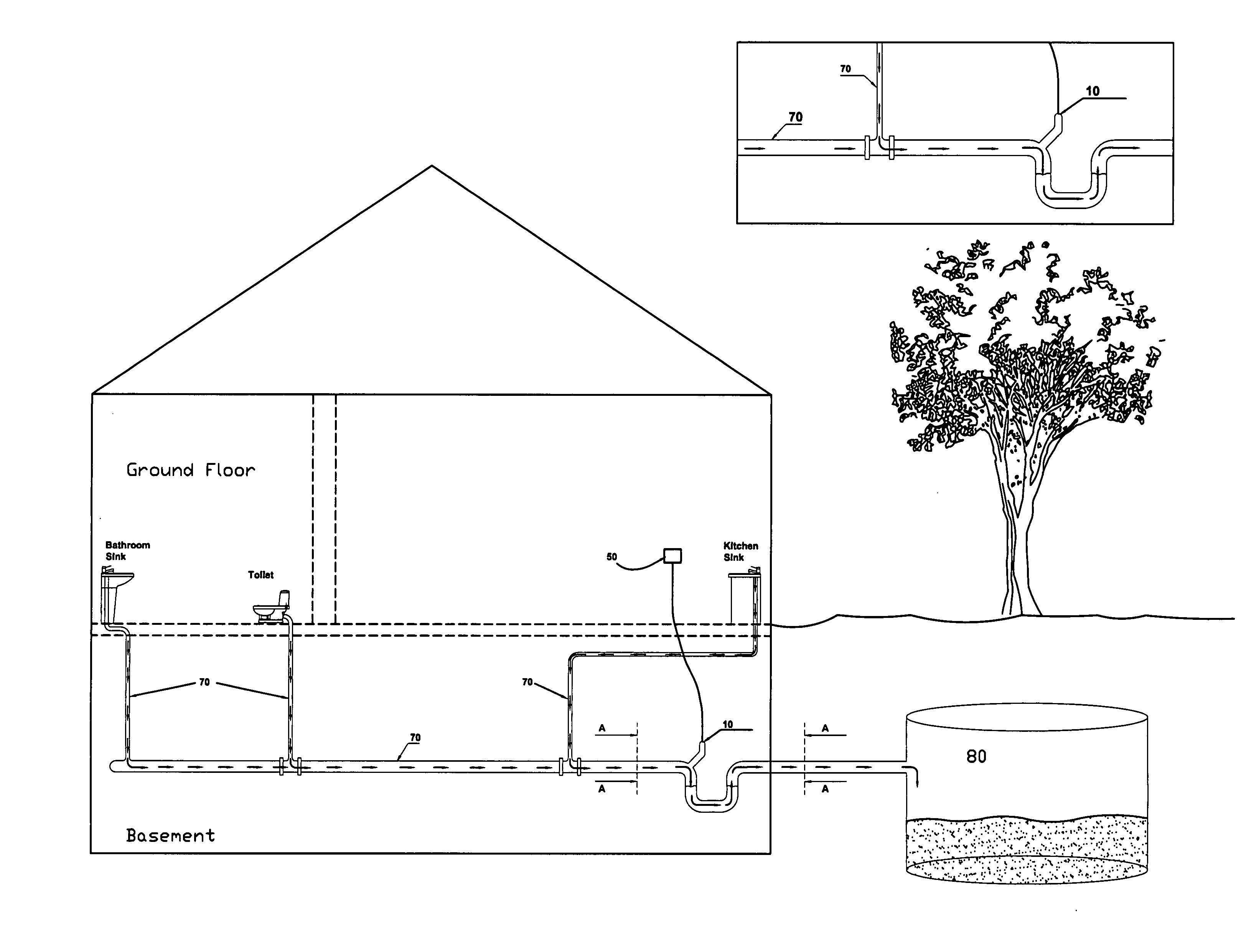
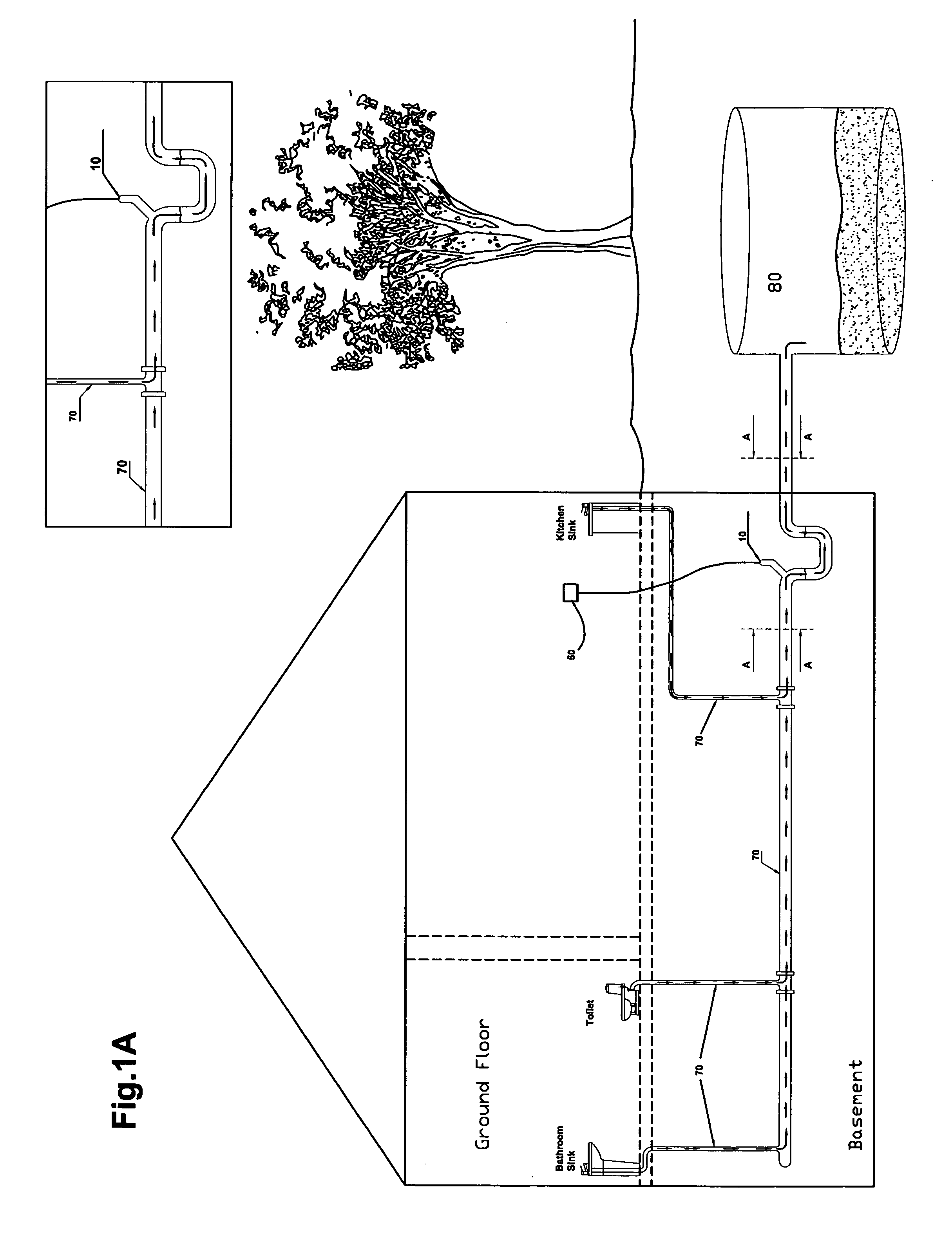
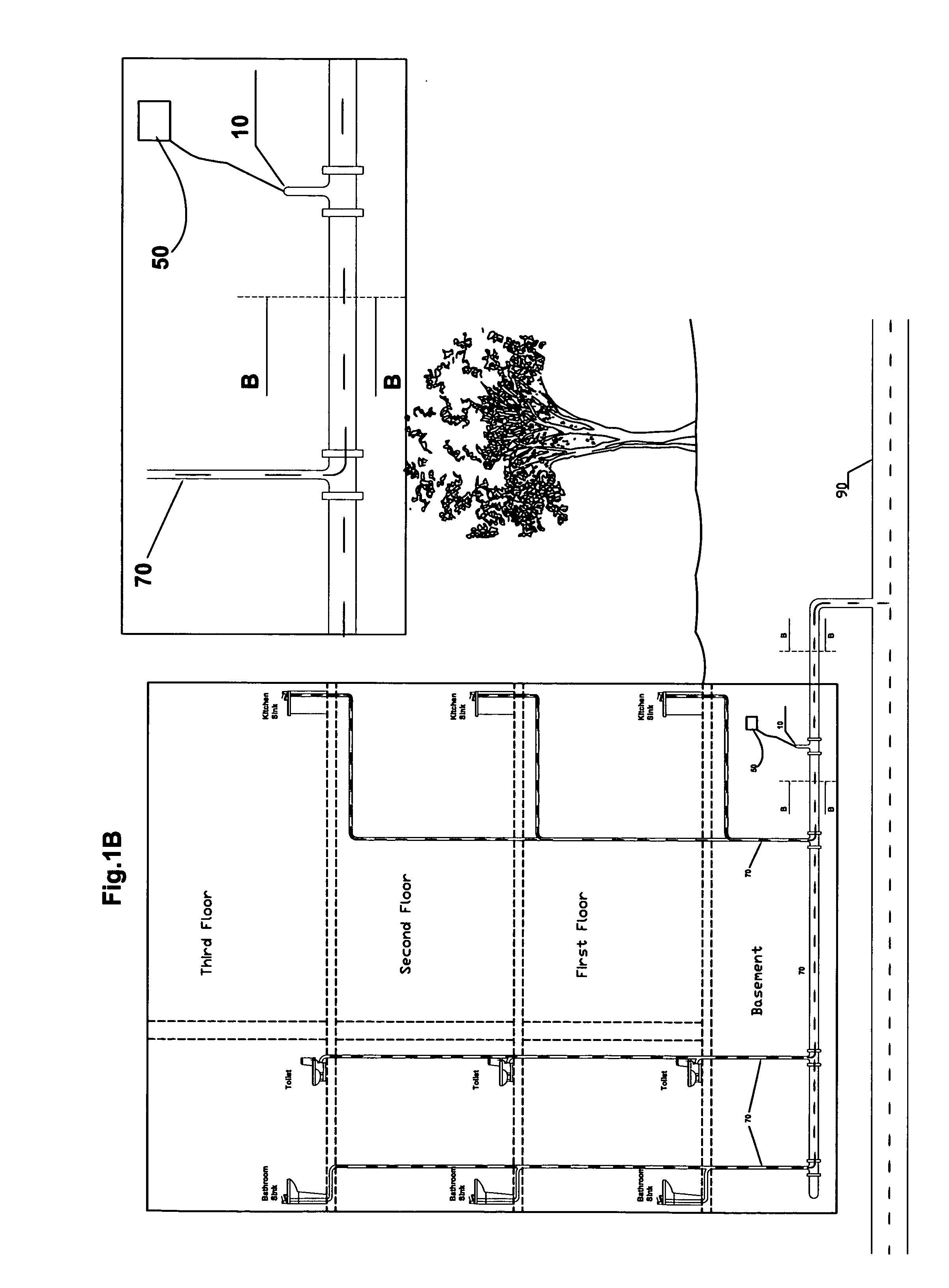
system installable into the existing plumbing of a construction, whether such construction is old or new or complete, without major reconstruction or implementation costs.
It was designed to eliminate the necessity of regularly opening and checking the cesspit to determine if it still has empty space for receiving
sewage, an action that was both unsavory and unsanitary.
It discloses no
system or process that alerts the owner of waste backing up in the main waste line of buildings as a result of the septic tank being full or even more importantly as a result of a blockage in the waste line, which can also cause an overflow.
It too, does not disclose any system or process that alerts the owner or occupant of a building of waste backing up in the main waste line of buildings as a result of the septic tank being full, or even more importantly as a result of a blockage in the waste line, which can also cause an overflow.
It was not designed to alert the owner of waste backing up in the main waste line of buildings as a result of the septic tank being full, or even more importantly as a result of a blockage in the waste line, which can also cause an overflow.
It is clear from the above that none of the prior art discloses any system or process that alerts the occupants, or building maintenance engineers, or home owners that waste is backing up in the main waste line of their building as a result of the septic tank or cesspool being full, or even more importantly as a result of a blockage in the waste line; before the waste actually overflows into the lowest level of the building.
Nor does such prior art disclose a
waste management and alarm system installable without major reconstruction or implementation costs, into the existing plumbing of a construction, whether such construction is old, new, complete, or incomplete.
Furthermore, none of these prior art devices are useful, within the context of overflowing cesspools or main waste lines as all of them must be easily viewed or studied.
In addition, because many of the prior art gauges are designed to work on boilers or fuel tanks, they can only work if they sense a differential in viscosities or in densities.
Cesspools do not have a differential of either
viscosity or density thereby rendering these gauges inapplicable.
Finally, none of these gauges can be used in line in a waste line, main or otherwise, because the nature of their structure itself will create a blockage or an obstruction in a the waste line.
Such obstruction will hinder the flow of waste, thereby initiating a blockage and causing a flood; the very flood that they are supposed to prevent.



 Login to View More
  Login to View More