Electronically enabling device remotely

a technology of electromagnetic enablement and remote operation, applied in the field of locks, can solve problems such as the inability to operate devices

US20070252675A1Inactive Publication Date: 2007-11-01LAMAR DAVID
11 Cites 110 Cited by

Patent Information

Authority / Receiving Office
US · United States
Patent Type
Applications(United States)
Current Assignee / Owner
Publication Date
2007-11-01
Estimated Expiration
Not applicable · inactive patent

Smart Images

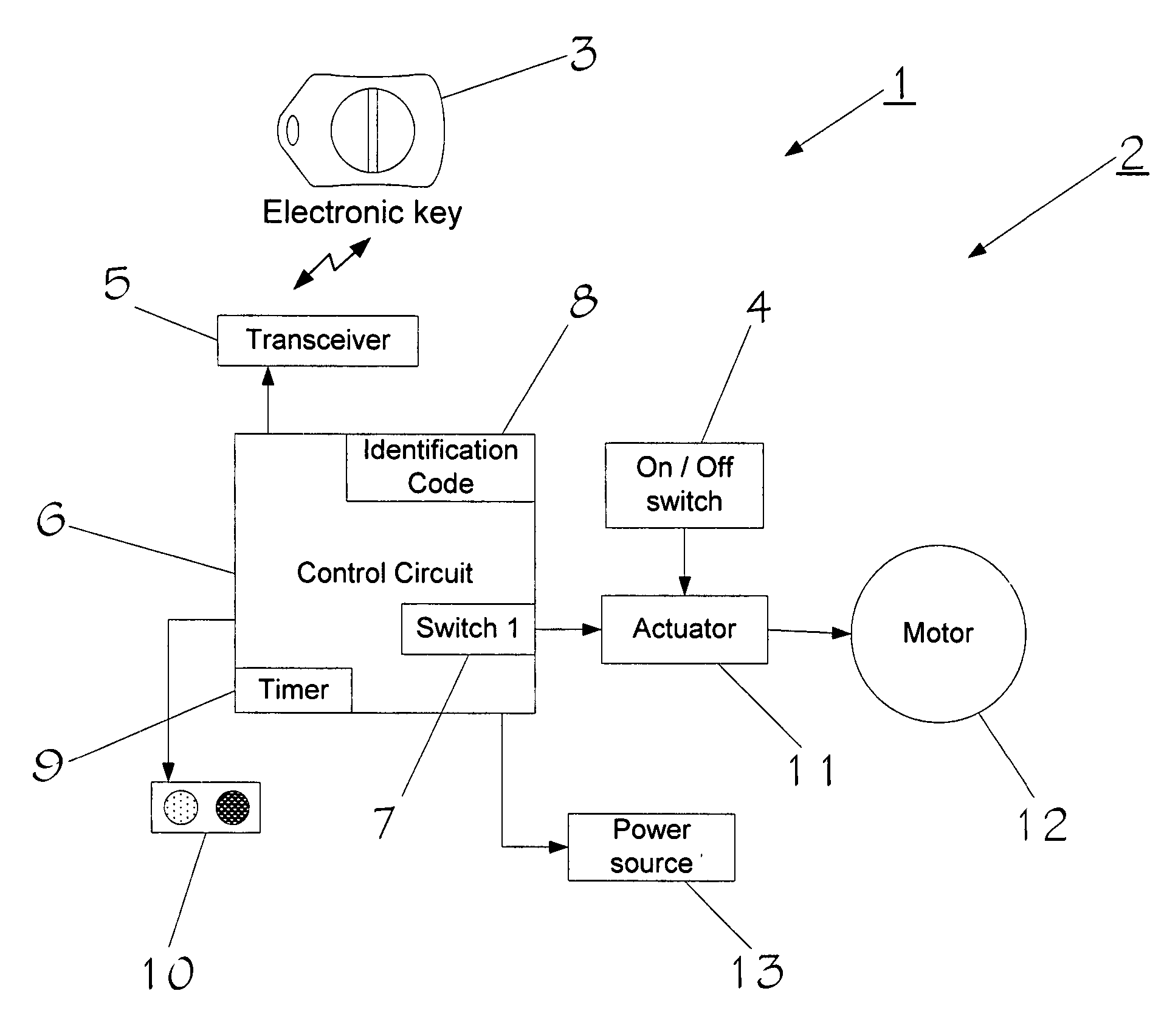
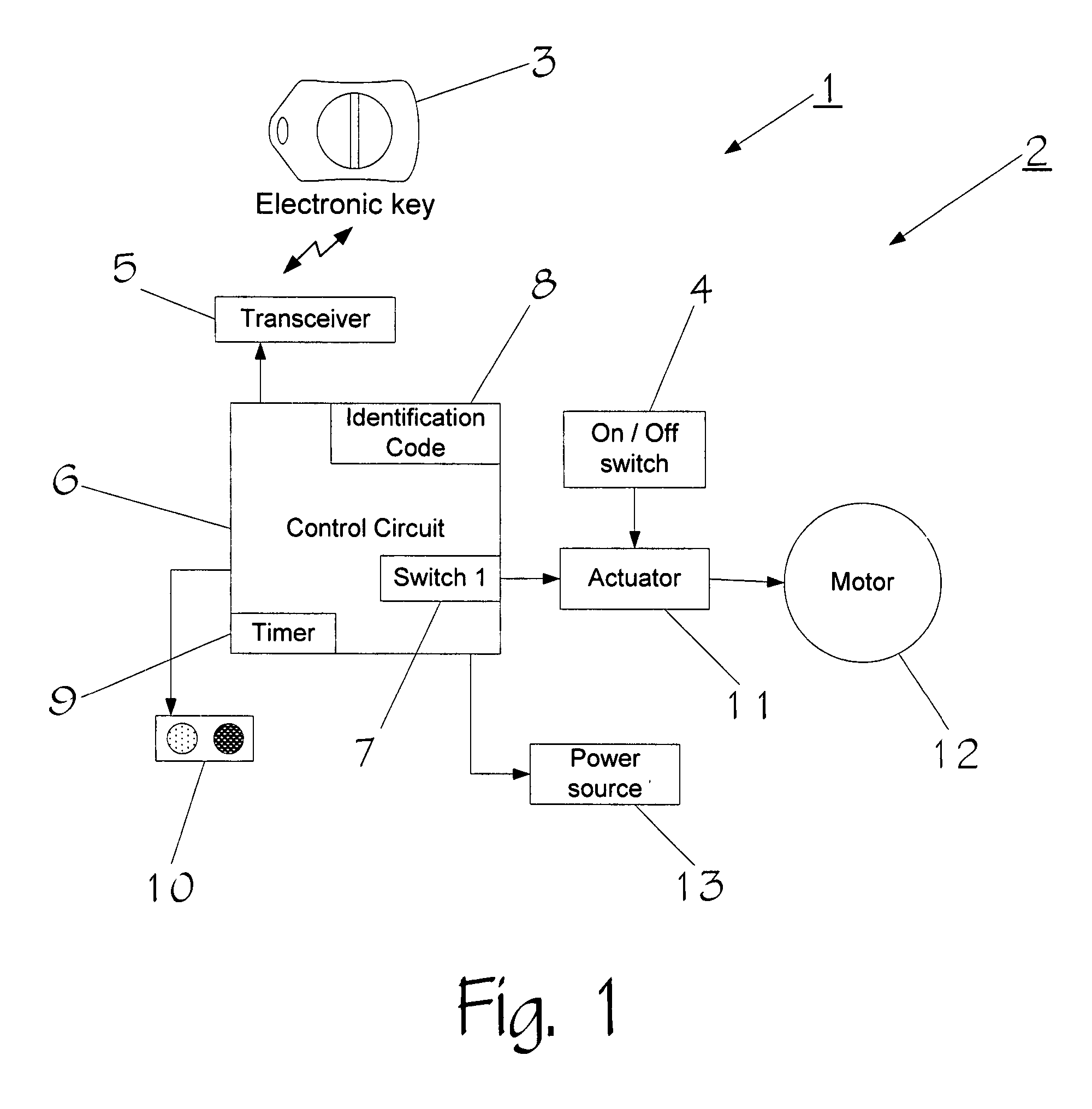
  • Figure 1
    Figure 1
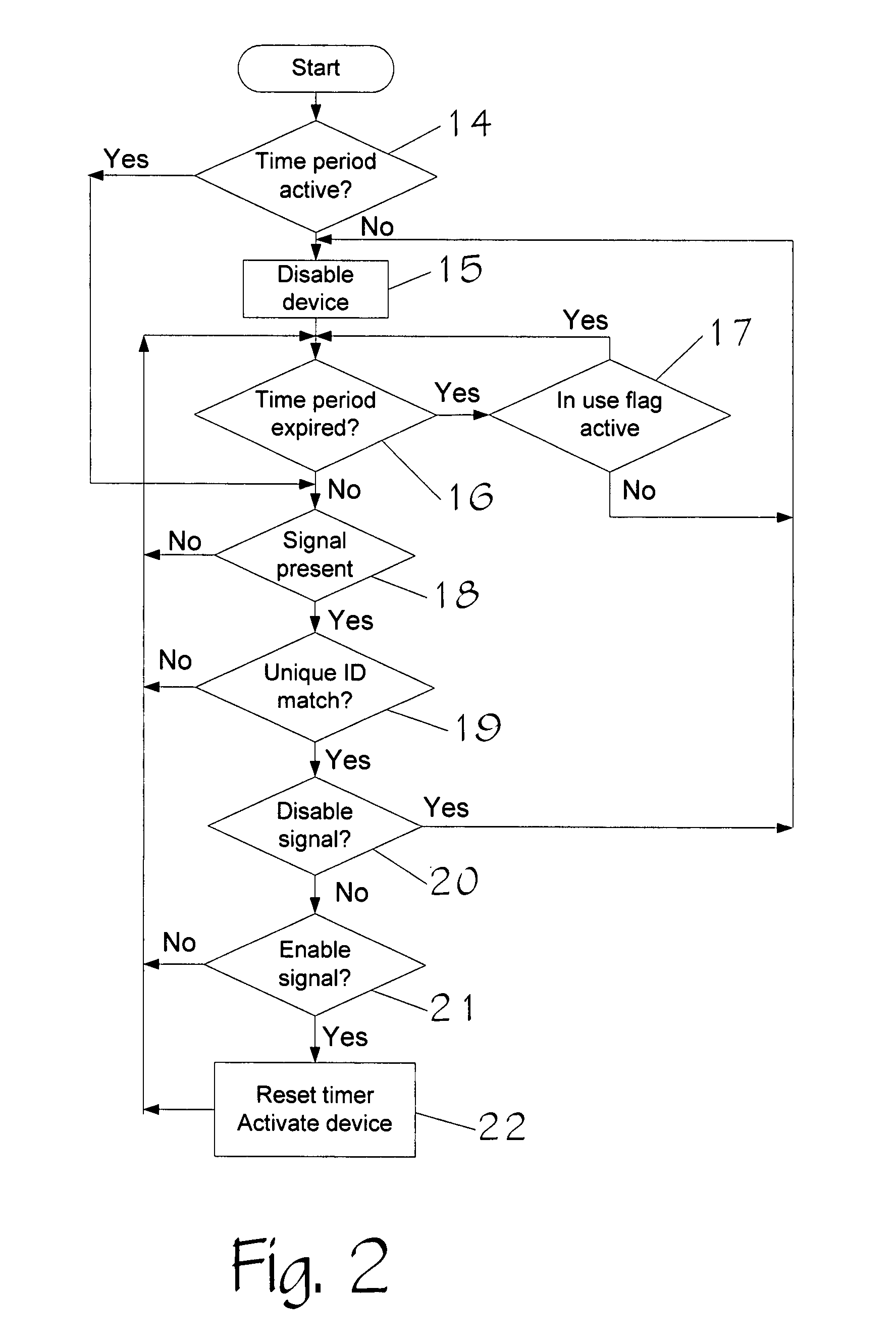
  • Figure 2
    Figure 2
  • Figure 3
    Figure 3
Patent Text Reader

Abstract

A system has an electronic key that transmits a coded signal and at least one tool or other device that can receive that signal. The coded signal is compared to a coded signal stored in the tool or other device. If the coded signal authenticates the stored signal, the tool is enabled or disabled for a specified amount of time. An on / off switch then enables the user of the tool to turn the tool or other device on and off during the specified amount of time. After the specified amount of time, the tool is disabled so that the tool or other device can no longer be used. Disabling the tool may be delayed if the tool or other device is in use. The tool or other device may also contain a unique identification code that can be read by an interrogating device to identify the tool or other device.
Need to check novelty before this filing date? Find Prior Art

Description

CROSS-REFERENCE TO RELATED APPLICATION

[0001] This application is a continuation-in-part of U.S. patent application Ser. No. 10 / 906,807 filed Mar. 8, 2005, which in turn claims priority from U.S. Provisional Application No. 60 / 612,399, filed Sep. 24, 2004, which were both invented by David Lamar and which are both incorporated herein by reference.

[0002] This application is also related to PCT / US2005 / 31809, filed Sep. 8, 2005, which is also incorporated herein by reference.FIELD

[0003] The specification relates to the field of locks. BACKGROUND

[0004] The subject matter discussed in the background section should not be assumed to be prior art merely as a result of its mention in the background section. Similarly, a problem mentioned in the background section or associated with the subject matter of the background section should not be assumed to have been previously recognized in the prior art. The subject matter in the background section merely represents different approaches, whic...

Examples

Embodiment Construction

OF EMBODIMENTS

[0035] Although various embodiments of the invention may have been motivated by various deficiencies with the prior art, which may be discussed or alluded to in one or more places in the specification, the embodiments of the invention do not necessarily address any of these deficiencies. In other words, different embodiments of the invention may address different deficiencies that may be discussed in the specification. Some embodiments may only partially address some deficiencies or just one deficiency that may be discussed in the specification, and some embodiments may not address any of these deficiencies.

[0036] Referring to FIG. 1, a device 1 according to this invention comprises tool 2 and remote wireless electronic key 3 that can communicate with tool 2. Tool 2, for example, may be a power tool, such as a drill or saw, a lawn mower, a digital camera, computer, digital music player, video cameras, digital projectors, video game player, cell phone (wireless communi...