Method for host bus adapter-based storage partitioning and mapping across shared physical drives

a technology of shared physical drives and host bus adapters, applied in the field of information handling systems, can solve the problems of adding cost to the overall compute blade design, and achieve the effect of reducing the number of drives required for the system

US20070276997A1Active Publication Date: 2007-11-29DELL PROD LP
12 Cites 11 Cited by

Patent Information

Authority / Receiving Office
US · United States
Patent Type
Applications(United States)
Current Assignee / Owner
Publication Date
2007-11-29

Smart Images

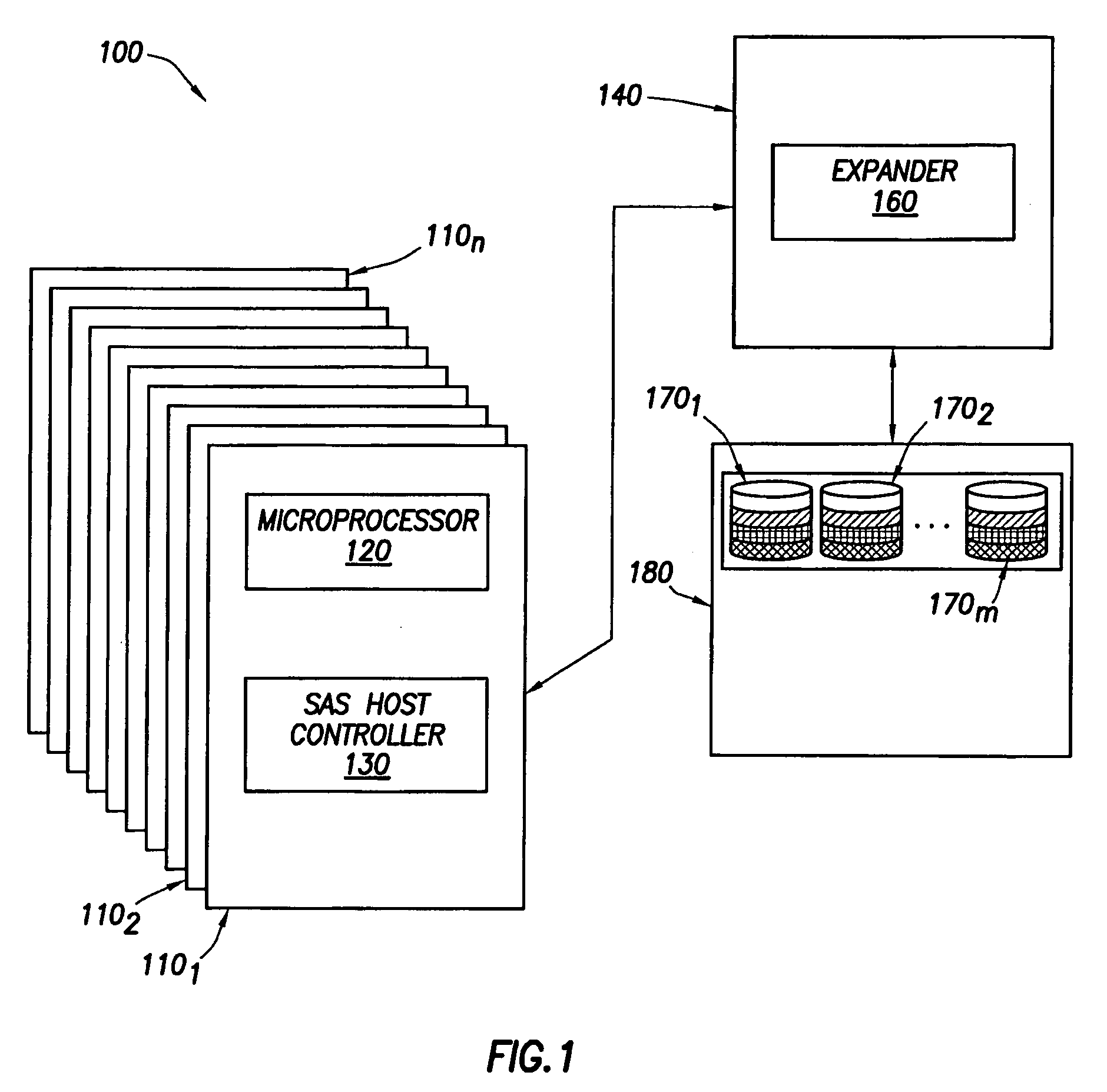
  • Figure 1
    Figure 1
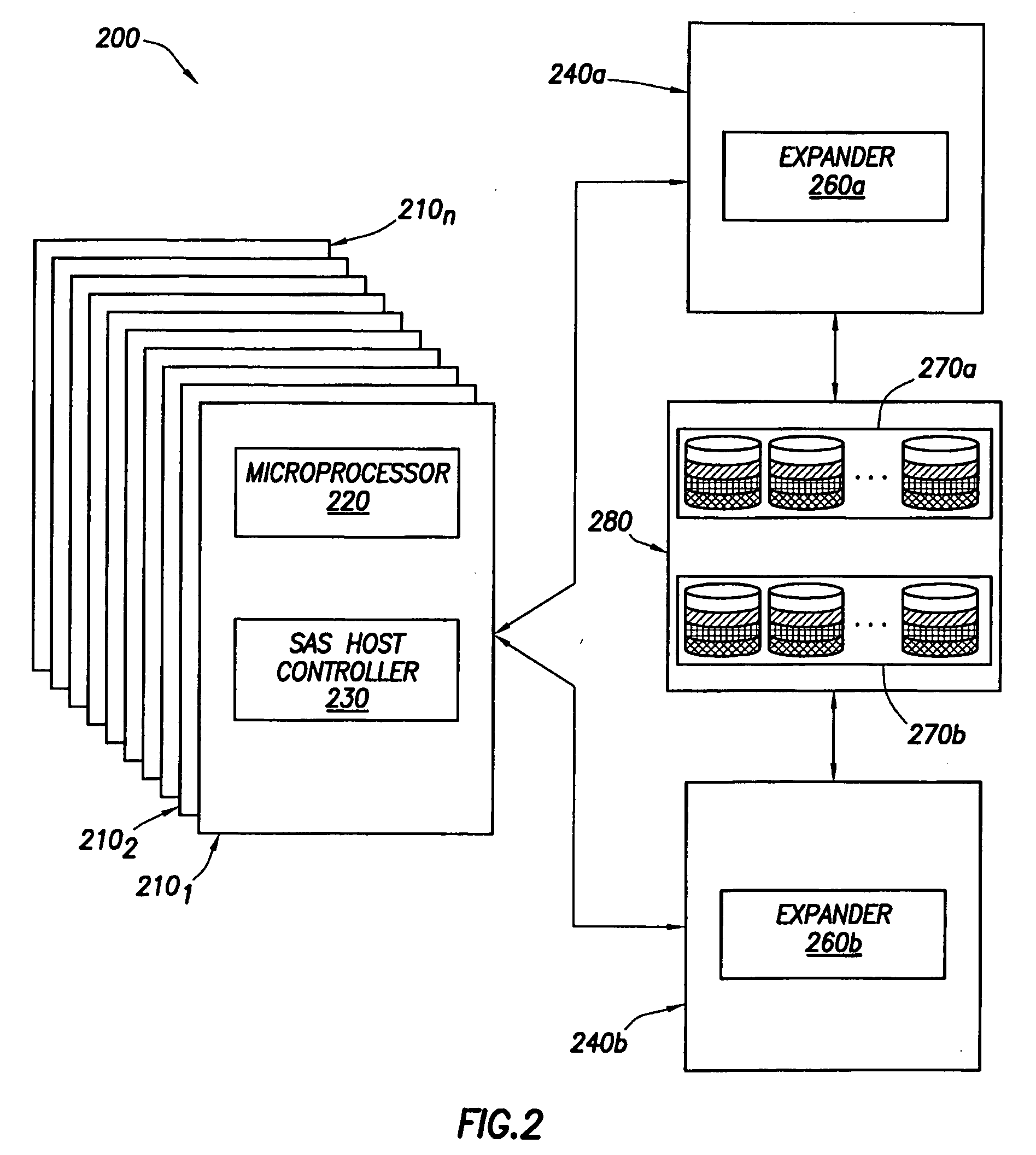
  • Figure 2
    Figure 2
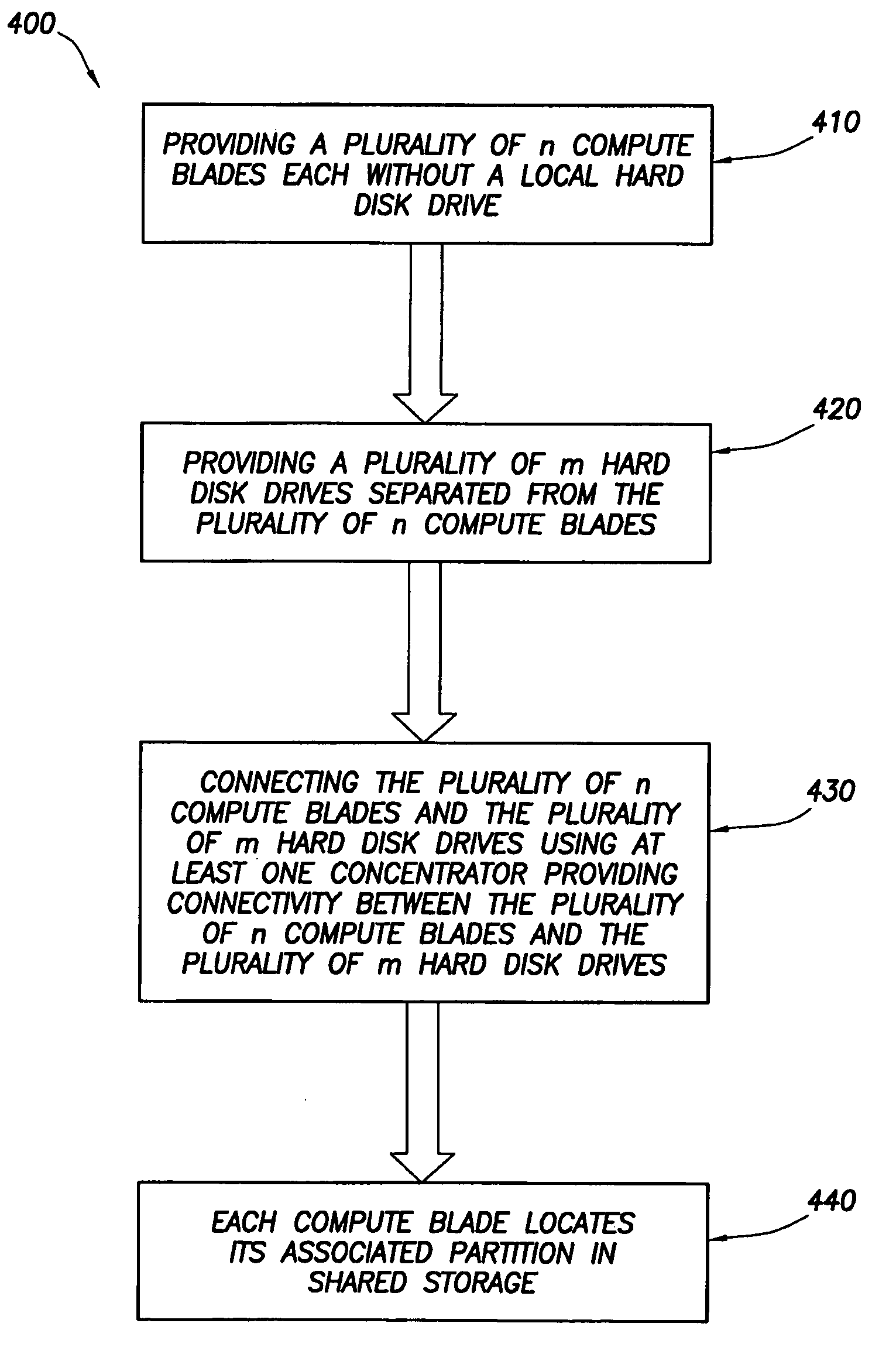
  • Figure 3
    Figure 3
Patent Text Reader

Abstract

A system for a host-based RAID solution in a shared storage environment is provided in which the compute blades of a system are coupled to one or multiple concentrators. The concentrators serve as a switch or expander to couple each of the compute blades to a shared storage resource. Within the shared storage resource, a set drives is configured in a RAID array. The shared disk drives are partitioned so that each partition is dedicated one of the compute blades of the system. Multiple sets of drives may be used so that the collective set of drives can be configured as part of a RAID volume that includes mirroring between at least two of the drive of the RAID volume, such as RAID 1 or RAID 0+1, in which each set of drives is a mirror of the other set of drives and the content associated with each of the compute blades is striped across multiple of the drives in each of the two sets of drives.
Need to check novelty before this filing date? Find Prior Art

Description

TECHNICAL FIELD

[0001] This invention relates generally to information handling systems and, more particularly, to a system for a host-based RAID solution in a shared storage environment.BACKGROUND

[0002] As the value and use of information continues to increase, individuals and businesses continually seek additional ways to process and store information. One option available to users of information is an information handling system. An information handling system generally processes, compiles, stores, and / or communicates information or data for business, personal, or other purposes, thereby allowing users to take advantage of the value of the information. Because technology and information handling needs and requirements vary between different users or applications, information handling systems may also vary with regard to the kind of information that is handled, how the information is handled, how much information is processed, stored, or communicated, and how quickly and efficiently ...

Examples

Embodiment Construction

[0011]For purposes of this disclosure, an information handling system may include any instrumentality or aggregate of instrumentalities operable to compute, classify, process, transmit, receive, retrieve, originate, switch, store, display, manifest, detect, record, reproduce, handle, or utilize any form of information, intelligence, or data for business, scientific, control, or other purposes. For example, an information handling system may be a personal computer, a network storage device, or any other suitable device and may vary in size, shape, performance, functionality, and price. The information handling system may include random access memory (RAM), one or more processing resources such as a central processing unit (CPU) or hardware or software control logic, ROM, and / or other types of nonvolatile memory. Additional components of the information handling system may include one or more disk drives, one or more network ports for communication with external devices as well as var...