[0007]The anti-obesity
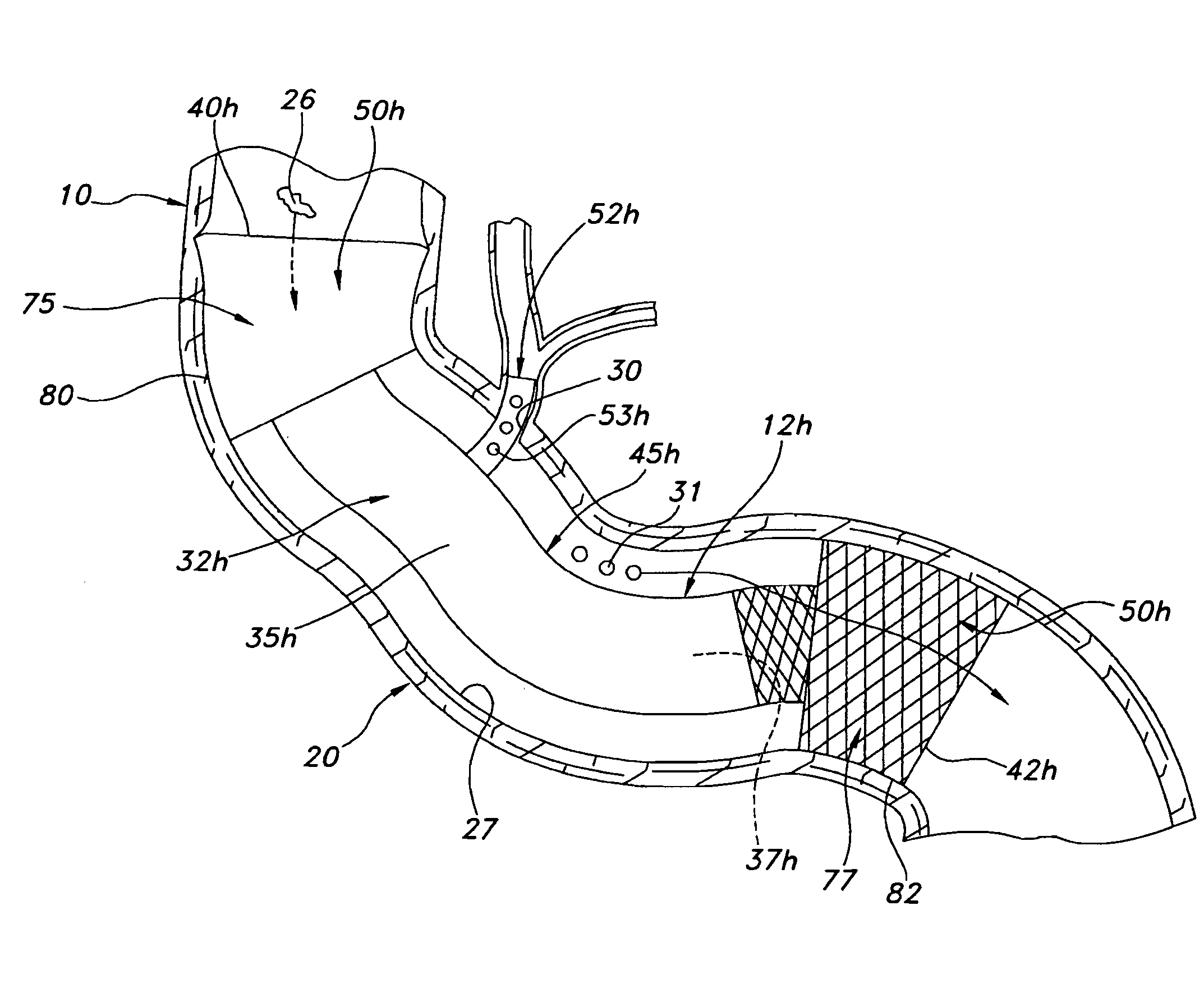
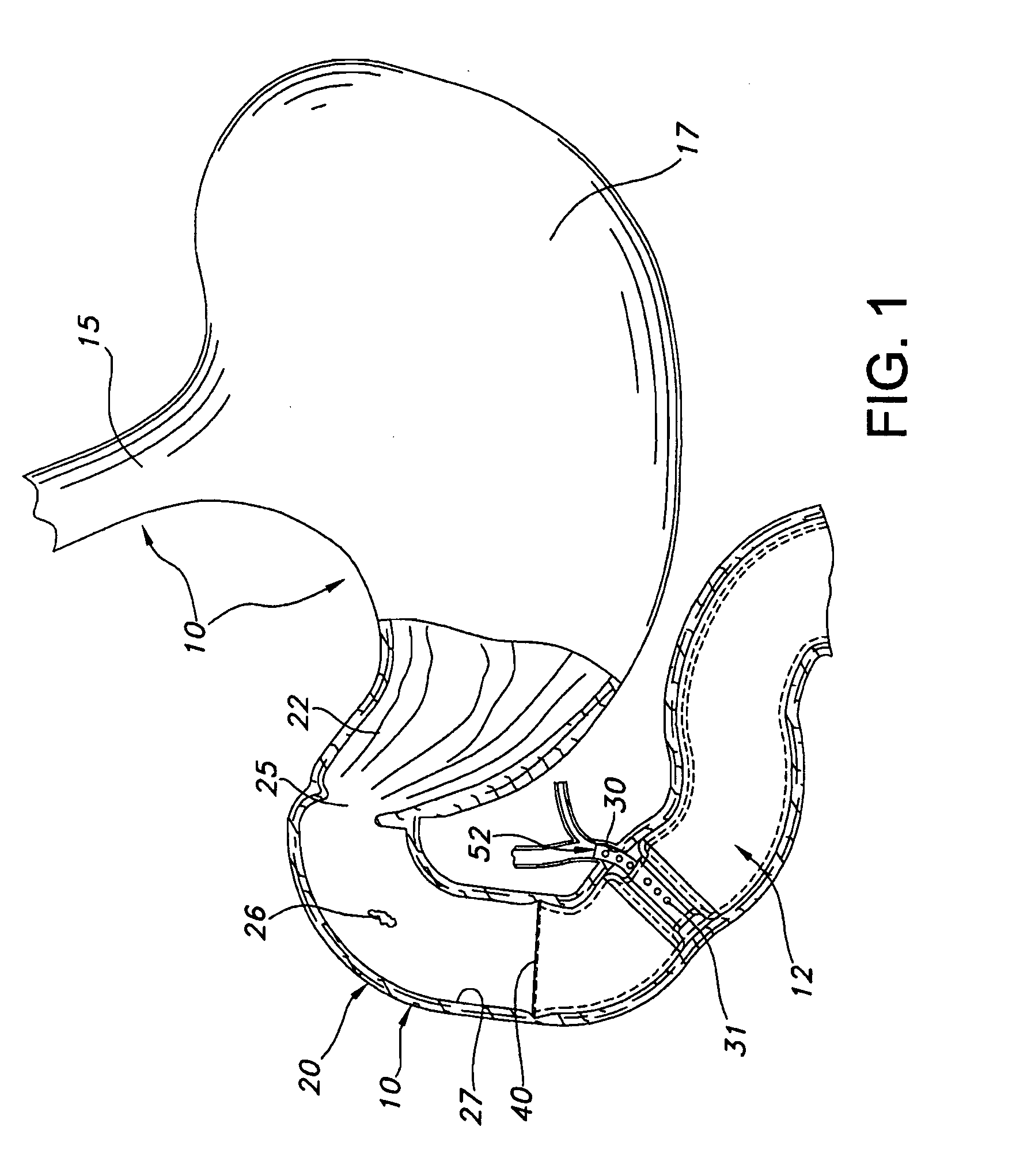
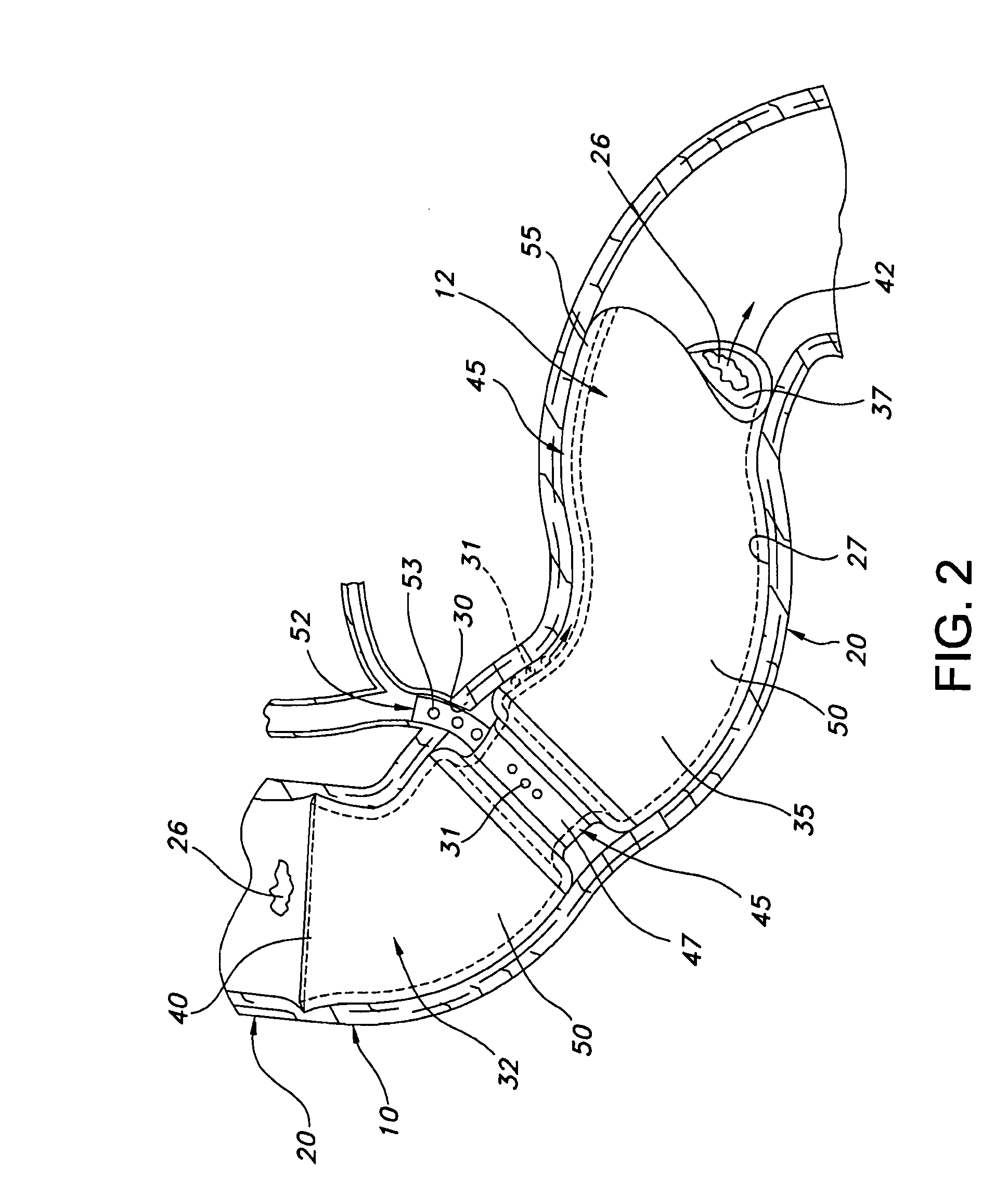
stent, when secured in the proper location within the duodenum, reduces or prevents mixing of the chyme and digestive substances within the duodenum. The digestive substances within the duodenum include digestive fluids, such as biliary and pancreatic juices, which reach the interior of the duodenum by flowing through the papilla of Vater which is contiguous with the inner surface of the duodenum. The digestive fluids are supplied to the papilla of Vater by the bile and pancreatic ducts. The anti-obesity stent reduces or prevents mixing of the chyme and digestive fluids by reducing or preventing the digestive fluids which flow through the papilla of Vater from passing through the tubular structure. Consequently, mixing of the digestive fluids with the chyme in the region of the duodenum which is occupied by the anti-obesity stent is reduced or prevented. This reduces the
exposure of the chyme to the digestive fluids which reduces the associated
chemical breakdown thereof. This is a result of the tubular structure being semi-permeable or impervious to the chyme. The reduction in the mixing of the chyme and digestive fluids provided by the anti-obesity stent reduces the
caloric intake by the patient. Also, this reduction in the mixing reduces the breakdown of fats because the bile is separated from the chyme over the
axial length of the anti-obesity stent. Consequently, the
chemical transformation of the chyme by the digestive fluids which is normally required for absorption of the nutrients, fats and other substances in the chyme by the duodenum is reduced.
[0008]The anti-obesity stent reduces the absorption of fats by the
small intestine, which includes the duodenum, by the following mechanisms: (i) the anti-obesity stent separates the chyme from the bile which is secreted by the papilla of Vater over the
axial length of the stent; (ii) the anti-obesity stent separates the chyme from the absorptive surfaces of the
small intestine which reduces the absorption of the nutrients, fats and other substances in the chyme by the
small intestine; and (iii) the bile which is located between the anti-obesity stent and the absorptive surfaces of the small intestine is reabsorbed by the absorptive surface over the
axial length of the stent which further reduces the availability of the bile exiting at the distal end of the stent to breakdown fats in the chyme.
[0009]The reduction in the mixing of the chyme and bile, and the separation of the chyme from the absorptive surfaces of the duodenum provided by the anti-obesity stent may significantly reduce the breakdown and absorption of fat in the chyme. Such a significant reduction may result from the absorption of fat possibly being required in the duodenum to be effective.
[0010]Additionally, the anti-obesity stent reduces the absorption of the nutrients, fats and other substances in the chyme by the duodenum. This reduced absorption results from the tubular structure being semi-permeable or impervious to the chyme. As a result, the chyme which is contained within the tubular structure is partially or completely prevented from reaching the inner surface of the portion of the duodenum in which the anti-obesity stent is located. Consequently, the portion of the duodenum in which the anti-obesity stent is located is partially or completely prevented from absorbing the nutrients, fats and other substances in the chyme. Reducing the absorption of the nutrients, fats and other substances by the duodenum reduces the
caloric intake by the patient. Also, reducing the absorption of the nutrients, fats and other substances reduces the
fat intake by the patient which typically reduces the weight thereof.
[0012]The anti-obesity stent separates the food and chyme, which flows from the
stomach into the duodenum, from the digestive fluids which include bile acids and
pancreatic enzymes and which promote
lipid absorption. This separation by the anti-obesity stent is provided at the location thereof in the duodenum which is the beginning of the small intestine. The anti-obesity stent treats obesity using a mal-absorptive method. Separating the food from the digestive fluids may reduce the amount of
digestion and, consequently, the amount of weight a person gains from eating a specific quantity of food. Also, such separation reduces the absorption of the nutrients, fats and other substances in the chyme.


 Login to View More
  Login to View More