Anti-obesity dual stent

a dual-stent, anti-obesity technology, applied in the field of anti-obesity stents, can solve the problems of increasing the incidence of obesity and its associated health problems, reducing the economic cost of obesity, and achieving only relatively short-term and limited weight loss in most patients. , to achieve the effect of reducing or preventing the mixing of chyme and digestive fluid, and reducing or preventing the mixing o

US20070282452A1Inactive Publication Date: 2007-12-06BOSTON SCI SCIMED INC
36 Cites 52 Cited by

Patent Information

Authority / Receiving Office
US · United States
Patent Type
Applications(United States)
Current Assignee / Owner
Publication Date
2007-12-06
Estimated Expiration
Not applicable · inactive patent

Smart Images

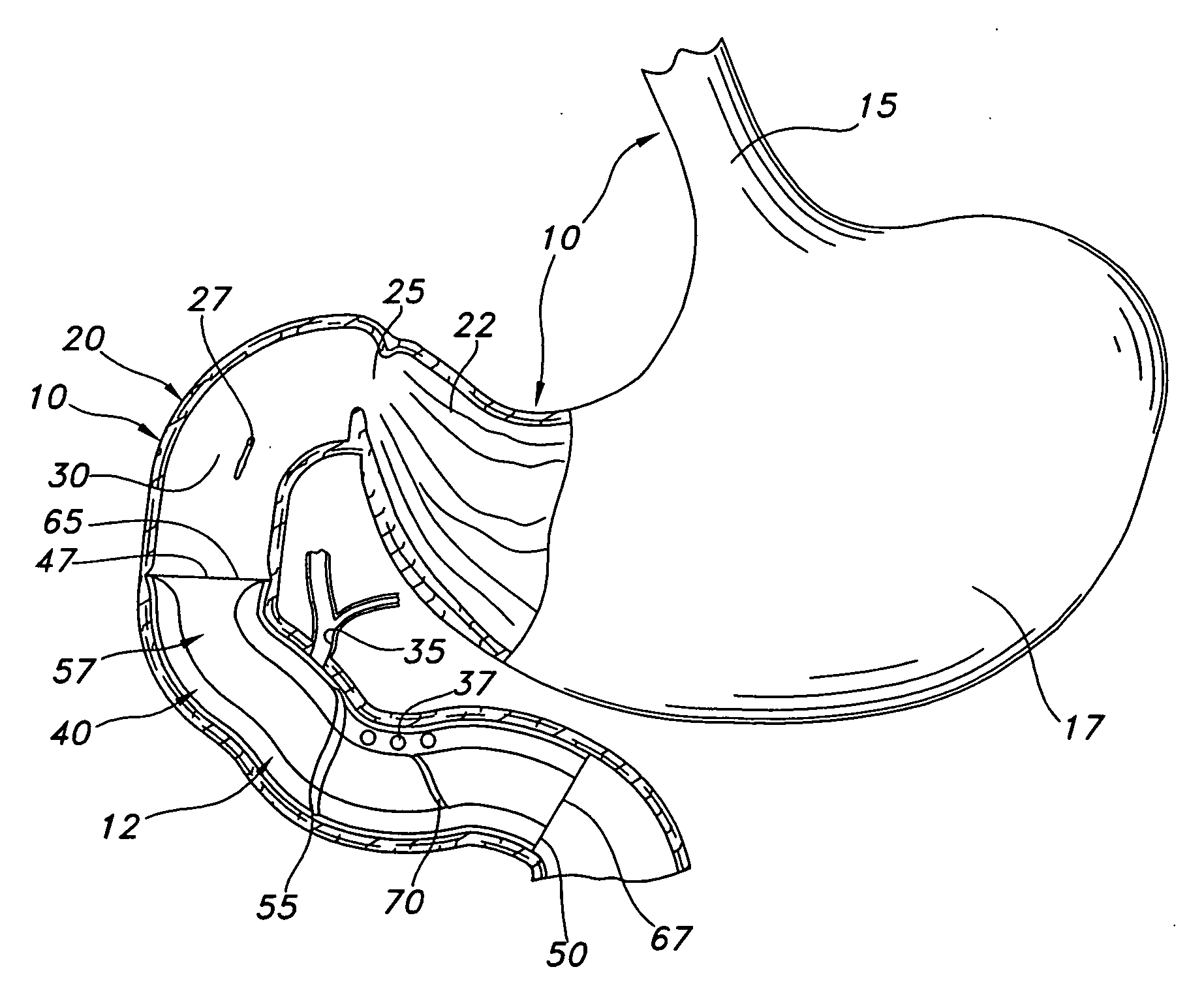
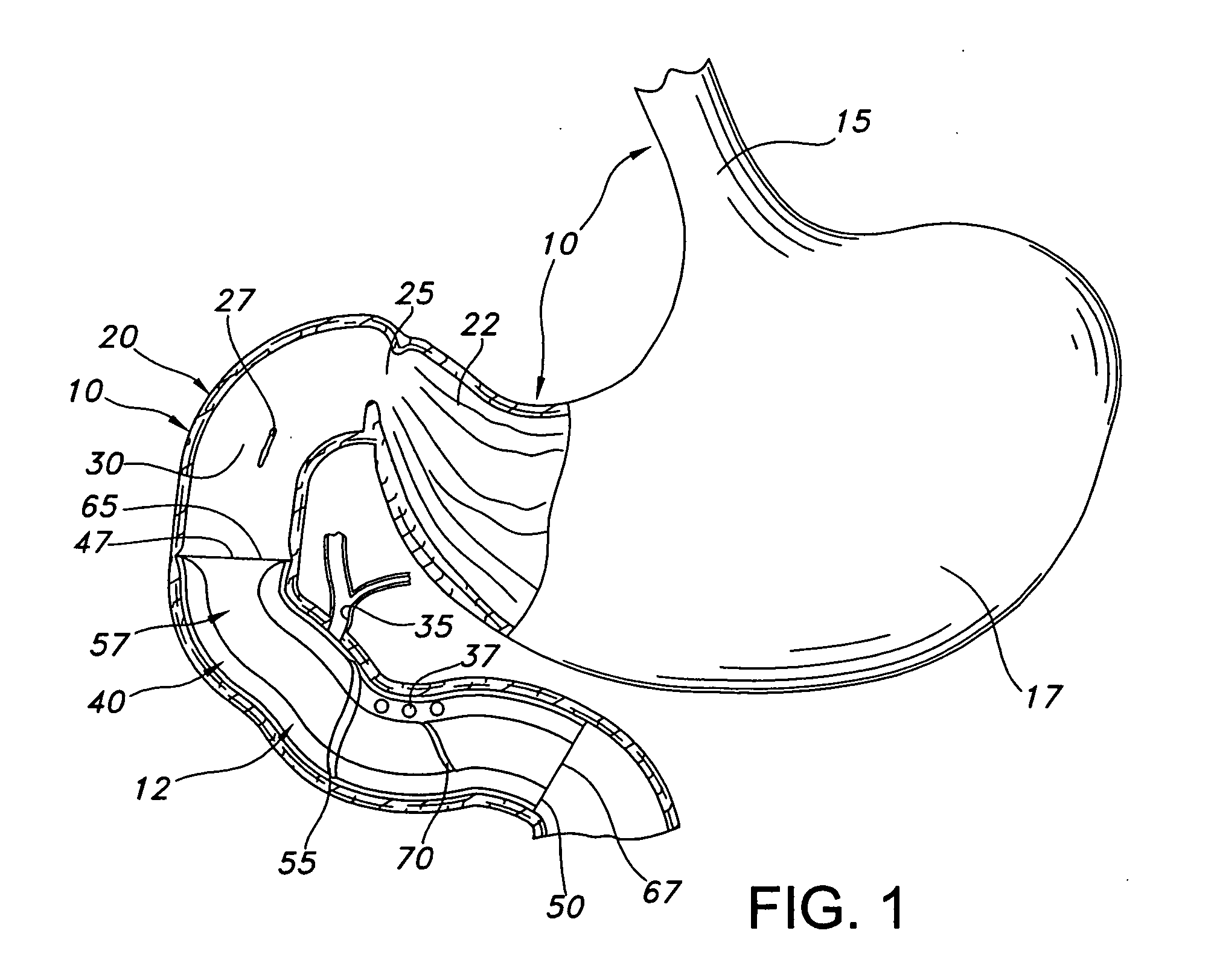
  • Figure 1
    Figure 1
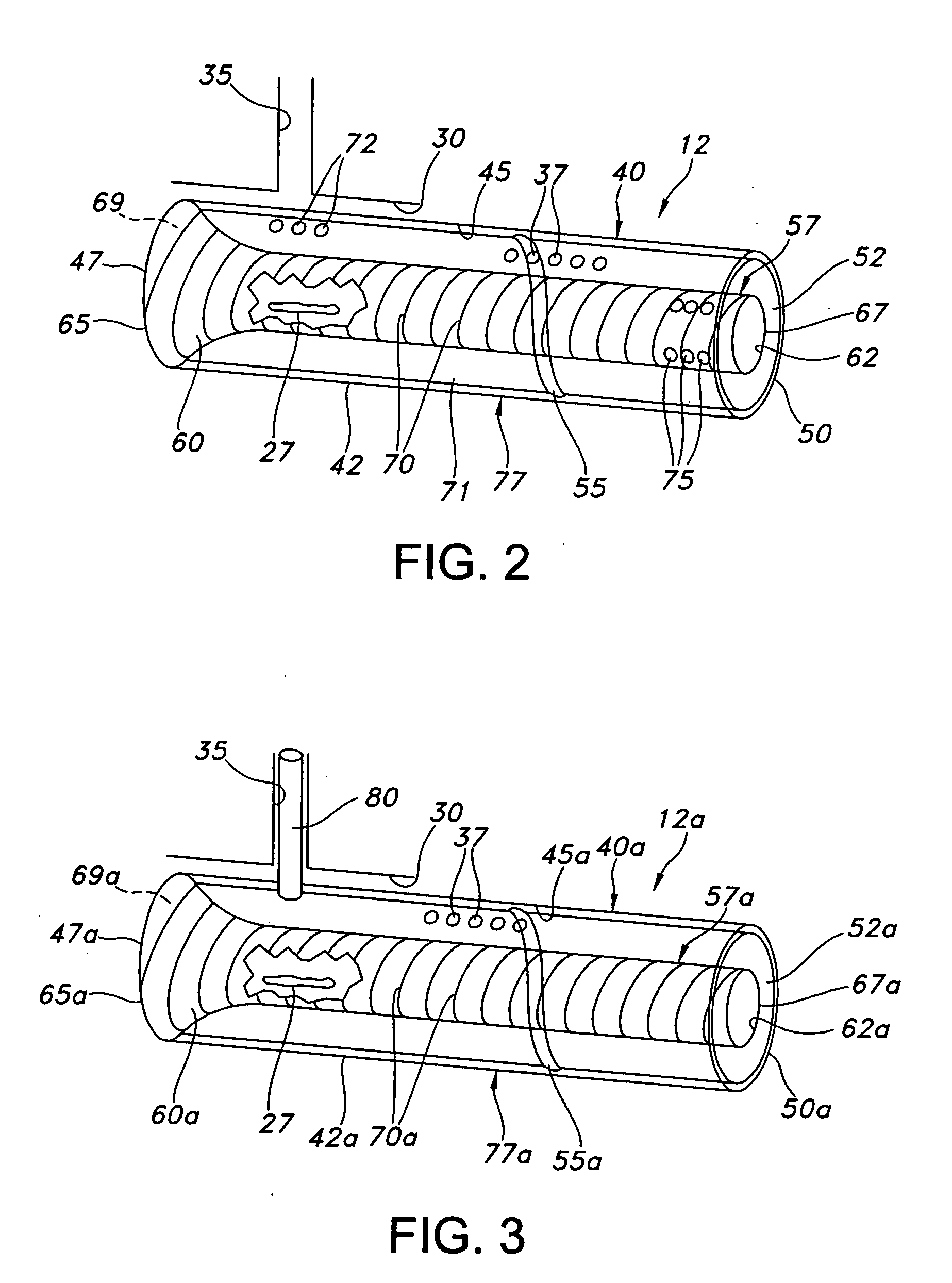
  • Figure 2
    Figure 2
  • Figure 3
    Figure 3
Patent Text Reader

Abstract

The anti-obesity dual stent includes a tubular outer structure within which is located a coaxial tubular inner structure. The outer structure is sized to fit within a duodenum in substantially coaxial relation therewith. The outer and inner structures communicate with the pylorus and papilla of Vater to provide conduits for the chyme and digestive fluid. Alternatively, the anti-obesity dual stent may include a tubular papilla-supplied structure which has a lateral orientation relative to a tubular pylorus-supplied structure. The papilla-supplied and pylorus-supplied structures each are sized to fit longitudinally within the duodenum. The pylorus-supplied and papilla-supplied structures communicate with the pylorus and papilla of Vater to provide conduits for the chyme and digestive fluid.
Need to check novelty before this filing date? Find Prior Art

Description

FIELD OF THE INVENTION

[0001] The present invention relates generally to anti-obesity stents and methods for using the same. More specifically, the present invention relates to anti-obesity dual stents which are secured in the duodenum adjacent to the stomach to reduce digestion and absorption of food.BACKGROUND OF THE INVENTION

[0002] The incidence of obesity and its associated health-related problems has become significant. The causes of obesity involve a complex interplay of genetic, environmental, psycho-behavioral, endocrine, metabolic, cultural, and socio-economic factors. Severe obesity is frequently associated with significant comorbid medical conditions, including coronary artery disease, hypertension, type II diabetes mellitus, gallstones, nonalcoholic steatohepatitis, pulmonary hypertension, and sleep apnea. Obesity is a leading cause of preventable death in the U.S. The spectrum of comorbid conditions associated with obesity includes cancer, osteoarthritis, and heart disease...

Examples

Embodiment Construction

[0027]Referring to the drawings and more particularly to FIG. 1, a central portion of the alimentary canal 10 in which the anti-obesity dual stent 12 is located is illustrated. This portion of the alimentary canal 10 includes the distal segment of the esophagus 15, the stomach 17, and the duodenum 20. The duodenum 20 is the proximate segment of the small intestine. The stomach 17 has a pyloric portion 22 which leads to the duodenum 20 by way of the gastric outlet or pylorus 25. The pylorus 25 forms the distal aperture of the stomach and has an enclosing circular layer of muscle which is normally contracted to close the aperture but which relaxes to provide an open but restrictive passage. Although subject to substantial variation in different individuals, the pylorus 25 has a maximum open diameter of about 2 cm, and the duodenum 20 has a diameter which typically is about 18 to 20 mm in a representative patient. The chyme 27 passes from the pyloric portion 22 through the pylorus 25 i...