
Cooperative Operation of Network Transport and Network Quality of Service Modules
a network transport and service module technology, applied in the field of improving the performance of transport protocols, can solve the problems of degrading the resulting performance of higher layer protocols and applications, increasing queues, and large queuing delays, and achieving efficient and flexible networking quality of service, improving tcp performance, and high latency
Patent Information
- Authority / Receiving Office
- US · United States
- Current Assignee / Owner
- Publication Date
- 2007-12-27
Smart Images
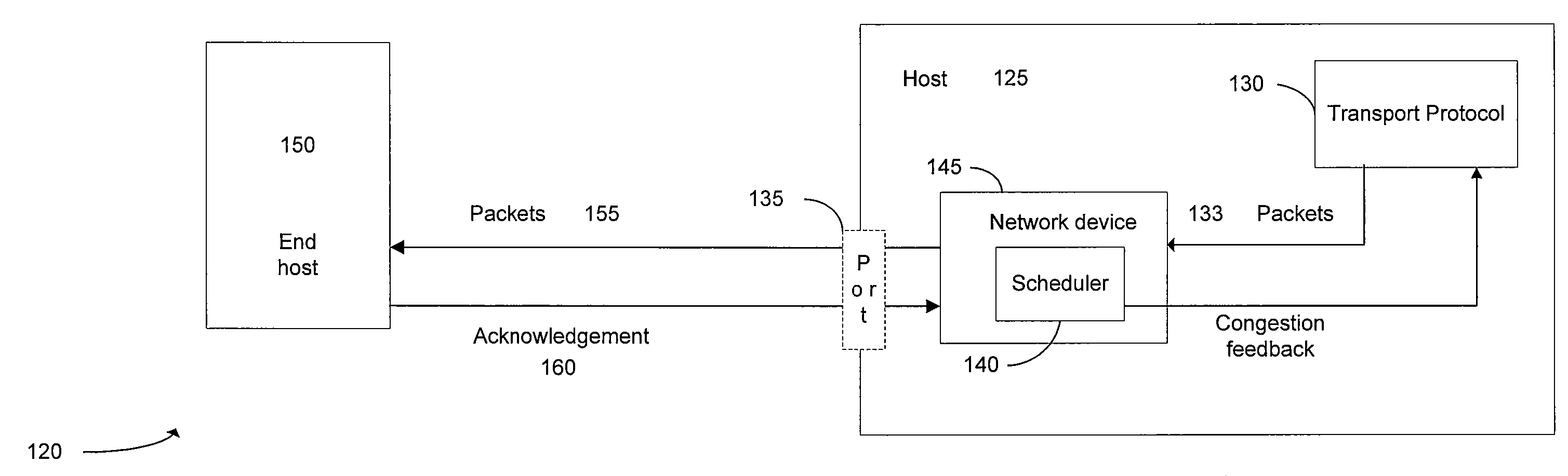
Figure 1 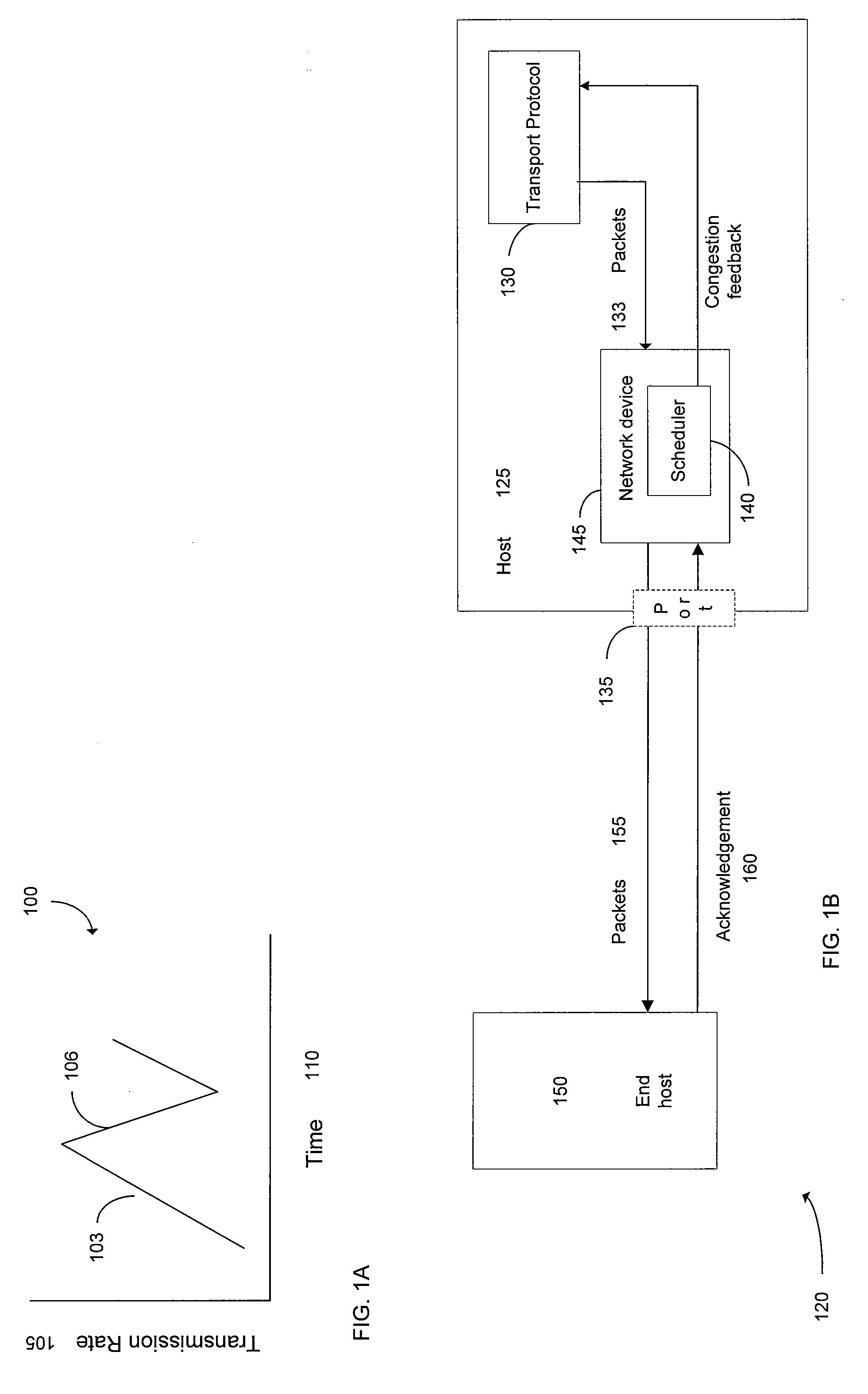
Figure 2 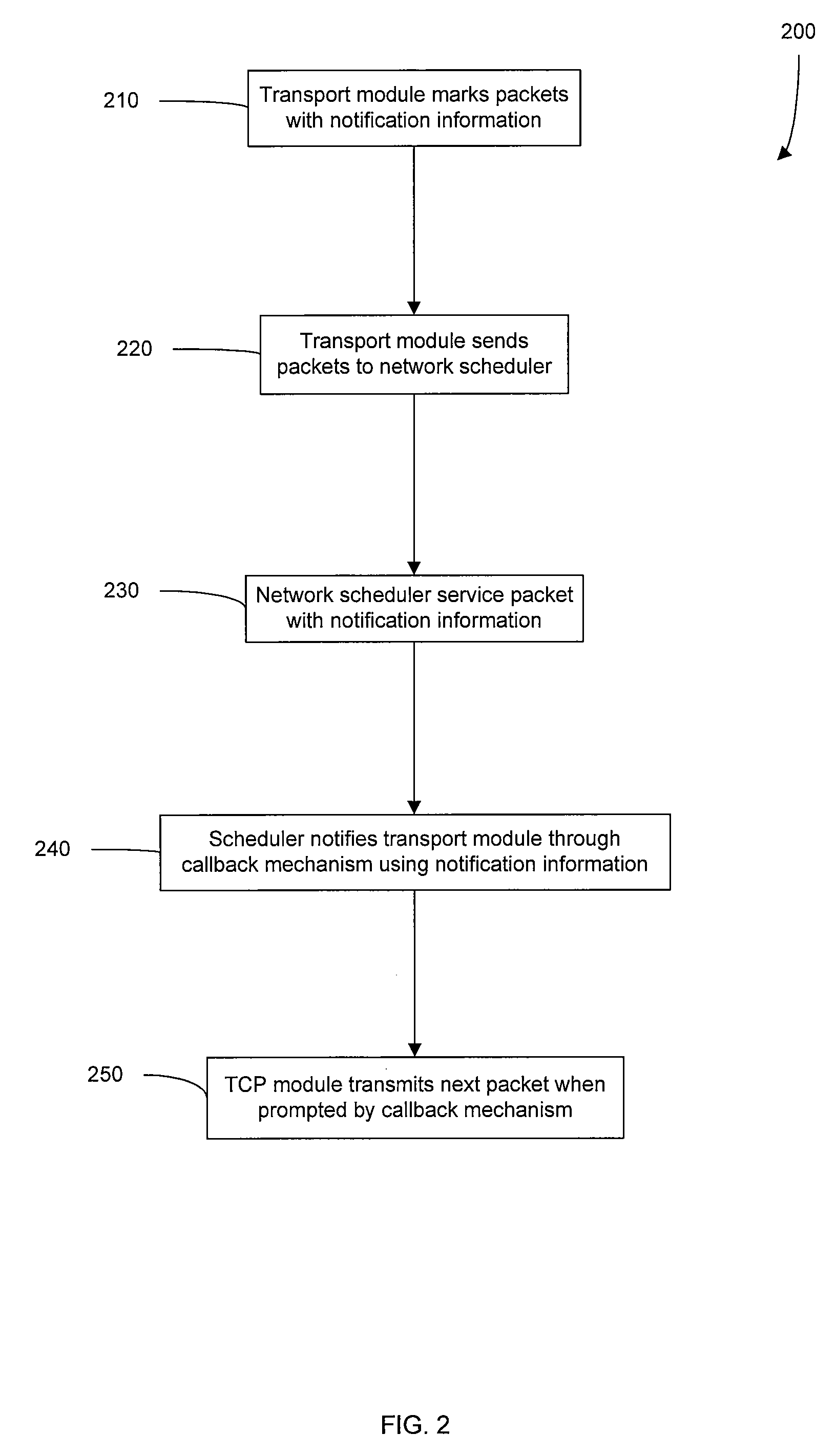
Figure 3
Abstract
Description
CLAIM OF PRIORITY
[0001] This application claims the benefit of U.S. Provisional Patent Application 60 / 813,862 entitled “COOPERATIVE OPERATION OF NETWORK QUALITY OF SERVICE MODULES”, by Nitin Gupta et al., filed Jun. 14, 2006 (Attorney Docket No. 021647-002400US), the entire contents of which are incorporated herein by reference.FIELD OF INVENTION
[0002] The present invention relates to the area of improving the performance of transport protocols like the Transmission Control Protocol (TCP) in an Internet Protocol (IP) network. BACKGROUND OF THE INVENTION
[0003] An important consequence of the queuing behavior of IP networks is that packets must spend time waiting in the queues of networking devices. This waiting time, often called the “queuing time” or “queuing delay”, can degrade the resulting performance of higher layer protocols and applications that utilize the network path through such devices because extra delays are injected into the conversation of two or more communicating...
Examples
Embodiment Construction
[0037] Embodiments of the invention provide efficient and flexible networking quality of service as well as transport protocol design. In one embodiment, a hybrid transport / network quality of service (HNTQ) scheme improves the performance of TCP over specific links or network paths that are subject to high latency, a high bandwidth-delay product, high packet loss, and / or bit errors. In one aspect, a callback mechanism is used between a packet scheduler and a transport module to control the transmission rate of packets across one or more connections or links.
I. Introduction
[0038] Traditionally, the network functions and the transport functions are deliberately separated. Oftentimes the “end to end” argument of Saltzer et al. has been used to argue that as much complexity as possible should be pushed out of the network and into the end hosts. As a result, QoS mechanisms in routers are deliberately kept as simple as possible and mechanisms like connection management, reliable delive...