

Fin retention and deployment mechanism
a technology of fins and deployment mechanisms, applied in the field of fin retention and deployment mechanisms, can solve the problems of cost and required bearing
- Summary
- Abstract
- Description
- Claims
- Application Information
AI Technical Summary
Benefits of technology
Problems solved by technology
Method used
Image

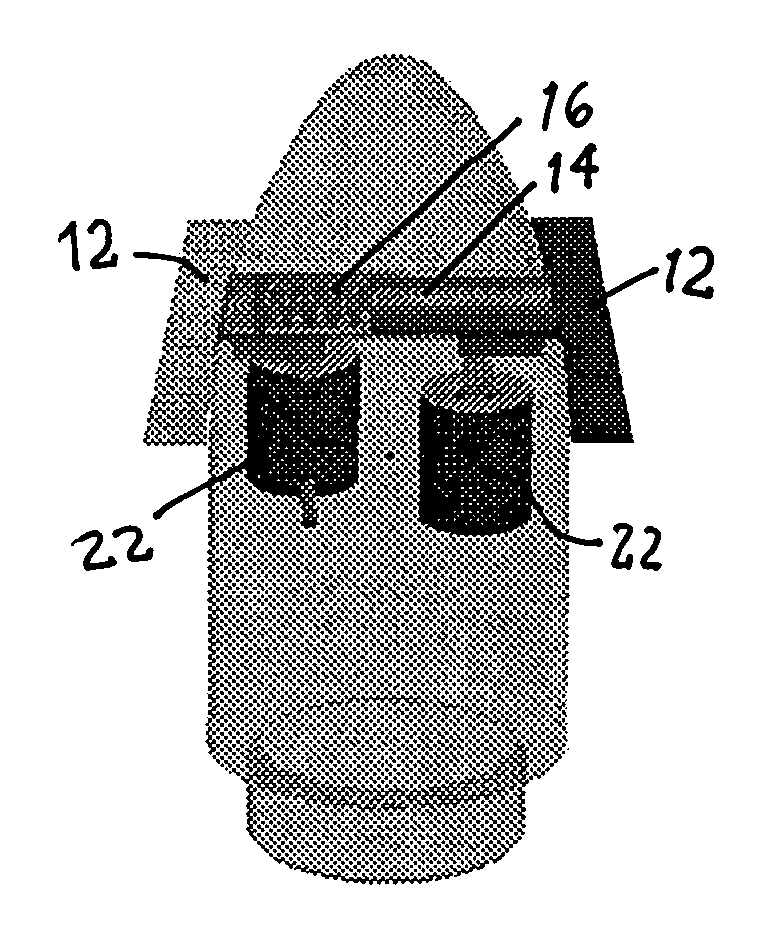
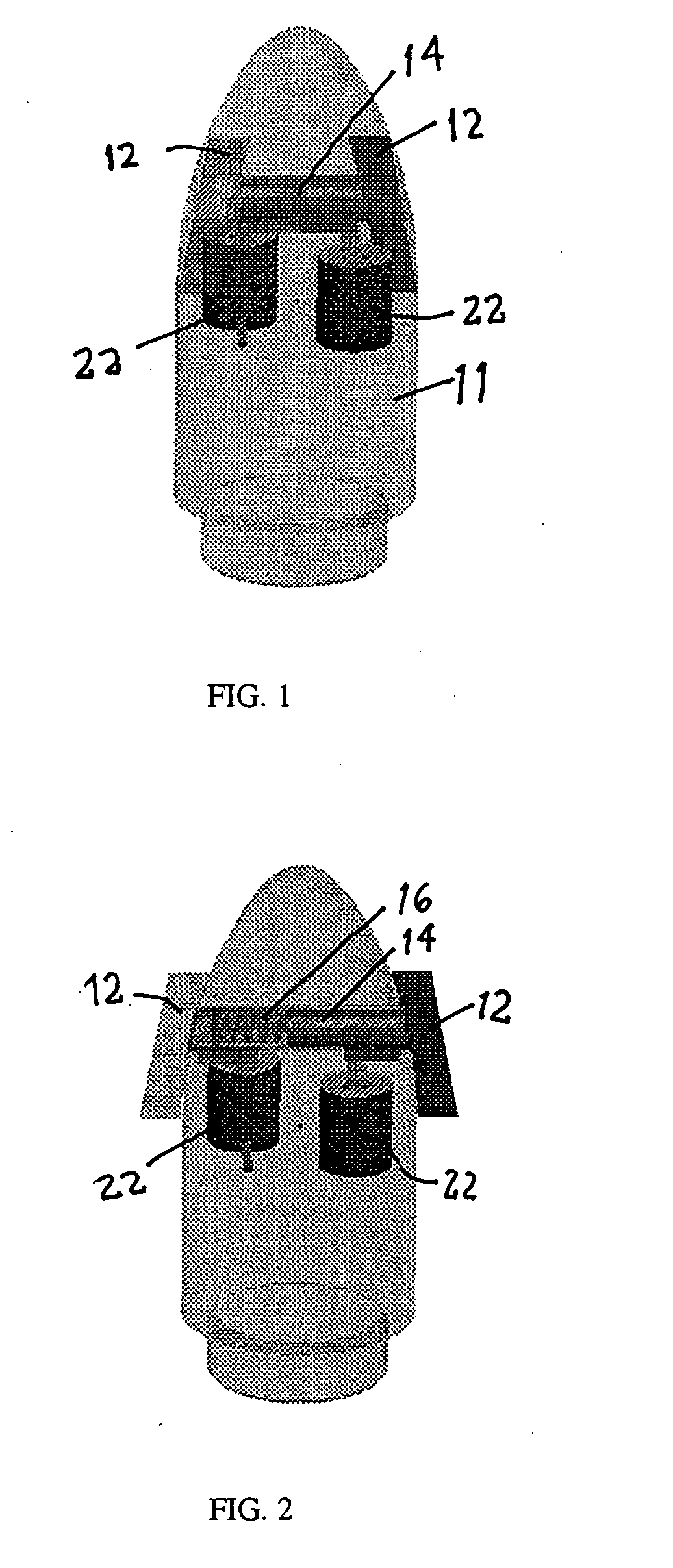
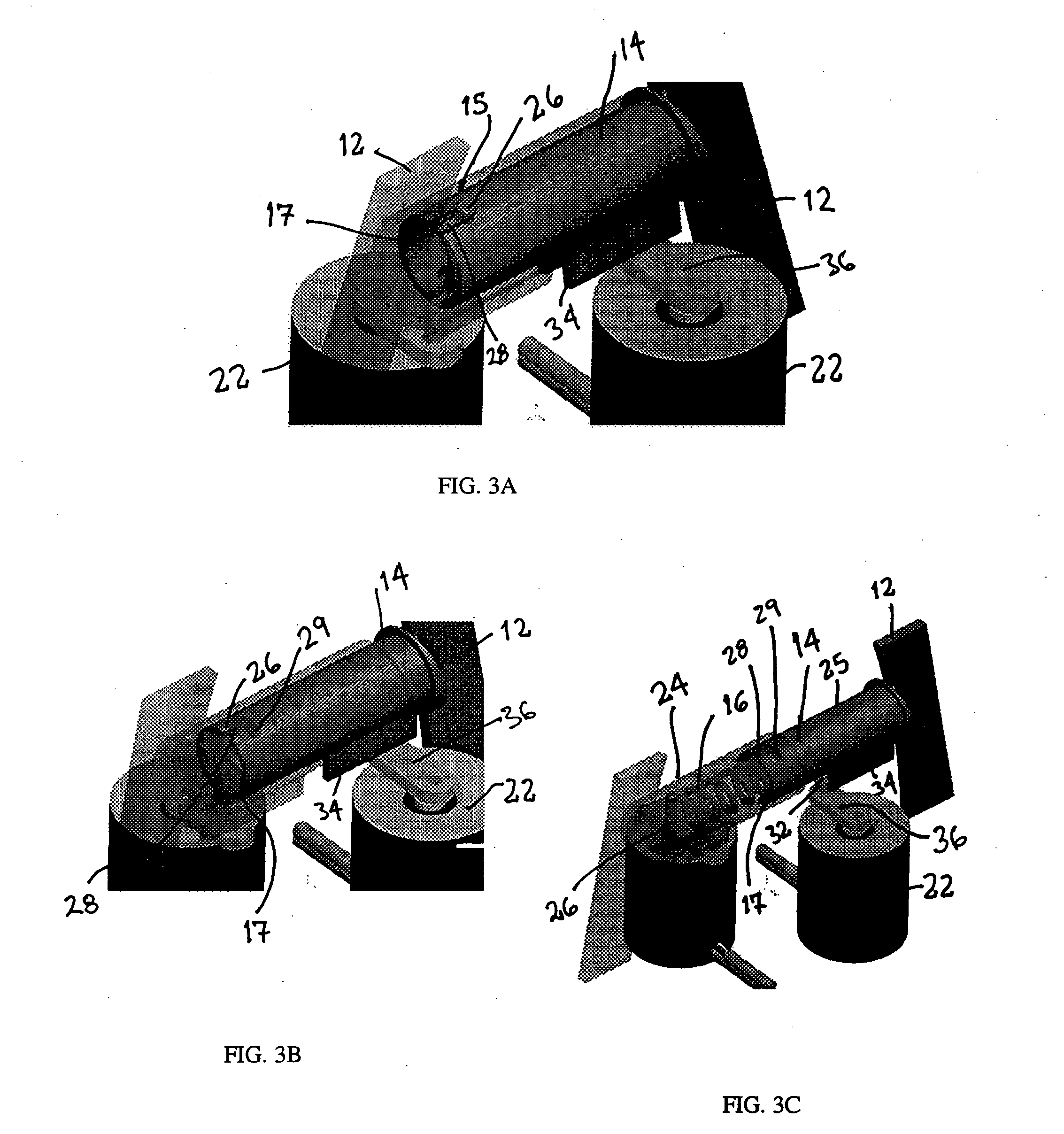
Examples
Embodiment Construction
[0014] This detailed description and drawings provide specific examples of the invention, but the invention should not be limited merely to the examples disclosed. Instead, the invention should be limited only by the claims that may eventually issue. Many variations in the system, changes in specific components of the system and uses of the system will be readily apparent to those familiar with the field based on the drawings and description provided.
[0015] As used herein, the term “projectile” refers to any launched object regardless of the object's purpose or method of propulsion. This description generally utilizes gun-launched projectiles as an appropriate example of the invention. However, other potential projectiles are contemplated and would be obvious to one of ordinary skill in the art. Examples include, but are not limited to, missiles, rockets, torpedoes, shells, rounds, and bullets.
[0016] As used in this application the term “fin” refers to any projection extending fro...
PUM
 Login to View More
 Abstract
Description
Claims
Application Information
 Login to View More