The
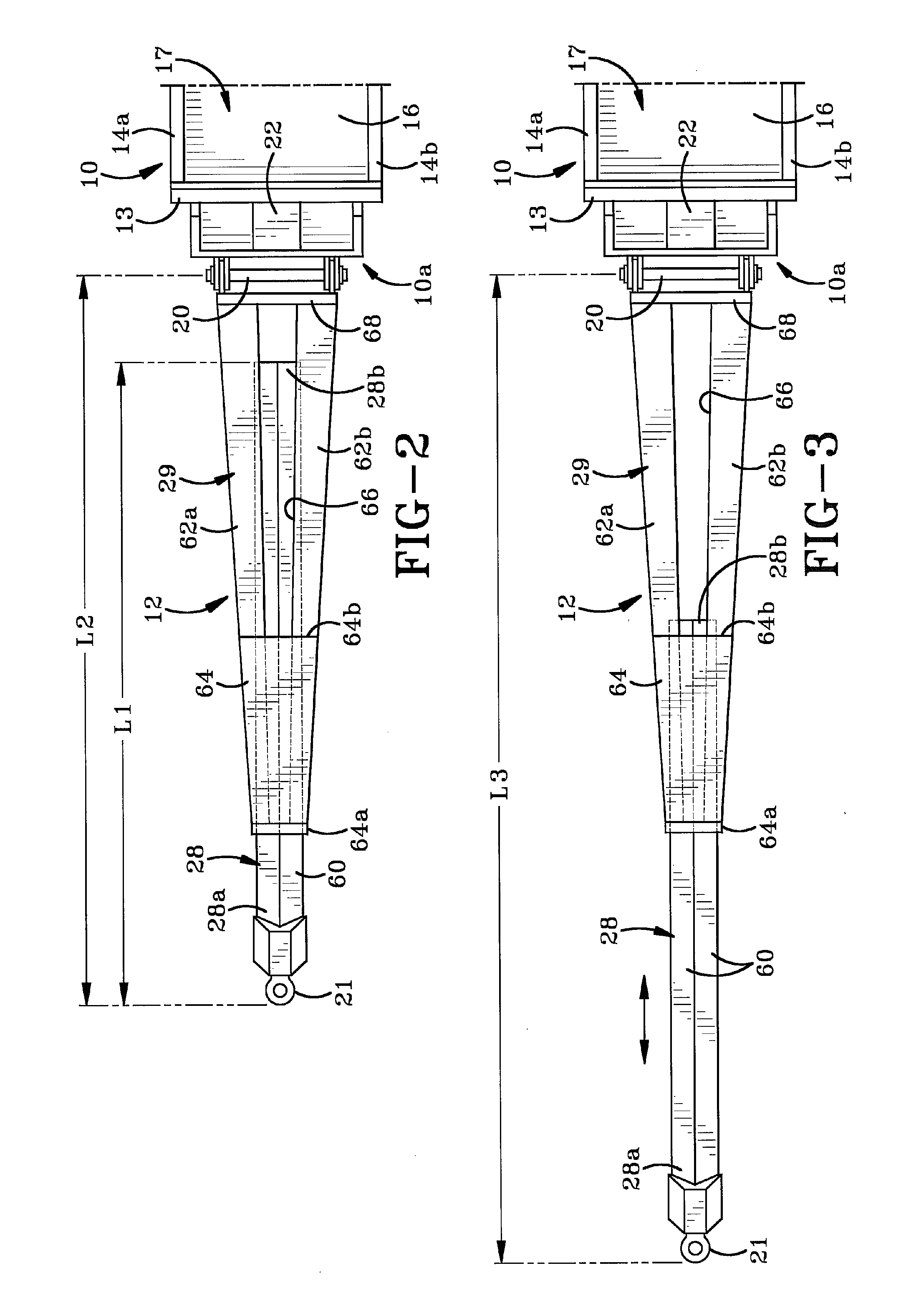
disadvantage of using a longer tongue is that the maneuverability of the pup trailer is considerably decreased.
However, as trailers have become longer in
actual length and heavier, and effectively even longer because of extendable tongues, has necessitated that the tongues themselves have had to be considerably increased in strength.
This has required the addition of material to the tongue, and consequently increased the overall weight of the trailer, thus necessitating a reduction in the potential weight of the
payload the trailer can carry.
However, if the
terrain is quite uneven or sufficiently steep enough to position the trailer at a different height and / or angle relative to the truck body, the forces at the three connection points between the tongue and trailer frame will be large and tend to lift either the front wheels or rear wheels of the trailer.
This loading is likely to break the resilient shocks and / or twist and damage the connection between the lowermost strut and the projection.
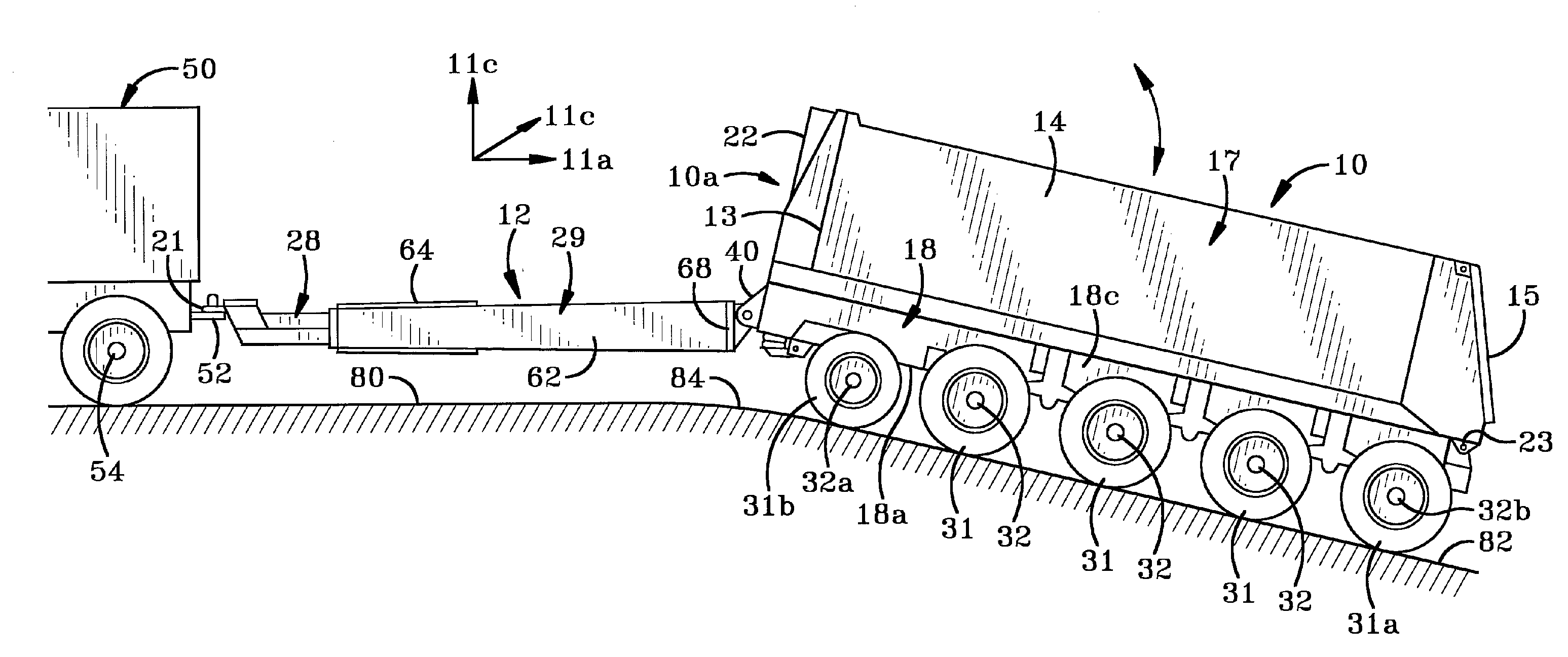
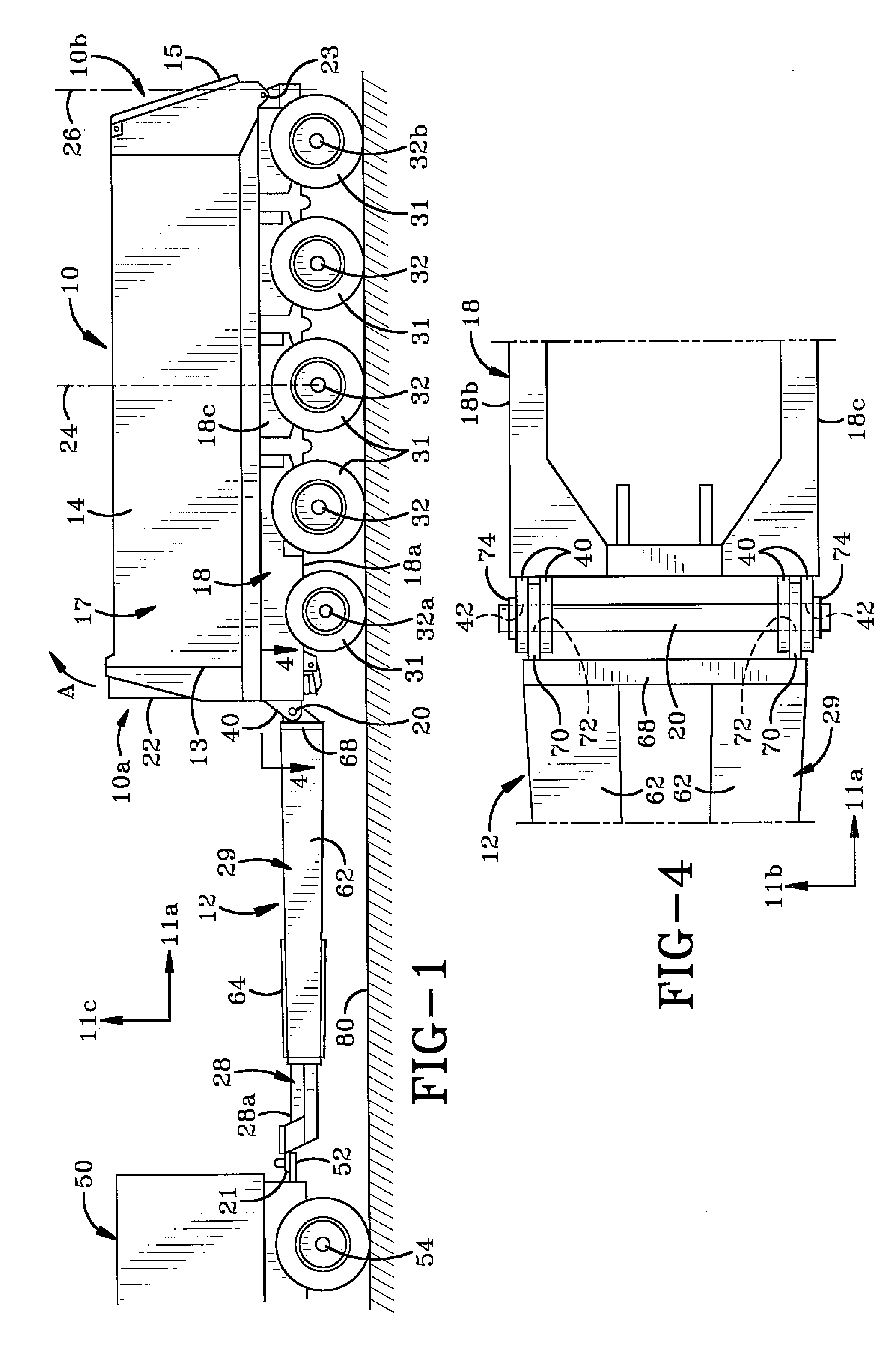
While this type of tongue-pup trailer connection is adequate for traveling down the highway and over slightly uneven terrain, the connection is less able to accommodate situations where the pup trailer is on a steeply inclined slope and the truck is on a horizontal surface or vice versa.
Furthermore, the position of the connection point between the tongue and trailer being under a portion of the trailer frame, substantially restricts how far upwardly and downwardly the tongue can rotate as the trailer moves over uneven ground.
If the tongue was caused to rotate severely downward by a change in the relative angles between the truck and trailer by traveling over very uneven ground, then the strut on the tongue will tend to engage the underside of the front end of the trailer and tend to lift the rear of the trailer off the ground.
This again induces large bending moments in the tongue.
These forces may damage the connector components on both the tongue and trailer.
The difficulty with limiting the motion of the tongue is that a pup trailer may be pulled over significantly uneven terrain that will tend to cause the tongue to reach the limit of its designed
range of motion of the spring, stop or dampening device, causing the tongue to become relatively rigid at that point.
The large bending moments tend to result in failure of the tongue.
In fact, in some cases this problem has been actually exacerbated because the tongue had been made lighter and less strong because of the presence of the motion-restricting device.
Additionally, the provision of motion-restricting devices has required the utilization of additional materials, parts, weight and expense.


 Login to View More
  Login to View More