
Surgical system
- Summary
- Abstract
- Description
- Claims
- Application Information
AI Technical Summary
Benefits of technology
Problems solved by technology
Method used
Image

Examples
Embodiment Construction
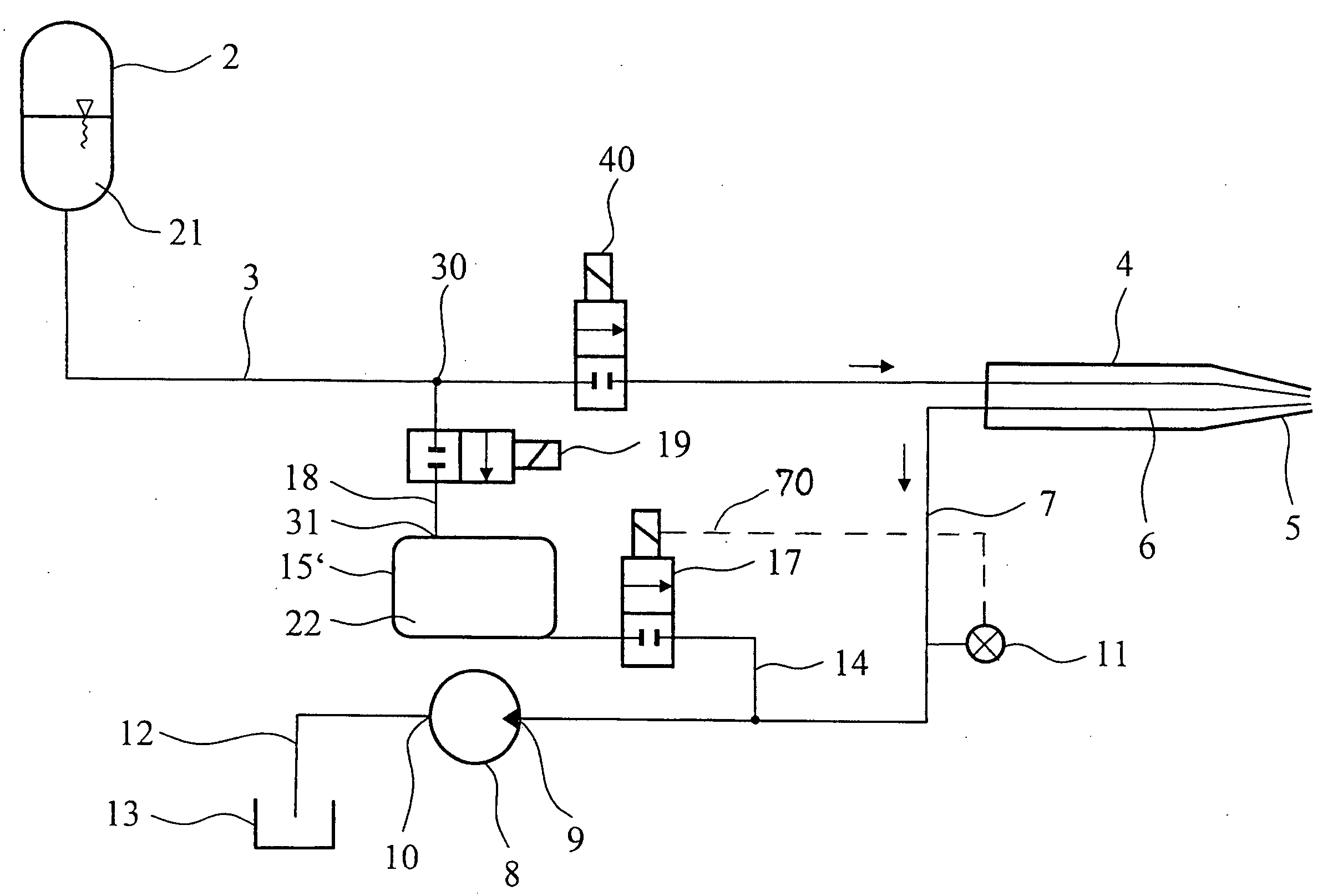
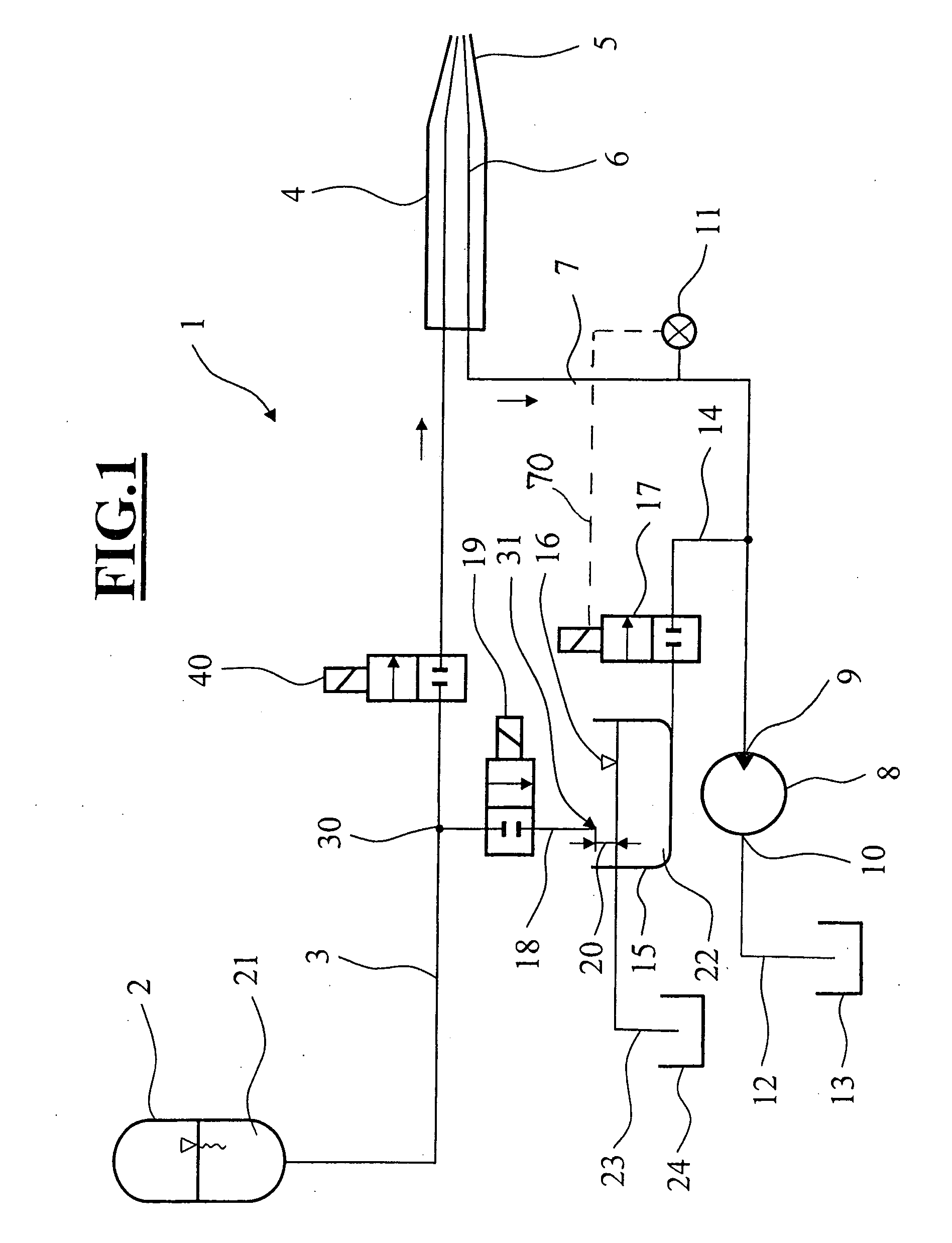
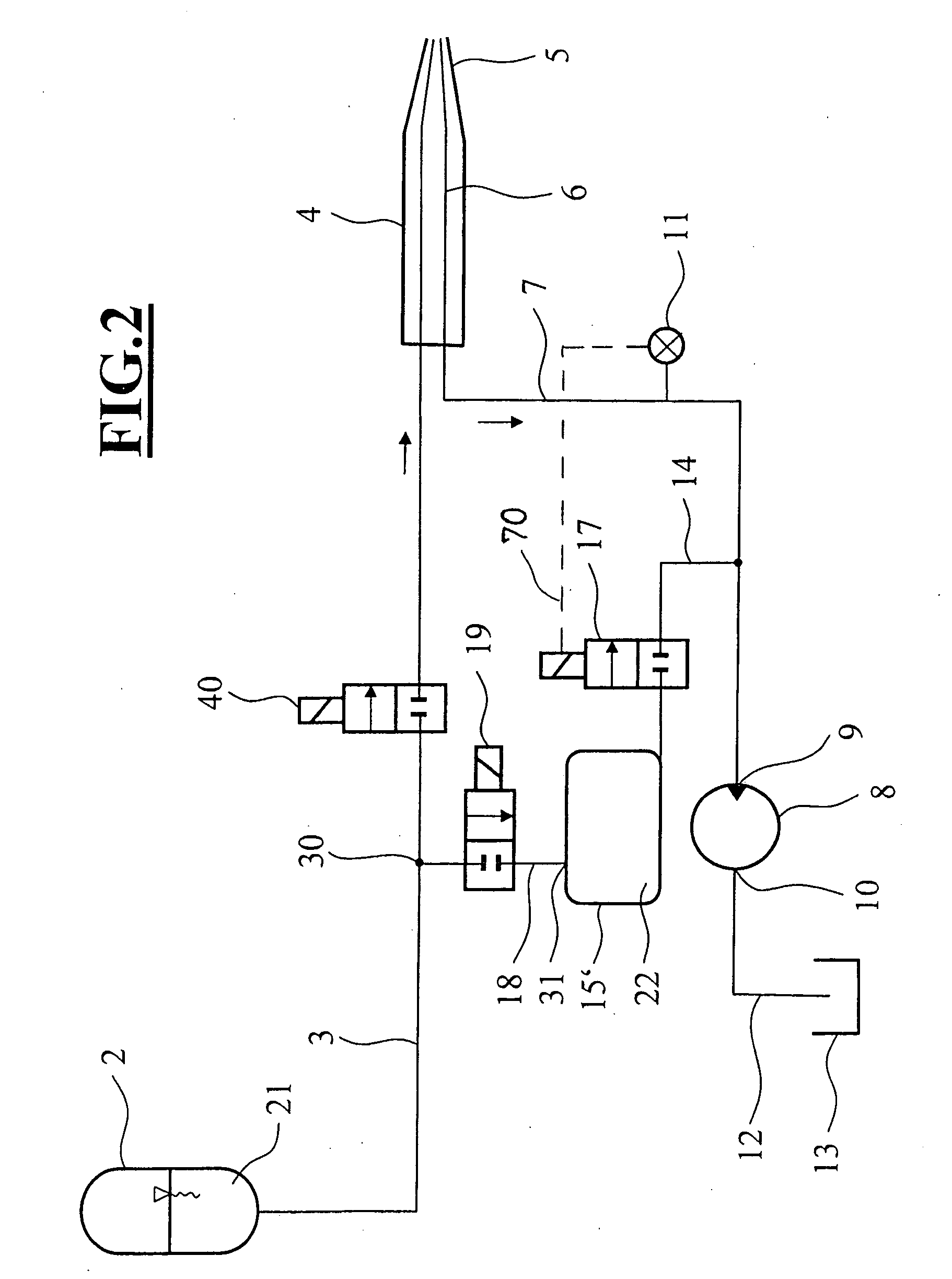
[0025] In FIG. 1, a schematic of an embodiment of the surgical system 1 of the invention is shown. An irrigation fluid 21 is held in a first fluid vessel 2 and this irrigation fluid can be guided via an irrigation line 3 to a surgical handpiece 4. The handpiece 4 can be a handpiece for phacoemulsification wherein a vibrating tip 5 emulsifies a clouded lens of an eye and the broken up lens fragments are drawn away by suction. An irrigation valve 40 is shown in FIG. 1 as a two-way valve and permits a passthrough or blocking of the irrigation fluid in a direction to the handpiece 4. An aspiration line 6 runs from the tip 5 to an end of the handpiece 4 in order to transport away emulsified lens pieces and fluid from the eye. The removal is caused by a suction pump 8 which is connected at its input 9 via an aspiration input line 7 to the handpiece 4. A fluid pressure in the aspiration input line 7 is detected by a pressure sensor 11 which is mounted between the input 9 of the suction pum...
PUM
 Login to View More
 Abstract
Description
Claims
Application Information
 Login to View More