
Clad tube for nuclear fuel
a technology of nuclear fuel and clad tubes, which is applied in the field of clad tubes with rhenium liner, can solve the problems of clad/fuel failure, pitting in pure niobium materials,
- Summary
- Abstract
- Description
- Claims
- Application Information
AI Technical Summary
Problems solved by technology
Method used
Image

Examples
Embodiment Construction
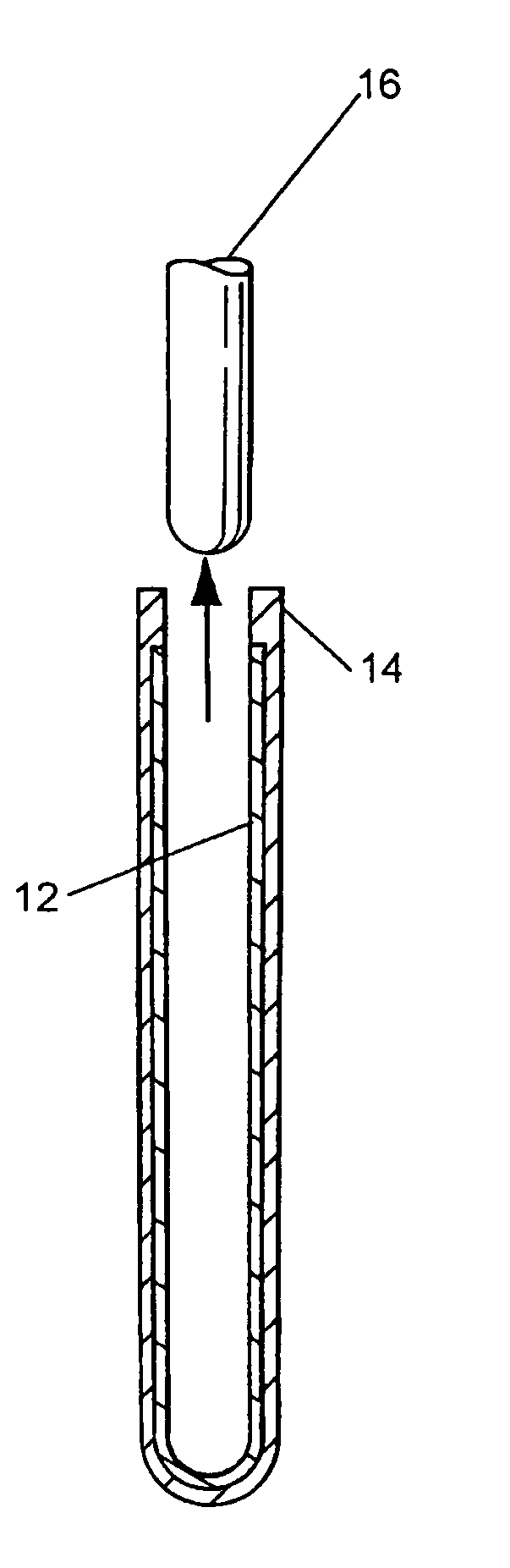
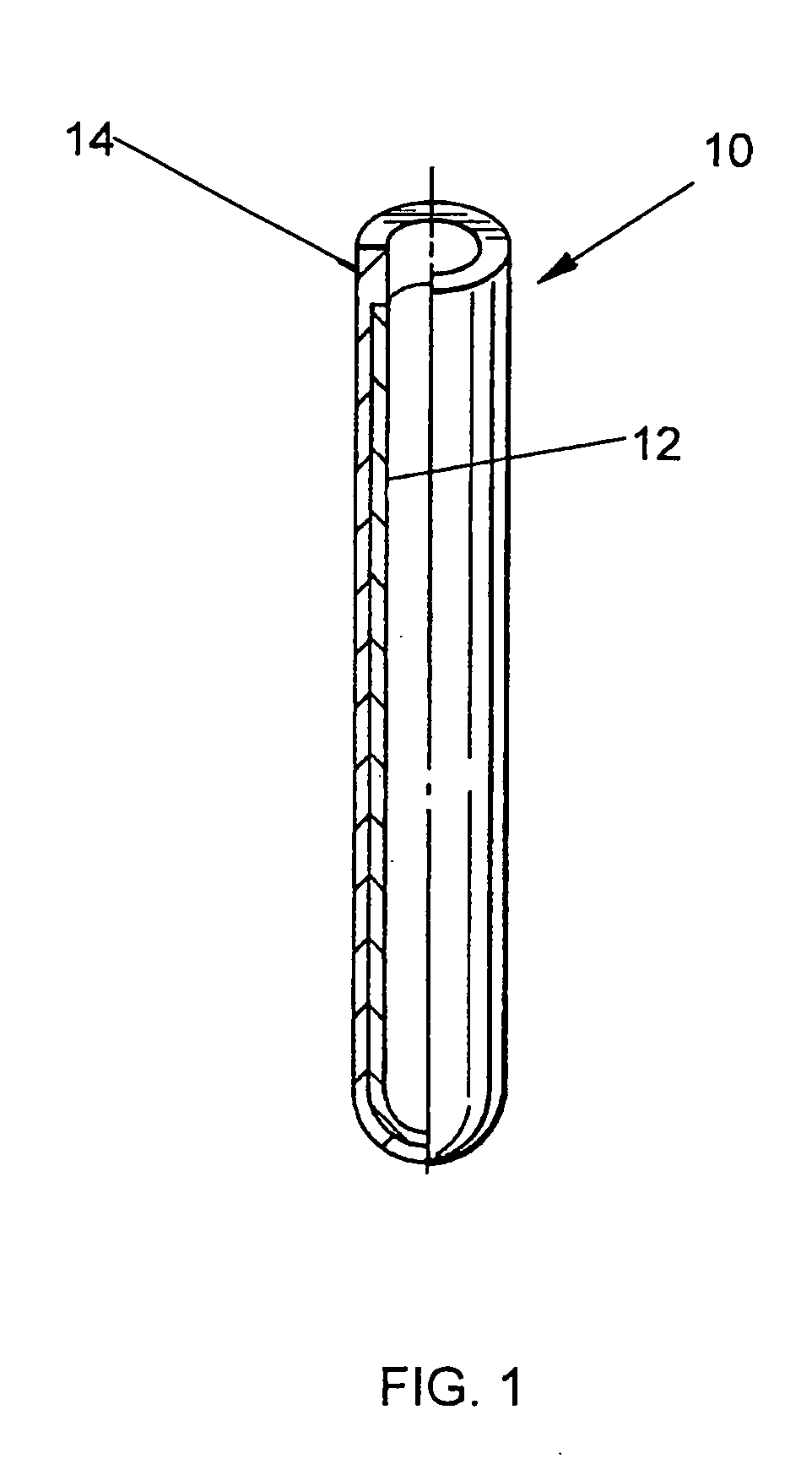
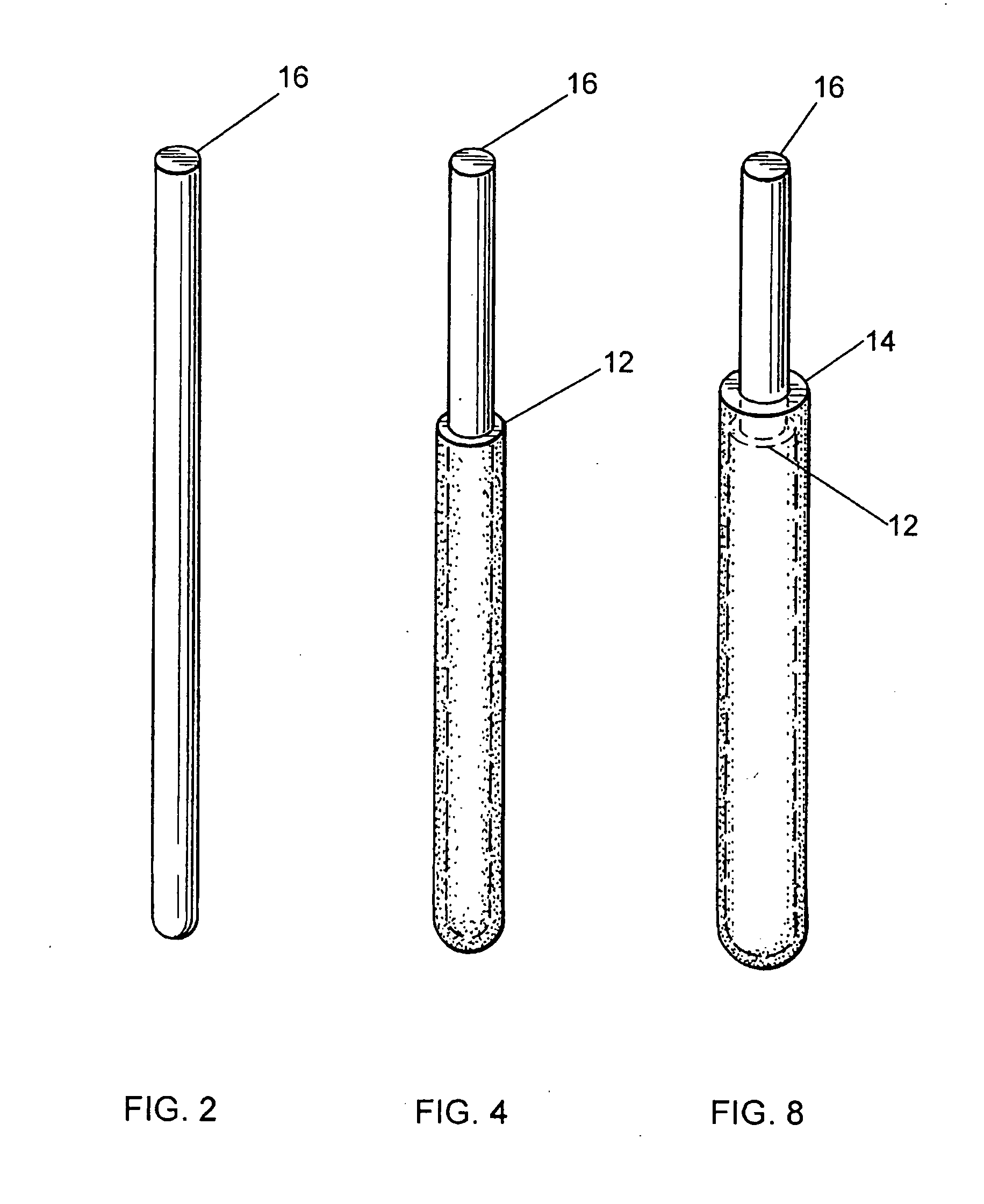
[0017]Referring to the drawings, FIG. 1 illustrates an example of a clad tube formed by the process described below. The tube 10 is generally comprised of an inner liner of rhenium 12 and outer layer of niobium alloy 14.
[0018]The process of forming the tube is comprised of several steps.
[0019]A graphite mandrel 16, seen in FIG. 2, that has been machined to the desired final geometry of the inner diameter of the tube 10 is placed in an electro deposit chamber 18 as the cathode material as illustrated in FIG. 3.
[0020]Rhenium stock 20 is placed in the electro deposit chamber 18 as the anode material. It is preferable to use refined rhenium. The chloride electrolyte 22 is placed in the electro deposit chamber 18. The chamber 18 is sealed and heating elements 24 are used to heat the electrolyte 22 to a desired temperature at less than 800 degrees Celsius. The electrolyte is a non-toxic molten salt mixture. Current and voltage are applied from a power source 26 to the mandrel cathode 16 a...
PUM
| Property | Measurement | Unit |
|---|---|---|
| temperature | aaaaa | aaaaa |
| temperature | aaaaa | aaaaa |
| temperature | aaaaa | aaaaa |
Abstract
Description
Claims
Application Information
 Login to View More