[0007]Based on some of all of the foregoing, there is an industry need for a numerical, graphical, or
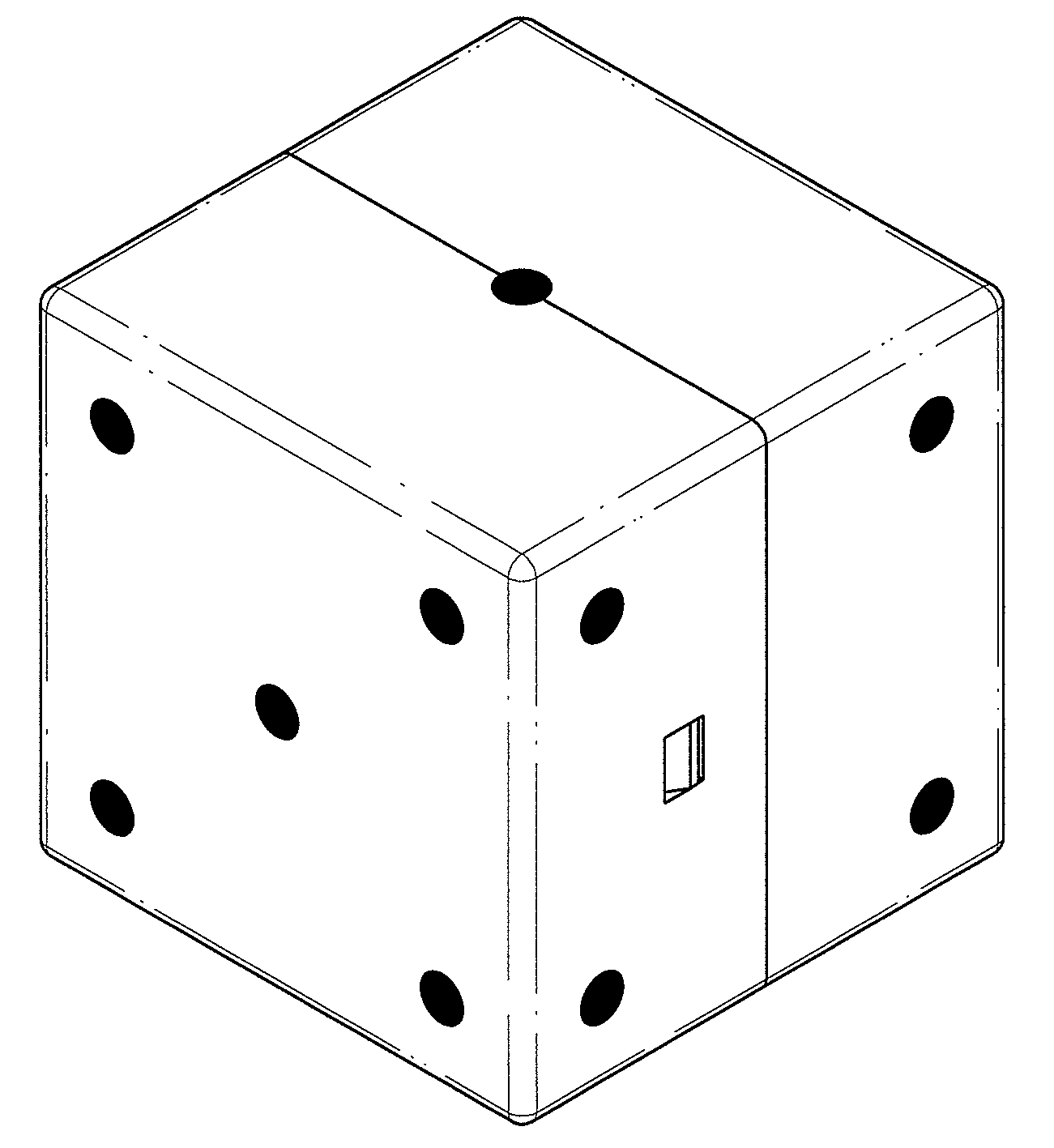
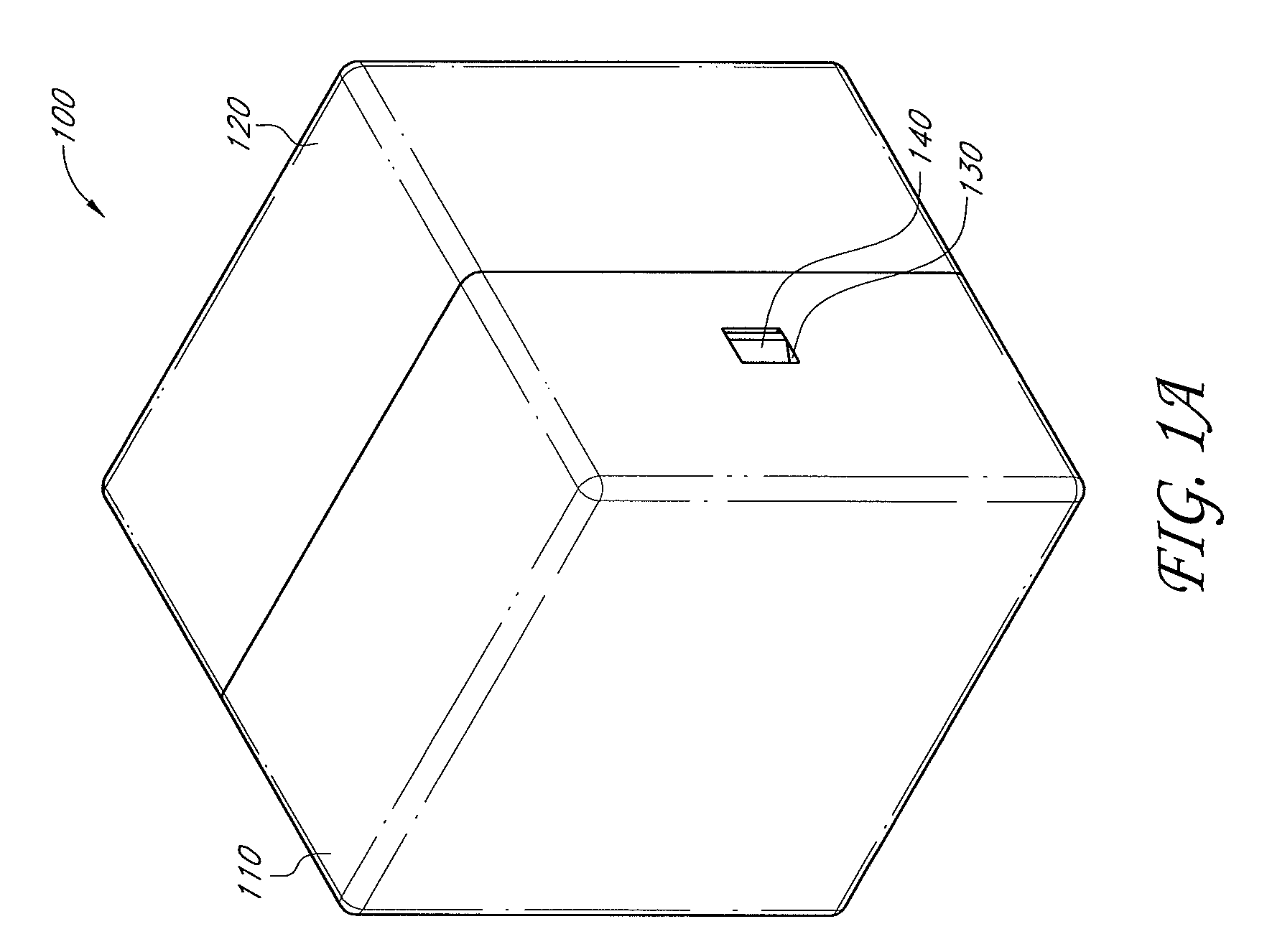
alphanumeric gaming die, and more specifically electronic gaming die. Moreover, there is also an industry need for dice with differentiating features and to protect the original shape and finish game pieces and surrounding areas against damage generally associated with normal use. Aspects of the present disclosure include an electronic die that detects and reports roll results to a monitoring device. In an embodiment, the electronic die allows a user to experience the
tactile sensation of throwing or rolling dice while providing a
wireless interface over which the roll results are transmitted. In some embodiments,
electronics for detecting and reporting roll results can be self-contained, minimizing the need for additional equipment.
[0009]Aspects of the present disclosure also include weight balancing the electronic die. The weight balancing helps increases a likelihood that each face is approximately equally likely to appear as a roll result.
[0015]The use of
electronics to keep track of dice roll results can provide substantial advantages in casino and other traditional gaming. Video games and
personal computer games, for example, could incorporate roll results to enhance
game play. The popularity of game systems such as the Nintendo® Wii™ have provided examples of the strong desire for interactive play with game controllers that to at least some degree measure or
record physical gestures. Board games,
plug and play television devices, and DVD games can also incorporate roll results to enhance
game play. In another setting, casinos can expand the number of players at a craps table, for example, by allowing online, real-time bet placement with semi-automated dealers based on identifying the outcome of rolled dice.
[0018]Based on at least the foregoing, a need exists for a straightforward, easily portable, protective device for reducing potentially damaging dings and chips consistent with both short and long term normal use for electronic game pieces. In an embodiment, a protective cover is placed over some or all of the edges of a game piece. For example, in the instance of a die, a cover may comprise a pliable rubber jacket that friction fits over one or more extremities. In an embodiment, the pliable jacket may be pre-formed to substantially match a particular game piece, or may be shaped to generically fit multiple game pieces and / or brands of game pieces. In an embodiment, the protective cover comprises a transparent material such that the finish of the game piece is readily viewable through the cover. In other embodiments, the cover may be
colored for aesthetic value. In an embodiment, the cover can remain on the game piece without changing, or at least without substantially changing or impacting the game performance piece.
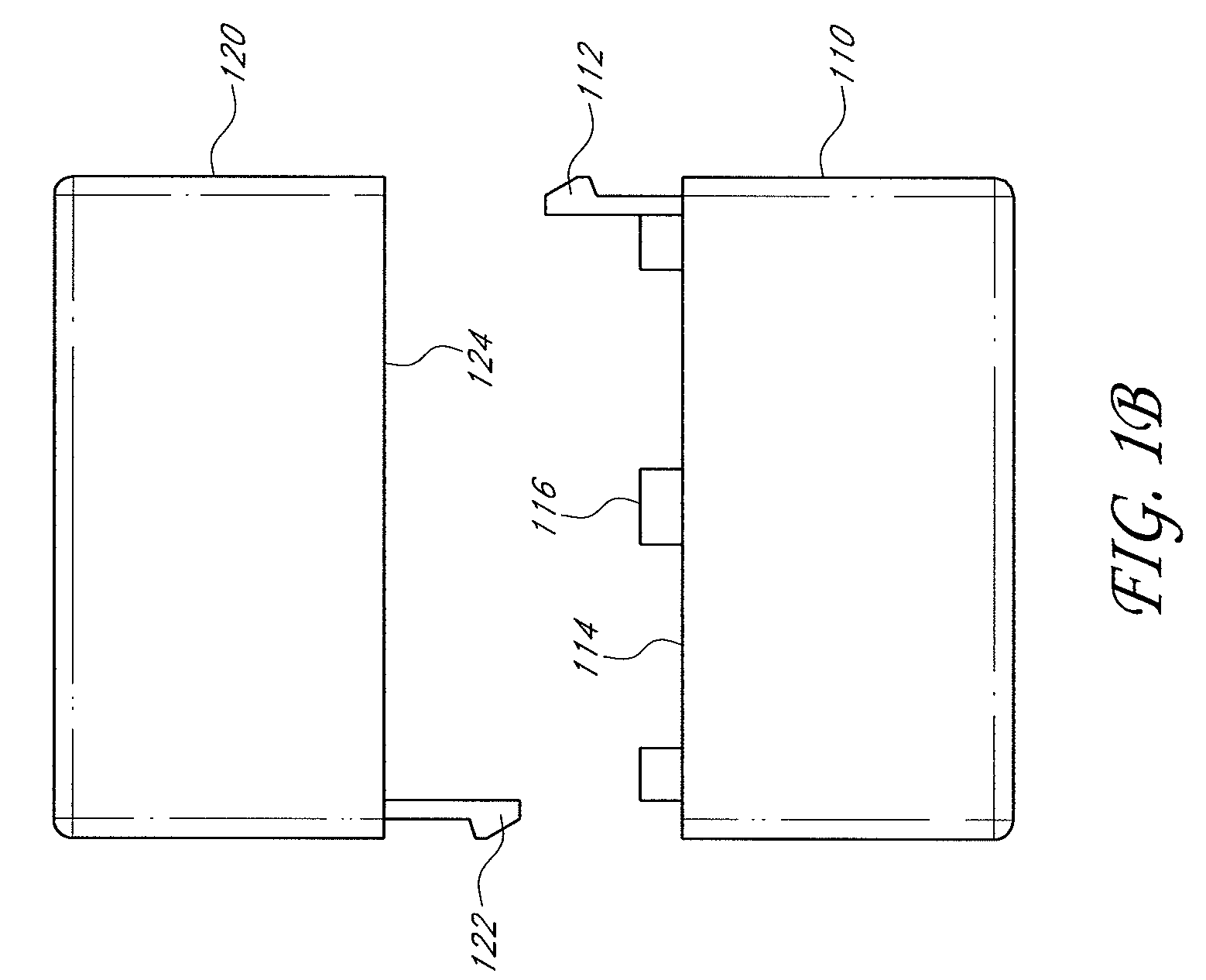
[0021]A need also exists for customizing game pieces for use in additional games. In an embodiment, reversible faceplates attached to a die. The faceplates can include different indicators on each side, allowing for user customization and enhanced
game play. For example, in the instance of a die, a faceplate may comprise a plastic piece that friction fits over one or more sides. In an embodiment, the faceplate may be pre-formed to substantially match a particular game piece, or may be shaped to generically fit multiple game pieces and / or brands of game pieces. In an embodiment, the faceplate comprises a reversible accessory with number indicators on one side and a different indicator on the other side. In other embodiments, the indicators may user definable. In an embodiment, the faceplate can remain on the game piece without changing, or at least without substantially changing or impacting the game performance piece, such as the roll characteristics of a die.



 Login to View More
  Login to View More