

Visual Prosthesis for Phosphene Shape Control
a technology of phosphene and prosthesis, applied in the field of neural stimulation, can solve the problems of large size, bulky prosthesis, and insufficient simulated vision for visually impaired, and achieve the effect of accurate video preproduction
- Summary
- Abstract
- Description
- Claims
- Application Information
AI Technical Summary
Benefits of technology
Problems solved by technology
Method used
Image

Examples
Embodiment Construction
[0032]The following description is of the best mode presently contemplated for carrying out the invention. This description is not to be taken in a limiting sense, but is made merely for the purpose of describing the general principles of the invention. The scope of the invention should be determined with reference to the claims.
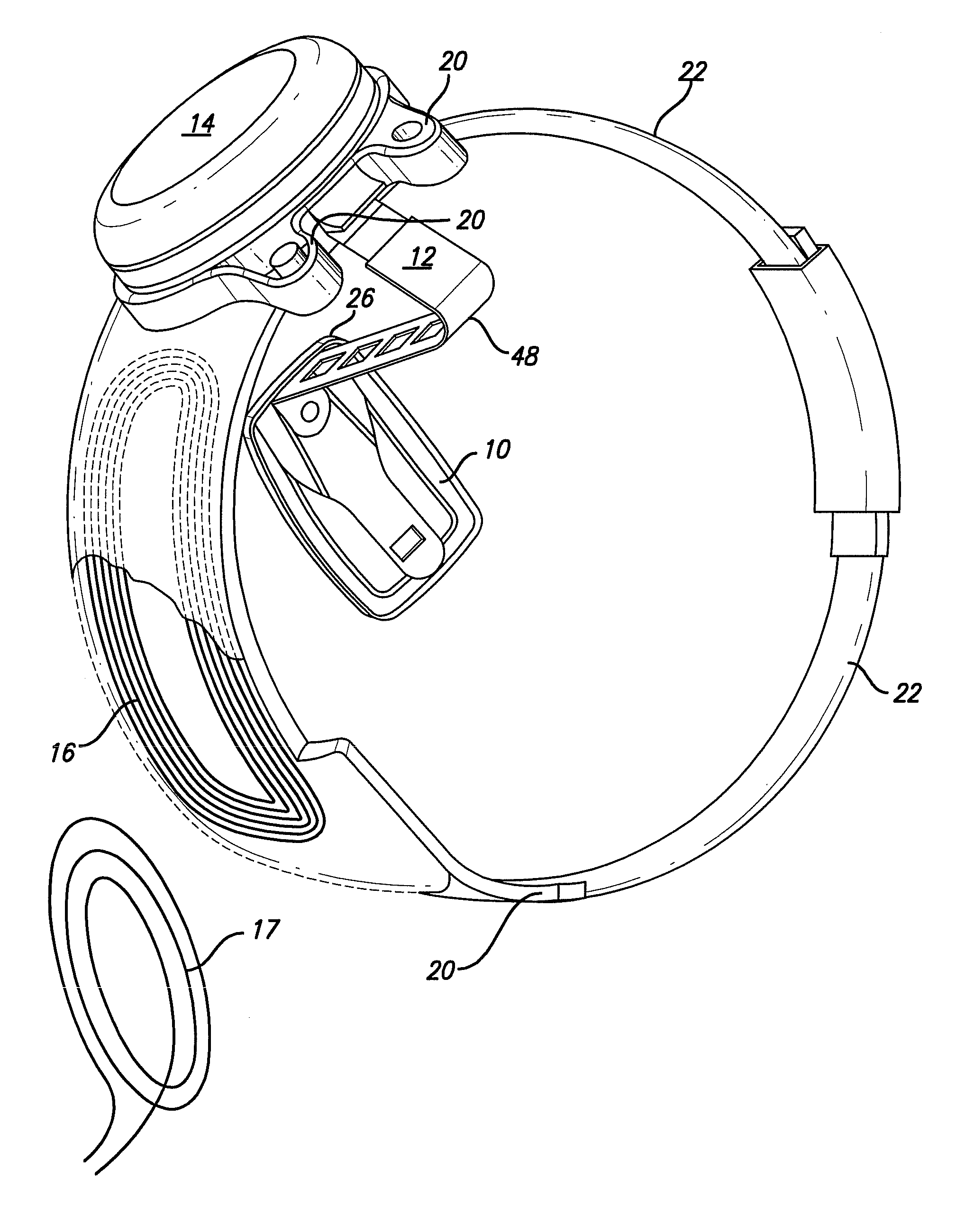
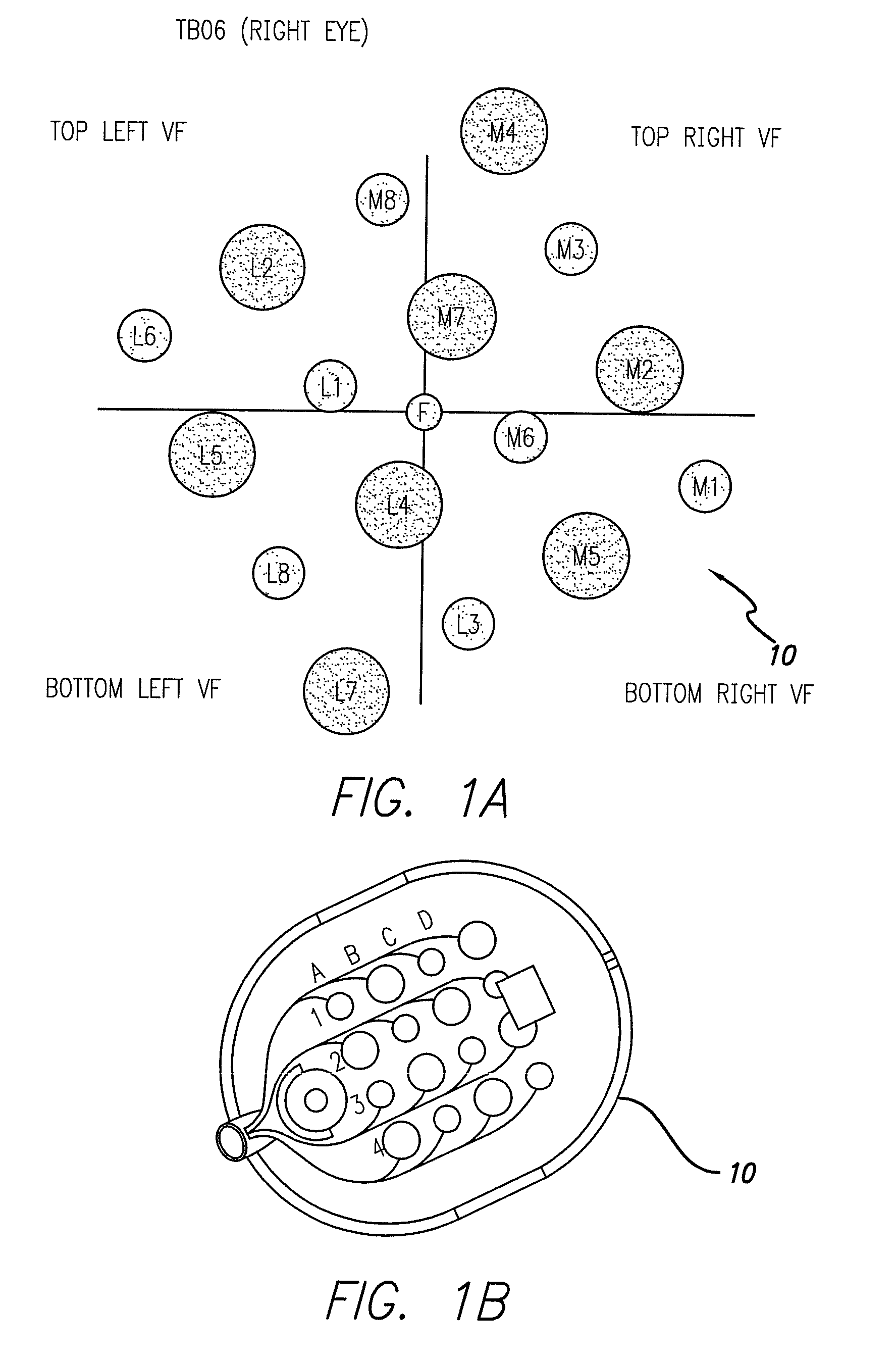
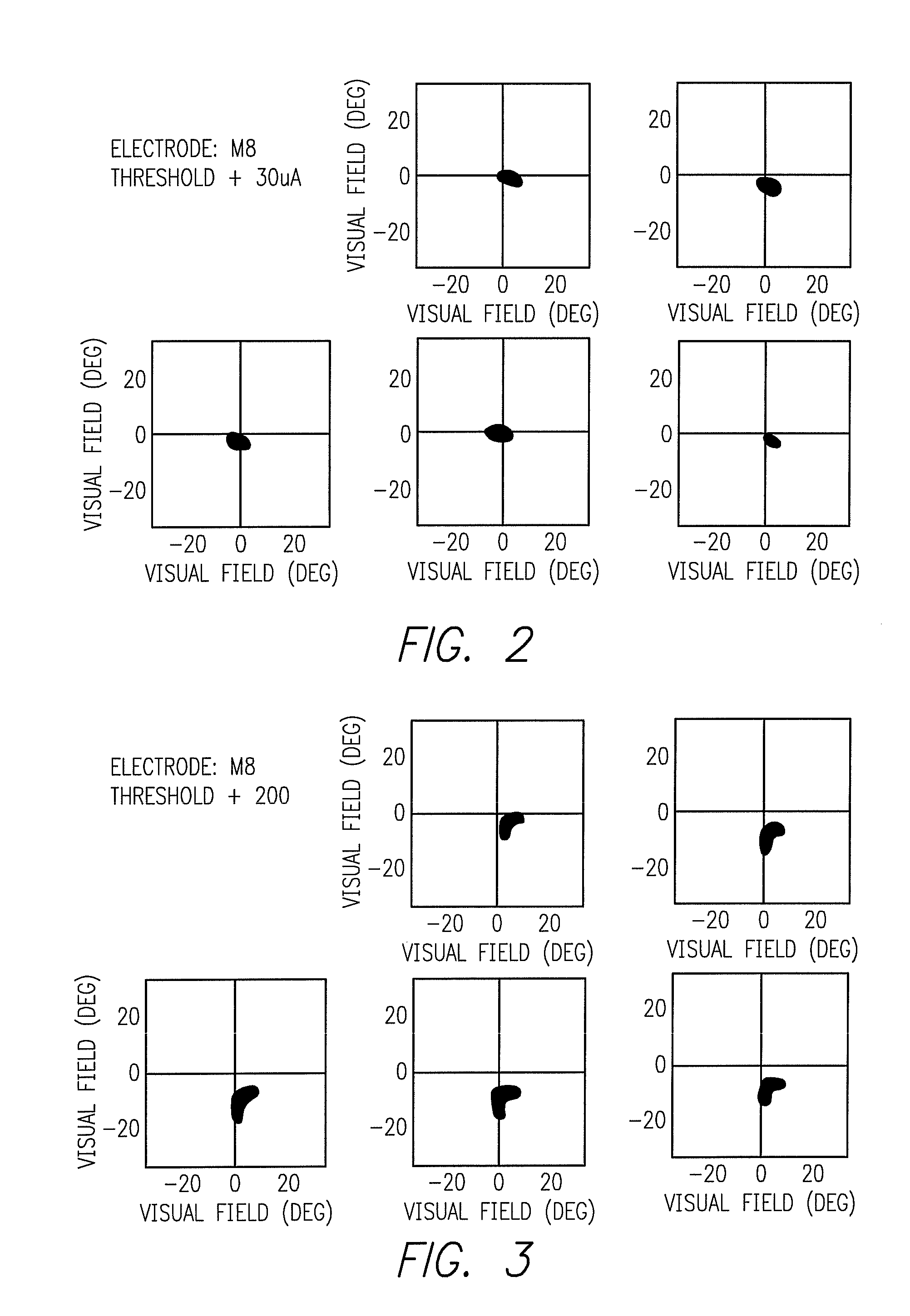
[0033]Retinal prosthesis systems elicit percepts by directly stimulating the inner retina, bypassing the functionality of the outer-retinal photoreceptors. The electrode array 10 is implanted in the macular region of the retina. Electrical signals are transmitted to the device through a neural stimulator 14. flex circuit cable 12 serves to connect the stimulator 14 with the epiretinal electrode array 10. Stimulation patterns are generated by either direct specification from a PC, or through a real-time head-mounted video camera capture and processing system. The PC / camera information is transmitted wirelessly to the stimulator vai tuned coils 16 and 17. An i...
PUM
 Login to View More
 Abstract
Description
Claims
Application Information
 Login to View More