
Program verify method for otp memories
a verification method and otp memory technology, applied in the field of nonvolatile memories, can solve the problems of low program speed of otp memory, and low breakdown voltage of salicided transistors, so as to achieve the effect of mitigate at least one disadvantage of prior otp memory
- Summary
- Abstract
- Description
- Claims
- Application Information
AI Technical Summary
Benefits of technology
Problems solved by technology
Method used
Image

Examples
Embodiment Construction
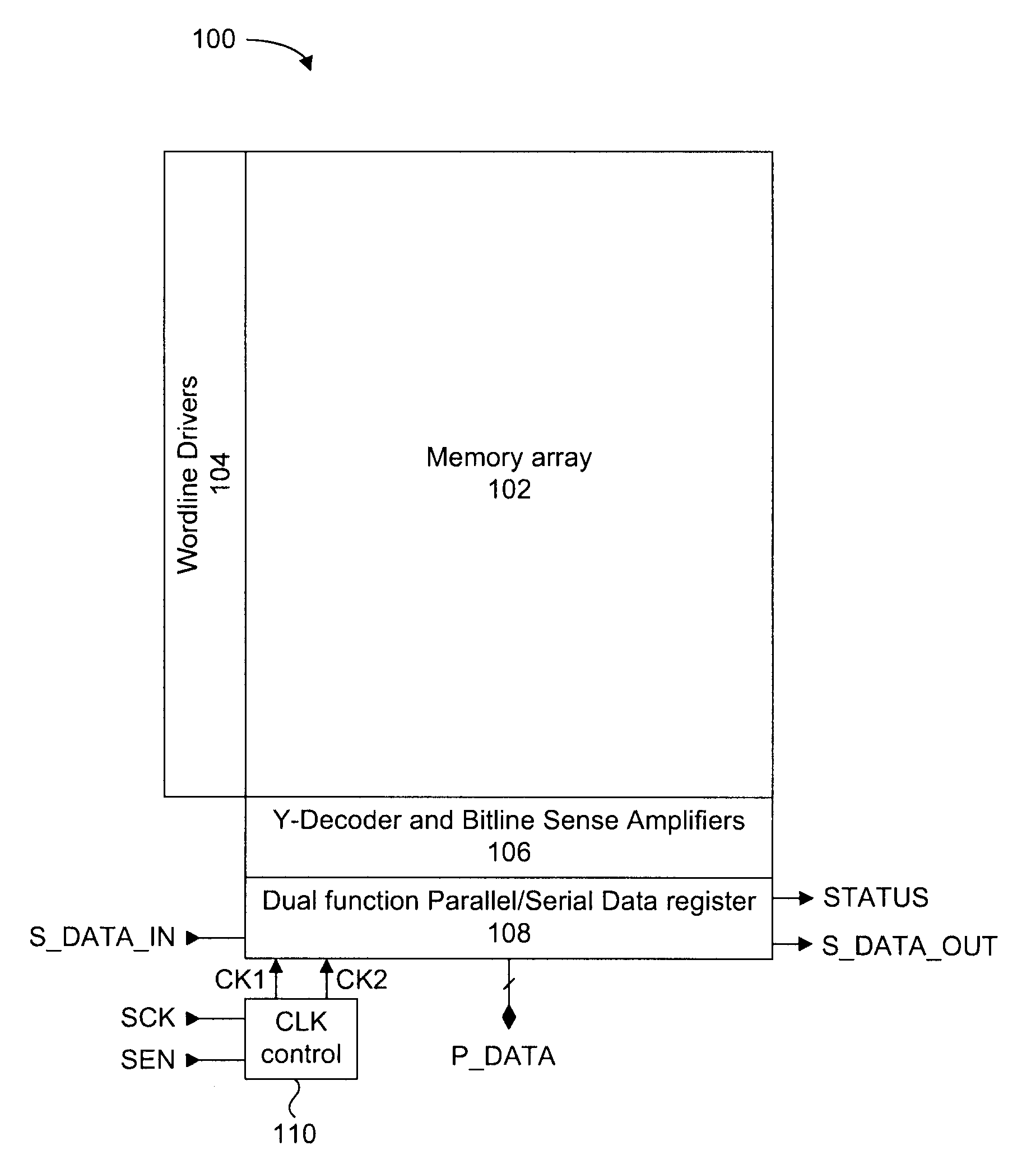
[0060]Generally, the present invention is directed to a dual function serial and parallel data register with integrated program verify functionality. The dual function serial and parallel operation gives the user the option for serial or parallel data interfacing in a single circuit, while integrating program verify functionality for reducing circuit logic overhead by utilizing the master and slave latching circuits of the data register to concurrently store two different words of data. In a program verify operation, the master latch stores program data and the slave latch will receive and store read data. Comparison logic in each register stage will compare the data of both latches and integrate the comparison result to that of the previous register stage. The final single bit result will indicate the presence of at least one bit that has not been programmed. If reprogramming is necessary, automatic program inhibit logic in each stage will prevent successfully programmed bits from ...
PUM
 Login to View More
 Abstract
Description
Claims
Application Information
 Login to View More