
Loudness Measurement with Spectral Modifications
a loudness measurement and spectral modification technology, applied in the field of audio signal processing, can solve the problems of described objective loudness measurements not matching subjective impressions accurately for certain types of audio signals, and the psychoacoustic methods are typically more complex
- Summary
- Abstract
- Description
- Claims
- Application Information
AI Technical Summary
Benefits of technology
Problems solved by technology
Method used
Image

Examples
Embodiment Construction
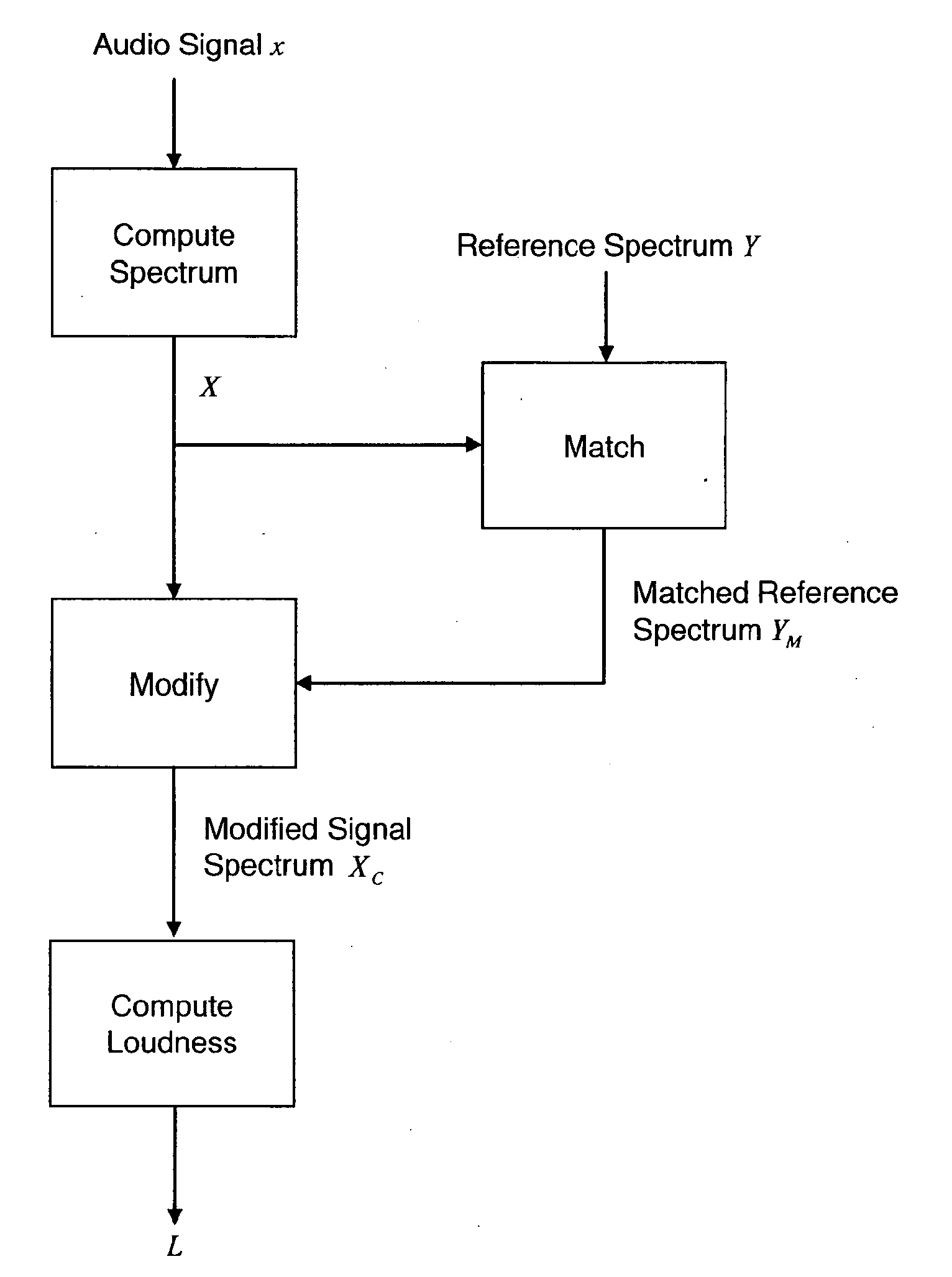
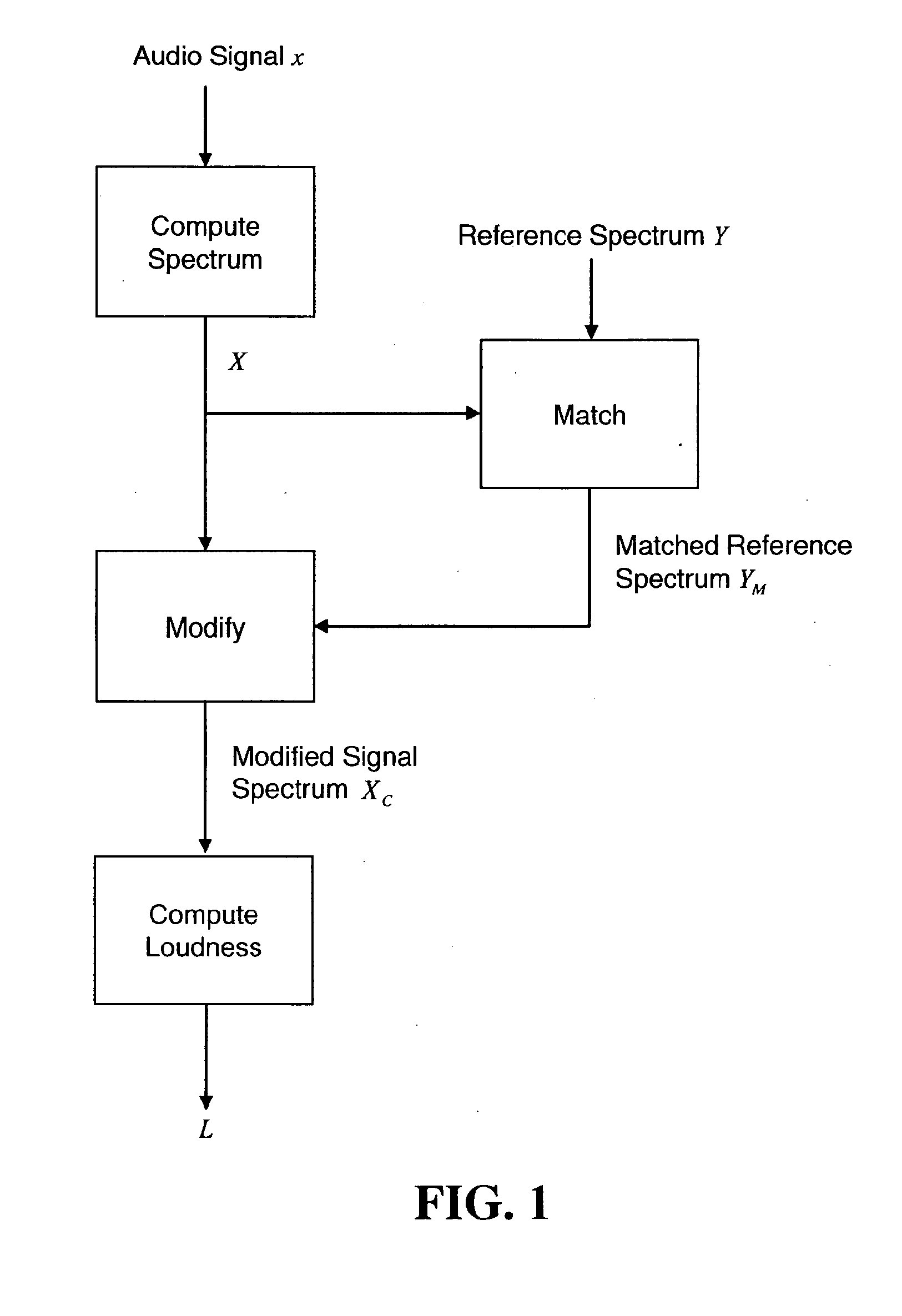
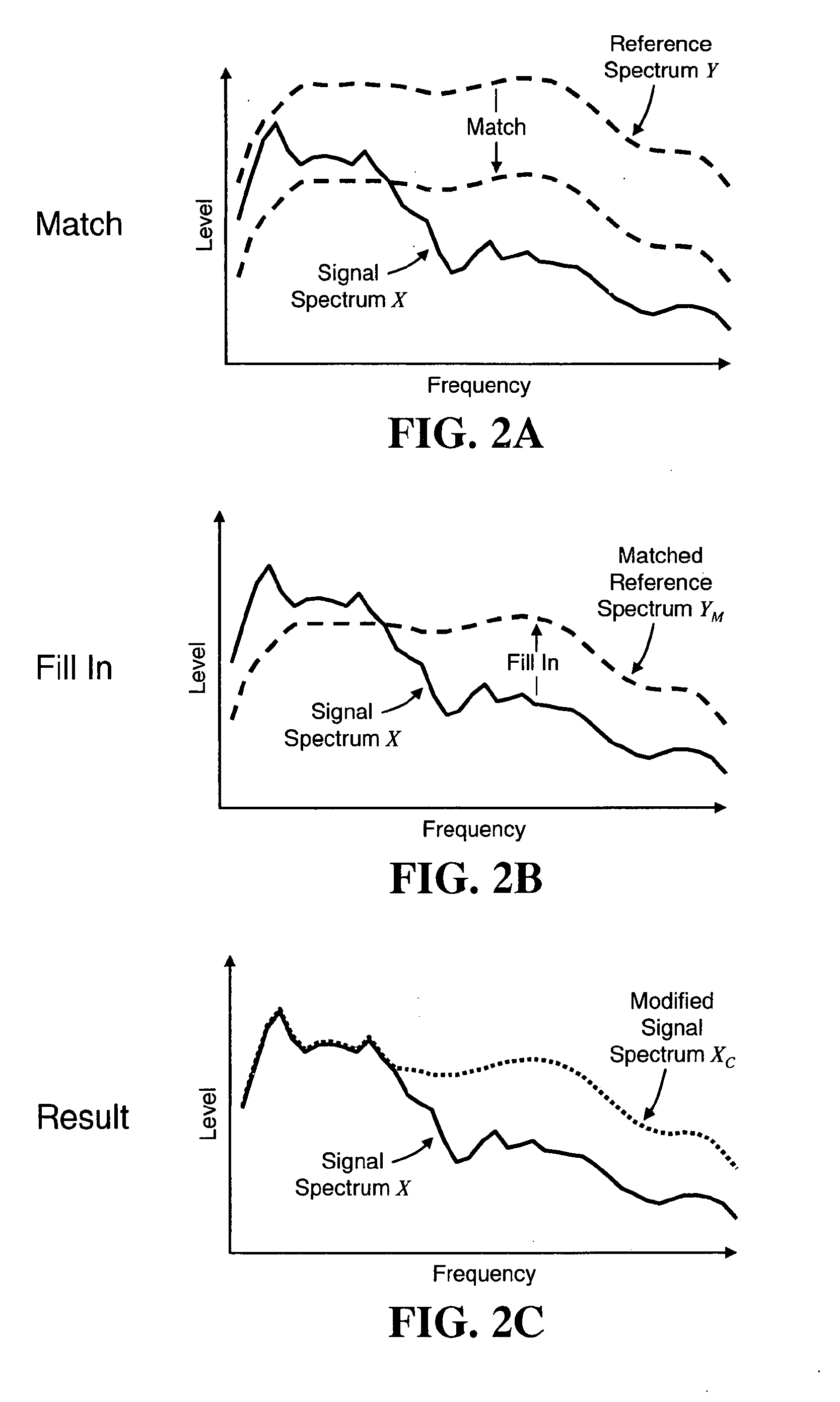
[0018]In a general sense, all of the objective loudness measurements mentioned earlier (both weighted power measurements and psychoacoustic models) may be viewed as integrating across frequency some representation of the spectrum of the audio signal. In the case of weighted power measurements, this spectrum is the power spectrum of the signal multiplied by the power spectrum of the chosen weighting filter. In the case of a psychoacoustic model, this spectrum may be a non-linear function of the power within a series of consecutive critical bands. As mentioned before, such objective measures of loudness have been found to provide reduced performance for audio signals possessing a spectrum previously described as “narrowband”.
[0019]Rather than viewing such signals as narrowband, the inventor has developed a simpler and more intuitive explanation based on the premise that such signals are dissimilar to the average spectral shape of ordinary sounds. It may be argued that most sounds enco...
PUM
 Login to View More
 Abstract
Description
Claims
Application Information
 Login to View More