
Vehicle traction control system
a traction control system and vehicle technology, applied in the direction of tractors, process and machine control, instruments, etc., can solve the problems of reducing vehicle performance, reducing engine power or a brake activation of the spun-up wheel, and reducing vehicle performan
Patent Information
- Authority / Receiving Office
- US · United States
- Patent Type
- Applications(United States)
- Current Assignee / Owner
- Publication Date
- 2010-03-25
- Estimated Expiration
- Not applicable · inactive patent
Smart Images
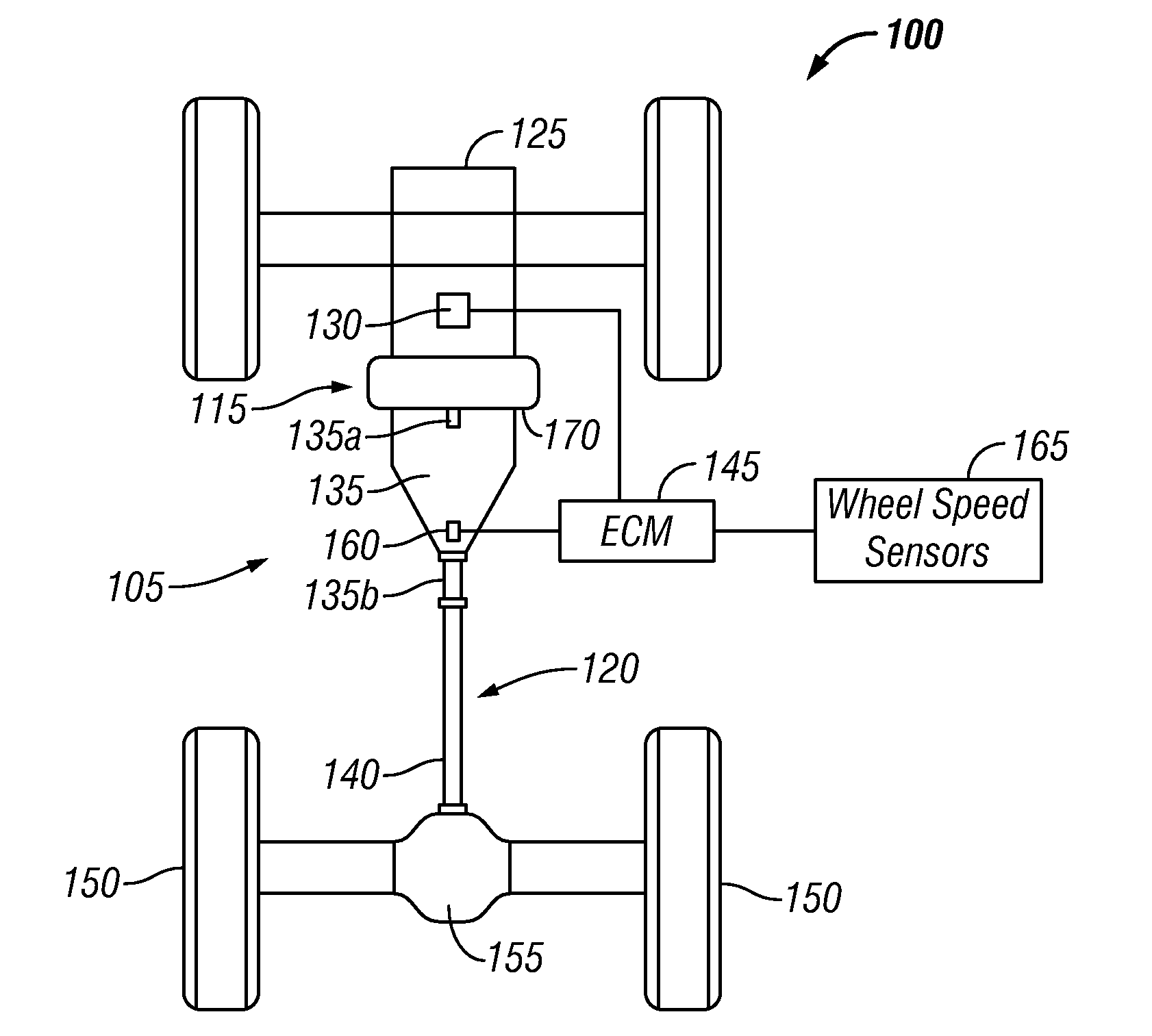
Figure 1 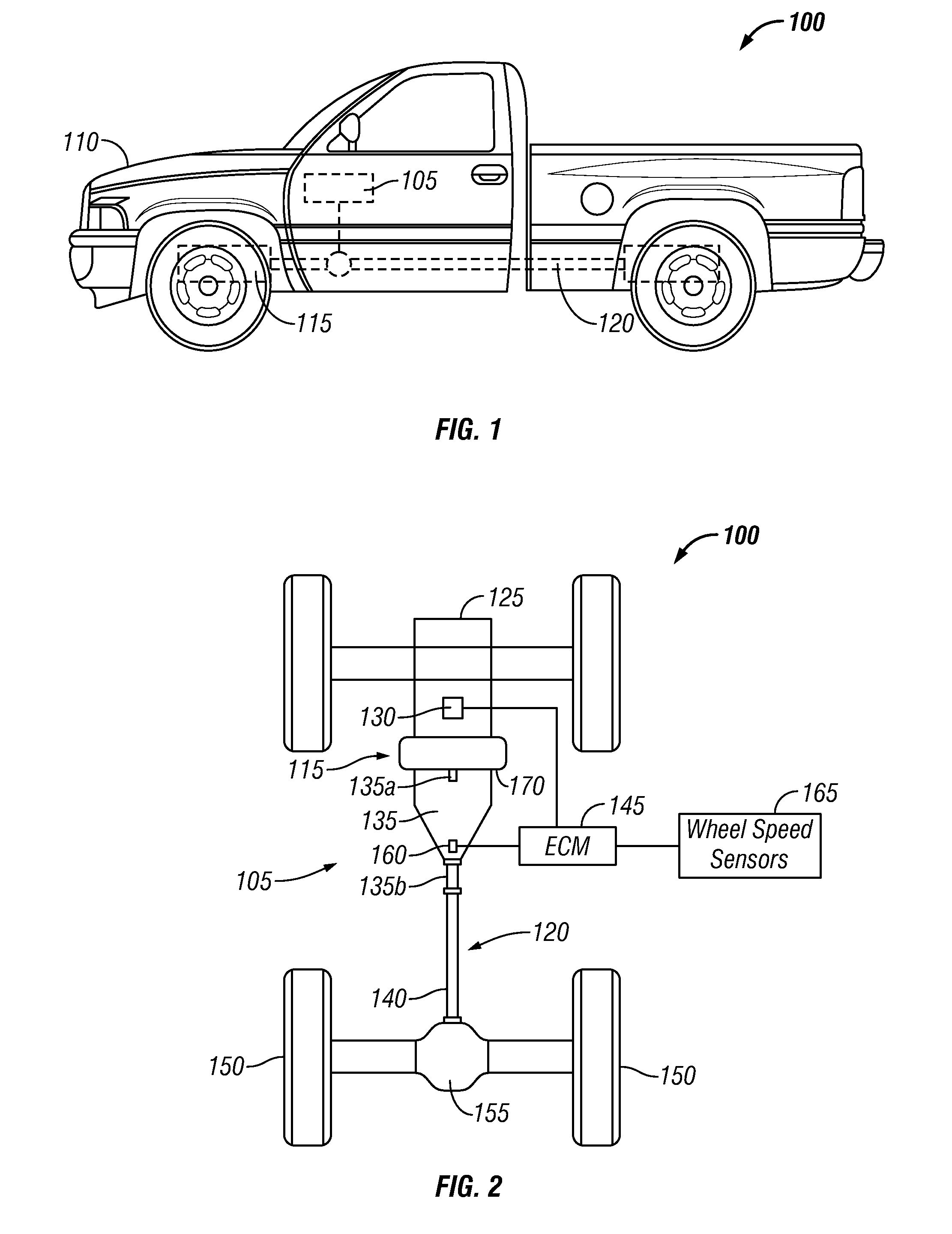
Figure 2 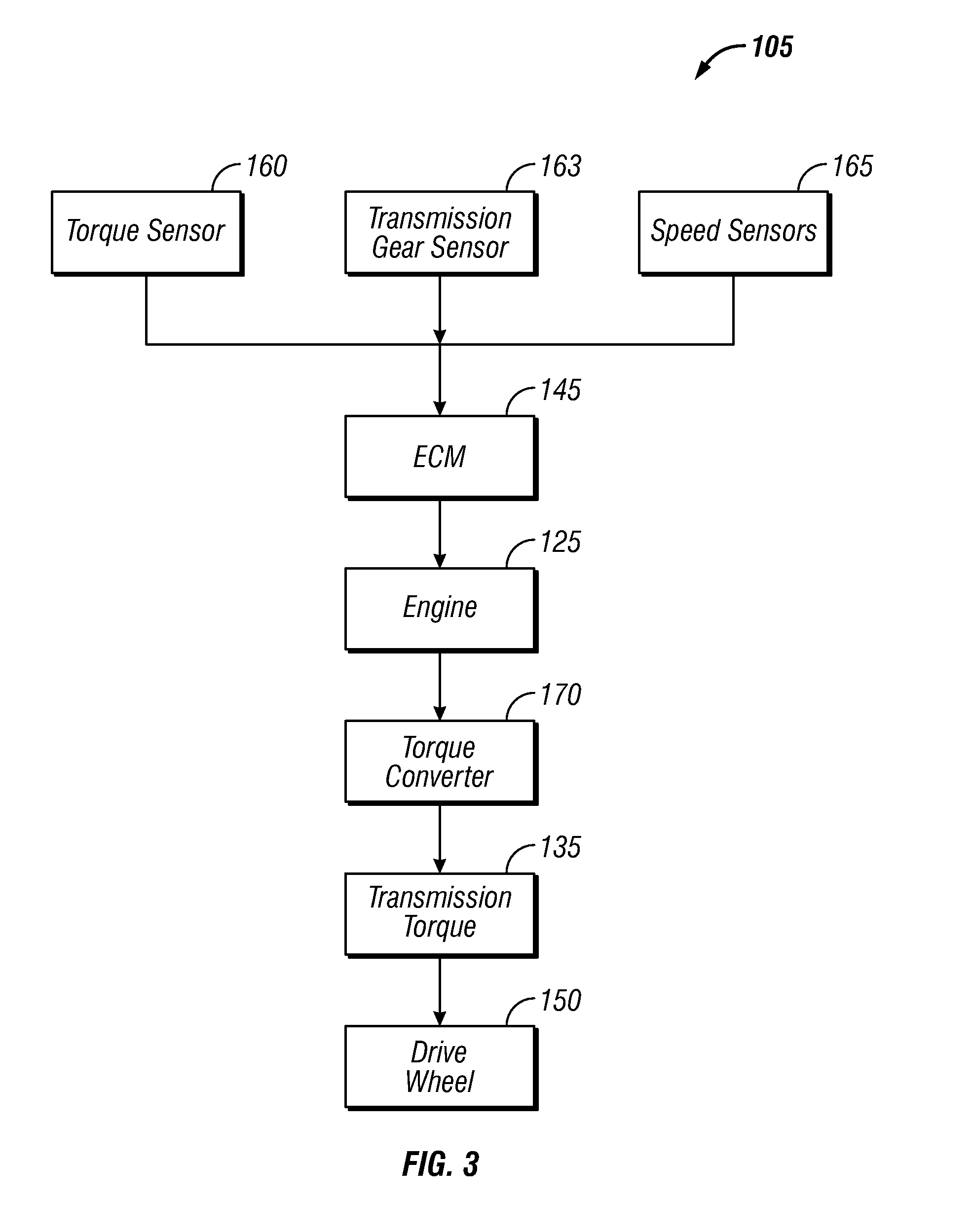
Figure 3
Abstract
Description
TECHNICAL FIELD
[0001] Embodiments are generally related to vehicle traction control systems. Embodiments are also related to torque sensors. Embodiments are further related to control techniques for optimizing traction.BACKGROUND OF THE INVENTION
[0002] A Traction Control System (TCS) is designed to prevent loss of traction and, therefore, the control of a vehicle when excessive throttle or steering is applied by a driver. Vehicle traction controls can be utilized to sense, for example, wheel slip under non-braking conditions and control one or both of the vehicle brakes or engine to spin down the driven wheels as necessary to regain traction. The wheel spin-up activates the traction control system, which causes a reduction in engine power or a brake activation of the spun-up wheel, which in turn may reduce vehicle performance at a time when it is most demanded. It is undesirable to merely retune the traction control system to ignore the spin-up because the action of the traction contr...
Examples
Embodiment Construction
[0016]The particular values and configurations discussed in these non-limiting examples can be varied and are cited merely to illustrate at least one embodiment and are not intended to limit the scope thereof.
[0017]Referring to FIGS. 1 and 2, a vehicle 100 is illustrated which includes a torque sensor traction control system 105, in accordance with a preferred embodiment. The vehicle 100 generally includes a body 110, a power train 115 and a driveline 120. Note that in FIGS. 1-4, identical parts or elements are generally indicated by the same reference numerals. Note also that the embodiments discussed herein generally relate to a two-wheel drive configuration. It can be appreciated, however, that such embodiments can be implemented in the context of other vehicles having other types of drivelines, including those having more than two drive wheels. The discussion of two-wheel drive configuration, as utilized herein, is presented for general illustrative purposes only.
[0018]Thus, for...