
Sensor unit and procedure for monitoring intracranial physiological properties
a sensor unit and physiological technology, applied in the field of implantable medical devices and monitoring systems, can solve the problems of occlusion and blockage, need for repositioning and balancing, and risk of infection, and achieve the effects of reducing infection risk and patient discomfort, accurate placement of sensing elements, and increasing patient mobility
- Summary
- Abstract
- Description
- Claims
- Application Information
AI Technical Summary
Benefits of technology
Problems solved by technology
Method used
Image

Examples
Embodiment Construction
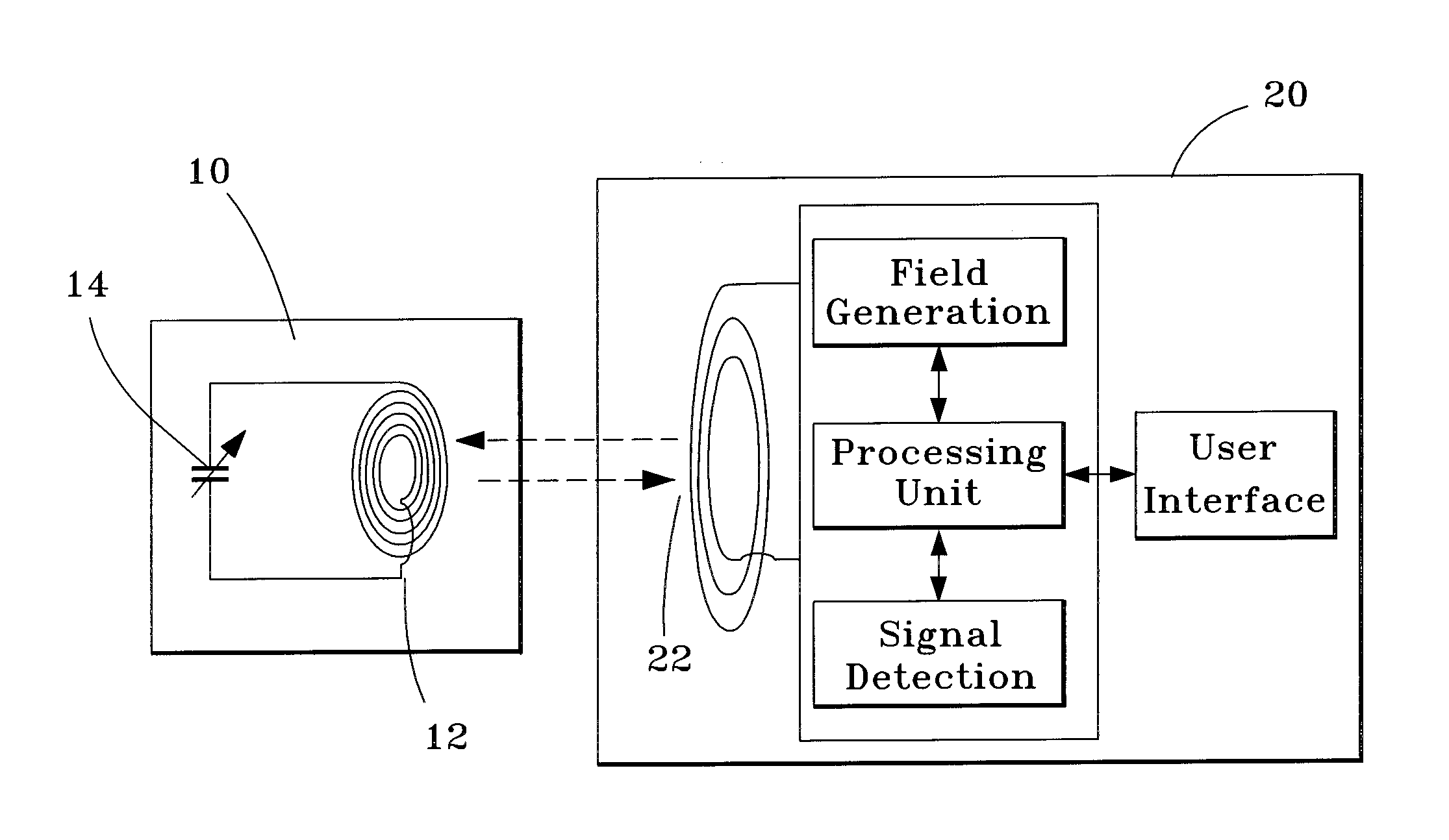
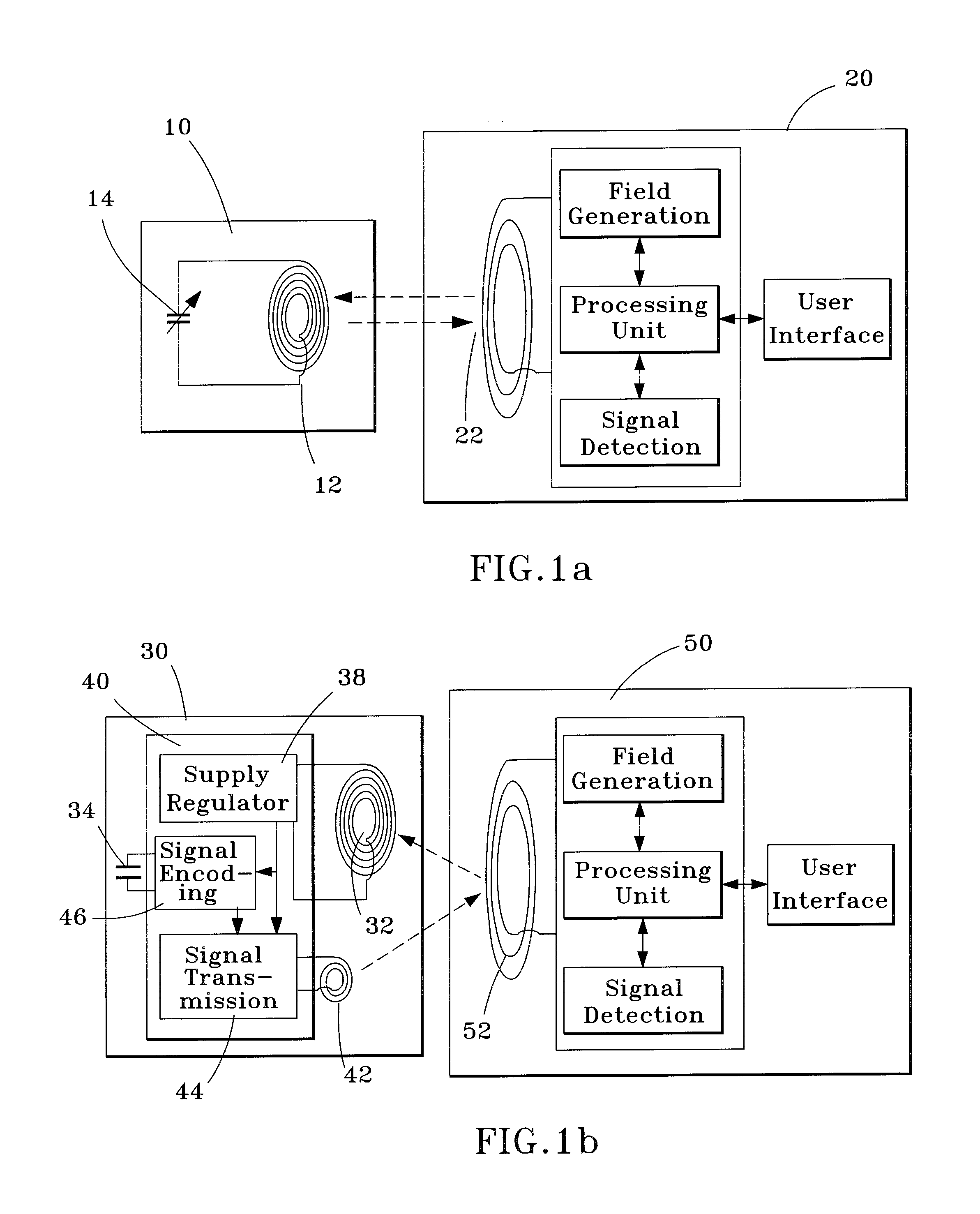
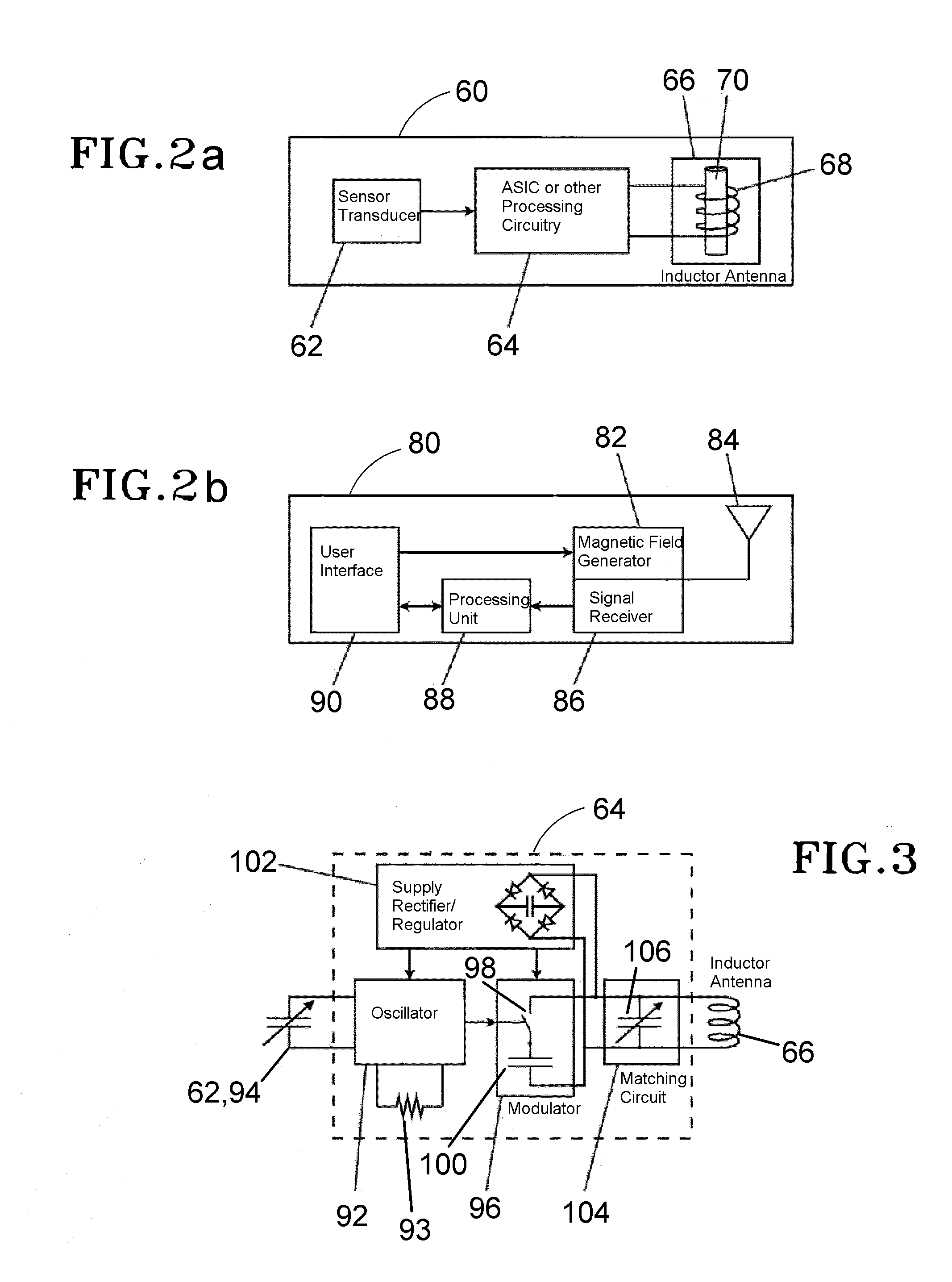
[0019]FIGS. 1a through 4 schematically illustrate monitoring systems and components thereof that implement one or more implantable sensing devices (10,30,60) adapted to be placed through a hole in the skull of a patent for monitoring one or more intracranial physiological parameters, a notable but nonlimiting example of which is intracranial pressure (ICP). Each monitoring system preferably makes use of a readout unit (20,50,80) adapted to wirelessly communicate with the sensing device. The sensing device is placed at a desired location within the skull with an anchor 120, of which several embodiments are shown in FIGS. 5 through 8. Together, the sensing device and its anchor 120 define a sensor unit 150. Because the sensing device communicates wirelessly with a readout unit, the sensor unit 150 lacks a wire, cable, tether, or other physical component that conducts the output of the sensing device to the readout unit or another processing or transmission device outside the body of a...
PUM
 Login to View More
 Abstract
Description
Claims
Application Information
 Login to View More