
Hormone responsive tissue culture system and uses thereof
a tissue culture system and hormone technology, applied in the field of hormone responsive tissue culture system, can solve problems such as difficult retrospectively identifying preciseness
- Summary
- Abstract
- Description
- Claims
- Application Information
AI Technical Summary
Benefits of technology
Problems solved by technology
Method used
Image

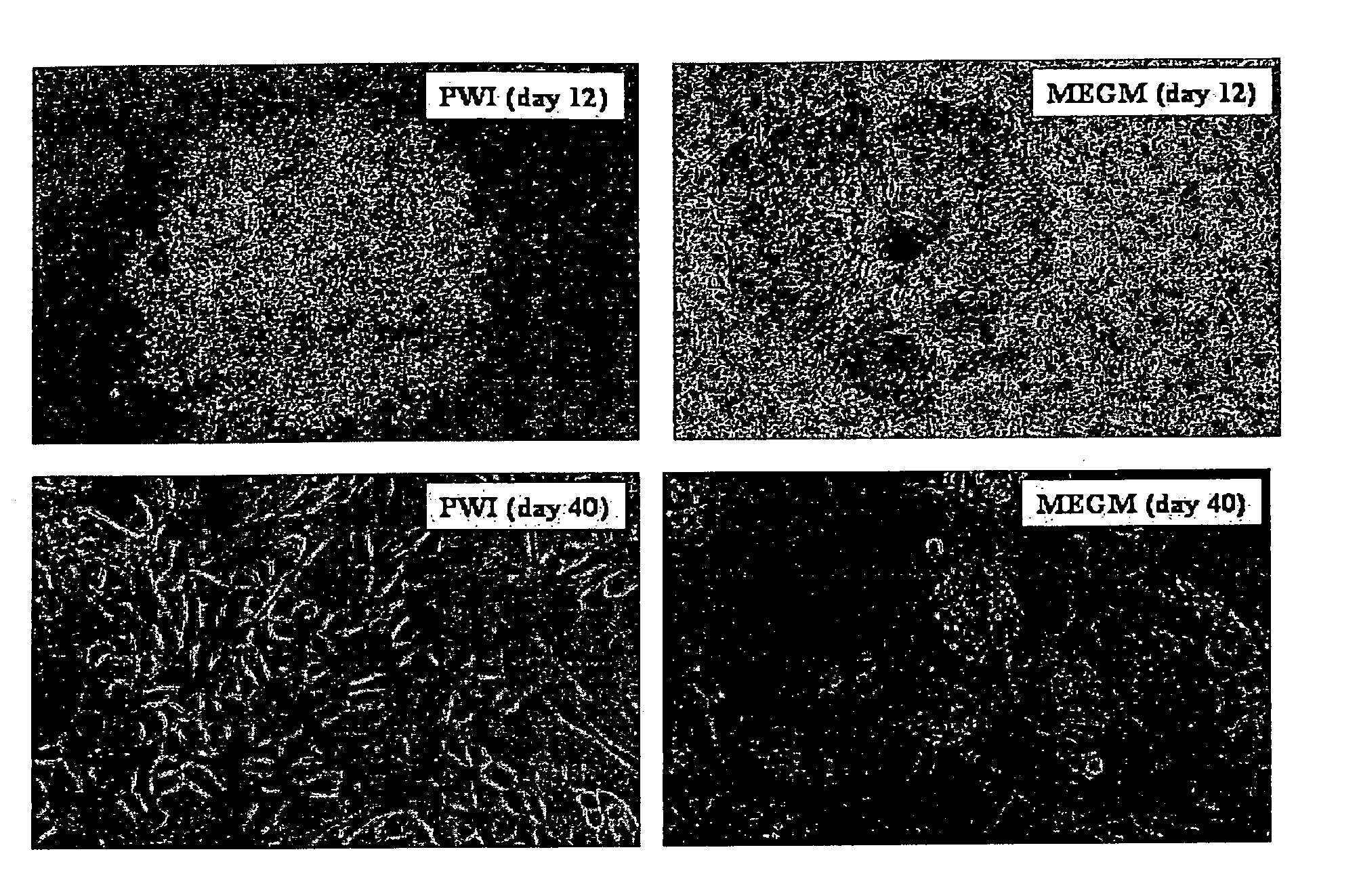
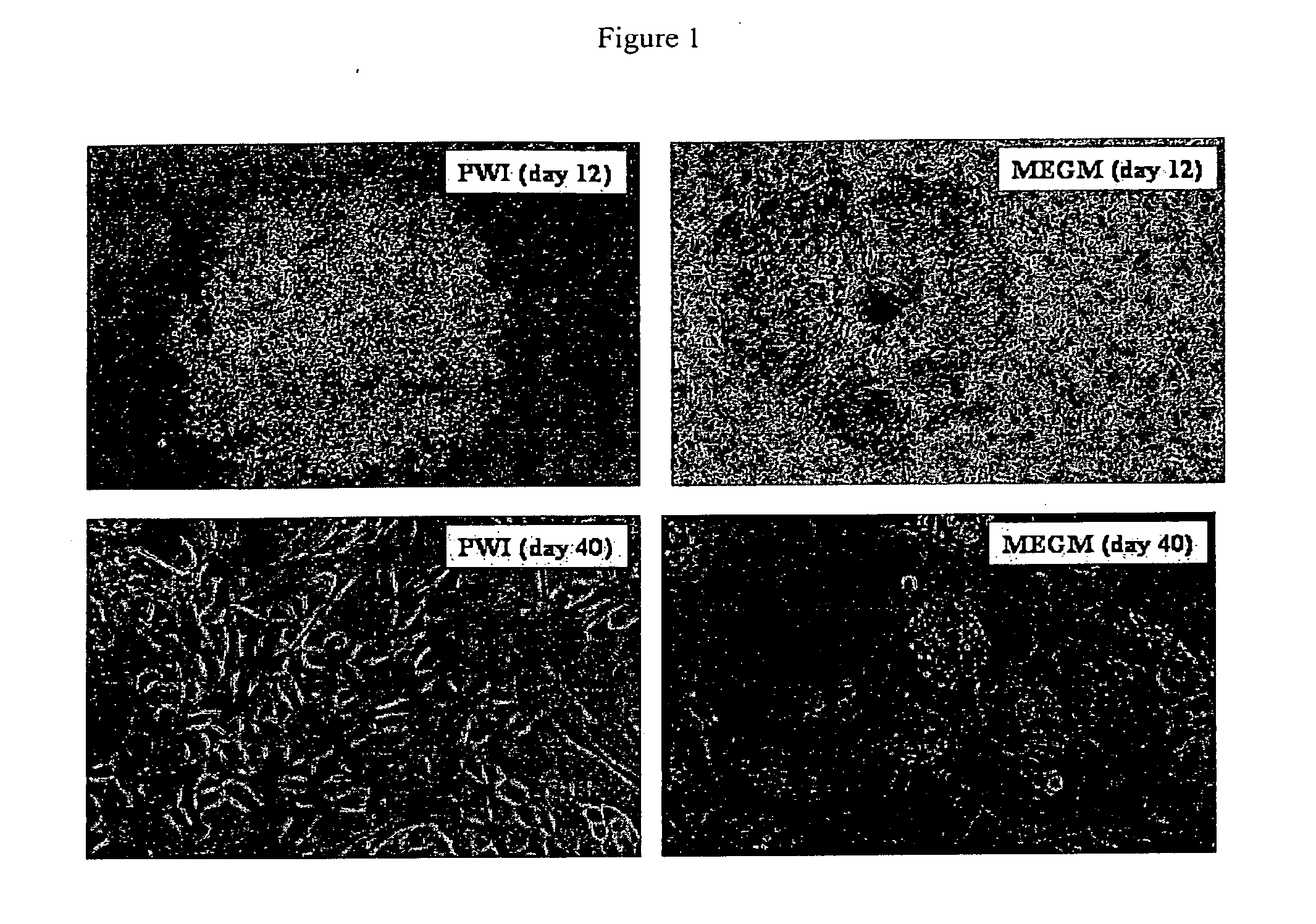
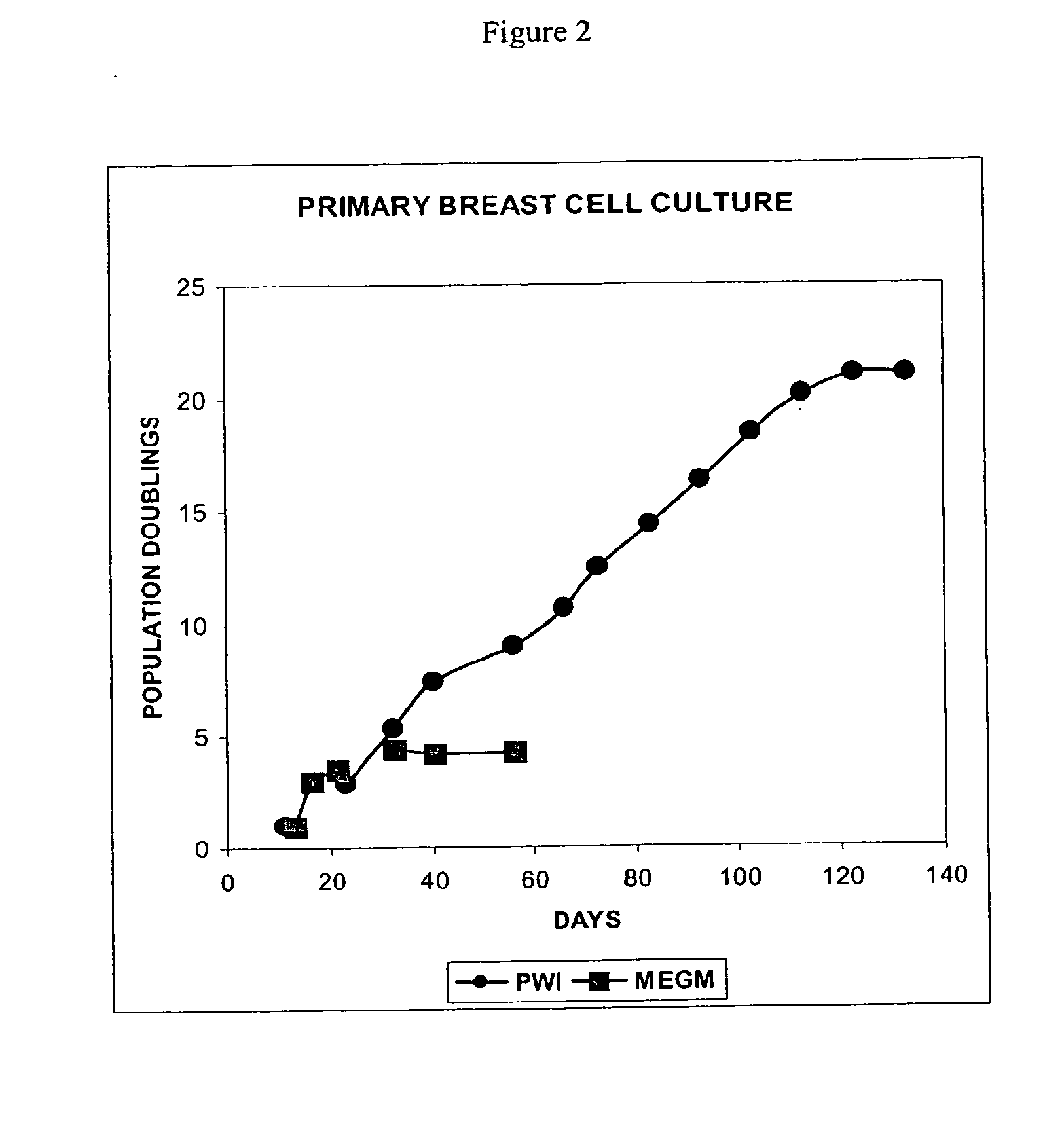
Examples
examples
[0353]The following examples are for illustrative purpose only, and should not be construed to be limiting in any respect of the claimed invention.
example i
Isolation of Primary Cells
[0354]1. Tissues are minced down to fragments about 1-2 mm in size, and digested with collagenase in Hank's buffered saline solution (HBSS) at 37° C. overnight.[0355]2. The resulting mixture of organoids that contain glandular cells are separated from single cells that are mostly stromal and myoepithelial by three consecutive rounds of centrifugation (5 min. at 300×g, 100×g and 50×g).[0356]3. The pellets and supernatants are collected in six fractions (300 g, 100 g and 50 g) and filtered through a 75 micrometer (μm) and 45 μm mesh.[0357]4. All filtered fractions are plated in Primaria™ tissue culture dishes in primary culture medium PWI (see below).[0358]5. The cells are grown for 7 days during which medium is changed every day.[0359]6. On day 8 and 9 plates are trypsinized with 0.025% trypsin removing all stromal cells.[0360]7. Epithelial cells are harvested with 0.15% trypsin and transferred to new Primaria™ plates in PWI medium.[0361]8. After one week ce...
example ii
Methods of Preparing the Media
[0363]The media disclosed herein can be made fresh every time from their individual components, which are commercially available from a variety of vendors, such as Sigma, Abott Lab., etc.
[0364]Alternatively, certain components of the media may be pre-made as high concentration stock solutions, which can be diluted to their final concentrations as listed in the Tables. The stock solutions should be appropriately stored according to the characteristics of the components, including stability at the storage temperature (e.g., liquid nitrogen, −80° C., −20° C., 4° C., room temperature or about 20-25° C., etc.), sensitiveness to light, natural half life in aqueous or organic solution, etc. Some stock solutions should be remade periodically to keep a fresh stock. The following lists at least one way of preparing several exemplary stock solutions. Other equivalent methods and similar (but not identical) concentration of stock solutions may also be used.
EGF (Epi...
PUM
 Login to View More
 Abstract
Description
Claims
Application Information
 Login to View More