

Process for manufacture of a thermochromic contact lens material
a manufacturing process and thermochromic technology, applied in the field of manufacturing contact lenses, can solve the problems of affecting the activation of the photoinitiator, the manufacturing process of contact lenses is also complicated, and the adaptation of certain technologies, including photochromic technology, is more difficult than that of adjusting the same technology to spectacles,
- Summary
- Abstract
- Description
- Claims
- Application Information
AI Technical Summary
Benefits of technology
Problems solved by technology
Method used
Image

Examples
example 1
Cure Temperature of 45° C.
[0069]A front curve mould (Zeonor) was pad printed with a dye base formed from 7% Dye-1 and 93% clear base (49.4 wt % Isopropyllactate, 12.4 wt % 1-Ethoxy-2-propanol, 0.9 wt % 1-Octanethiol, 1.63 wt % Glycerol, 35 wt % HEMA, 0.48% methacrylic acid, and 0.21 wt % Azobis-(2-methylbutyronitrile) (AMBM). The clear base was made by adding the 1-octanethiol, monomers and solvents, except for about 50-100 cc of the isopropyllactate, were mixed in a 5 liter blue cap bottle and stirred for 10 minutes. The mixture was then poured into a 5 L stainless steel reactor with stirrer and nitrogen. The mixture was stirred and heated for approximately 25 min. until the temperature was 68° C. After the temperature was stabilized at 68° C., the AMBN was dissolved in the remaining isopropyllactate and added while opening the nitrogen bleed. The polymerization was allowed to proceed for 16-24 hours after which the temperature was increased to 80° C. and the reaction was completed...
example 2
Cure Temperature of 50° C.
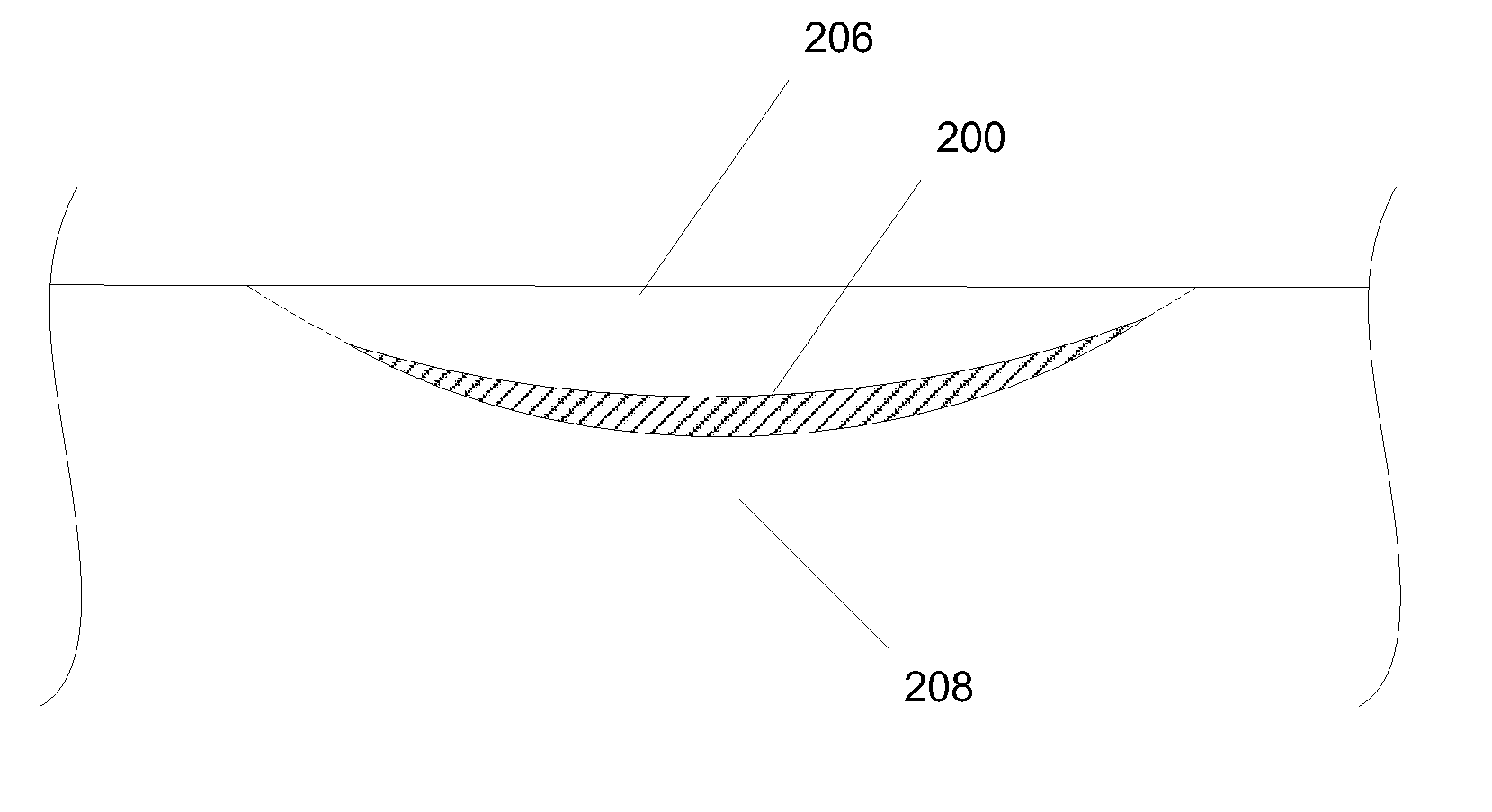
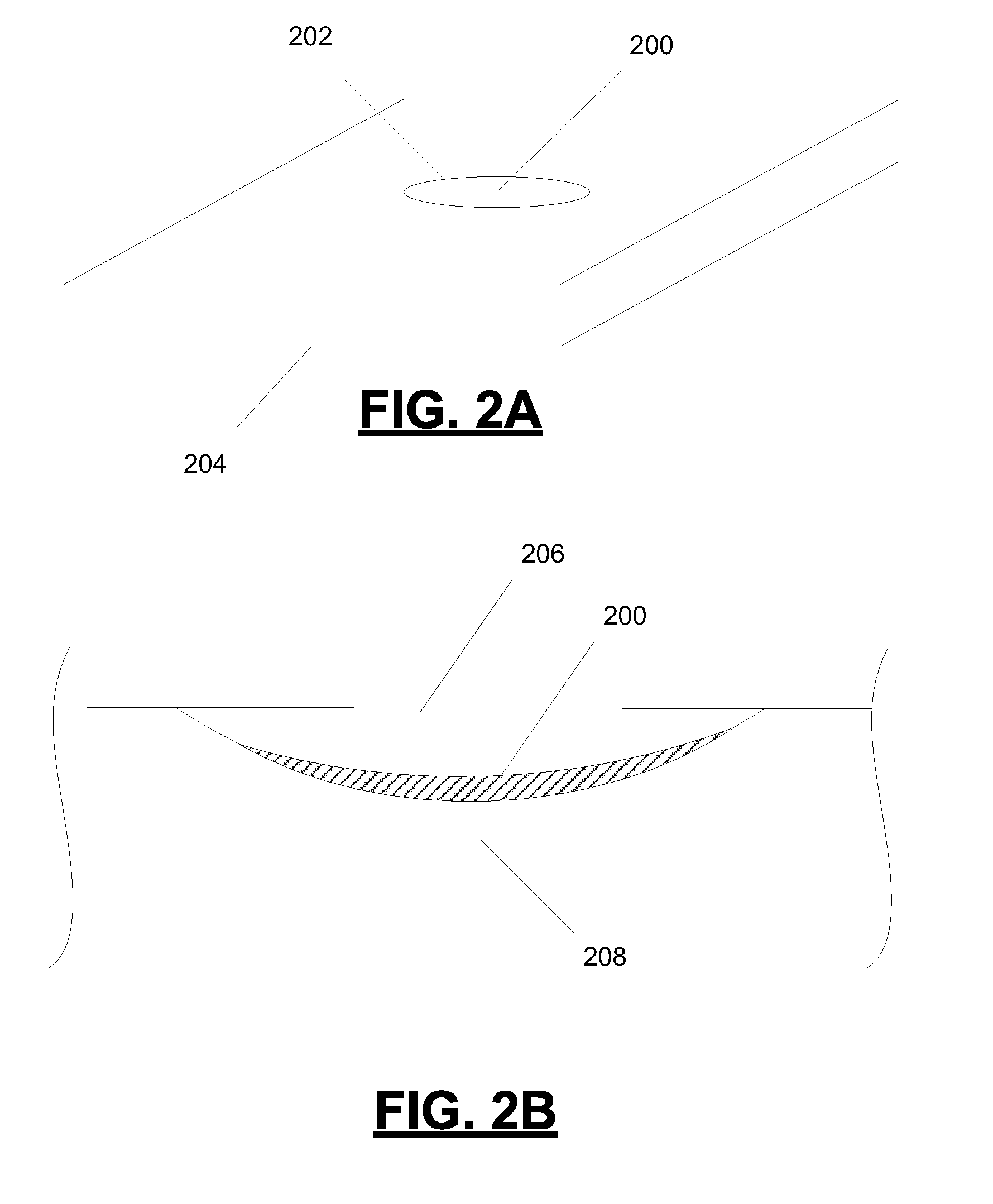
[0071]Example 2 was conducted in a substantially identical fashion as Example 1 except in that the cure temperature was 50° C. The lenses were cross-sectioned and an image was obtained. The image is shown in FIG. 5.
example 3
Cure Temperature of 55° C.
[0072]Example 3 was conducted in a substantially identical fashion as Example 1 except in that the cure temperature was 55° C. The lenses were cross-sectioned and an image was obtained. The image is shown in FIG. 5.
PUM
| Property | Measurement | Unit |
|---|---|---|
| Temperature | aaaaa | aaaaa |
| Temperature | aaaaa | aaaaa |
| Temperature | aaaaa | aaaaa |
Abstract
Description
Claims
Application Information
 Login to View More