Volume Sensing

a volume sensing and volume technology, applied in the field of volume sensing, can solve the problems of not being easy to do, current use of ultrasound techniques, and limited wall position determination via external ultrasonography, and achieve the effect of reducing the number of techniques and reducing the difficulty of us

US20120095355A1Inactive Publication Date: 2012-04-19PROTEUS DIGITAL HEALTH INC
1 Cites 23 Cited by

Patent Information

Authority / Receiving Office
US · United States
Current Assignee / Owner
Publication Date
2012-04-19
Estimated Expiration
Not applicable · inactive patent

Smart Images

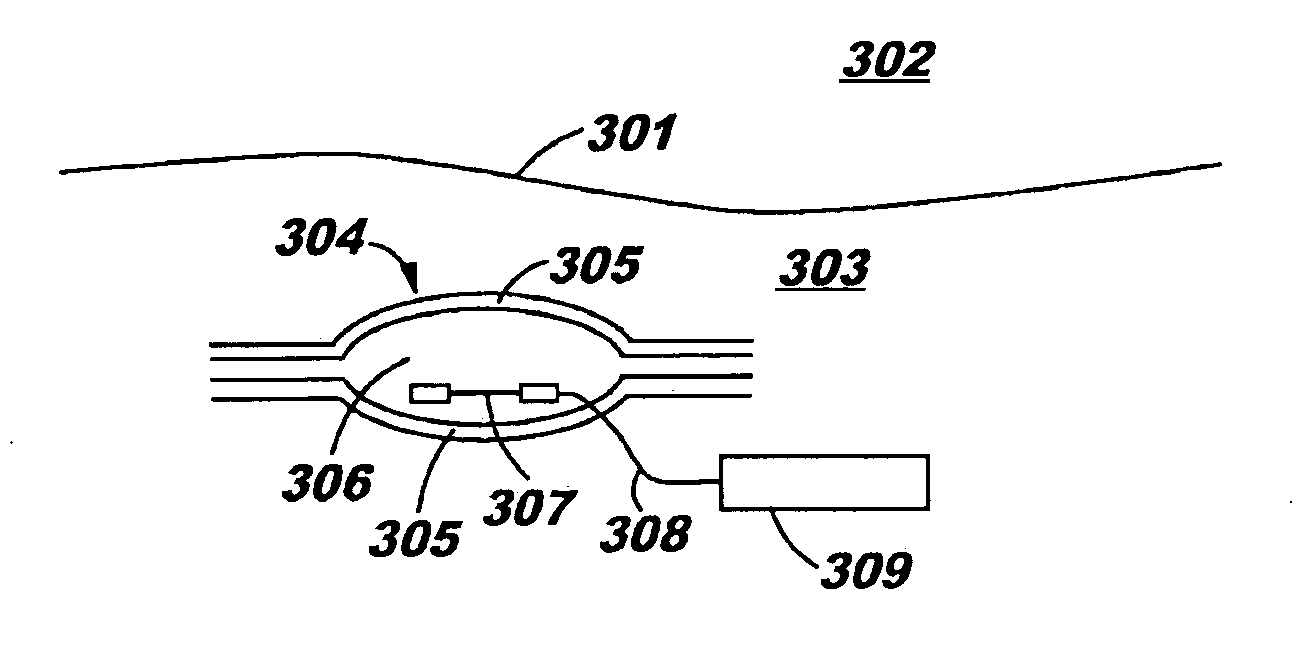
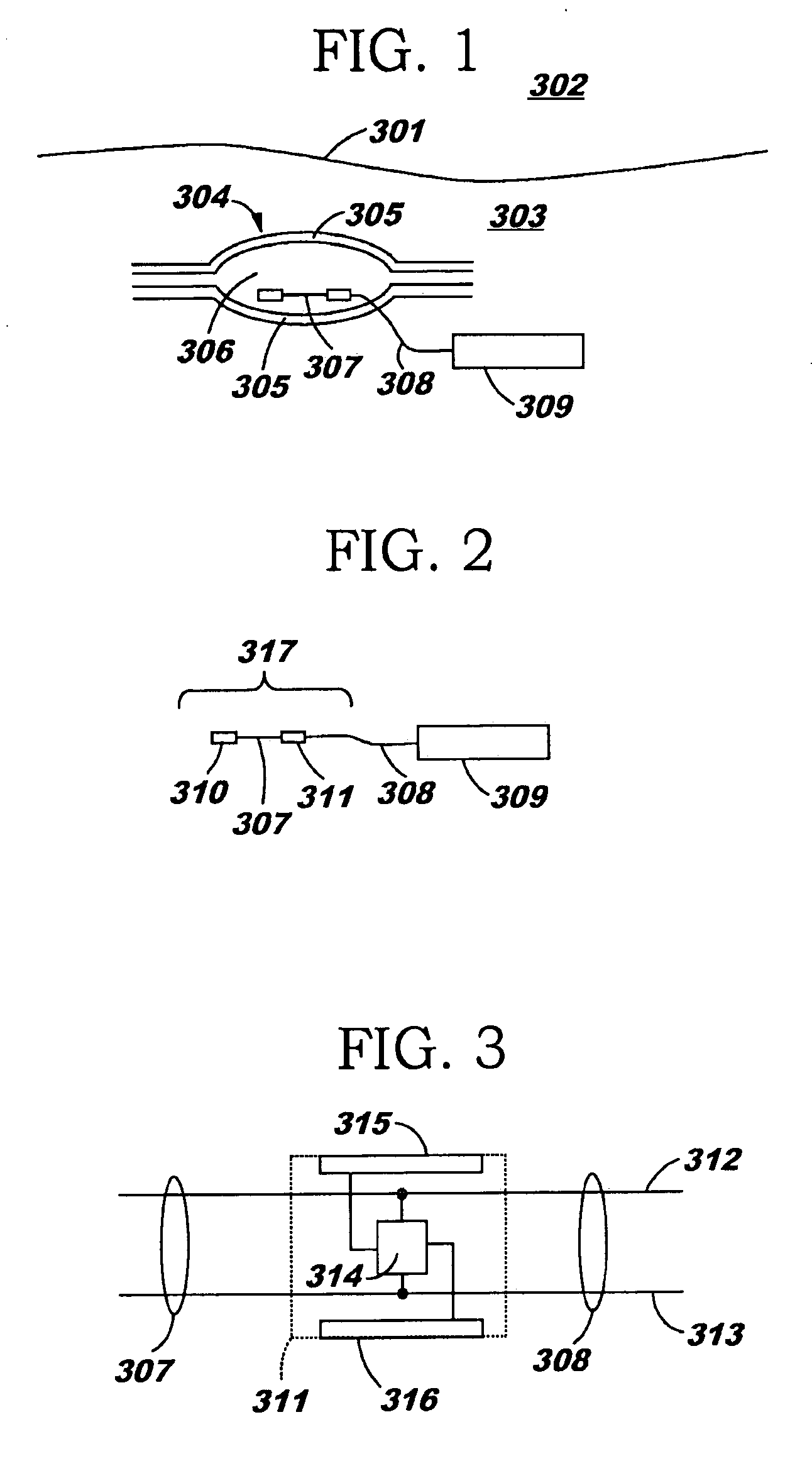
  • Figure 1
    Figure 1
  • Figure 2
    Figure 2
  • Figure 3
    Figure 3
Patent Text Reader

Abstract

Each sensor in one or more pairs of sensors is associated with a particular tissue, for example a first tissue location and a second tissue location respectively. Tissue at a particular tissue location may be solid, for example, muscle tissue, fat tissue, etc., or fluid, for example, blood, fluids associated with edema, etc. The area between the two tissue locations associated with a pair of sensors may comprise solid tissue, fluid tissue, an empty chamber, or combinations thereof. For each pair of sensors in the at least one pair of sensors, a first impedance measurement between the pair of sensors and associated with a first frequency is determined. For each pair of sensors in the at least one pair of sensors, a second impedance measurement between the pair of sensors and associated with a second frequency is determined. A comparison of a ratio of the first impedance measurement at a point in time to the second impedance measurement at a corresponding point in time may be made to determine a volume-related value associated with an area located between the first tissue location and the second tissue location.
Need to check novelty before this filing date? Find Prior Art

Description

[0001] This application claims the benefit of U.S. patent application No. 61 / 235,979 filed Mar. 13, 2009, which application is incorporated herein by reference for all purposes.BACKGROUND

[0002] It would be very helpful if organ volumes could be measured nearly continuously and in real time and in spite of bodily movements and variations in body position. This is not, however, easy to do. Until now, it has only been possible to measure organ volumes in very constrained settings and in very constrained body positions.

[0003] Cardiac resynchronization therapy (CRT) and various other cardiac therapies may optimize or improve cardiac performance. The cardiac performance may be gauged, for example, by assessment of various cardiac parameters such as tissue motion and blood volume.

[0004] In current practice, some cardiac properties may be approximated via external measurements. In one example, external ultrasound measurements are used to calculate some tissue parameters. Current use of ultrasou...

Examples

Embodiment Construction

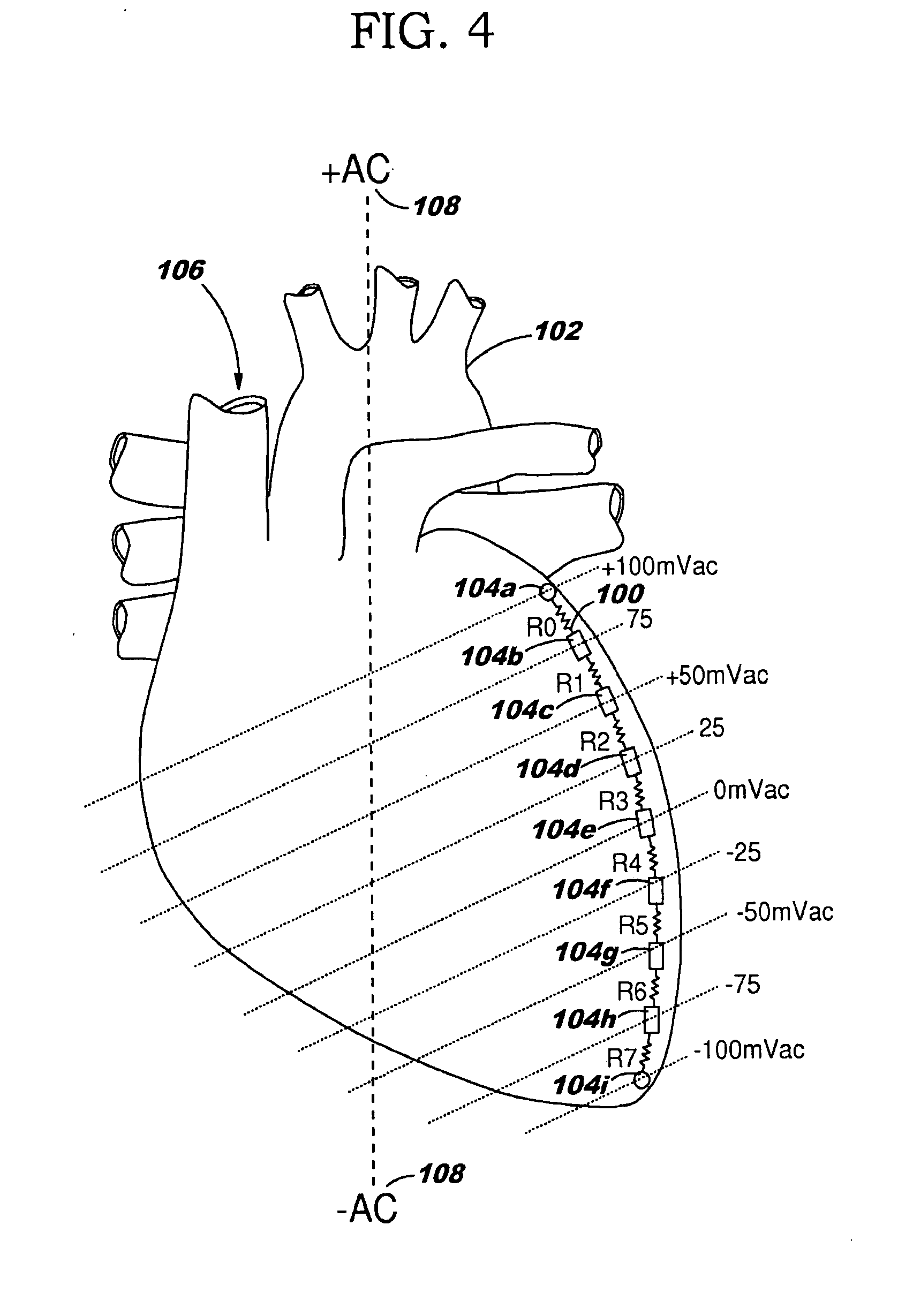
[0012]What will be described is a device, system, and method for determining various parameters, including tissue volume and fluid volume. In one aspect, for example, a multiplex lead such as a cardiac volume-sensing lead may estimate an amount of fluid, for example the amount of blood pumped out of heart chambers. The estimation may be adaptable for various uses, including CRT optimization and various other therapies.

[0013]Furthermore, methods of the invention may be carried out in any suitable body structure, such as but not limited to the heart, arterial or venous vasculature, and other body structures. Examples of body structures include tissue, such as cardiac tissue, and organs, such as the urinary bladder, stomach, lungs, etc.

[0014]Various applications will be readily apparent, such as, for example, measuring the congestion in the lungs, determining how much fluid is in the brain, assessing distention of the urinary bladder, assessing content volume of the stomach, assessing ...