Dynamic reduction of stream backpressure

US20130031556A1Inactive Publication Date: 2013-01-31IBM CORP

Patent Information

Authority / Receiving Office
US Β· United States
Current Assignee / Owner
IBM CORP
Publication Date
2013-01-31
Estimated Expiration
Not applicable Β· inactive patent

Smart Images

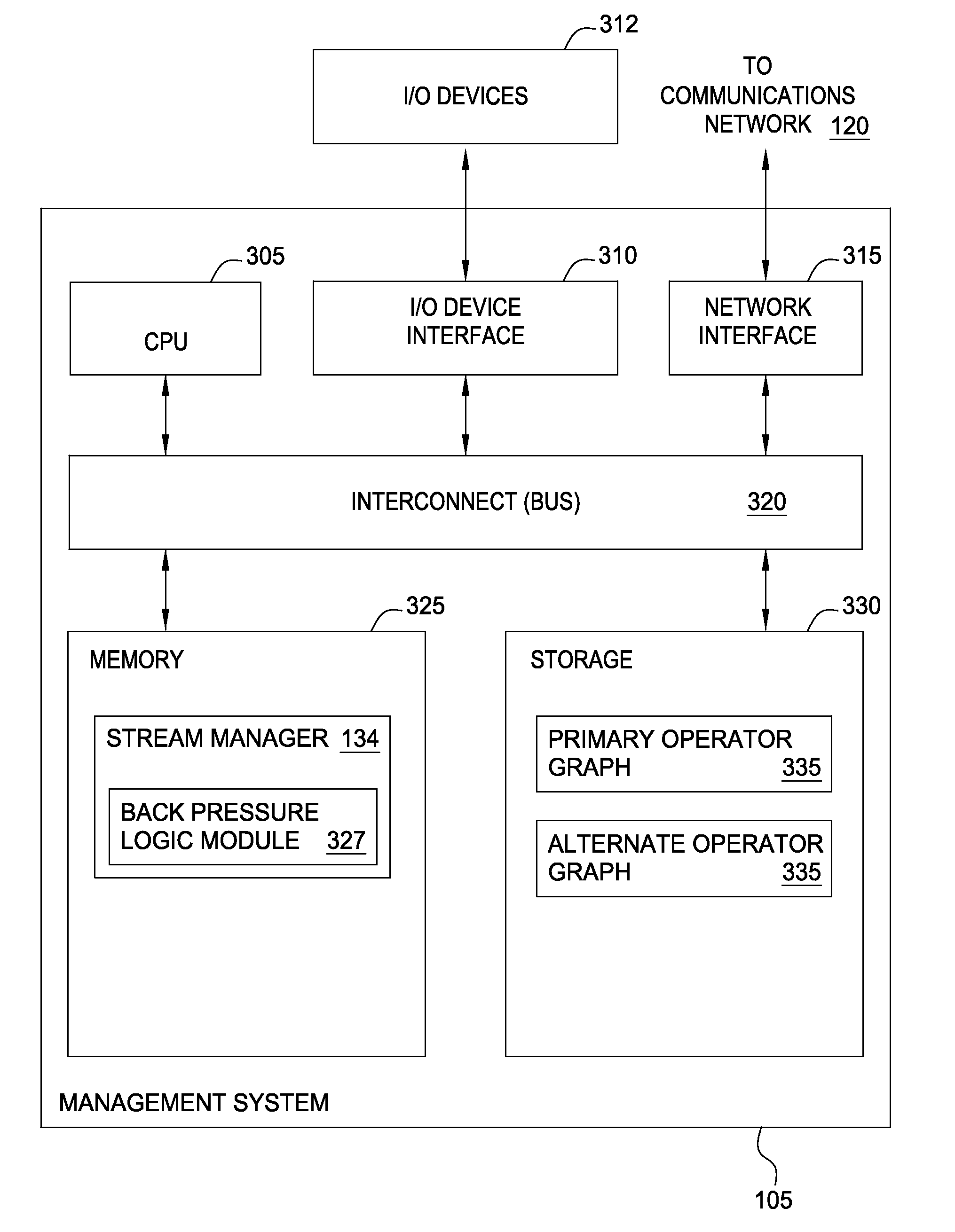
  • Figure 1
    Figure 1
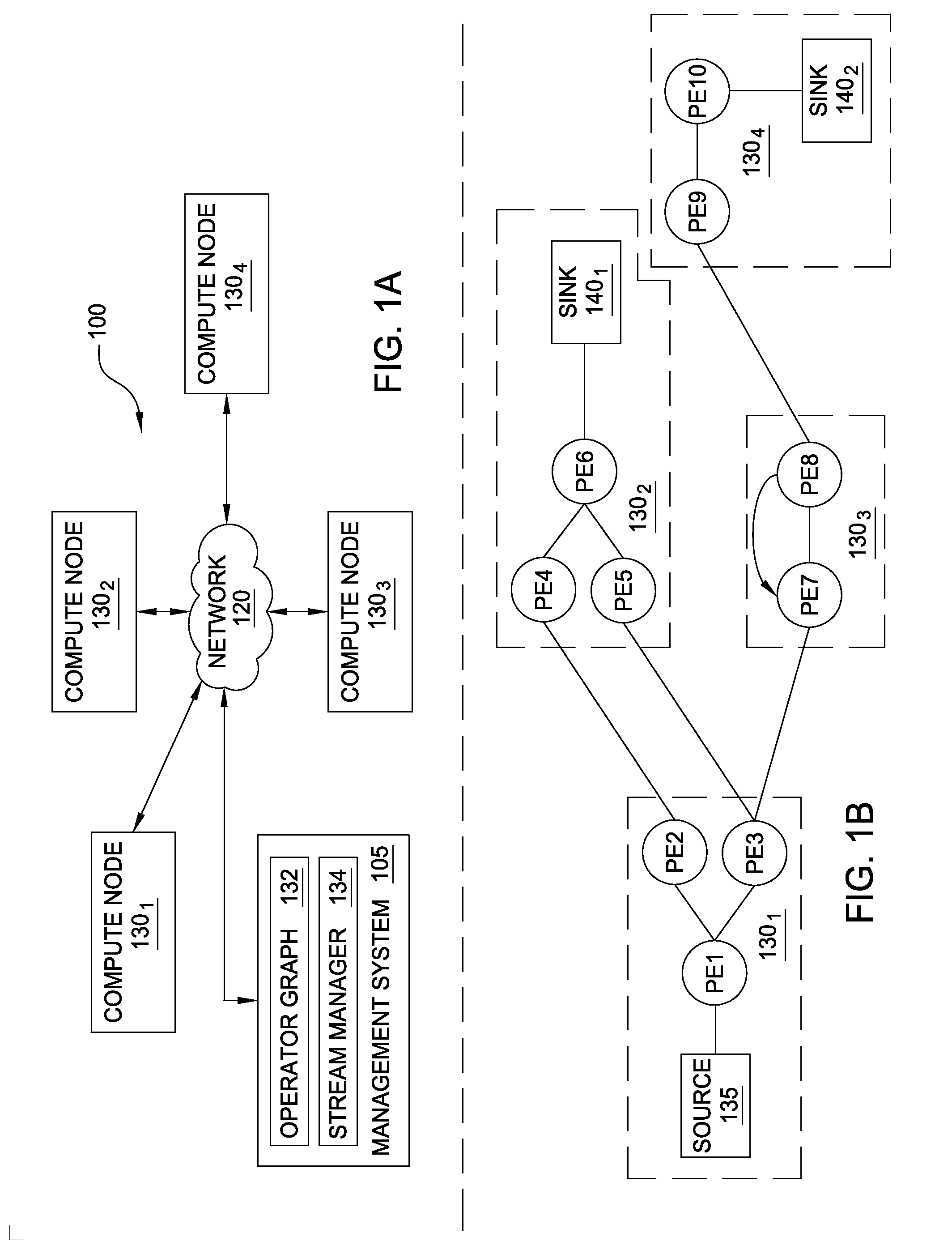
  • Figure 2
    Figure 2
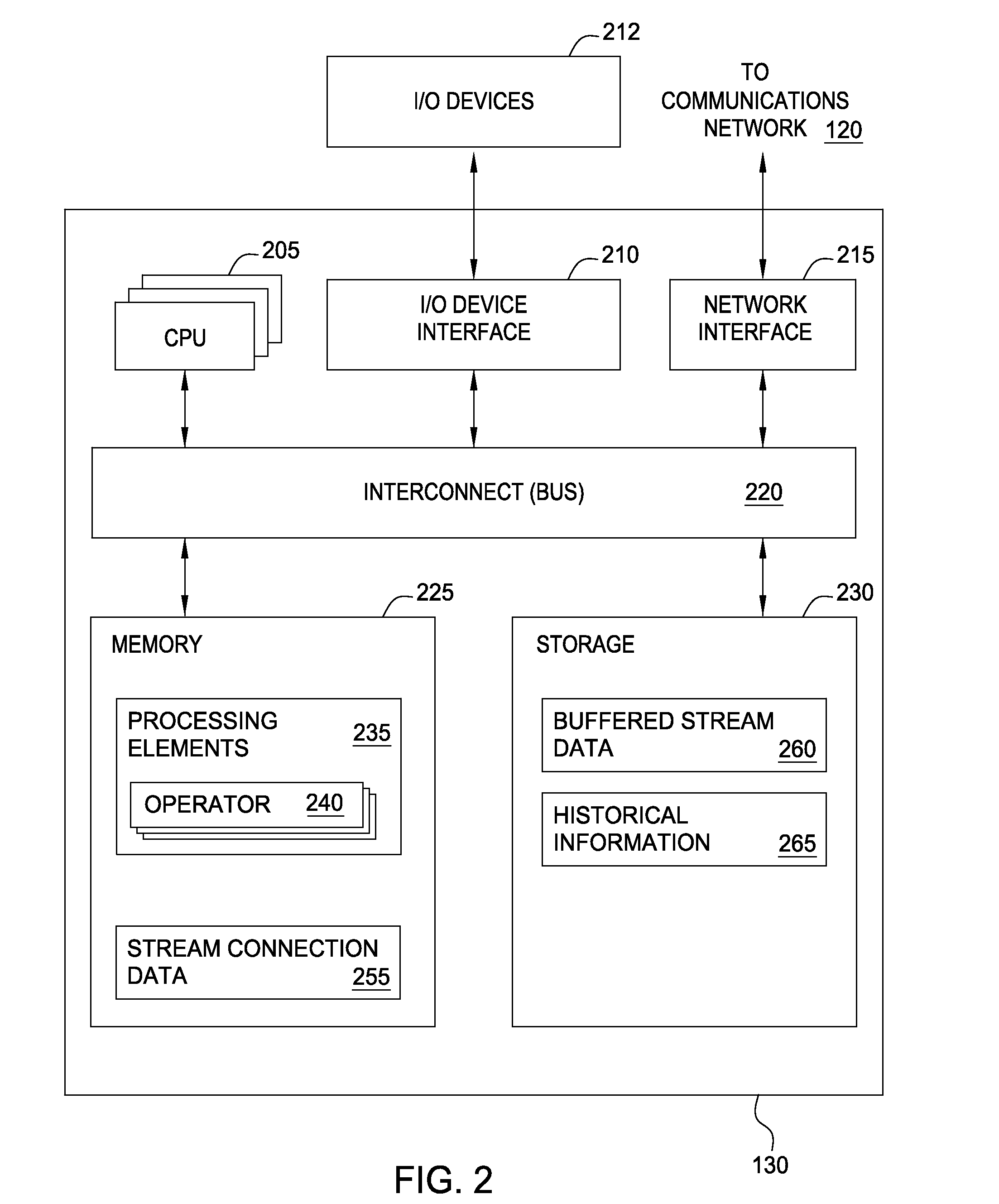
  • Figure 3
    Figure 3
Patent Text Reader

Abstract

Techniques are described for eliminating backpressure in a distributed system by changing the rate data flows through a processing element. Backpressure occurs when data throughput in a processing element begins to decrease, for example, if new processing elements are added to the operating chart or if the distributed system is required to process more data. Indicators of backpressure (current or future) may be monitored. Once current backpressure or potential backpressure is identified, the operator graph or data rates may be altered to alleviate the backpressure. For example, a processing element may reduce the data rates it sends to processing elements that are downstream in the operator graph, or processing elements and / or data paths may be eliminated. In one embodiment, processing elements and associate data paths may be prioritized so that more important execution paths are maintained. In another embodiment, if a request to add one or more processing elements may cause future backpressure, the request may be refused.
Need to check novelty before this filing date? Find Prior Art

Description

BACKGROUND

[0001] 1. Field of the Invention

[0002] Embodiments of the present invention generally relate to stream applications. Specifically, the invention relates to detecting and reducing backpressure in a stream application.

[0003] 2. Description of the Related Art

[0004] While computer databases have become extremely sophisticated, the computing demands placed on database systems have also increased at a rapid pace. Database systems are typically configured to separate the process of storing data from accessing, manipulating or using data stored in the database. More specifically, databases use a model where data is first stored, then indexed, and finally queried. However, this model cannot meet the performance requirements of some real-time applications. For example, the rate at which a database system can receive and store incoming data limits how much data can be processed or otherwise evaluated. This, in turn, can limit the ability of database applications to process large amounts ...

Claims

the structure of the environmentally friendly knitted fabric provided by the present invention; figure 2 Flow chart of the yarn wrapping machine for environmentally friendly knitted fabrics and storage devices; image 3 Is the parameter map of the yarn covering machine
Login to View More