In addition, the CDN technology is widely used in fields such as PC streaming media,
Internet Protocol television (
Internet Protocol Television,
IPTV), mobile streaming media, and video surveillance, and solves experience problems due to reasons such as insufficient network bandwidth, a large number of accesses, and uneven distribution of network nodes when a user accesses streaming
media content.
There are a large number of users, and the performance of a media
server is limited.
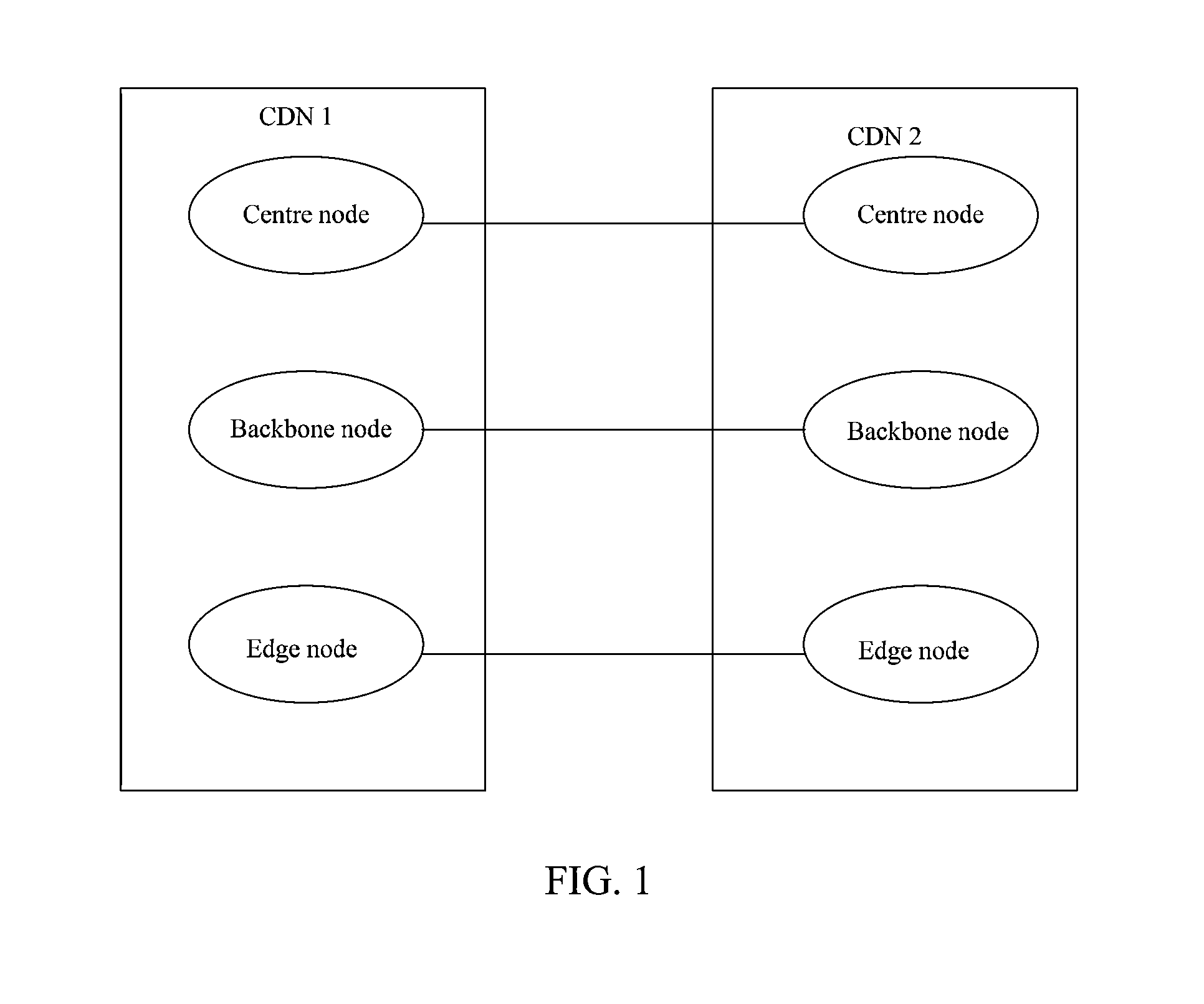
The CDN nodes provided by different vendors cannot implement interconnection and interworking, and the CDN nodes provided by a same vendor are not open to and cannot interconnect with the CDN nodes provided by other vendors.
As a result, the cost for deploying a CDN is high.
When several CDNs co-exist in a country, the content on those CDNs cannot be shared, so the
delivery efficiency of utilizing those CDNs cannot be maximized.
The difficulties in the interconnection and interworking of CDNs provided by different vendors and opening of CDN nodes provided by a same vendor lie in inconsistent content delivery (including content PUSH and content PULL) protocols used by nodes on CDNs provided by each vendor.
Therefore, the interconnection and interworking of CDNs and the opening and interconnection of the CDN nodes to other CDN nodes cannot be implemented by unifying protocols.
Because no unified protocols exist currently, it is difficult to implement the interconnection and interworking among nodes on different CDNs.
Currently, because no standards exist, it is very difficult to open a CDN.
However, the content cannot be replicated to other CDNs on a large scale, and it is highly complicated to unify interaction protocols and implement interconnection among nodes on different CDNs.
However, some Internet protocols are not opened.
When the nodes on the CDNs need to be cascaded, those Internet protocols, which are not opened, cannot be supported, that is, terminals that use those Internet protocols, which are not opened, cannot be supported.
It is very complicated to define this
unified interface protocol because the
interface protocol needs to support different transmission protocols, different file formats, and different coding formats.
In addition, some Internet protocols are not opened and the
unified interface protocol cannot support those Internet protocols that are not opened, that is, terminals that use those Internet protocols, which are not opened, cannot be supported.
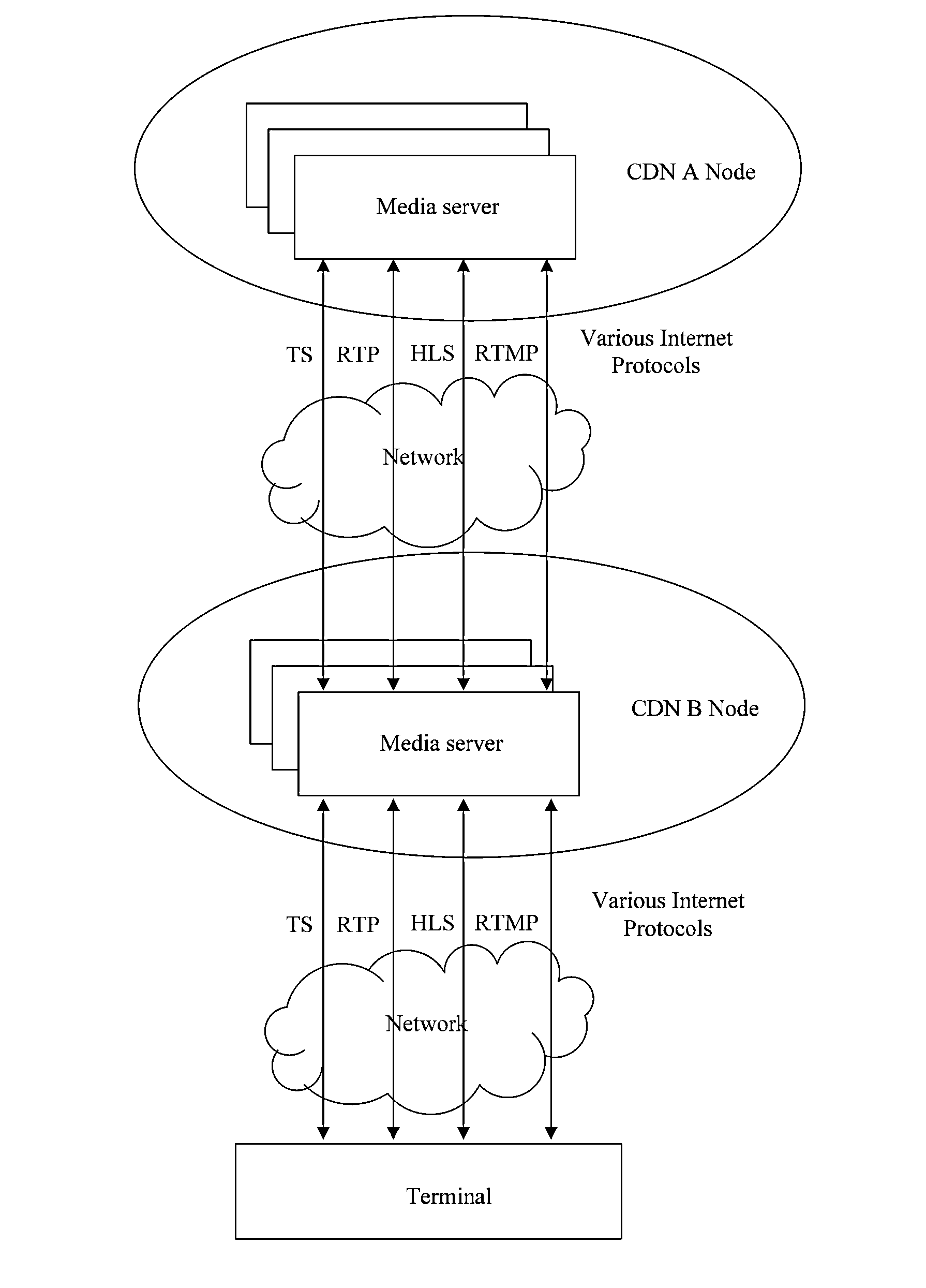
1. As there are a variety of Internet protocols, it is complicated that the media servers on the nodes on different CDNs or on a same CDN are compatible with all
the Internet protocols.
2. The interconnection and interworking among the nodes on different CDNs or on a same CDN rely on the implementation of various Internet protocols, or defining a complicated
unified interface protocol that is compatible with all Internet protocols.
3. Currently, a method used to interconnect and interwork with the nodes on different CDNs is closely related to
the Internet protocols. With the addition and change of
the Internet protocols, the CDN nodes need to be modified constantly to adapt to new Internet protocols.


 Login to View More
  Login to View More