
Wind turbine noise control methods
- Summary
- Abstract
- Description
- Claims
- Application Information
AI Technical Summary
Benefits of technology
Problems solved by technology
Method used
Image

Examples
Embodiment Construction
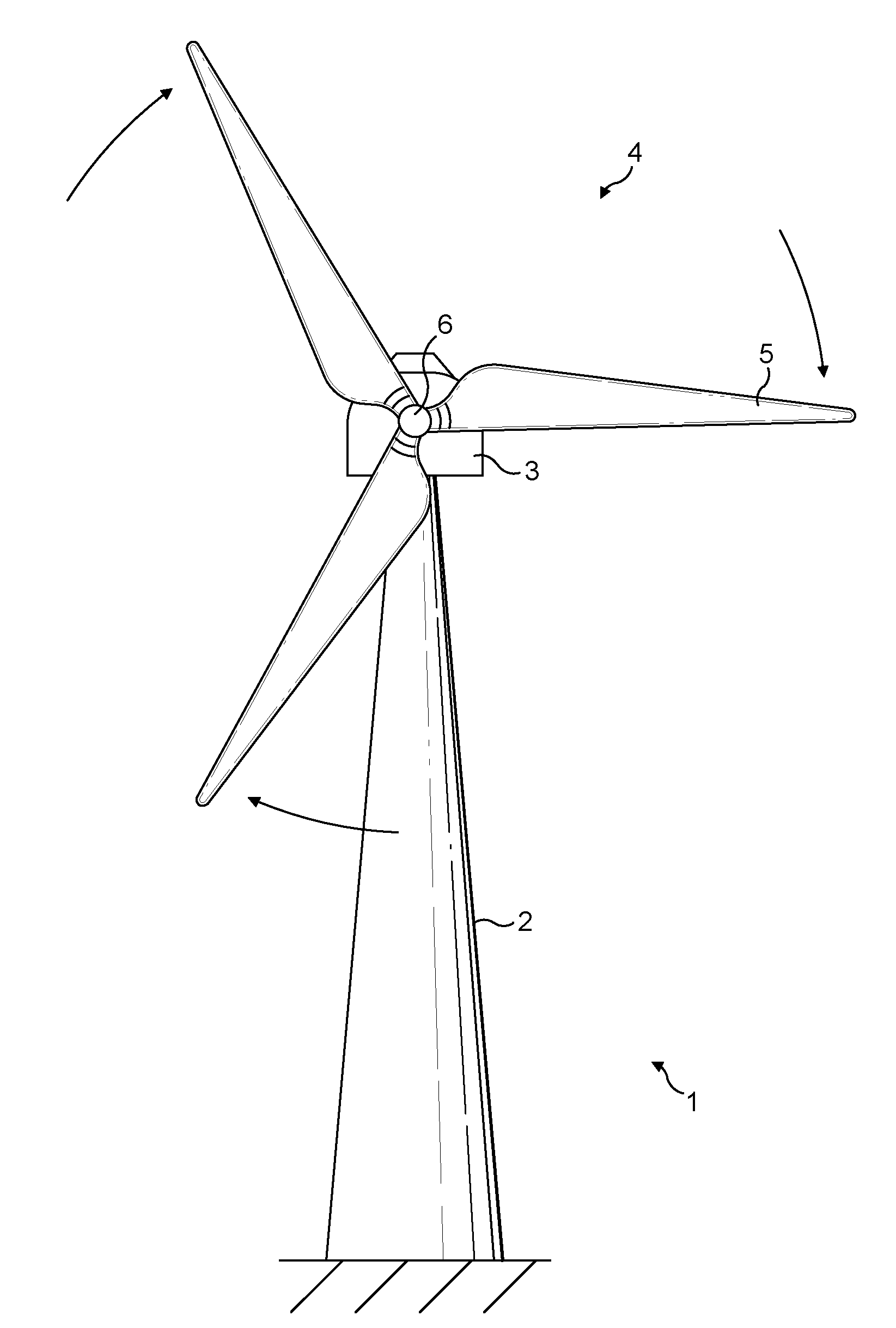
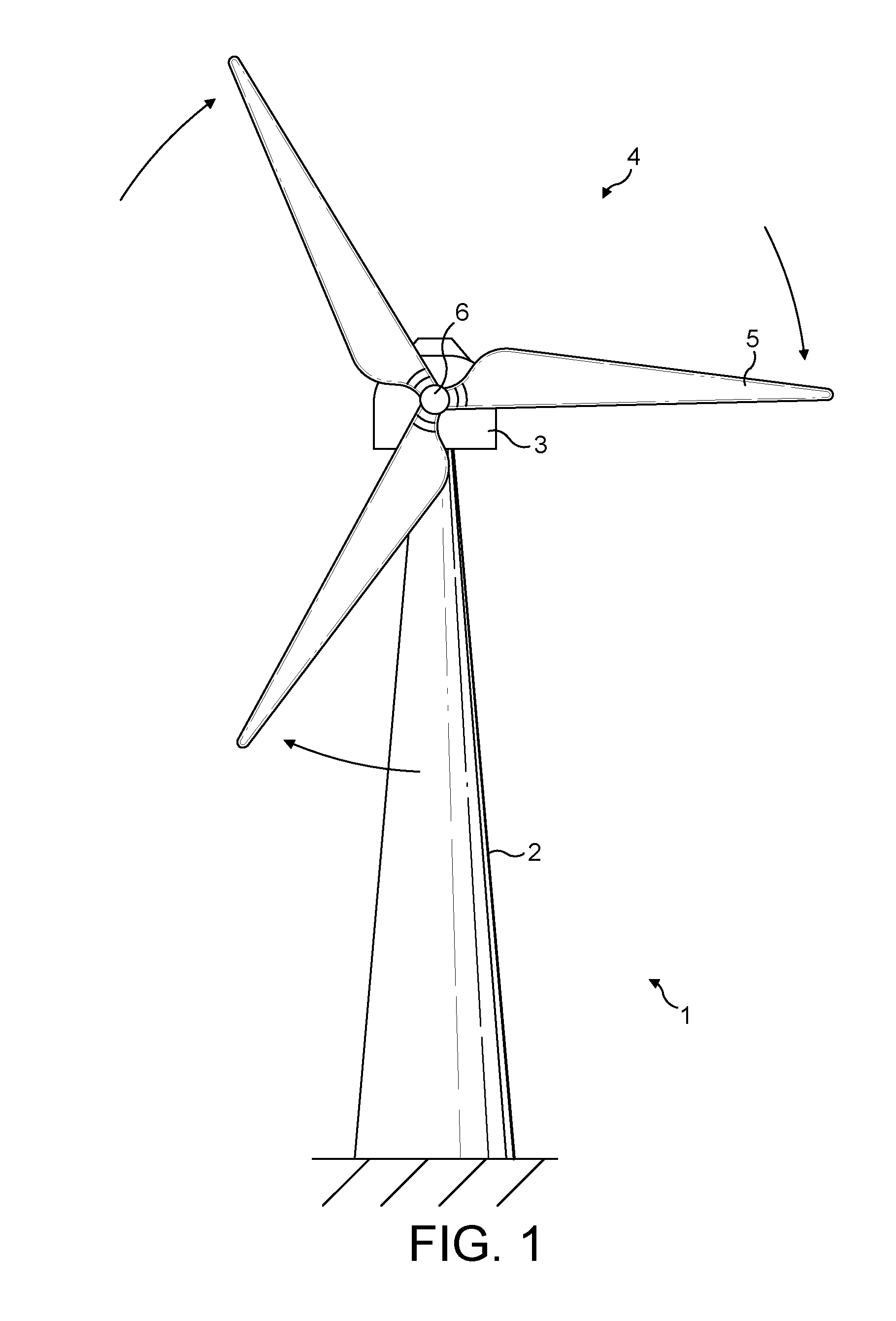
[0031]An embodiment of the invention relates to a wind turbine having a rotor with one or more blades, wherein one or more of the blades includes at least one control surface.
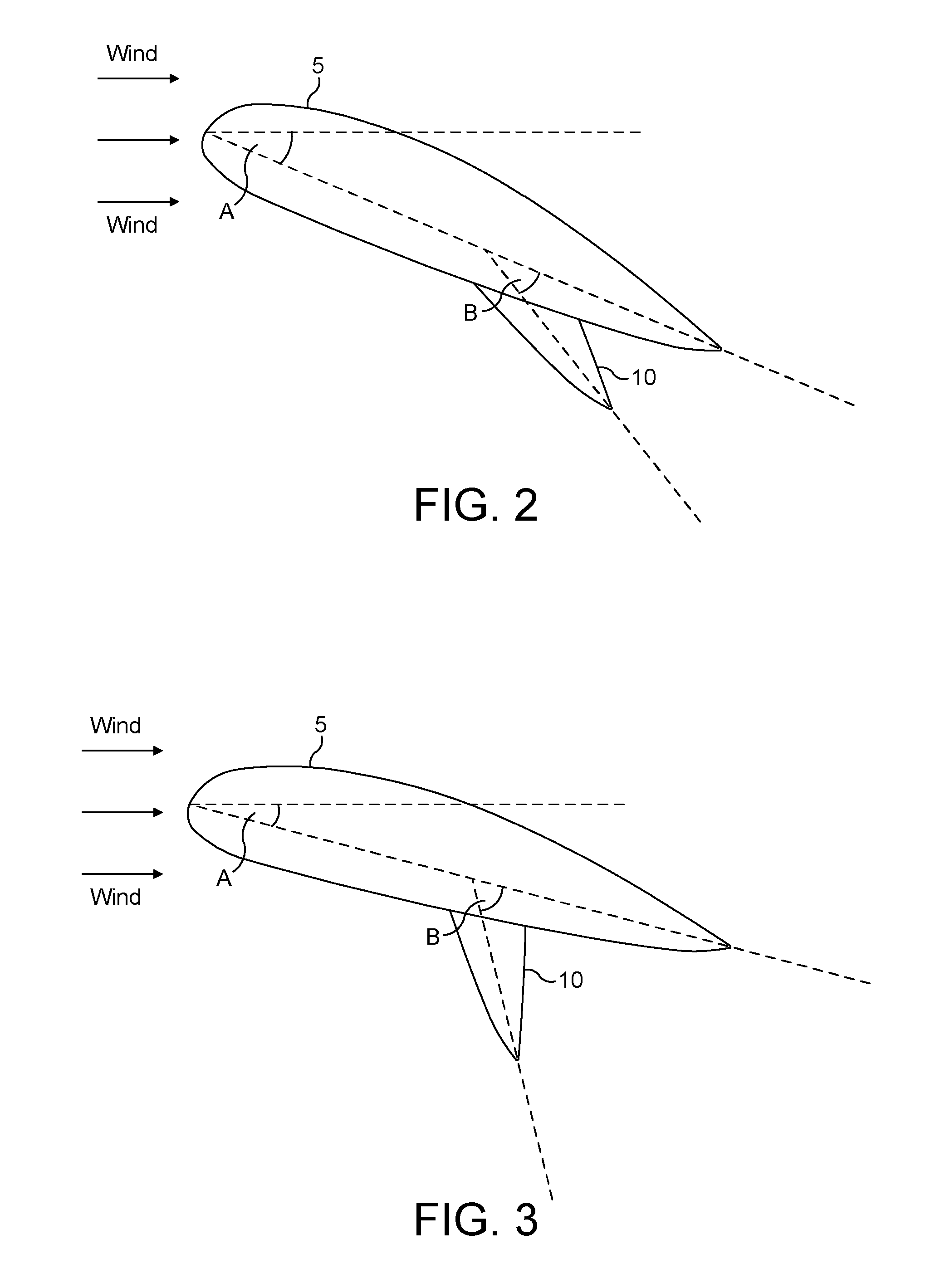
[0032]The term control surface refers to a movable surface of the wind turbine blade for modifying the aerodynamic profile of the wind turbine blade. Examples of control surfaces include ailerons, leading or trailing edge flaps, leading edge slats, Krueger flaps, Gurney flaps (wickerbill flaps), stall inducing flaps, vortex generators for controlling the boundary layer separation, adaptive elastic members incorporated in the blade surface, means for changing the surface roughness, adjustable openings or apertures, or movable tabs. A blade may have one or more such control surfaces, and each control surface will typically only extend along part of the spanwise length of a blade.
[0033]FIG. 2 shows a wind turbine rotor blade 5 in a first operating mode. Blade 5 describes an angle of attack A to the direction of th...
PUM
 Login to View More
 Abstract
Description
Claims
Application Information
 Login to View More