
Subtalar Joint Prostheseis and Its Method of Implantation
- Summary
- Abstract
- Description
- Claims
- Application Information
AI Technical Summary
Benefits of technology
Problems solved by technology
Method used
Image

Examples
Embodiment Construction
[0025]Before explaining at least one embodiment of the present invention in detail, it is to be understood that the invention is not limited in its application to the details of construction and to the arrangements of the components set forth in the following description or illustrated in the drawings. The invention is capable of other embodiments and of being practiced and carried out in various ways. Also, it is to be understood that the phraseology and terminology employed herein are for the purpose of description and should not be regarded as limiting.
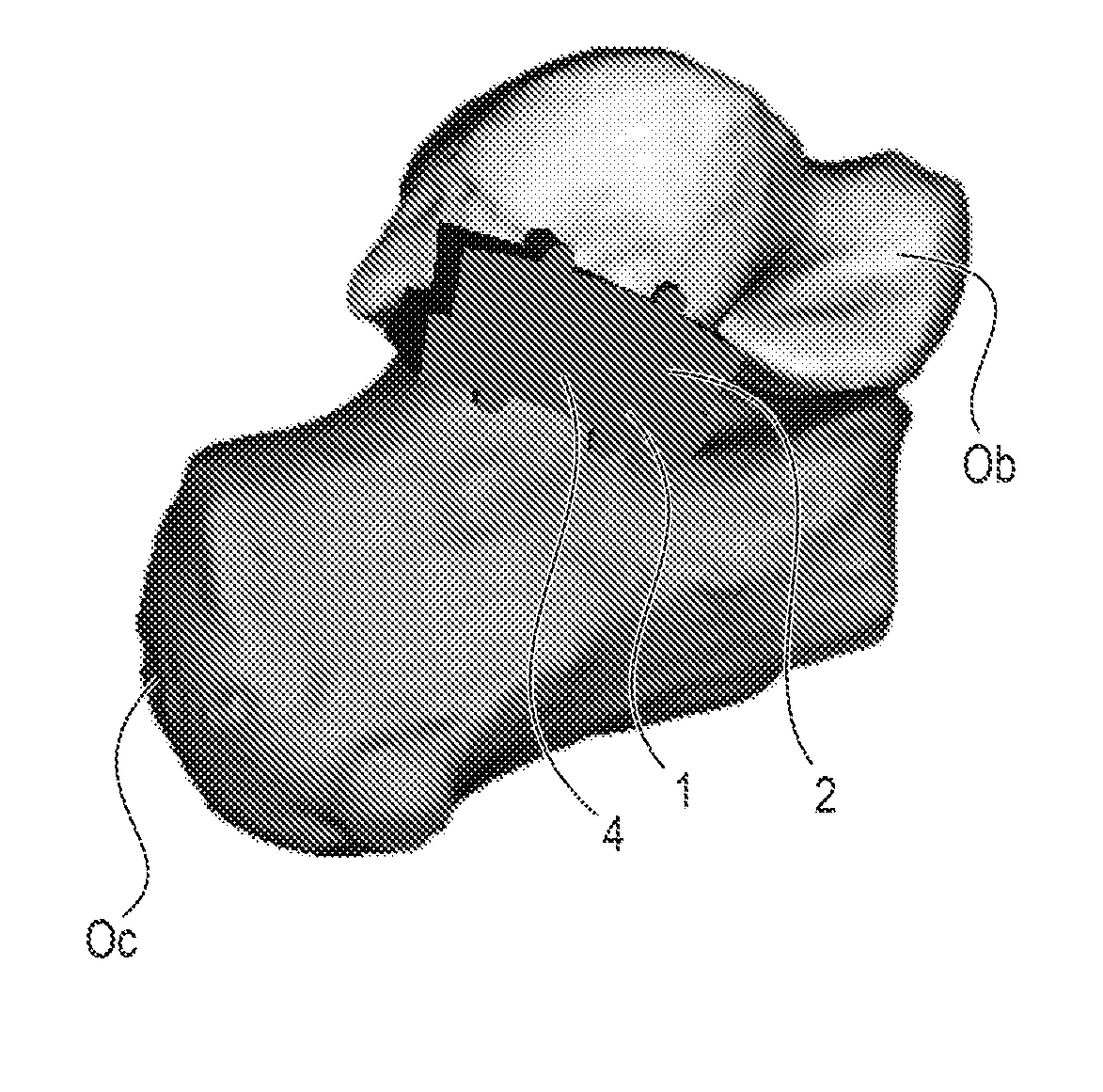
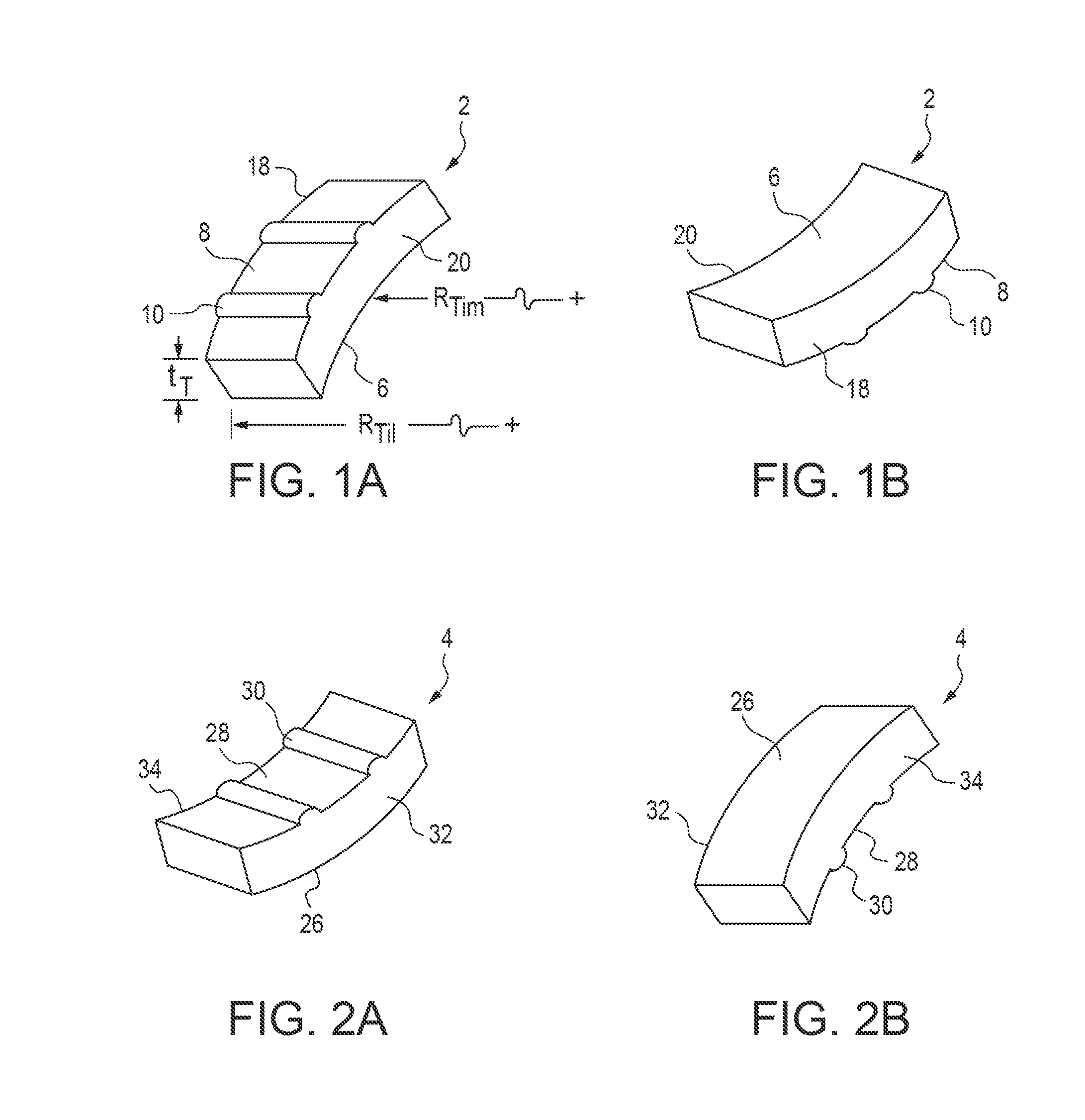
[0026]In a preferred embodiment, the subtalar joint prosthesis 1 of the present invention includes talar 2 and calcaneal 4 components. See FIGS. 1A-1B and 2A-2B. These components are designed so as to allow the subtalar joint prosthesis of the present invention to reproduce natural subtalar joint motion.
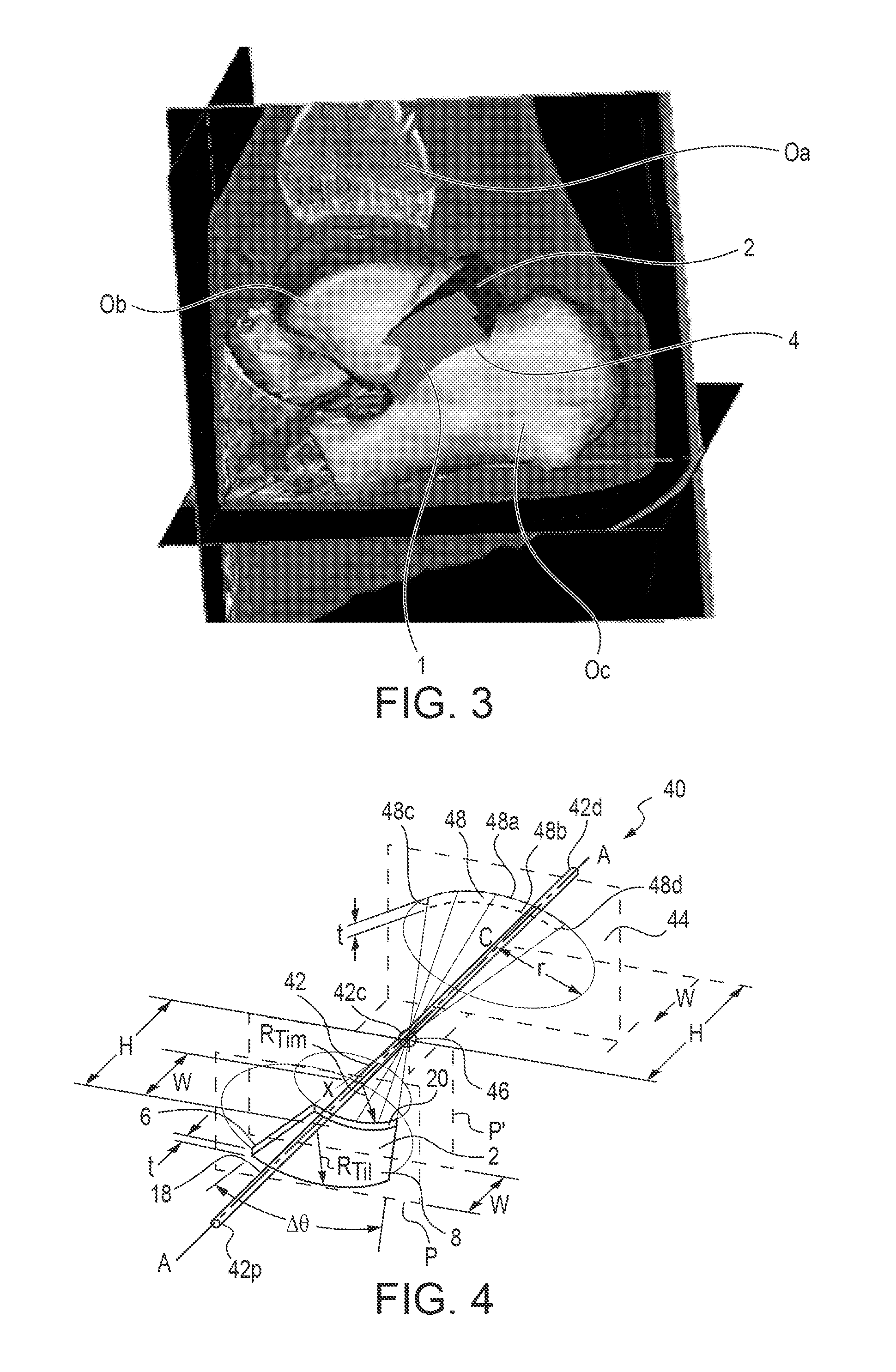
[0027]FIG. 3 shows these components after they have been implanted in the subtalar joint. Shown is a generally medially to lateral...
PUM
 Login to View More
 Abstract
Description
Claims
Application Information
 Login to View More