High resolution inspection device for casting defects using ir imaging
- Summary
- Abstract
- Description
- Claims
- Application Information
AI Technical Summary
Benefits of technology
Problems solved by technology
Method used
Image

Examples
Embodiment Construction
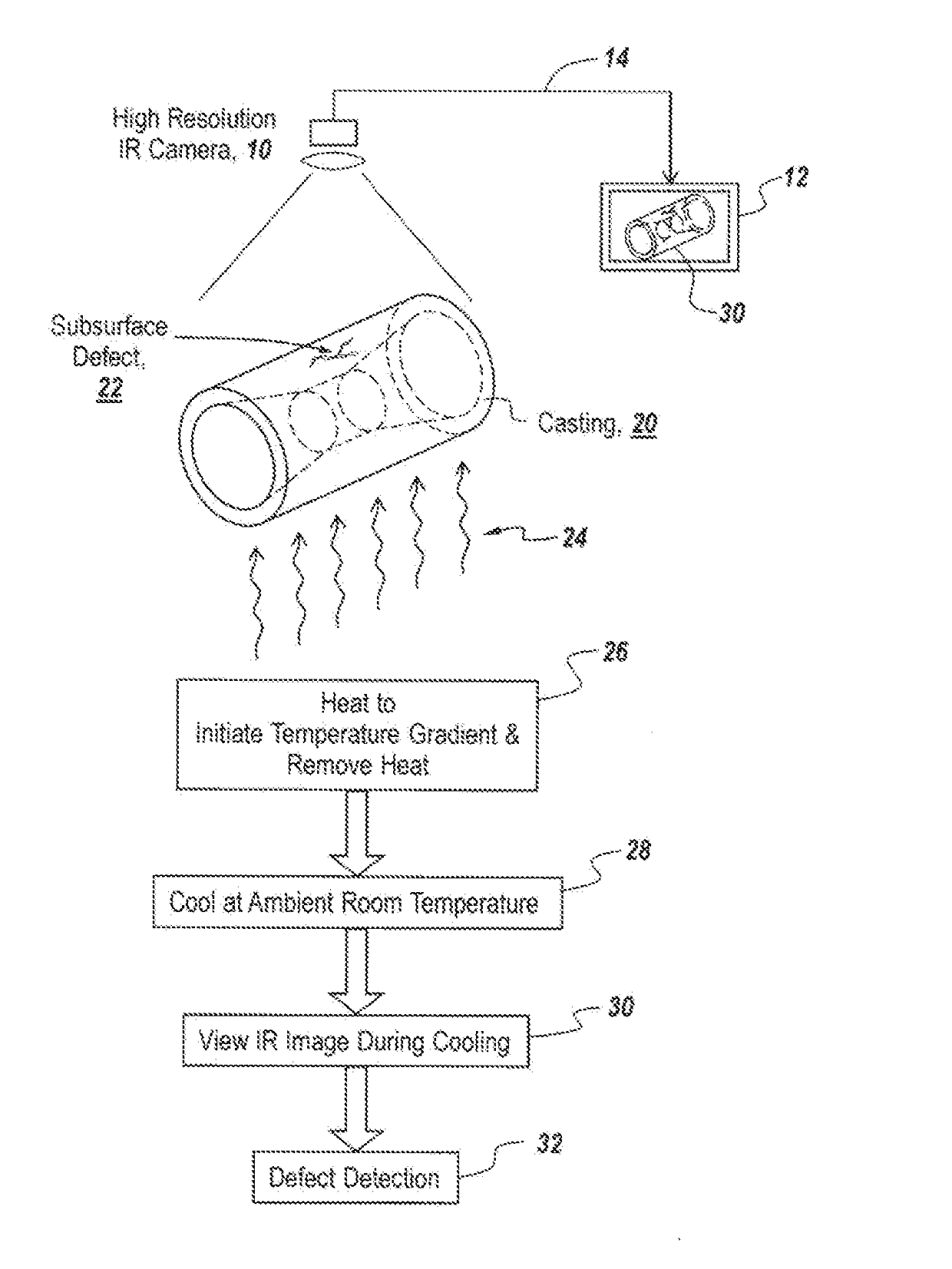
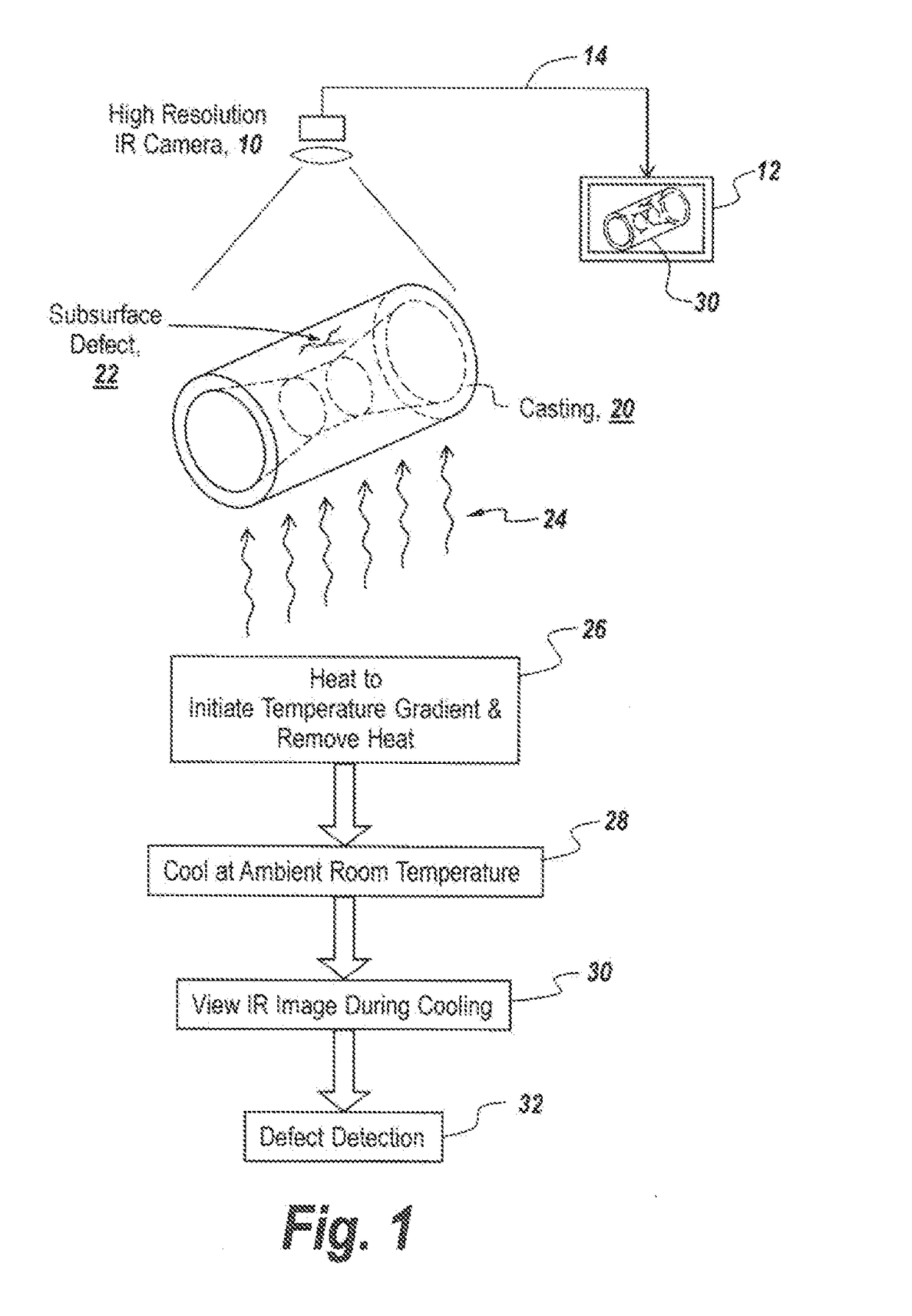
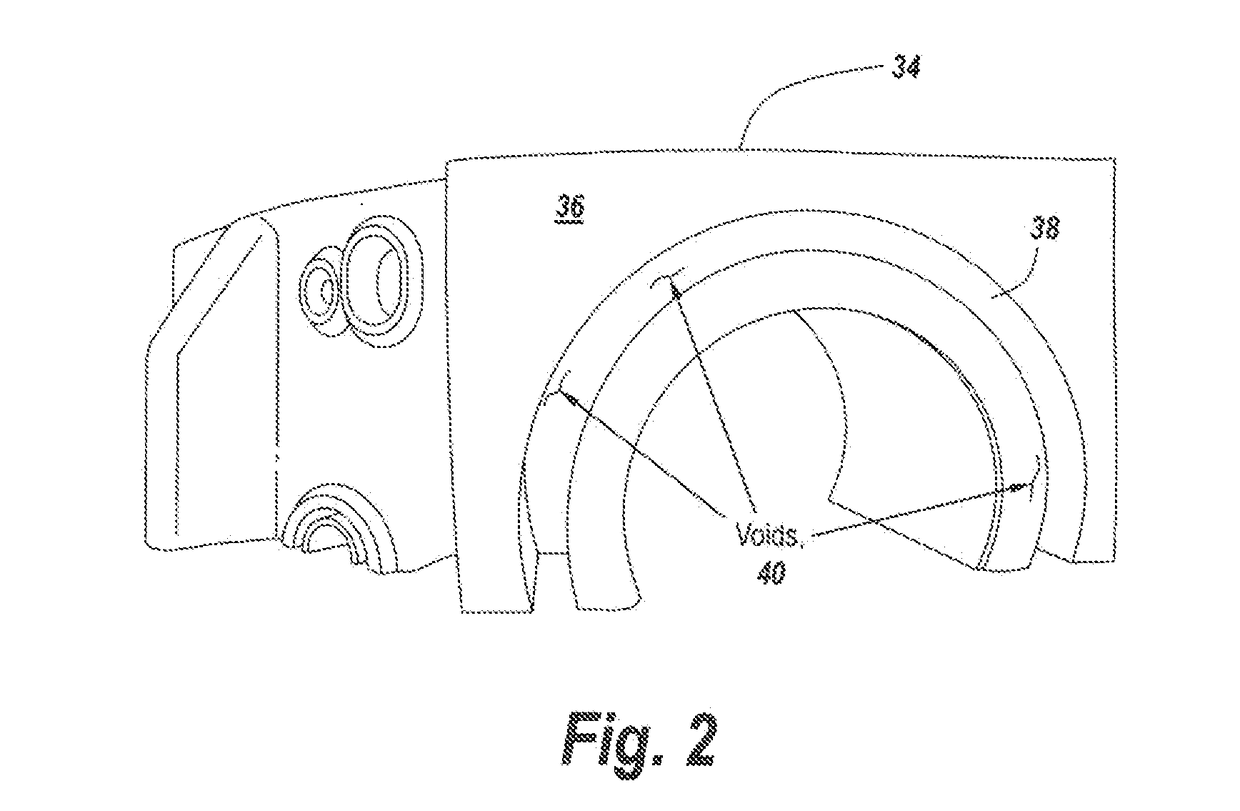
[0018]Defects in metal castings can be detected through the utilization of infrared imagery and causing the casting to be subjected to a thermal gradient. Because of the existence of the thermal gradient, the defect absorbs heat differently compared to casting material to either side. This defect shows up as a distinct thermal trace on the IR image and therefore constitutes a convenient nondestructive method of finding defects in castings or other materials. In one embodiment, the casting is heated above ambient temperature to for instance 100° F. and is allowed to cool. During the cool down the thermal gradient is absorbed differently at the flaw or defect in the casting so that it becomes highly visible in the infrared image as the device cools and before it reaches thermal equilibrium.
[0019]Alternatively, one could cool down the casting, and then allow it to rise to ambient room temperature. The thermal trace, which is the result of the thermal gradient when the casting rises to ...
PUM
 Login to View More
 Abstract
Description
Claims
Application Information
 Login to View More
 - R&D
- Intellectual Property
- Life Sciences
- Materials
- Tech Scout
- Unparalleled Data Quality
- Higher Quality Content
- 60% Fewer Hallucinations
Browse by: Latest US Patents, China's latest patents, Technical Efficacy Thesaurus, Application Domain, Technology Topic, Popular Technical Reports.
© 2025 PatSnap. All rights reserved.Legal|Privacy policy|Modern Slavery Act Transparency Statement|Sitemap|About US| Contact US: help@patsnap.com