Cell penetrating peptides that inhibit irf5 nuclear localization
a technology of nuclear localization and cell penetrating peptides, which is applied in the direction of peptide/protein ingredients, peptide sources, immunological disorders, etc., can solve the problems of severe side effects of certain treatments and no cure for sl
- Summary
- Abstract
- Description
- Claims
- Application Information
AI Technical Summary
Benefits of technology
Problems solved by technology
Method used
Image

Examples
example 1
[0118]Little is known of the mechanism(s) regulating IRF5 nuclear localization. Two functional nuclear localization signals (NLS) were identified and characterized in the IRF5 protein that were not conserved or homologous with NLS in other IRFs. The IRF5 poylpeptide contains two NLSs, one residing in the amino-terminus (PRRVRLK) (SEQ ID NO:1), and the other in the carboxyl-terminus (PREKKLI) (SEQ ID NO:2) (Barnes et al. (2002) Mol Cell Biol 22, 5721-5740). While both NLSs could signal translocation to the nucleus, each had a distinct function. The amino-terminal NLS, located in the DNA binding domain, contributed to nuclear localization and retention, while the carboxyl-terminal NLS was responsive to virus-induced nuclear translocation but not retention. These two NLSs are solely responsible for nuclear localization and transactivation of target promoters as a mutant lacking both NLSs was localized in the cytoplasm and non-functional (Barnes et al. (2002) Mol Cell Biol 22, 5721-5740...
example 2
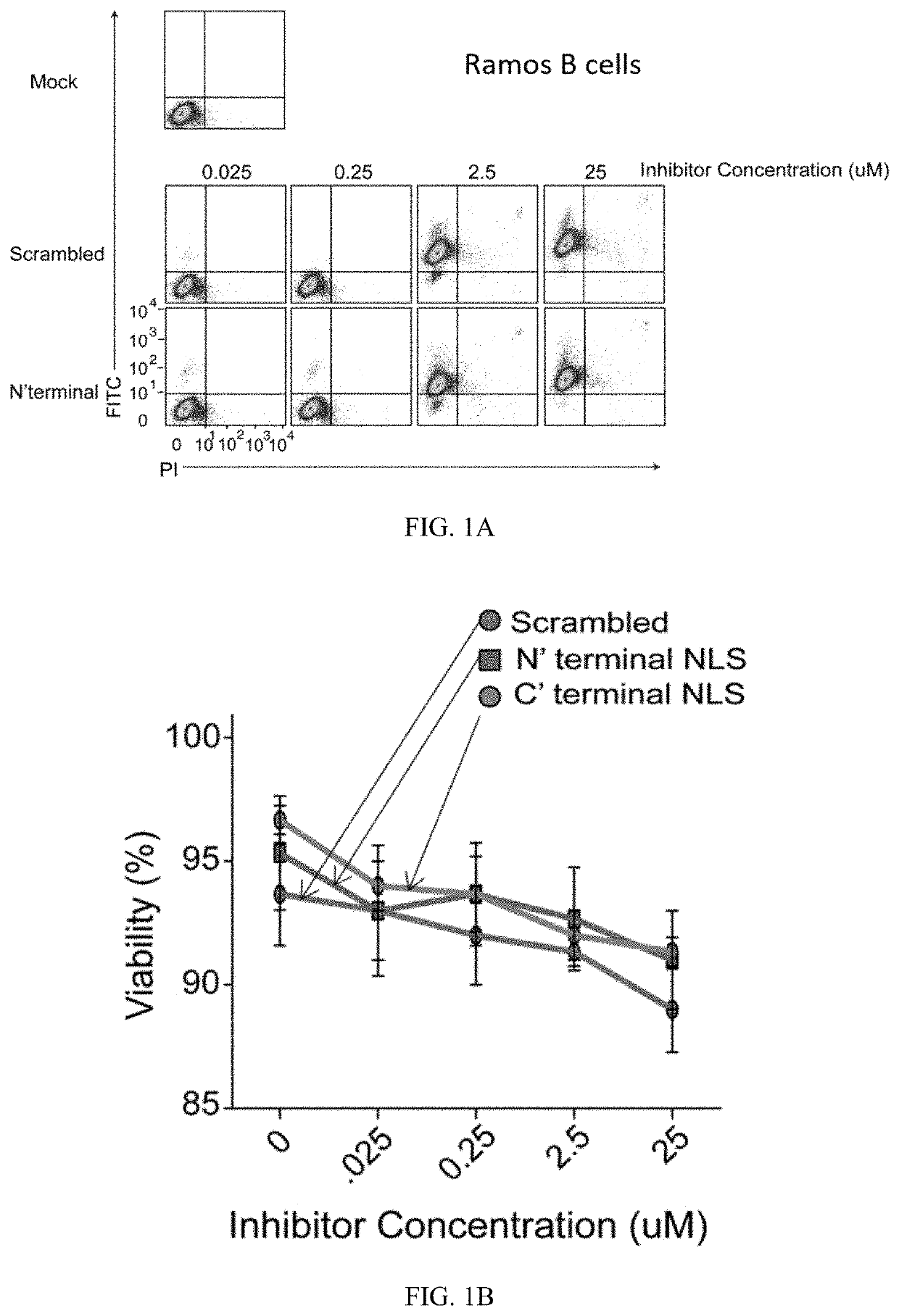
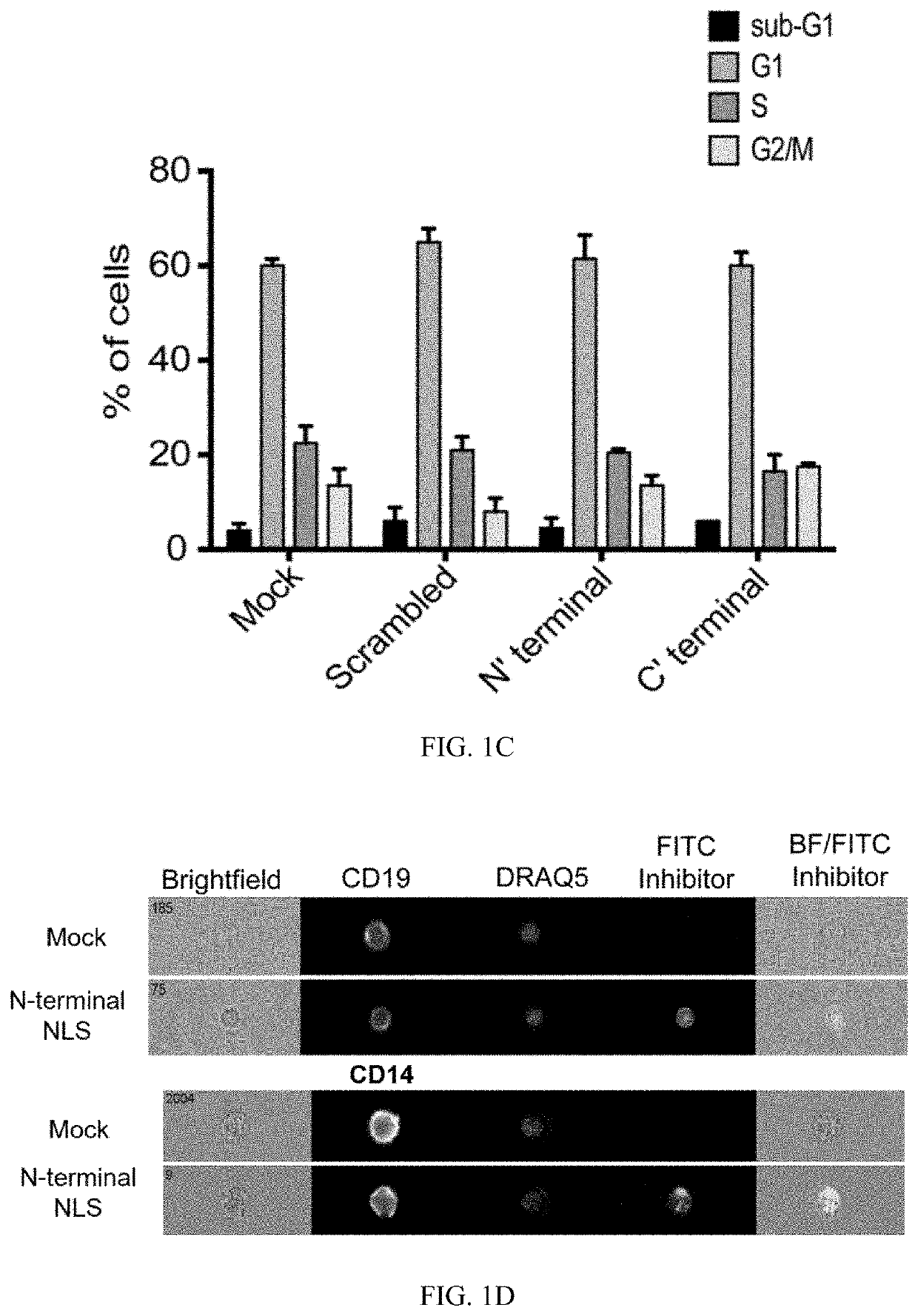
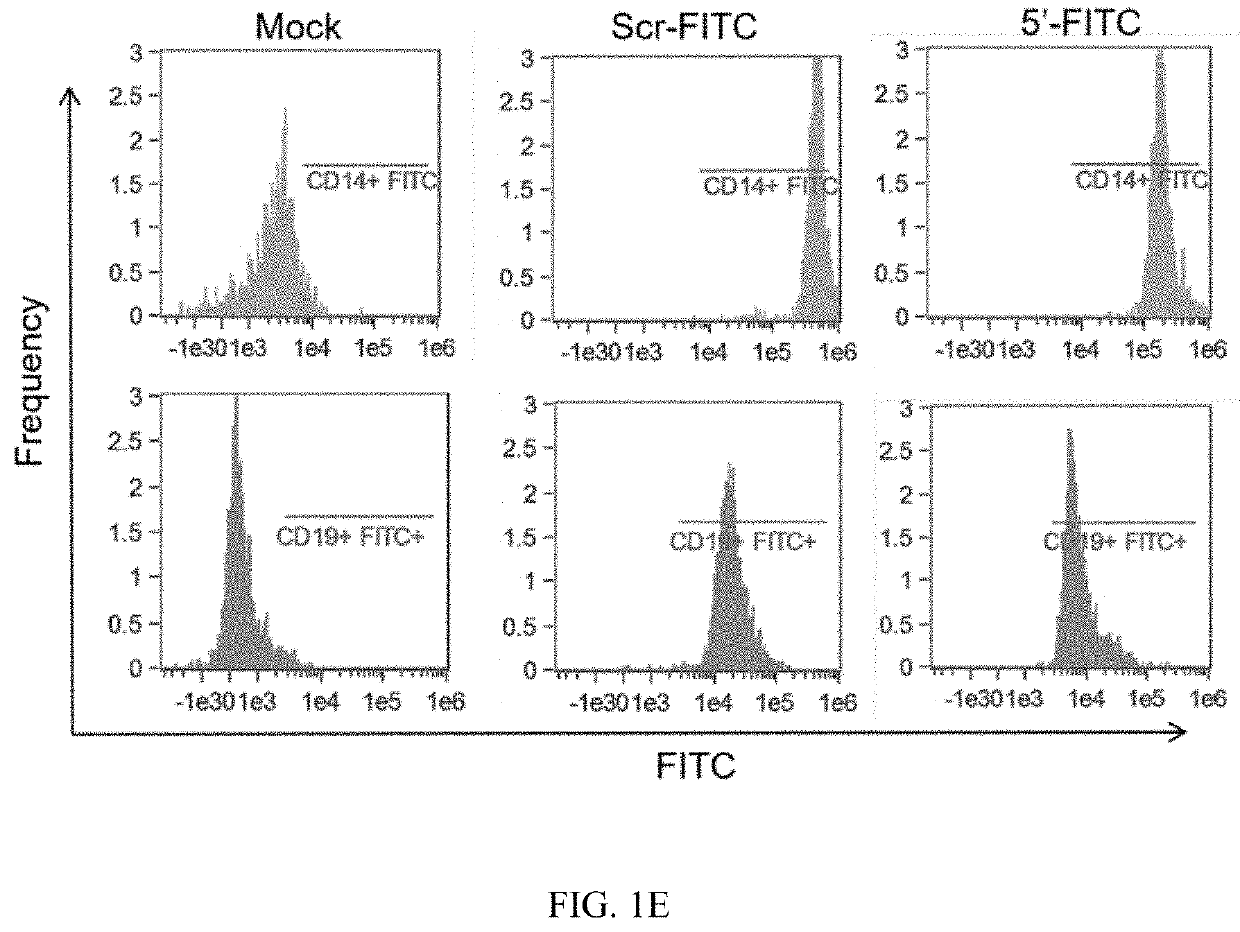
[0121]The transcription factor interferon regulatory factor 5 (IRF5) has previously been implicated in the onset of the autoimmune disorder systemic lupus erythrematosus (SLE). Elevated levels of inflammatory cytokines are a common characteristic of SLE, and are believed to contribute to both autoantibody production and wide spread inflammation. Upon activation, cytoplasmic IRF5 translocates to the nucleus to initiate pro-inflammatory gene transcription. To achieve nuclear translocation, IRF5 relies on two nuclear localization signals located in the N′ and C′ termini of the protein. To investigate the therapeutic potential of IRF5 inhibition, two unique cell-penetrating peptides have been developed (SEQ ID NO:3 and SEQ ID NO:4). Upon treatment with these inhibitors, IRF5 is excluded from the nucleus, while IRF7 and NFκB nuclear translocation were unaffected following activation. The impact of IRF5 inhibition has also been investigated in a variety of cell lines as well as primary pe...
example 3
[0122]The transition of naïve B cells to effector B cells is dependent on a large transcription factor network, which mediates both effector B cell differentiation and function. The full repertoire of transcription factors involved in this process is not known, yet dysregulation of this transcription factor network can result in altered B cell function and autoimmunity. It appears that the transcription factor, interferon regulatory factor 5 (IRF5), is involved in the development of effector B cells. Irf5− / − mice have previously been reported to have reduced plasma B cells, as well as reduced serum IgG subtypes. It remains unclear, however, what role IRF5 may play in human B cell development and function. Significant levels of IRF5 in B cells translocate to the nucleus following stimulation with anti-IgM antibody and CpG. In order to characterize the role of IRF5 in human B cells, IRF5 ChIP-Seq have been performed in both primary naïve B cells and Ramos B cells either mock or anti-I...
PUM
| Property | Measurement | Unit |
|---|---|---|
| swelling | aaaaa | aaaaa |
Abstract
Description
Claims
Application Information
 Login to View More