

Functional training equipment with multiple movement planes for biceps curl exercise
a training equipment and biceps technology, applied in the field of biceps curl exercise functional training equipment with multiple movement planes, can solve problems such as deviation from a biomechanically correct exercise position
Patent Information
- Authority / Receiving Office
- US · United States
- Patent Type
- Applications(United States)
- Current Assignee / Owner
- Publication Date
- 2020-06-18
- Estimated Expiration
- Not applicable · inactive patent
Smart Images
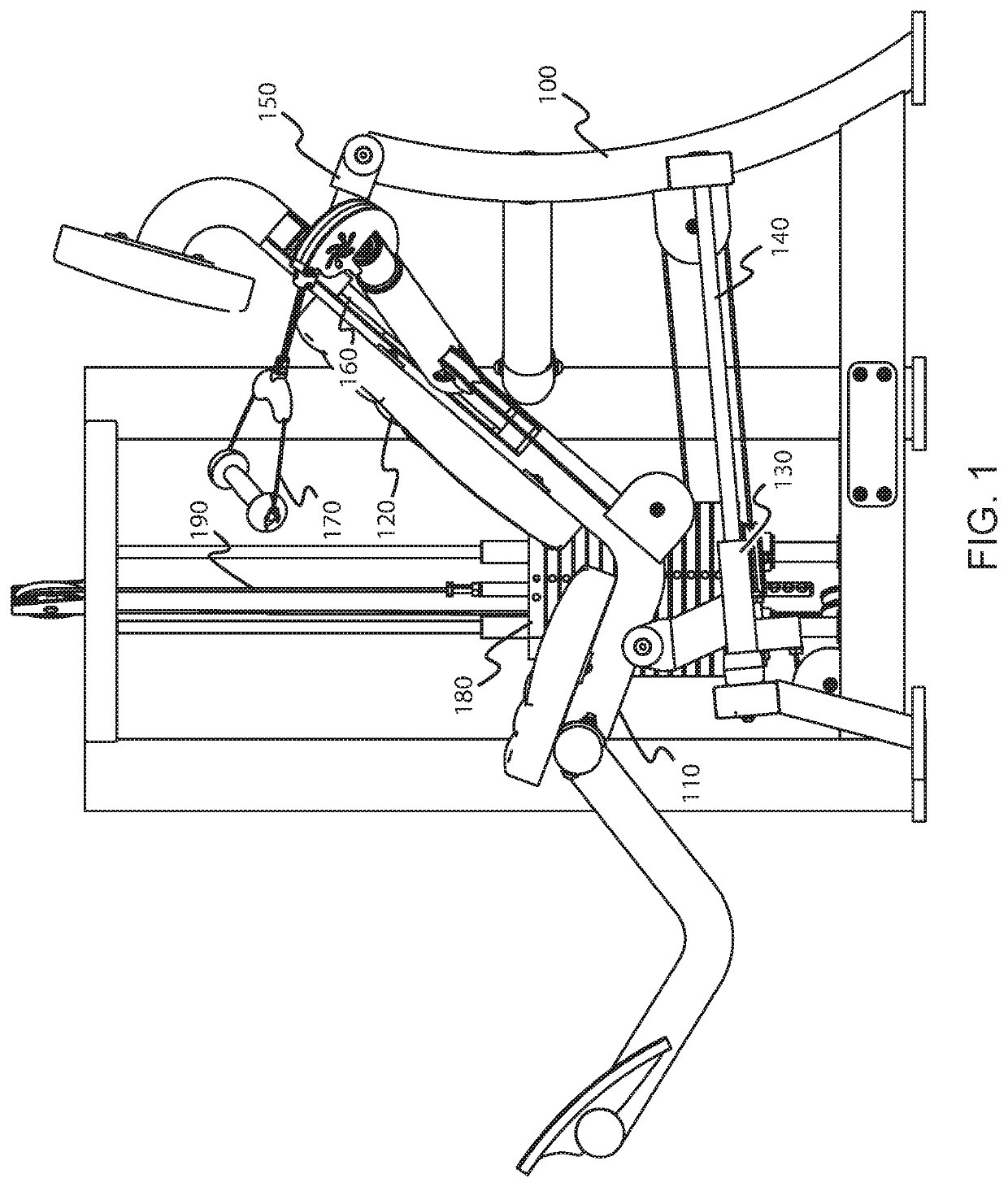
Figure 1 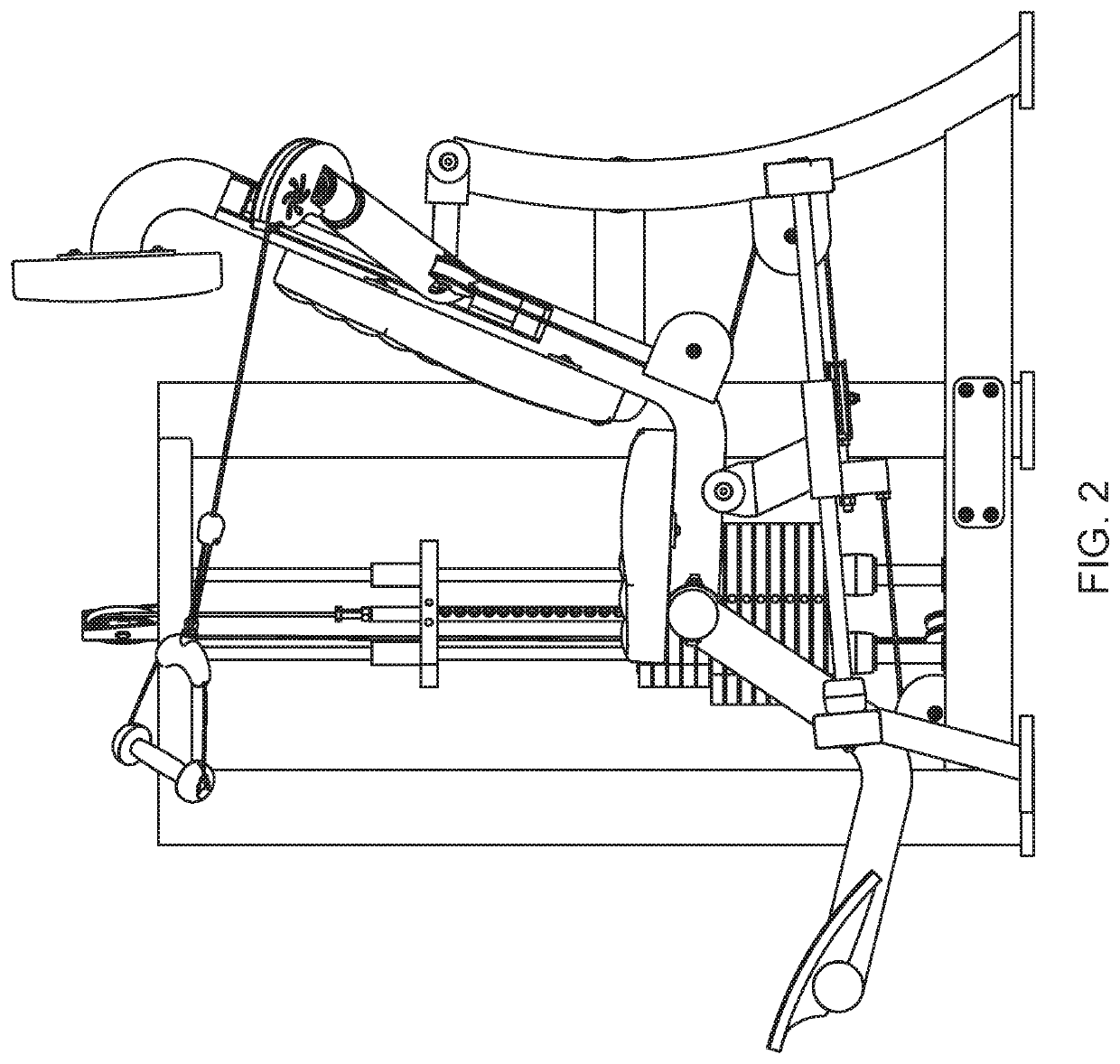
Figure 2 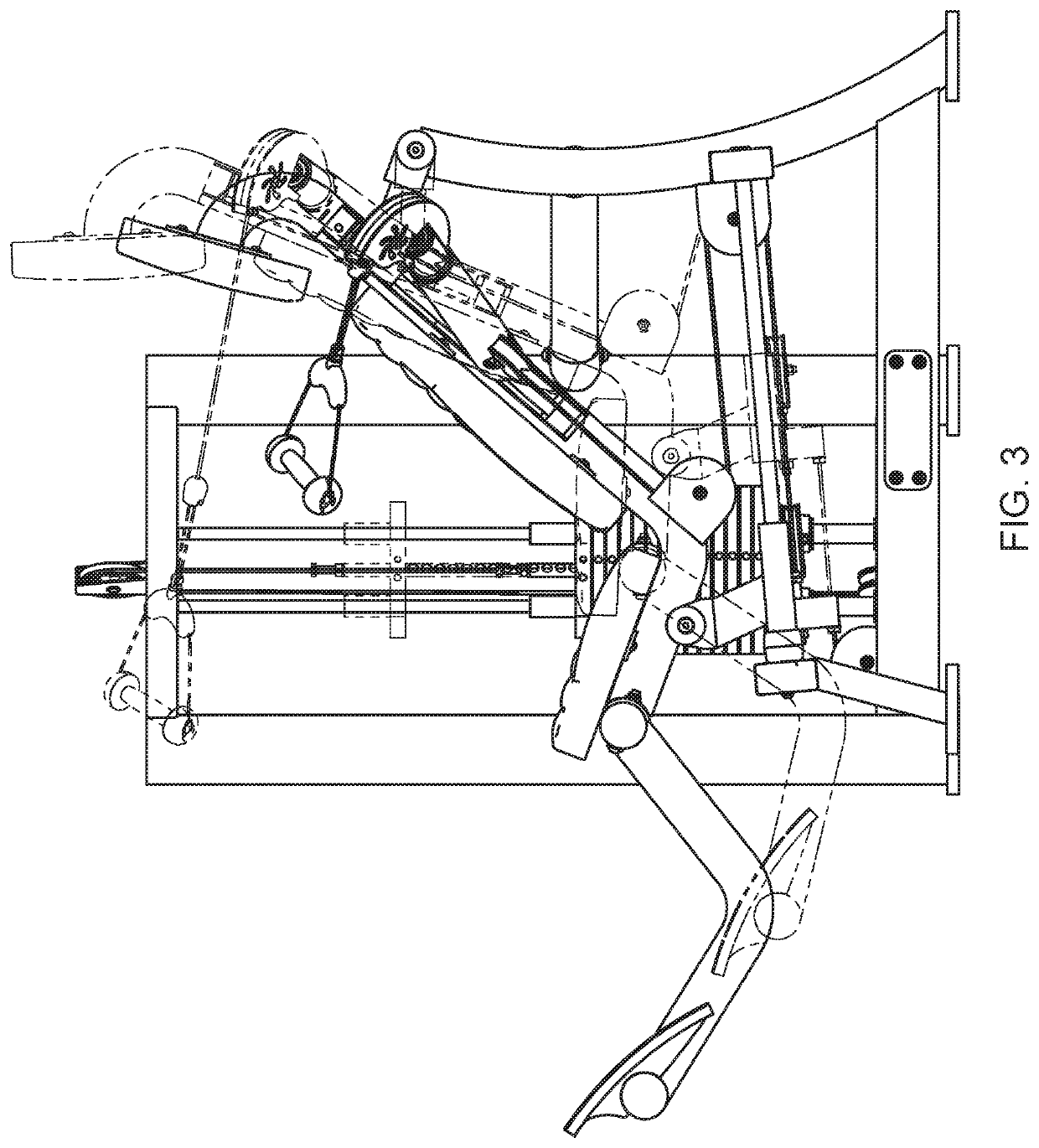
Figure 3
Abstract
Description
BACKGROUND OF THE INVENTION
[0001] Functional training is a classification of exercise which involves training the body for activities performed in daily life. Functional Training leads to better joint mobility, joint stability, and more efficient motor patterns which includes strength and balance. The origins of functional training are derived from physical or occupational rehabilitation using exercises that mimic normal activities. The use of traditional strength machines delivers single plane or fixed pattern motion, which targets only a specific muscle and does not necessarily bear any relationship to the movements people make in their regular activities.
[0002] Many existing solutions subject a user to a mode of interaction and level of stress on the body that can be counterproductive or cause unnecessary injury. In addition, existing solutions may require body positions that are unnatural and / or cause a deviation from a biomechanically correct exercise position through a range of ...
Examples
Embodiment Construction
[0118]The following detailed description is of the best currently contemplated modes of carrying out exemplary embodiments of the invention. The description is not to be taken in a limiting sense, but is made merely for the purpose of illustrating the general principles of the invention, as the scope of the invention is best defined by the appended claims.
[0119]Various inventive features are described below that can each be used independently of one another or in combination with other features. Broadly, some embodiments of the present invention generally provide exercise equipment that puts a user through a natural, progressive motion. Such equipment may include a circuit of individual cable driven machines that allows the user to define a course of exercise.
[0120]The movement created using an arcing progression of some embodiments triggers compound muscle interaction that includes core stabilization and peripheral muscles. Coupling the arc movement of some embodiments and unrestri...