
Automatic detection of airway device, endotracheal intubation, and tube misplacement in children during the anesthesia procedure
an anesthesia procedure and automatic detection technology, applied in the field of automatic detection of airway devices, endotracheal intubation, tube misplacement in children during the anesthesia procedure, can solve problems such as alert fatigue, and achieve the effects of rapid and accurate detection, low accuracy rate, and long time delays
- Summary
- Abstract
- Description
- Claims
- Application Information
AI Technical Summary
Benefits of technology
Problems solved by technology
Method used
Image

Examples
Embodiment Construction
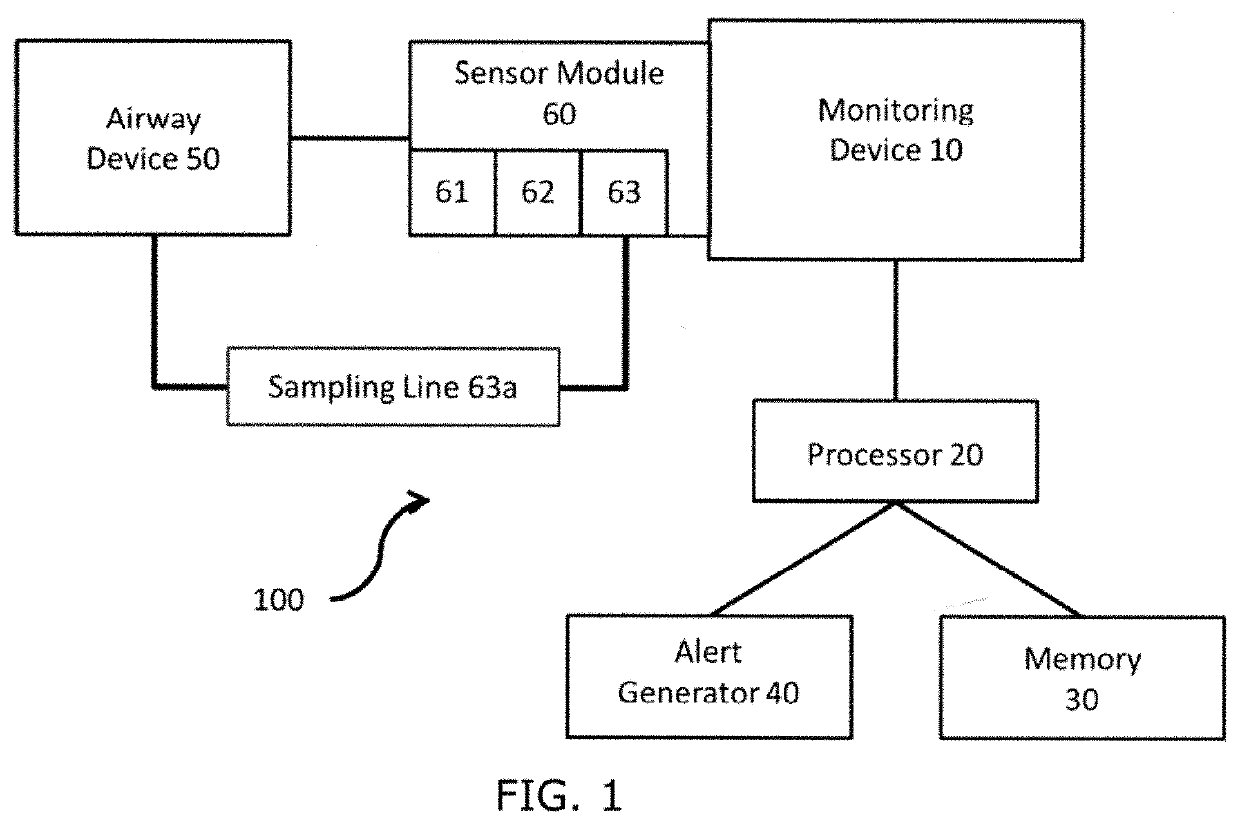
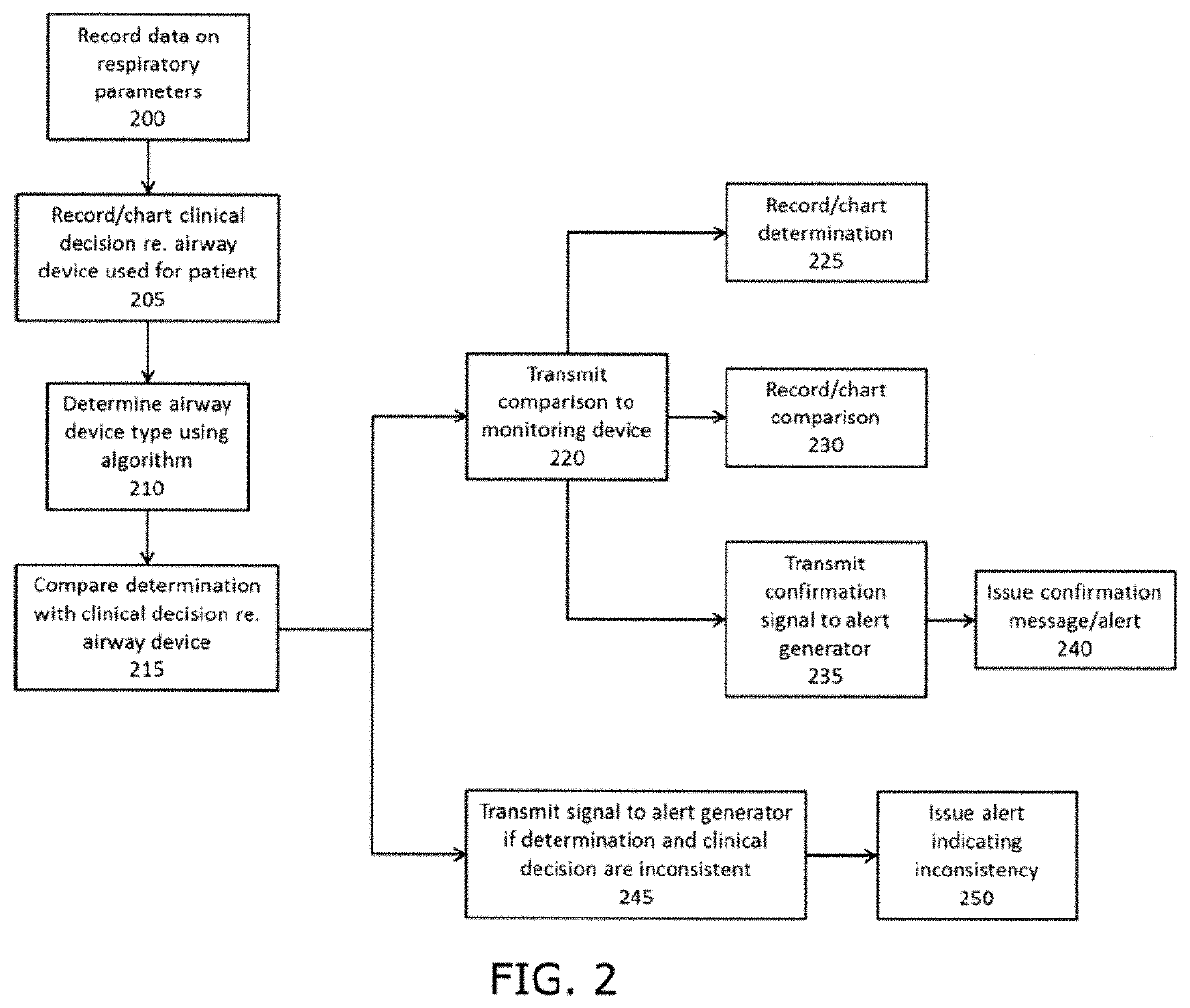
[0044]Aspects of the invention provide devices, methods, and systems having one or more algorithms for detecting and confirming the type of airway device used for mechanical ventilation on a patient, and ET intubation and / or misplacement of ETT by using respiratory data measurements of a patient undergoing mechanical ventilation. Anesthesia machines, mechanical ventilators, and / or respiratory function monitors continuously measure respiratory parameters including end-tidal CO2 (EtCO2), tidal volume (TV), peak inspiratory pressure (PIP), and minute ventilation.
[0045]A patient's airway may be supported during anesthesia using a number of devices, including mask ventilation (Mask), a laryngeal mask airway (LMA) or an endotracheal tube (ETT). Each of these support devices produce subtle differences in the patient's ventilation parameters. It was surprisingly found that these differences result in patterns that can be used to develop algorithms for determining and confirming the type of ...
PUM
 Login to View More
 Abstract
Description
Claims
Application Information
 Login to View More