
Cell culture container capable of long-term culture and method for manufacturing same
a cell culture and long-term culture technology, applied in the field of cell culture containers, can solve the problems of cell proliferation and impaired cell expression, and achieve the effect of reducing the number of cells
- Summary
- Abstract
- Description
- Claims
- Application Information
AI Technical Summary
Benefits of technology
Problems solved by technology
Method used
Image

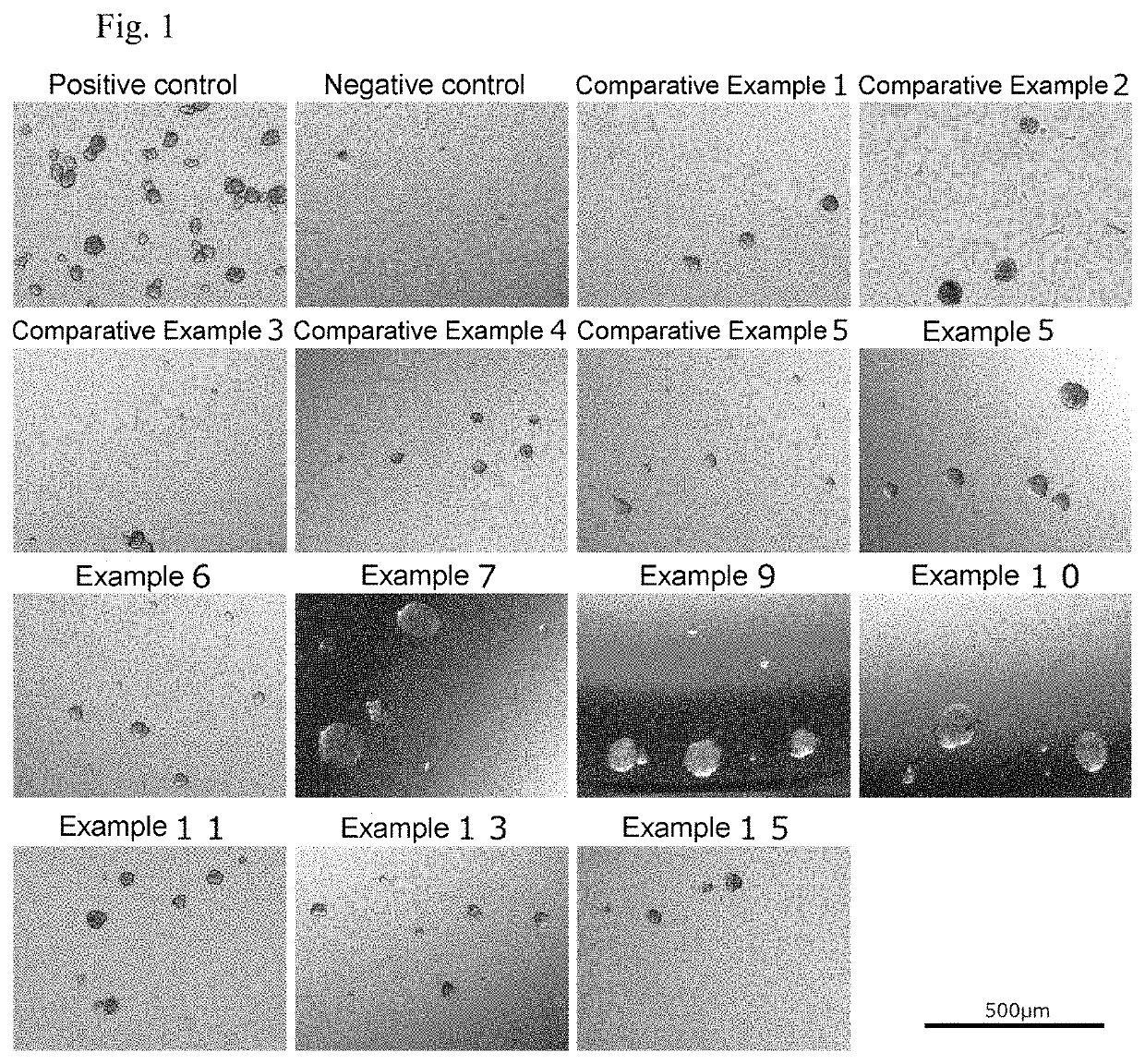
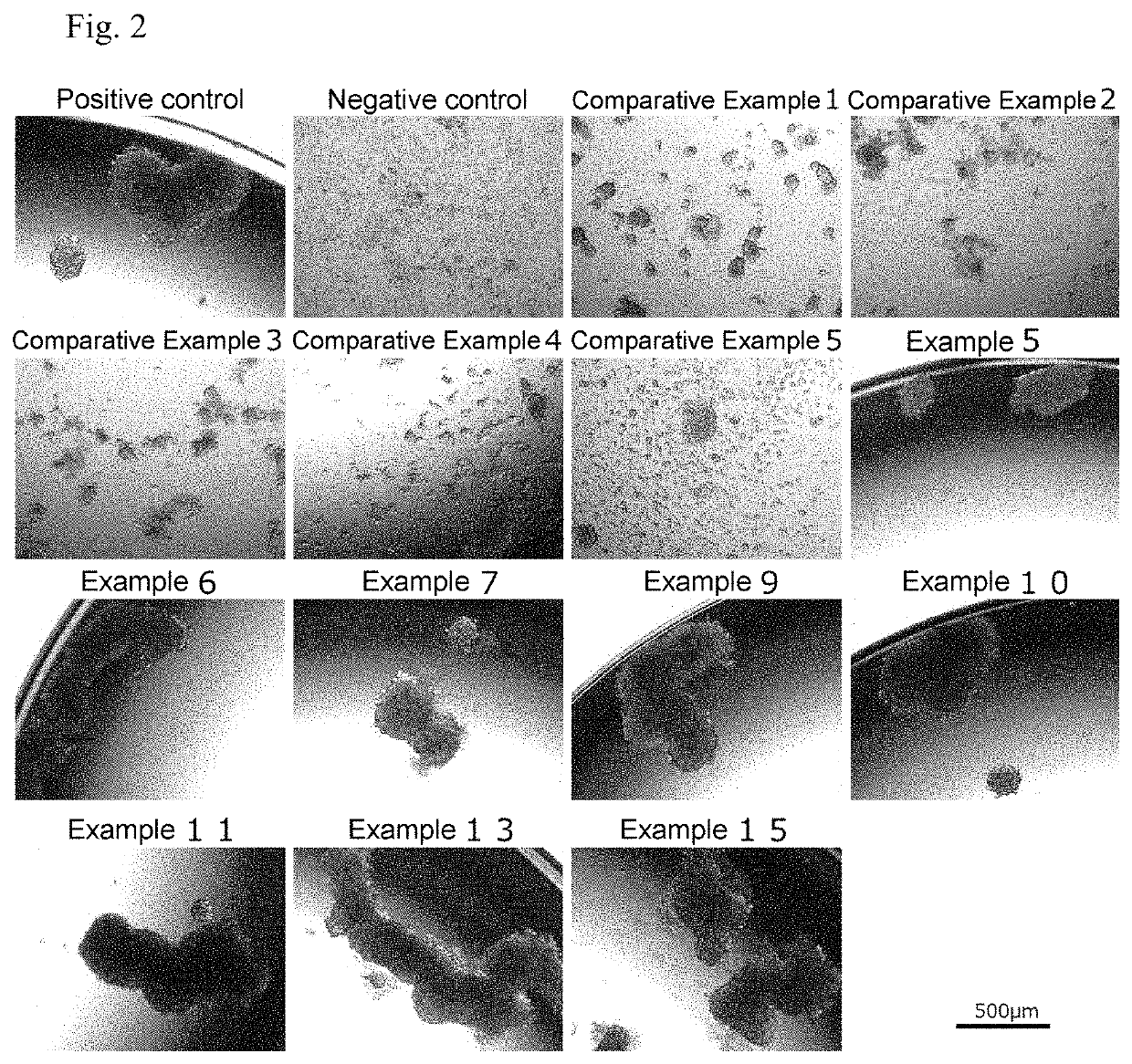
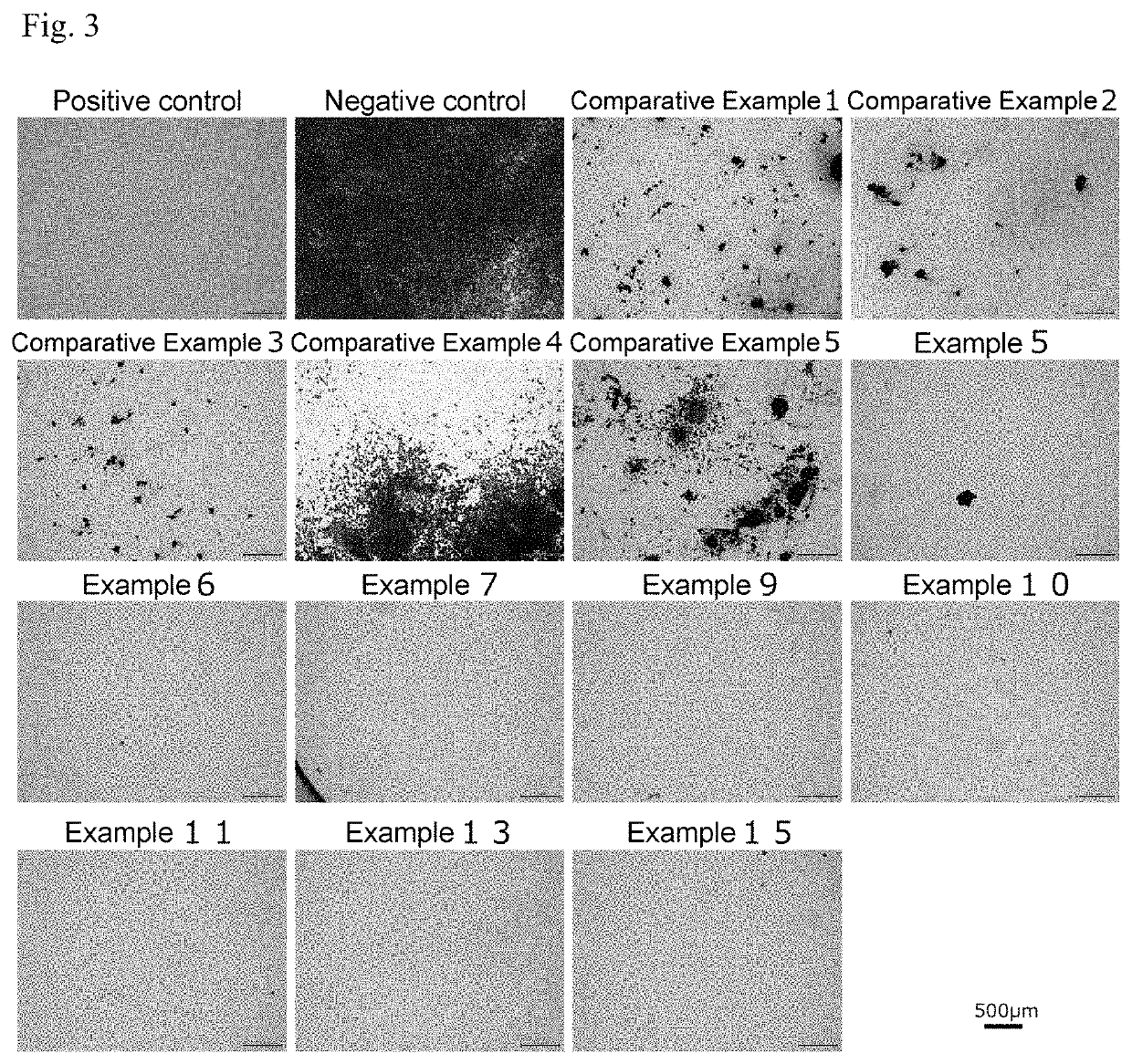
Examples
synthetic example 1
[0198]32.10 g of pure water was added to 7.00 g of acid phosphoxyethyl methacrylate (product name; Phosmer M, available from UniChemical Co., non-volatile content by evaporation to dryness method at 100° C. for 1 hour: 91.8%, a mixture of acid phosphoxyethyl methacrylate (44.2% by mass), bis[2-(methacryloyloxy)ethyl] phosphate (28.6% by mass) and other substance(s) (27.2% by mass)), and the mixture was sufficiently dissolved. Then, 32.10 g of ethanol, 9.41 g of 2-(diethylamino)ethyl methacrylate (available from Tokyo Chemical Industry Co., Ltd.), 1.34 g of n-butyl methacrylate (available from Tokyo Chemical Industry Co., Ltd.) and 0.09 g of 2,2′-azobis(N-(2-carboxyethyl)-2-methylpropionamidine) n-hydrate (available from Wako Pure Chemical Industries, Ltd.; VA-057) were successively added to the aqueous solution of Phosmer M while maintaining to 20° C. or lower. A mixed solution in which all the above-mentioned materials were contained which became uniform by sufficiently stirring wa...
synthetic example 2
[0199]16.05 g of pure water was added to 7.00 g of acid phosphoxyethyl methacrylate (the product name; Phosmer M, available from UniChemical Co., non-volatile content by evaporation to dryness method at 100° C. for 1 hour: 91.8%, a mixture of acid phosphoxyethyl methacrylate (44.2% by mass), bis[2-(methacryloyloxy)ethyl] phosphate (28.6% by mass) and other substance(s) (27.2% by mass)), and the mixture was sufficiently dissolved. Then, 48.16 g of ethanol, 9.41 g of 2-(diethylamino)ethyl methacrylate (available from Tokyo Chemical Industry Co., Ltd.), 1.34 g of n-butyl methacrylate (available from Tokyo Chemical Industry Co., Ltd.) and 0.09 g of 2,2′-azobis(N-(2-carboxyethyl)-2-methylpropionamidine) n-hydrate (available from Wako Pure Chemical Industries, Ltd.; VA-057) were successively added to the aqueous solution of Phosmer M while maintaining to 20° C. or lower. A mixed solution in which all the above-mentioned materials were contained which became uniform by sufficiently stirrin...
synthetic example 3
[0200]15.81 g of pure water was added to 7.00 g of acid phosphoxyethyl methacrylate (the product name; Phosmer M, available from UniChemical Co., non-volatile content by evaporation to dryness method at 100° C. for 1 hour: 91.8%, a mixture of acid phosphoxyethyl methacrylate (44.2% by mass), bis[2-(methacryloyloxy)ethyl] phosphate (28.6% by mass) and other substance(s) (27.2% by mass)), and the mixture was sufficiently dissolved. Then, 47.44 g of ethanol, 9.41 g of 2-(diethylamino)ethyl methacrylate (available from Tokyo Chemical Industry Co., Ltd.), 1.07 g of ethyl methacrylate (available from Tokyo Chemical Industry Co., Ltd.) and 0.09 g of 2,2′-azobis(N-(2-carboxyethyl)-2-methylpropionamidine) n-hydrate (available from Wako Pure Chemical Industries, Ltd.; VA-057) were successively added to the aqueous solution of Phosmer M while maintaining to 20° C. or lower. A mixed solution in which all the above-mentioned materials were contained which became uniform by sufficiently stirring ...
PUM
| Property | Measurement | Unit |
|---|---|---|
| Density | aaaaa | aaaaa |
| Adhesion strength | aaaaa | aaaaa |
Abstract
Description
Claims
Application Information
 Login to View More