Strained Semiconductor FET Devices with Epitaxial Quality Improvement

US20220005951A1Pending Publication Date: 2022-01-06IBM CORP
5 Cites 0 Cited by

Patent Information

Authority / Receiving Office
US · United States
Current Assignee / Owner
Publication Date
2022-01-06

Smart Images

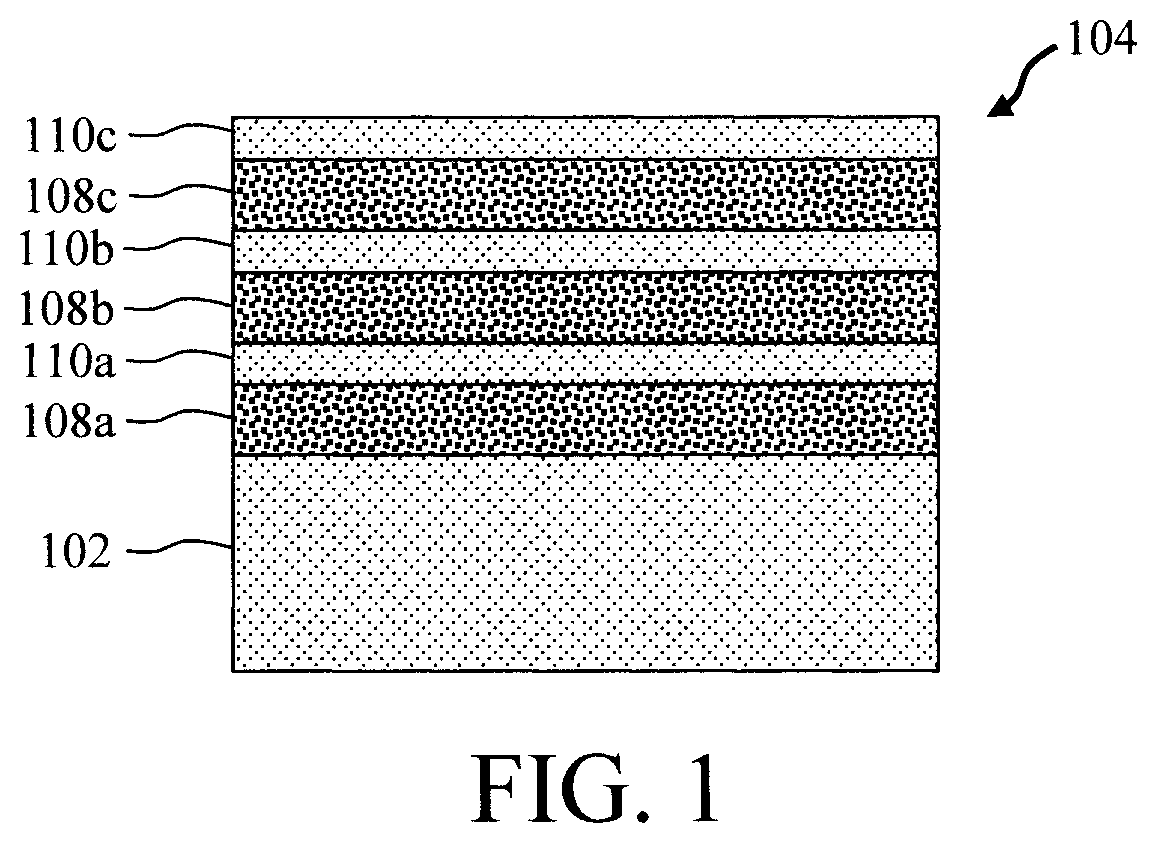
  • Figure 1
    Figure 1
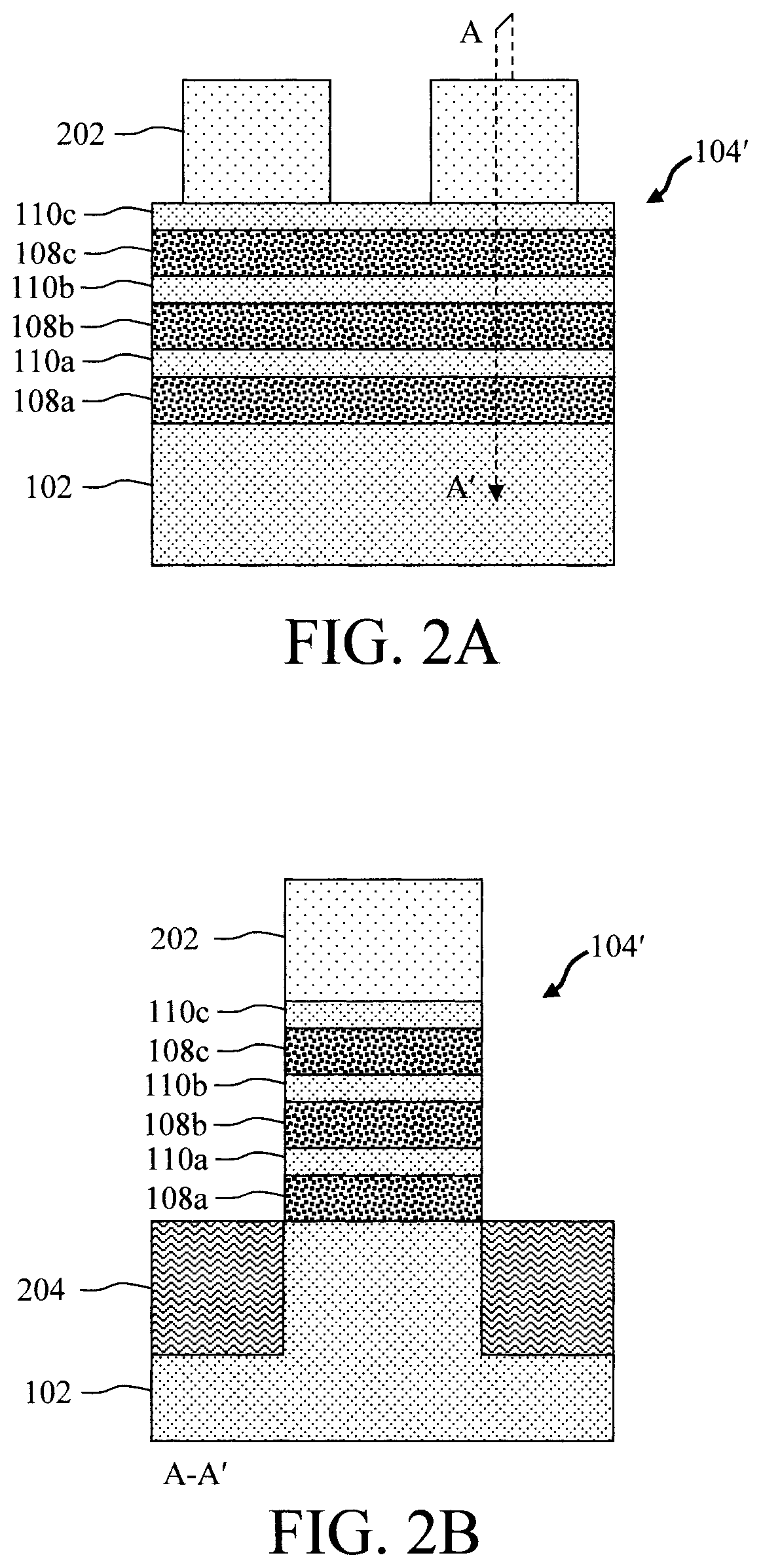
  • Figure 2
    Figure 2
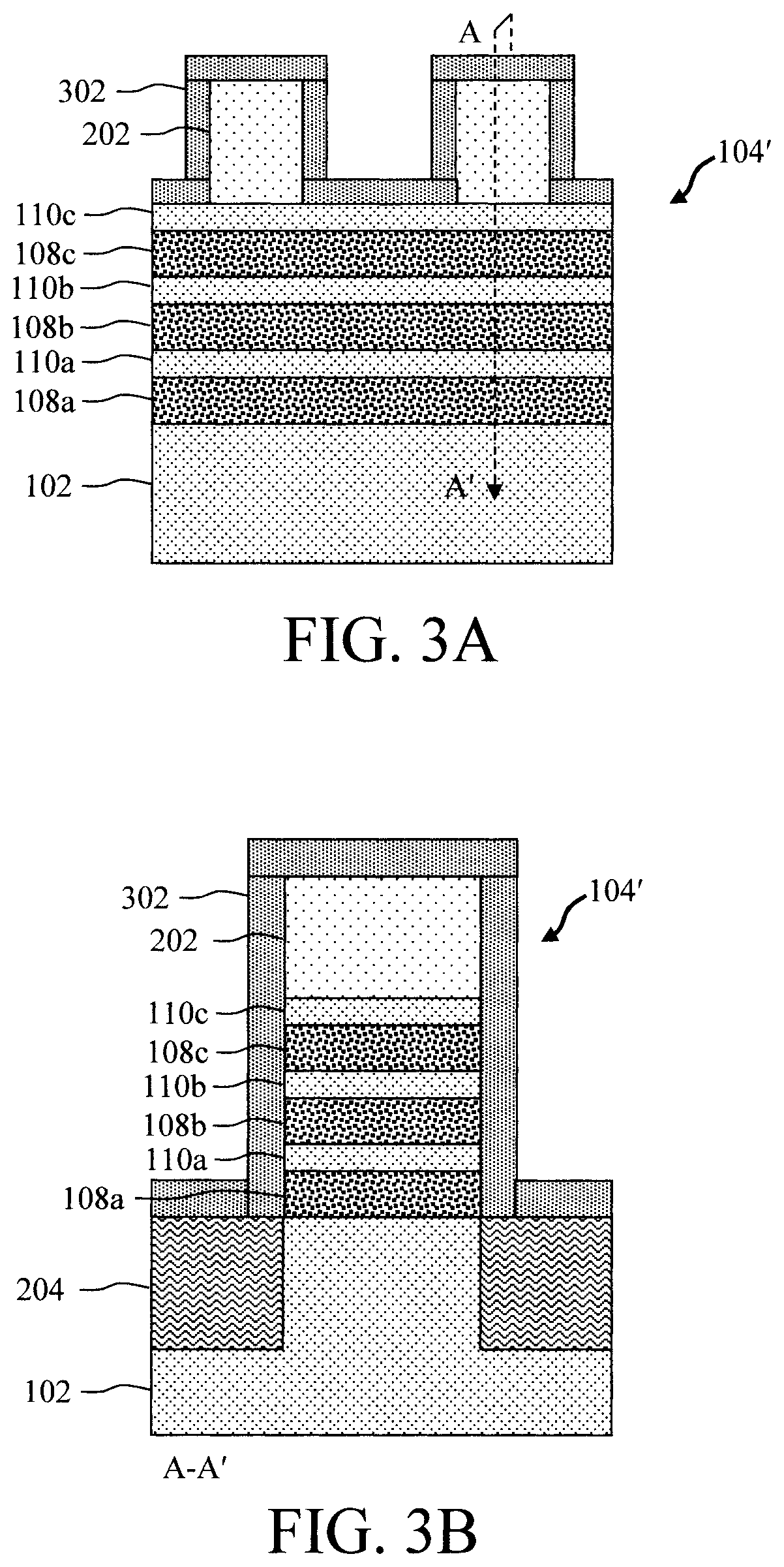
  • Figure 3
    Figure 3
Patent Text Reader

Abstract

Strained semiconductor FET devices with epitaxial quality improvement are provided. In one aspect, a semiconductor FET device includes: a substrate; at least one device stack including active layers oriented horizontally one on top of another on the substrate; gates surrounding at least a portion of each of the active layers; gate spacers alongside the gates; and source / drains, interconnected by the active layers, on opposite sides of the gates, wherein the source / drains are offset from the gates by inner spacers, wherein the source / drains include an epitaxial material having a low defect density which induces strain in the active layers, and wherein the gate spacers are formed from a same material as the inner spacers. A method of forming the semiconductor FET device using a spacer last process is also provided.
Need to check novelty before this filing date? Find Prior Art

Description

FIELD OF THE INVENTION

[0001] The present invention relates to source / drain epitaxy in semiconductor field-effect transistor (FET) devices, and more particularly, to strained semiconductor FET devices with epitaxial quality improvement and techniques for formation thereof using a spacer-last process.BACKGROUND OF THE INVENTION

[0002] A stacked nanosheet architecture is a promising design choice for the next generation of field-effect transistors (FETs). Advantageously, a nanosheet FET design enables the formation of gate-all-around or GAA configurations. With conventional process flows for nanosheet FET fabrication, inner spacers are formed along the nanosheet stack prior to source and drain growth. These inner spacers limit growth of the source and drain epitaxy to the ends of the channel nanosheets.

[0003] However, it is difficult to grow the source and drain epitaxy with the inner spacers already in place. This is due to the small exposed area at the ends of the channel nanosheets. Fur...

Examples

Embodiment Construction

[0023]As provided above, nanosheet field-effect transistor (FET) device fabrication process flows where inner spacers are formed along the nanosheet stack prior to source and drain growth can present some notable drawbacks. For instance, there is only a small exposed area at the ends of the channel nanosheets for the source and drain epitaxy which makes the epitaxial growth process difficult.

[0024]Furthermore, the defectivity in the resulting source and drain epitaxy is high based on the different angle of epitaxy nucleation on the exposed ends of the channel nanosheets. With a high defectivity, there is almost no channel strain generated by the epitaxial material. Channel strain desirably enhances channel mobility and overall device performance.

[0025]Advantageously, provided herein are techniques for fabricating semiconductor FET devices such as nanosheet FET devices whereby the inner spacers are formed post epitaxial source / drain growth. By enabling the source / drain growth to occu...