
Method and apparatus for treating tubular knitted goods
a tubular knitted goods and treatment method technology, applied in the direction of light and heating apparatus, drying, stretching, etc., can solve the problems of non-uniform color or dyeing of fabrics, conventional heat fixing process involving cutting open and re-sewing tubular goods, and insufficient material rejection,
- Summary
- Abstract
- Description
- Claims
- Application Information
AI Technical Summary
Benefits of technology
Problems solved by technology
Method used
Image

Examples
Embodiment Construction
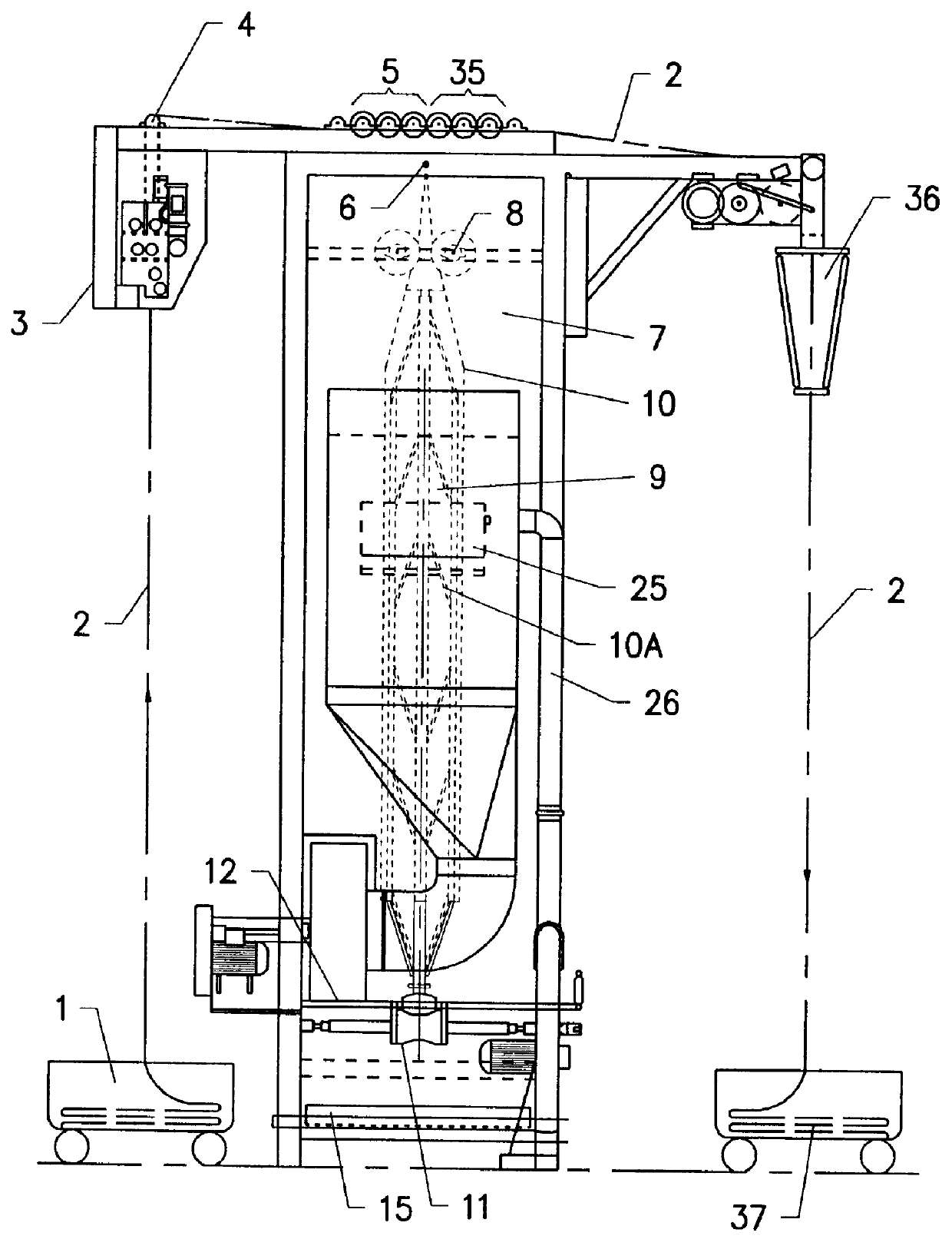
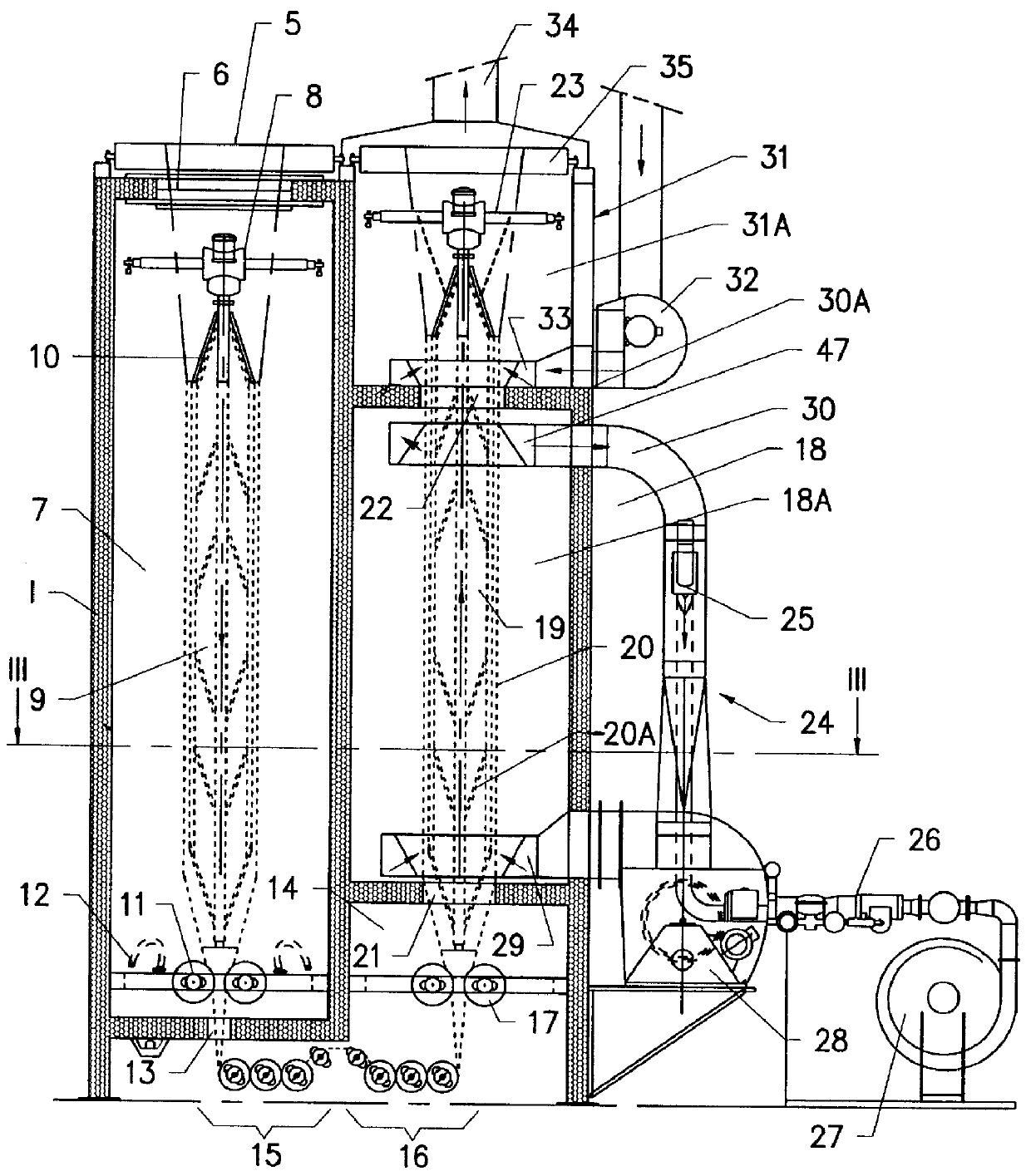
FIG. 1 shows a first embodiment of an apparatus according to the invention, wherein tubular knitted goods 2 are taken from a supply stack 1 of the raw knitted goods and are guided over a so-called inlet stretcher or spreader 3, which spreads, flattens and smoothes the knitted goods 2. Thereafter, the knitted goods 2 run over a deflection roller 4 and are then grasped or engaged by a feed roller arrangement 5 that includes rotationally driven feed rollers, which further transport the knitted goods 2 into a relaxing chamber 7.
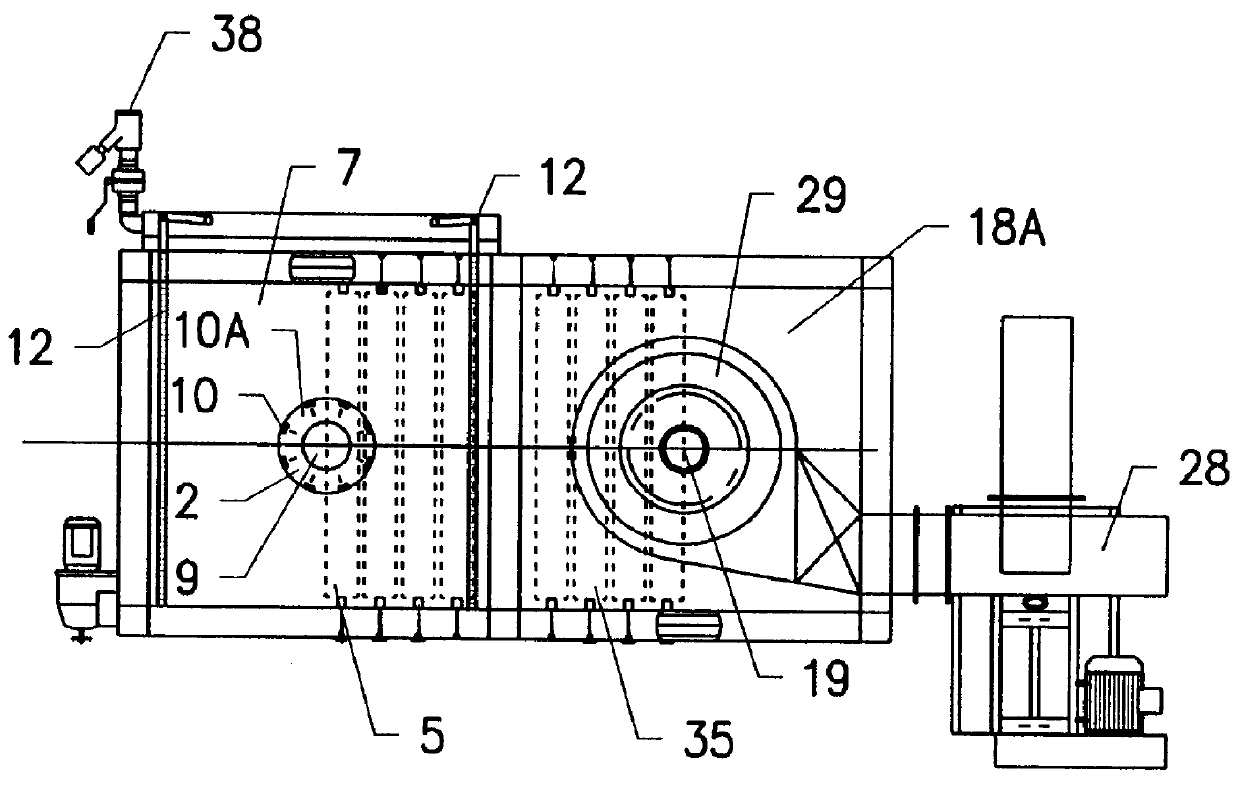
The relaxing chamber 7 is insulated all around with thermal insulation I as shown in FIG. 2, for example. Furthermore, the relaxing chamber 7 has a substantially sealed inlet opening 6 through which the knitted goods 2 are introduced into the relaxing chamber 7 from the feed roller arrangement 5. The interior space of the relaxing chamber 7 is heated by a direct steam heating arrangement, whereby particularly one or more steam pipes 12 introduce steam directly in...
PUM
| Property | Measurement | Unit |
|---|---|---|
| Velocity | aaaaa | aaaaa |
| Temperature | aaaaa | aaaaa |
| Length | aaaaa | aaaaa |
Abstract
Description
Claims
Application Information
 Login to View More