
Injection ratio control system for internal combustion engine
a technology of injection ratio control and internal combustion engine, which is applied in the direction of electrical control, process and machine control, instruments, etc., can solve the problems of excessive fuel injection, inability to control the injection ratio of the engine, and inability to inhibit the noise and vibration of the engin
- Summary
- Abstract
- Description
- Claims
- Application Information
AI Technical Summary
Benefits of technology
Problems solved by technology
Method used
Image

Examples
first embodiment
(First Embodiment)
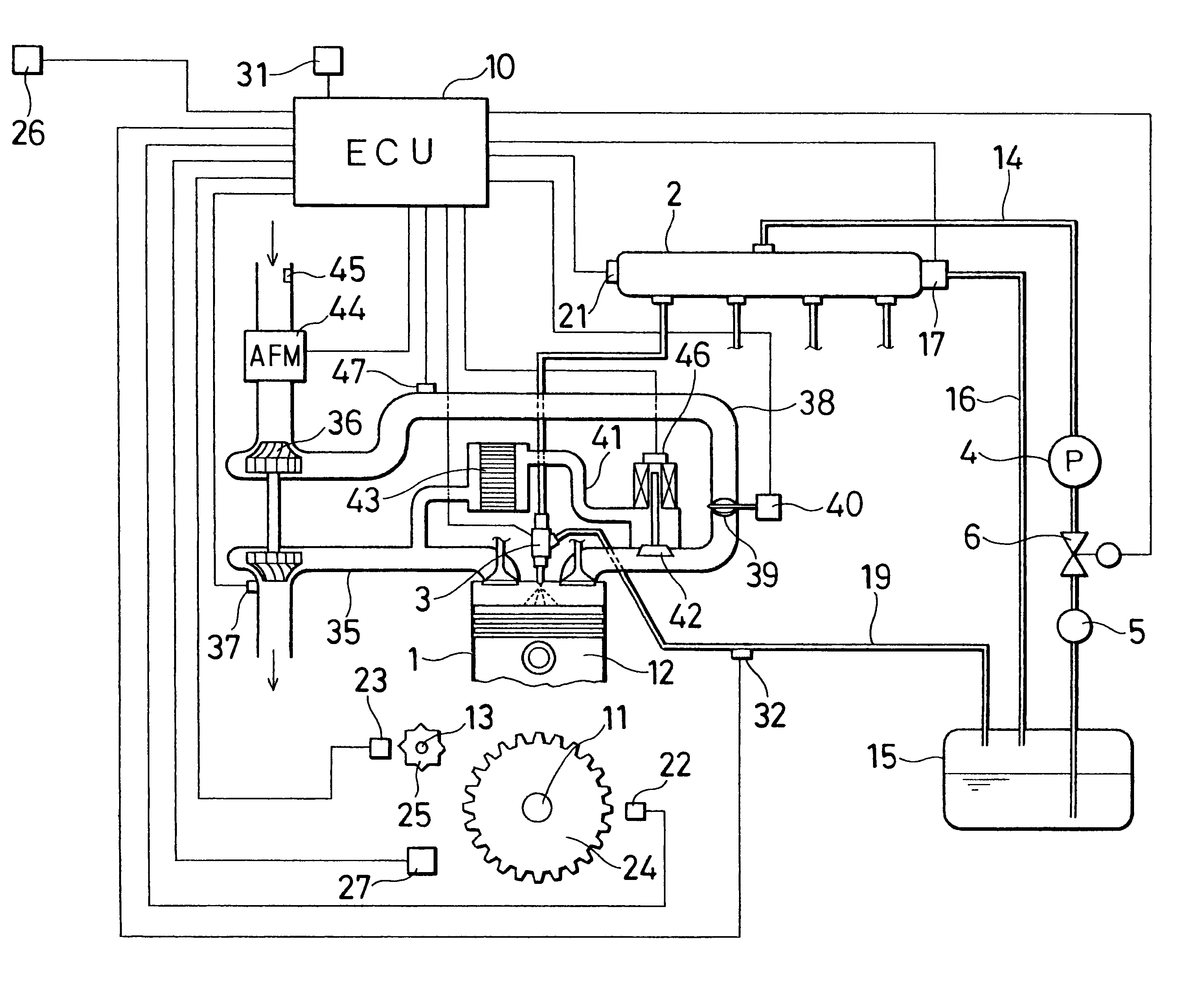
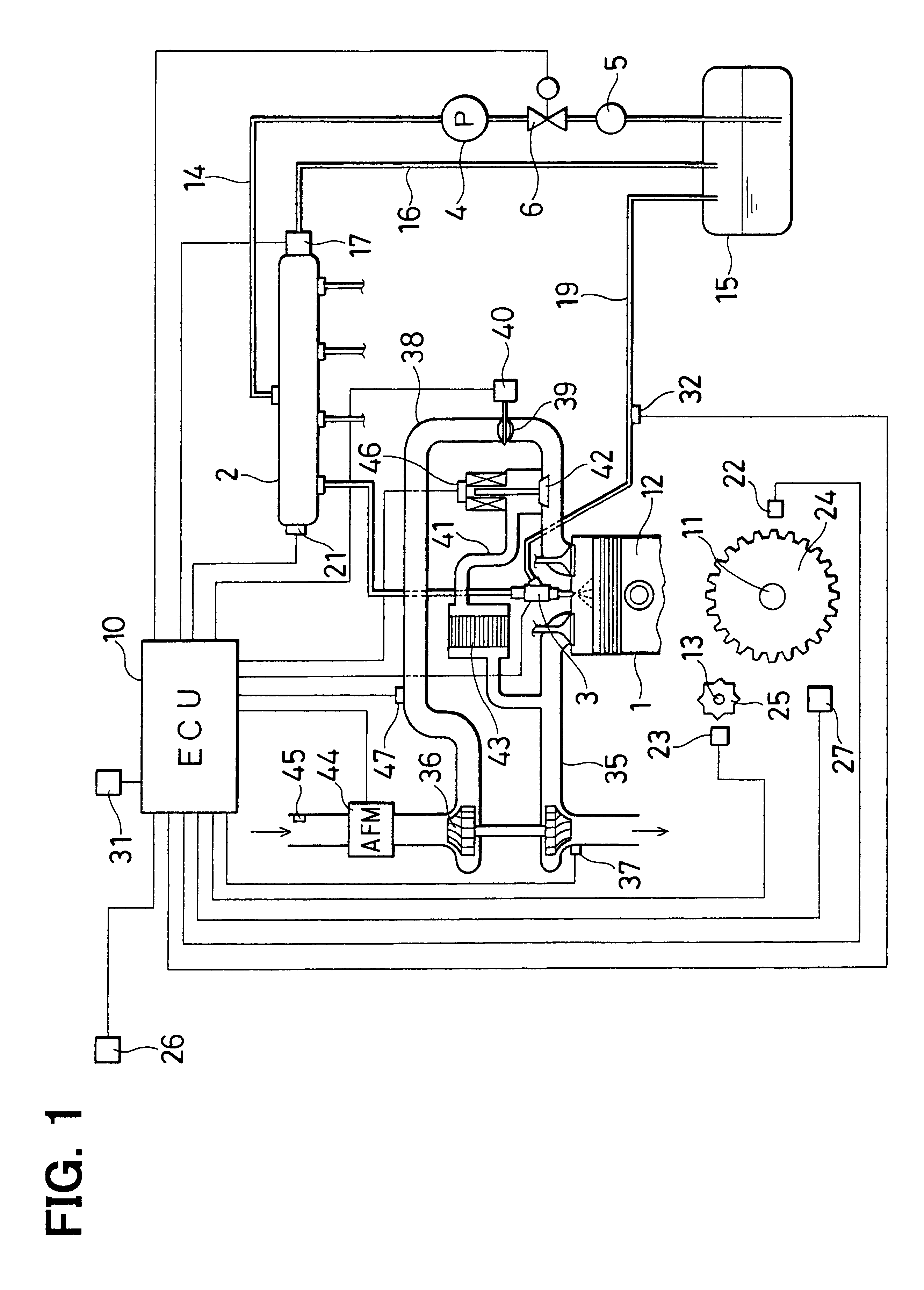
Referring to FIG. 1, an accumulation type fuel injection system according to the first embodiment is illustrated. The accumulation type fuel injection system has a common rail 2 as an accumulator, a plurality of (four, in the embodiment) injectors 3 having electromagnetic valves, a fuel supply pump 4 and an electronic control unit (ECU) 10. The common rail 2 accumulates fuel at a high pressure corresponding to a fuel injection pressure, at which the fuel is injected into respective cylinders of an internal combustion engine 1 such as a four-cylinder diesel engine mounted on a vehicle. The injectors 3 are respectively connected with the common rail 2 and inject the fuel into the respective cylinders of the engine 1. The supply pump 4 is rotated by the engine 1. The ECU 10 electronically controls the injectors 3 and the supply pump 4.
A piston 12 connected with a crankshaft 11 through a connection rod is slidably disposed in each cylinder of the engine 1.
The common ra...
second embodiment
(Second Embodiment)
Next, an injector injection quantity controlling method of the second embodiment for controlling a multi-injection frequency will be explained based on FIGS. 5 and 6.
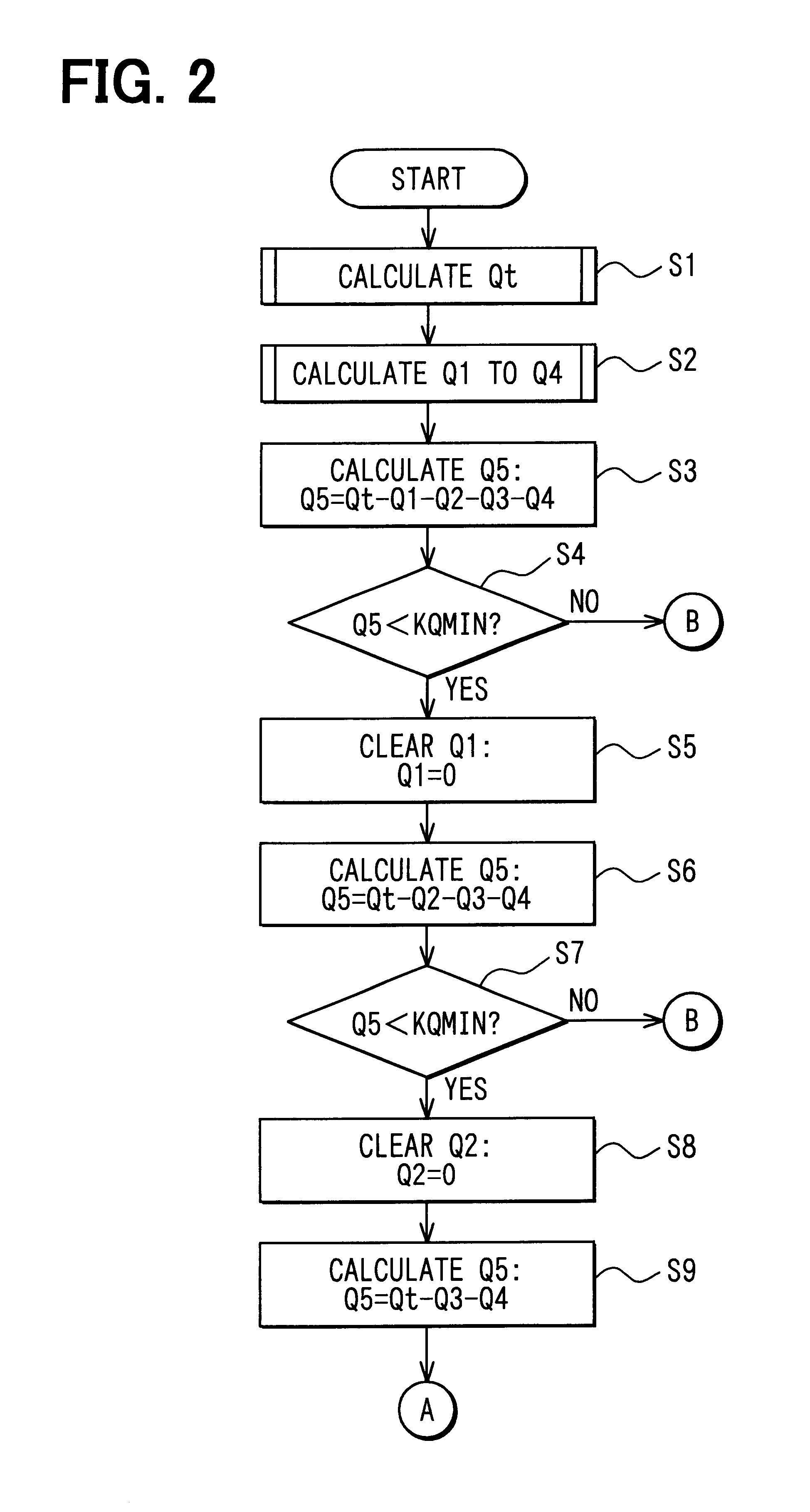
When a routine shown in FIG. 5 is started after the FCCB correction or the ISC correction, the total injection quantity command value Qt is calculated like the first embodiment in Step S21. Then, it is determined whether the total injection quantity Qt is greater than an N times (five times, in the embodiment) injection permission determination value KQMIN5 or not in Step S22. If the result of the determination is "YES", N times (five times, in the embodiment) injections are permitted in Step S23. Then, the processing leaves the routine shown in FIG. 5.
If the result of the determination in Step S22 is "NO", the injection quantity command value Q1 is cleared (Q1=0) in Step S24. Meanwhile, it is determined whether the total injection quantity Qt is greater than an N minus one times (four times, in the e...
PUM
 Login to View More
 Abstract
Description
Claims
Application Information
 Login to View More