
Electronic ballast using cut and save technology
a technology of electronic ballast and cut-and-save technology, which is applied in the direction of electrical equipment, instruments, light sources, etc., can solve the problems of low reliability, poor consistency, and reduce so as to prolong the life of the lamp tube, improve safety performance, and improve the whole efficiency of the electronic ballast
- Summary
- Abstract
- Description
- Claims
- Application Information
AI Technical Summary
Benefits of technology
Problems solved by technology
Method used
Image

Examples
Embodiment Construction
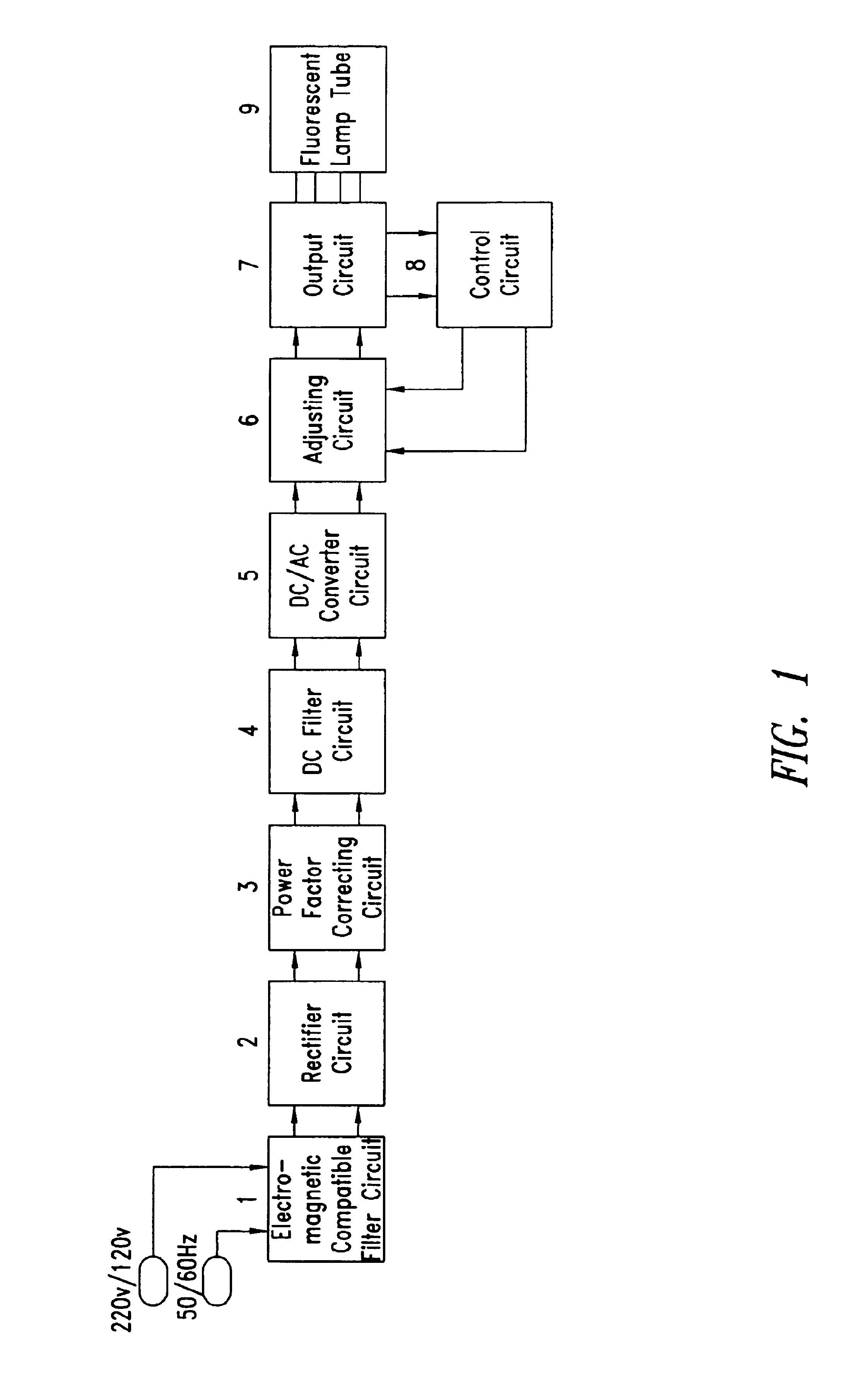
[0025]As shown in FIG. 1, an electronic ballast includes an electro-magnetic compatible filter circuit 1, a rectifier circuit 2, a power factor correcting circuit (PFC) 3, a DC filter circuit 4, a DC / AC converter circuit 5, an adjusting circuit 6, an output circuit 7, and a control circuit 8 connected successively.
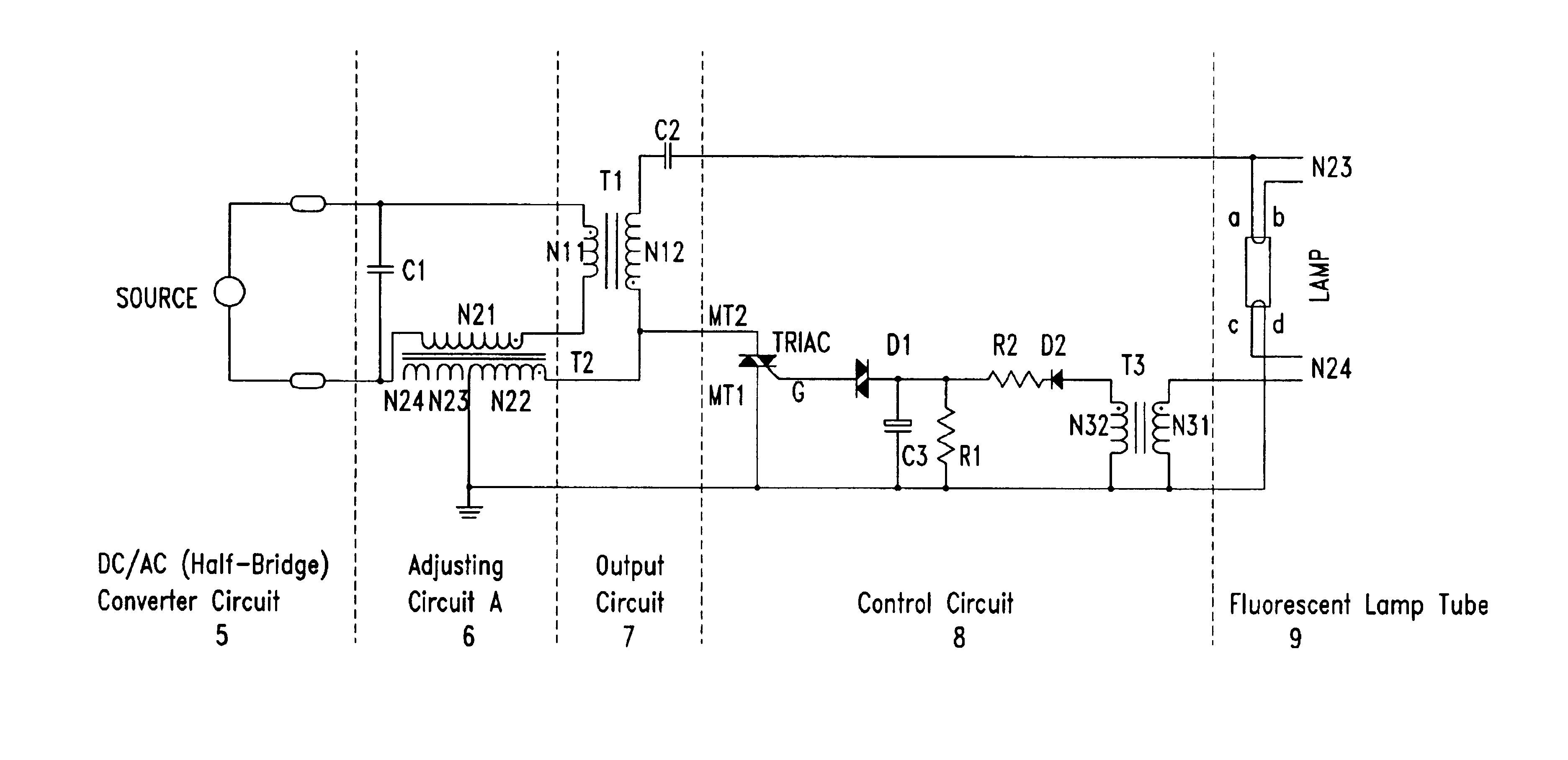
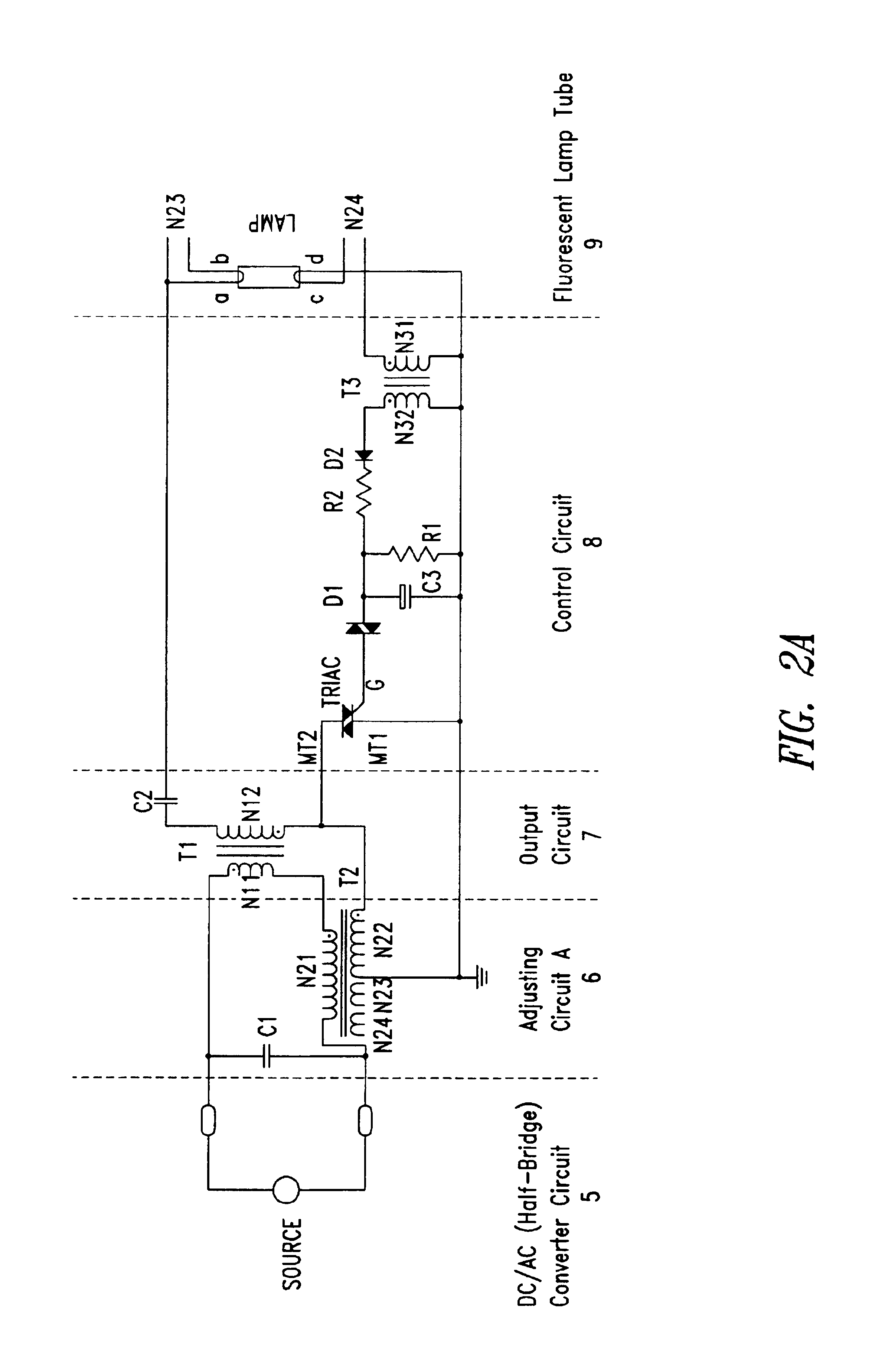
[0026]As shown in FIG. 2a, a primary winding N21 of a transformer T2 in the adjusting circuit 6 is connected in series to a primary winding N11 of a transformer T1 in the output circuit 7. In particular, the same polarity end of the primary winding N21 of the transformer T2 is connected to the different polarity end of the primary winding N11 of the transformer T1 in the output circuit 7, and both the other end of the primary winding N21 of the transformer T2 and the other end of the primary winding N11 of the transformer T1 are connected to output ends port 1 and port 2 of the DC / AC converter circuit 5 respectively, with a resonant capacitor C1 being connected between the...
PUM
 Login to View More
 Abstract
Description
Claims
Application Information
 Login to View More