
Master node selection in clustered node configurations
a clustering and node technology, applied in the field of computer networks, can solve the problems of difficult administration, insufficient capacity of single servers to keep up with the load on their system, and require network administrators to use time-consuming trial and error techniques, and achieve the effect of maximum total availability potential for the network
- Summary
- Abstract
- Description
- Claims
- Application Information
AI Technical Summary
Benefits of technology
Problems solved by technology
Method used
Image

Examples
Embodiment Construction
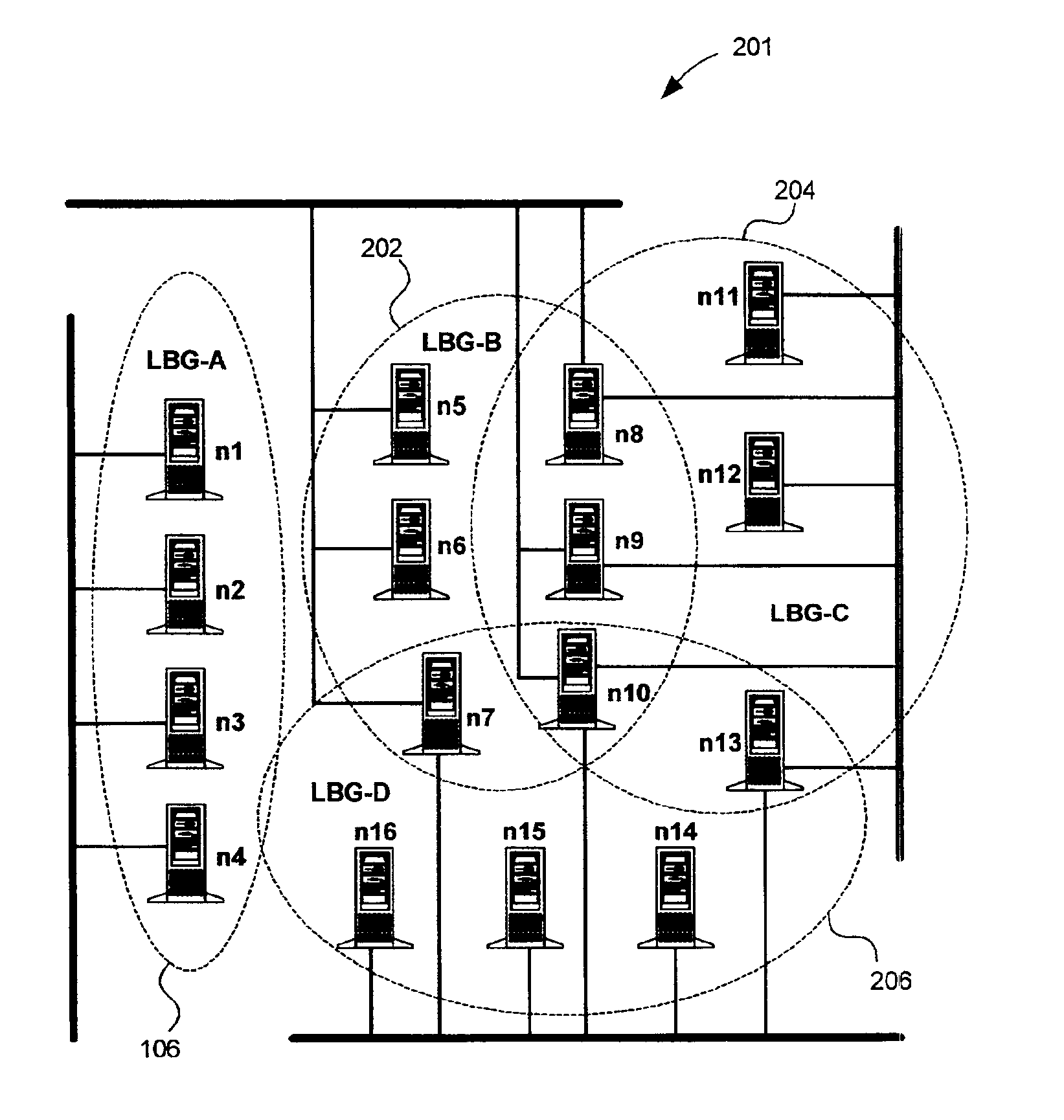
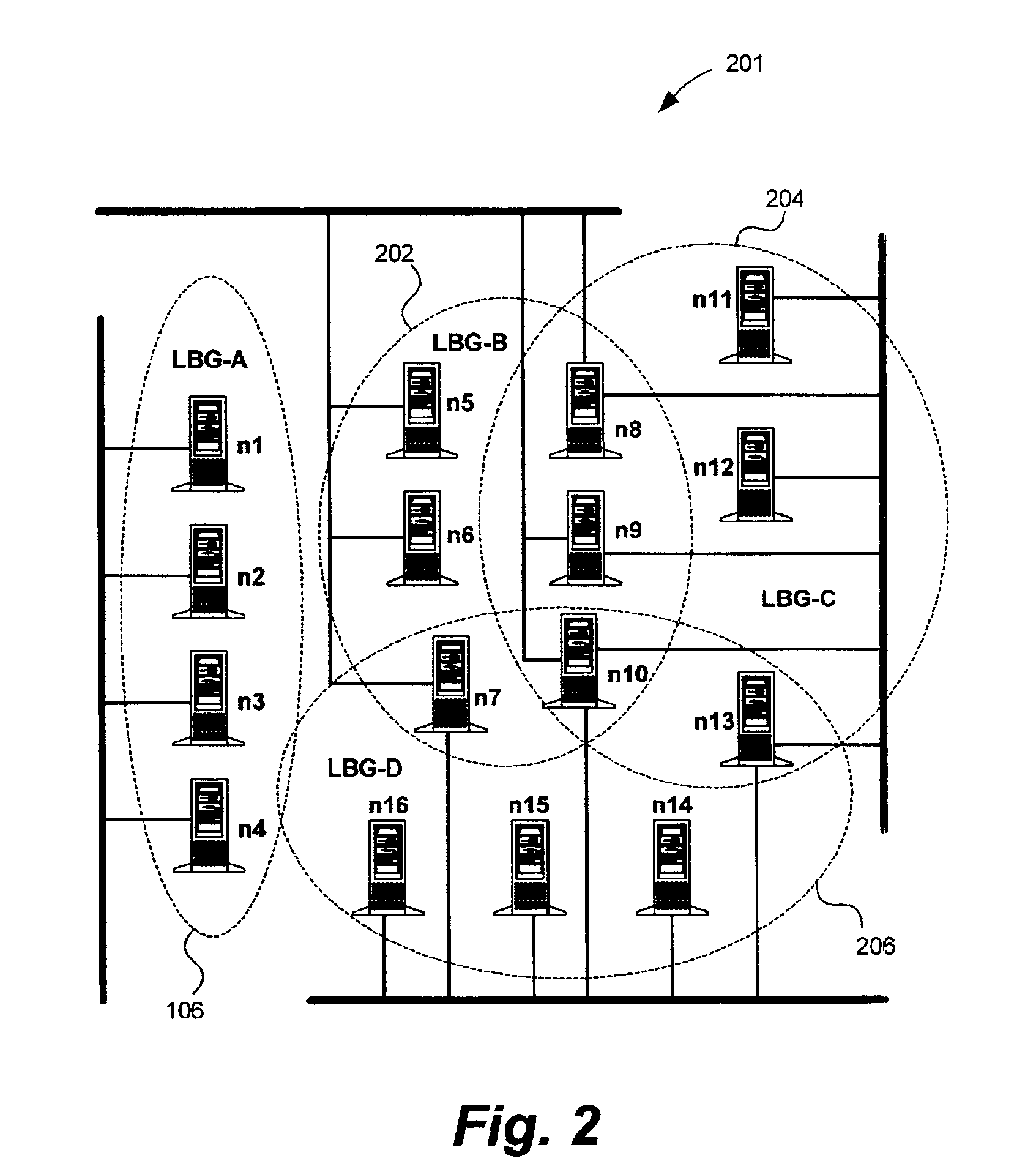
[0023]In general, the present invention is used to automatically select master nodes such that optimal availability of the node group is achieved. The invention is described in detail below with reference to FIGS. 1-4E. When referring to the figures, like structures and elements shown throughout are indicated with like reference numerals.
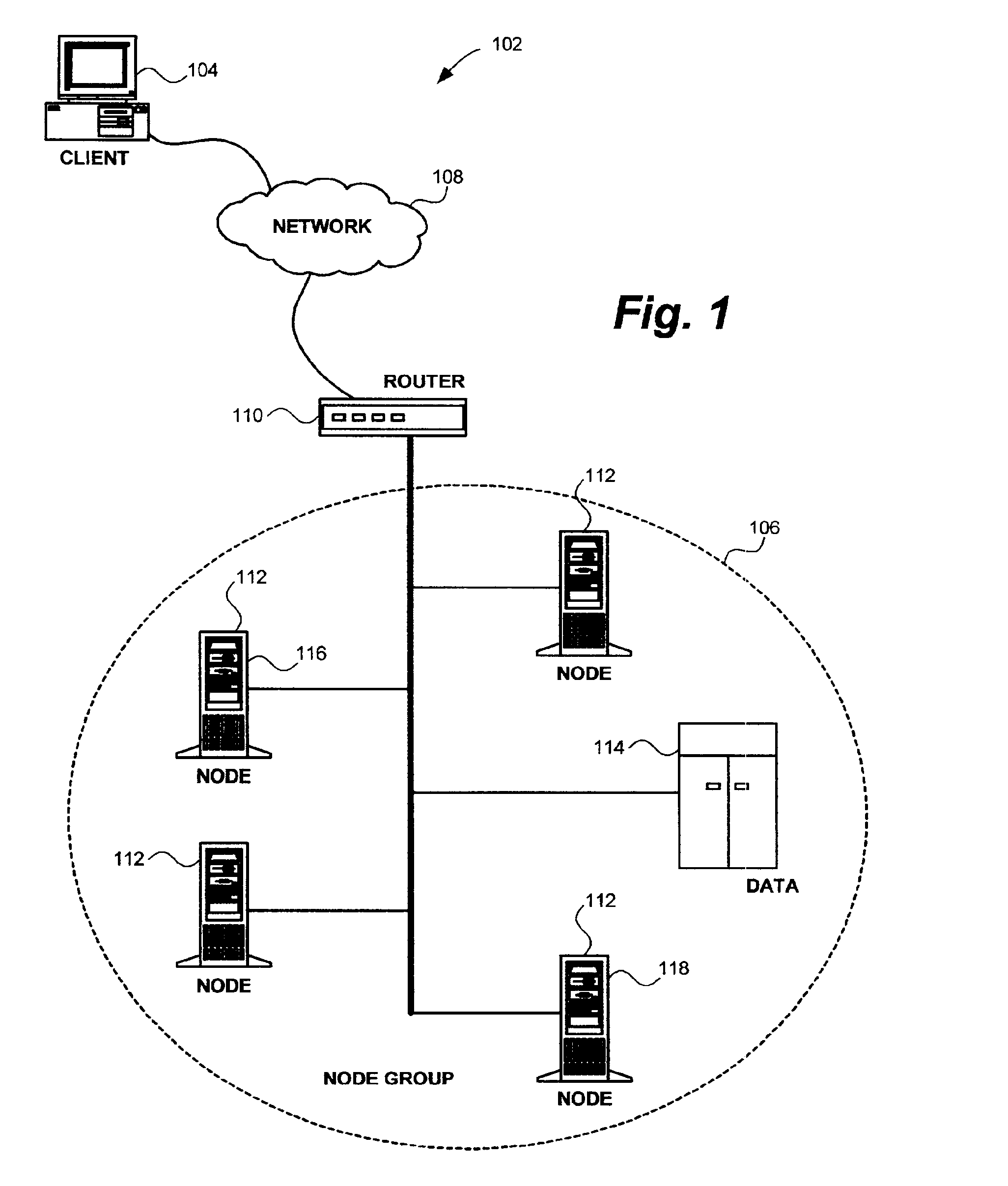
[0024]In FIG. 1, an exemplary computer network environment 102 embodying the present invention is shown. A client 104 is pictured communicating to a node group 106 through a wide area network (WAN) 108. The communication path between the client 104 and the node group 106 may include various networking devices known to those in art. For example, a router 110 may be used to direct messages from the client 104 to the node group 106.
[0025]The node group 106 is comprised of several nodes 112 sharing at least one common network resource 114, such as data. One node in the node group 106 is selected to be a master node 116, also referred to herein as the pr...
PUM
 Login to View More
 Abstract
Description
Claims
Application Information
 Login to View More