Quasi-resonant DC-DC converters with reduced body diode loss

a diode converter and diode current technology, applied in the field of buck dc — dc converters, can solve the problems of reverse recovery loss, reduced energy efficiency of buck converters, and substantial energy loss of diode current, so as to reduce switching losses, reduce output voltage, and increase the duty cycle

US6989997B2Inactive Publication Date: 2006-01-24VIRGINIA TECH INTPROP INC +1
3 Cites 70 Cited by

Patent Information

Authority / Receiving Office
US · United States
Patent Type
Patents(United States)
Current Assignee / Owner
Publication Date
2006-01-24
Estimated Expiration
Not applicable · inactive patent

Smart Images

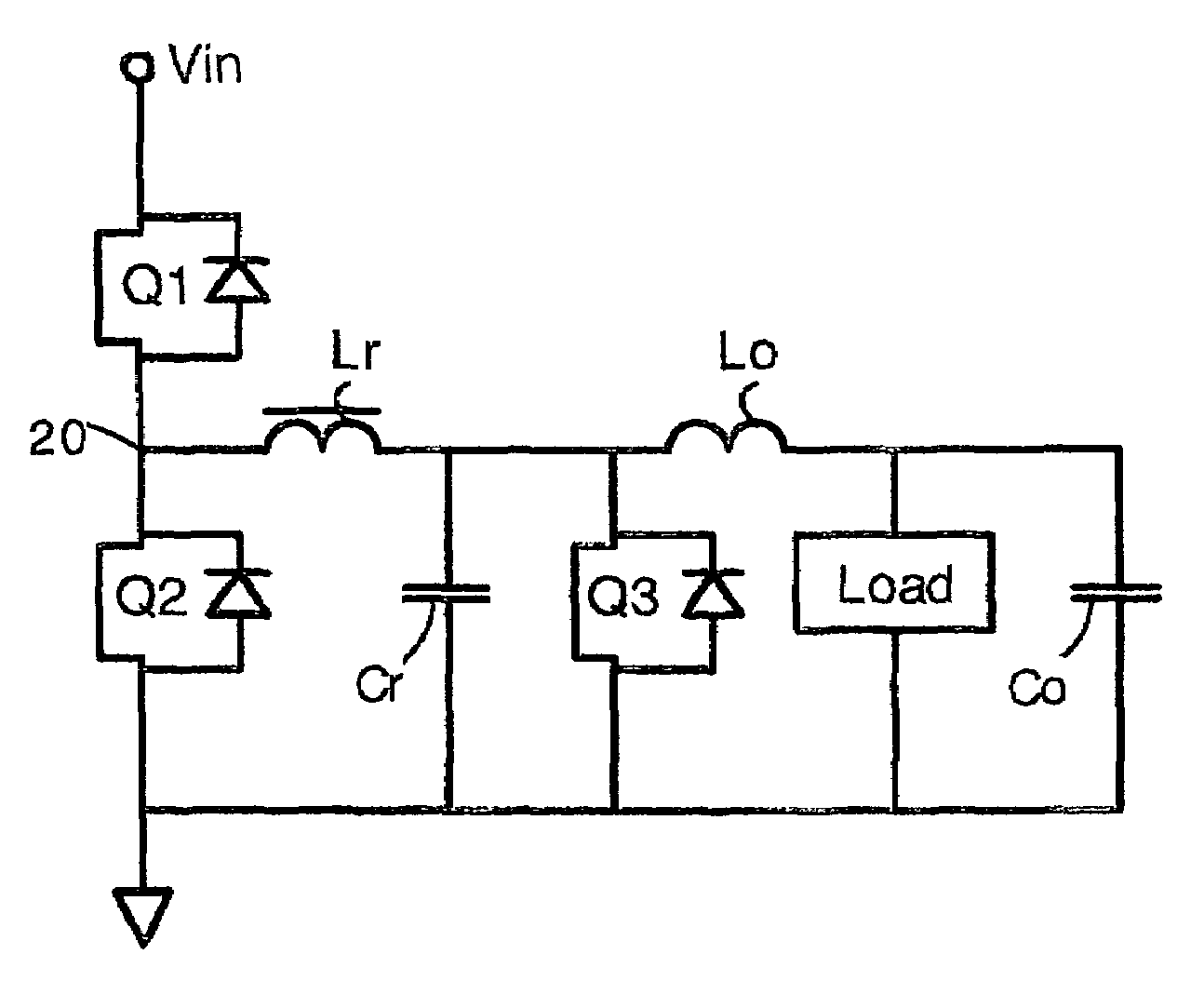
  • Figure 1
    Figure 1
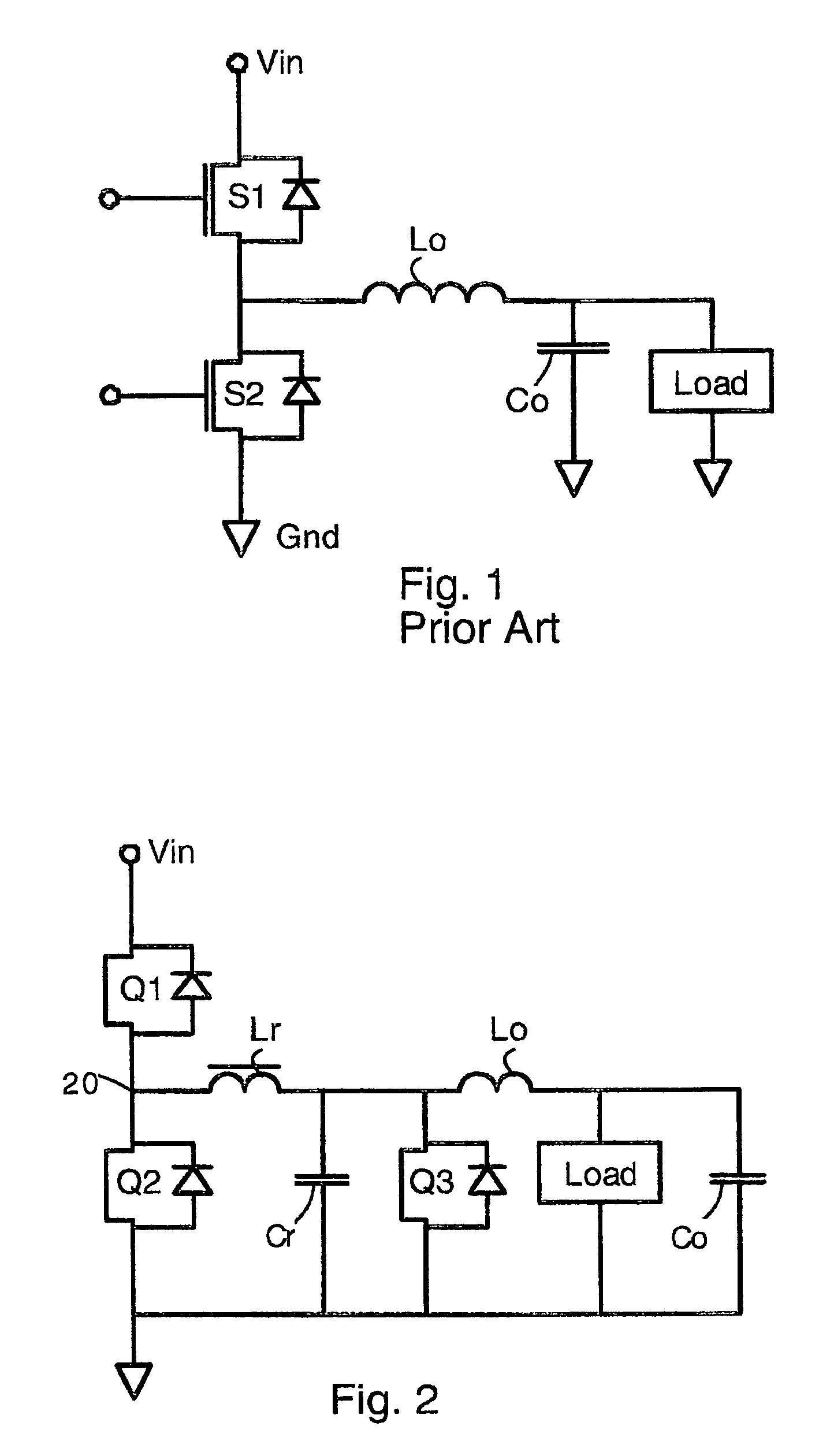
  • Figure 2
    Figure 2
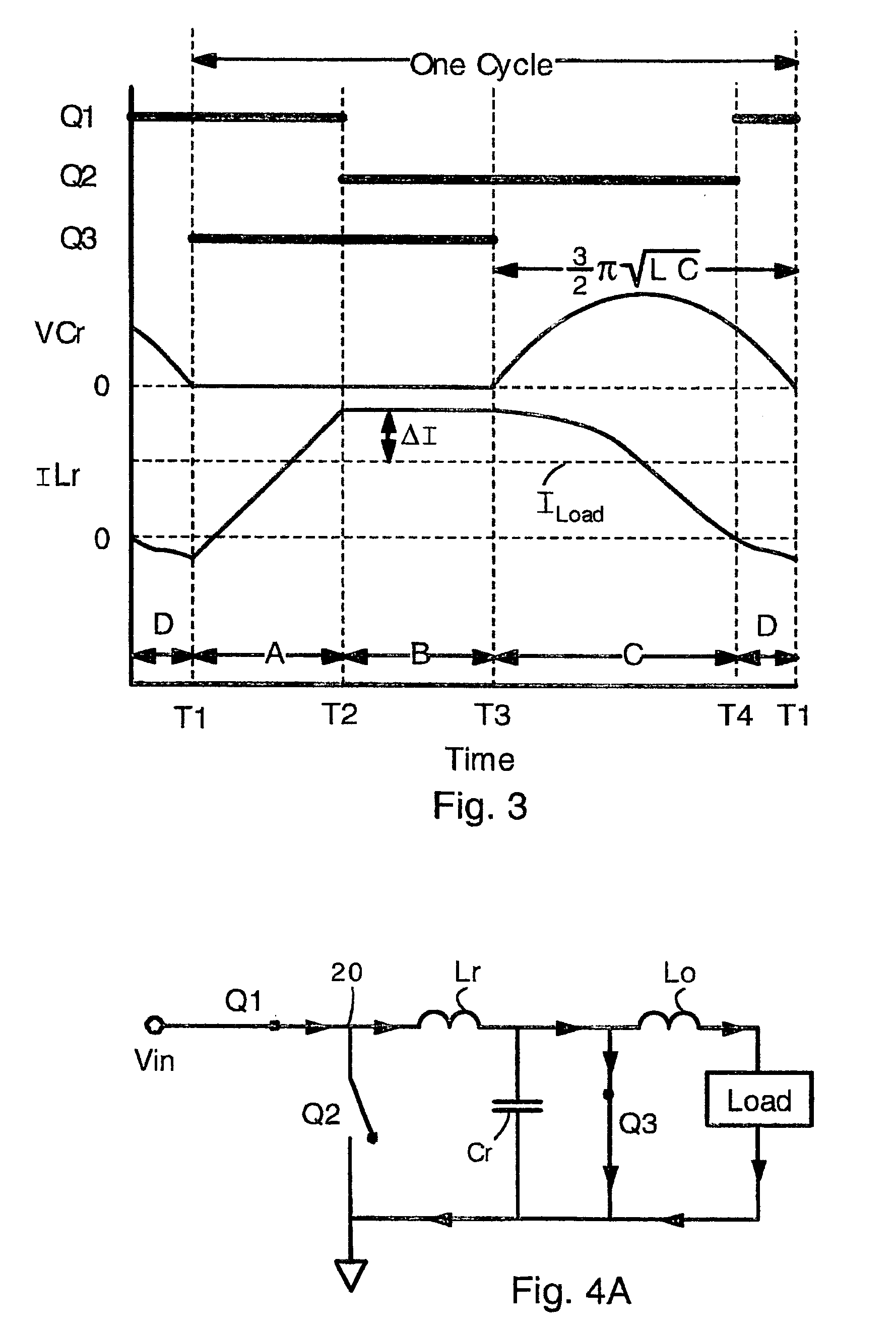
  • Figure 3
    Figure 3
Patent Text Reader

Abstract

Buck converters having a resonant inductor Lr, resonant capacitor Cr, and synchronous switch Q3 that together provide reduced switching loss and soft switching. In operation, the resonant inductor Lr is charged during a time period A. Then, Lr is freewheeling and provides current to an output inductor Lo. Then, Q3 is turned OFF, and energy from the resonant inductor Lr charges the resonant capacitor Cr. Finally, energy from the resonant capacitor Cr is provided to the output inductor and load. The output power can be adjusted by phase control of the operation of switch Q3. In alternative embodiments, the circuit has a pair of coupled inductors L1 L2 or an isolation transformer 40. The coupled inductors have a polarity selected so that the output voltage is reduced, thereby allowing top switch Q1 to have a greater duty cycle. These circuits feature no body diode loss in the switch Q3.
Need to check novelty before this filing date? Find Prior Art

Description

FIELD OF THE INVENTION

[0001] The present invention relates generally to electrical power supplies. More particularly, it relates to buck DC—DC converters having a resonant capacitor and resonant inductor that provide increased efficiency and reduced output voltage.BACKGROUND OF THE INVENTION

[0002] Buck converters are commonly used in electronics for changing the voltage or polarity of a power supply. They are often used to provide low voltage, high current output power. Buck converters typically employ two electronic switches (typically MOSFETs) in combination with an output inductor. The switches are alternately turned on, thereby providing voltage pulses to the output inductor.

[0003] During portions (dead times) of the switching cycle, both switches are off. When both switches are off, the output inductor produces freewheeling current that flows through the integral body diode of one of the switches. Body diode current produces substantial energy loss due to the forward-bias voltage ...

Examples

Embodiment Construction

[0026]The present invention provides a buck converter having a resonant capacitor and resonant inductor. In operation, the resonant capacitor and inductor apply voltage and current across the switches so that soft switching (or nearly-soft switching) is provided. Also, the resonant capacitor and resonant inductor help to transfer output power. Body diode current loss is reduced in the present buck converters. Specifically, the resonant capacitor and resonant inductor apply a reverse current through the body diodes of the buck switches at turn-on so that zero-voltage switching (ZVS) is provided. Also, the resonant capacitor and inductor oppose current flow through buck switches at turn-off so that near-zero current switching (ZCS) is provided. Also, in one embodiment, a coupled inductor provides for reduced output voltage even with relatively high duty cycle. Additionally, an isolated embodiment is provided.

[0027]FIG. 1 shows a buck converter according to the prior art. The buck conv...