

Igniter for exothermic torch rod
a torch rod and exothermic technology, applied in the direction of ignitor, ammunition fuze, weapons, etc., can solve the problems of limited shelf life, unreliable or at the very least difficult to use in underwater environments, and ineffective high current and smoldering punk tube ignition systems
- Summary
- Abstract
- Description
- Claims
- Application Information
AI Technical Summary
Benefits of technology
Problems solved by technology
Method used
Image

Examples
Embodiment Construction
)
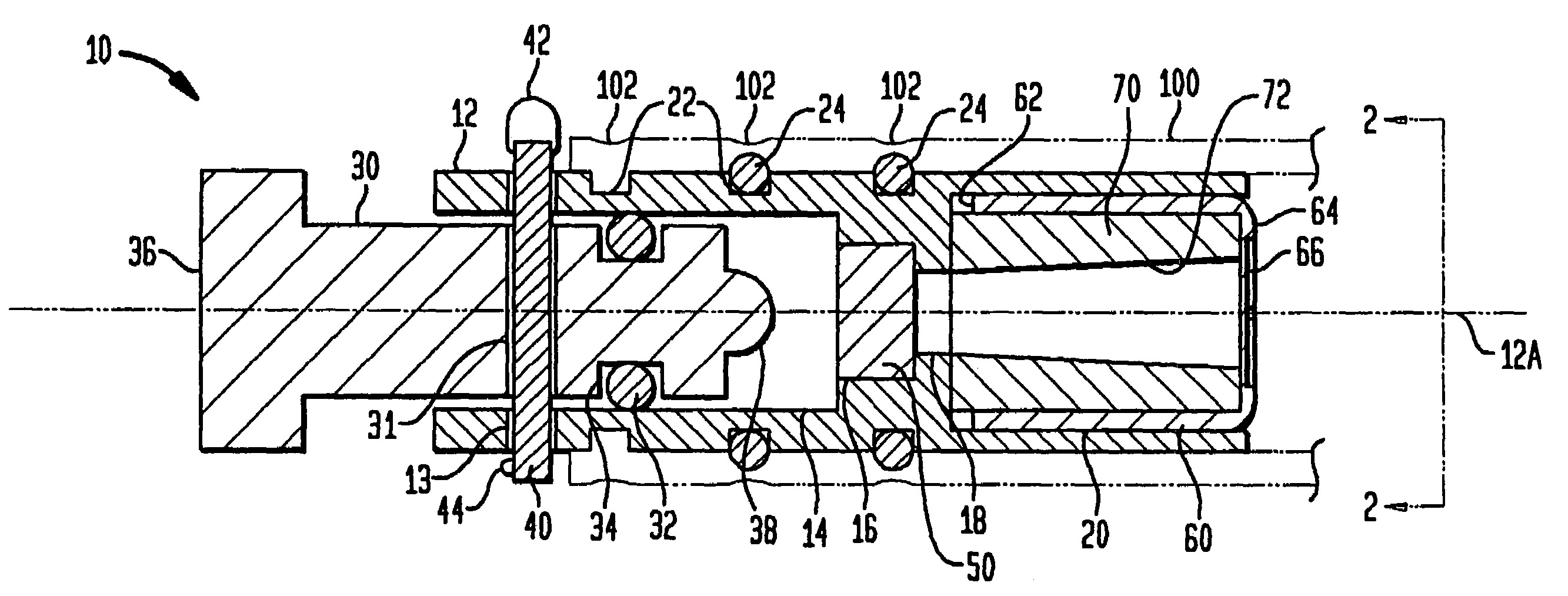
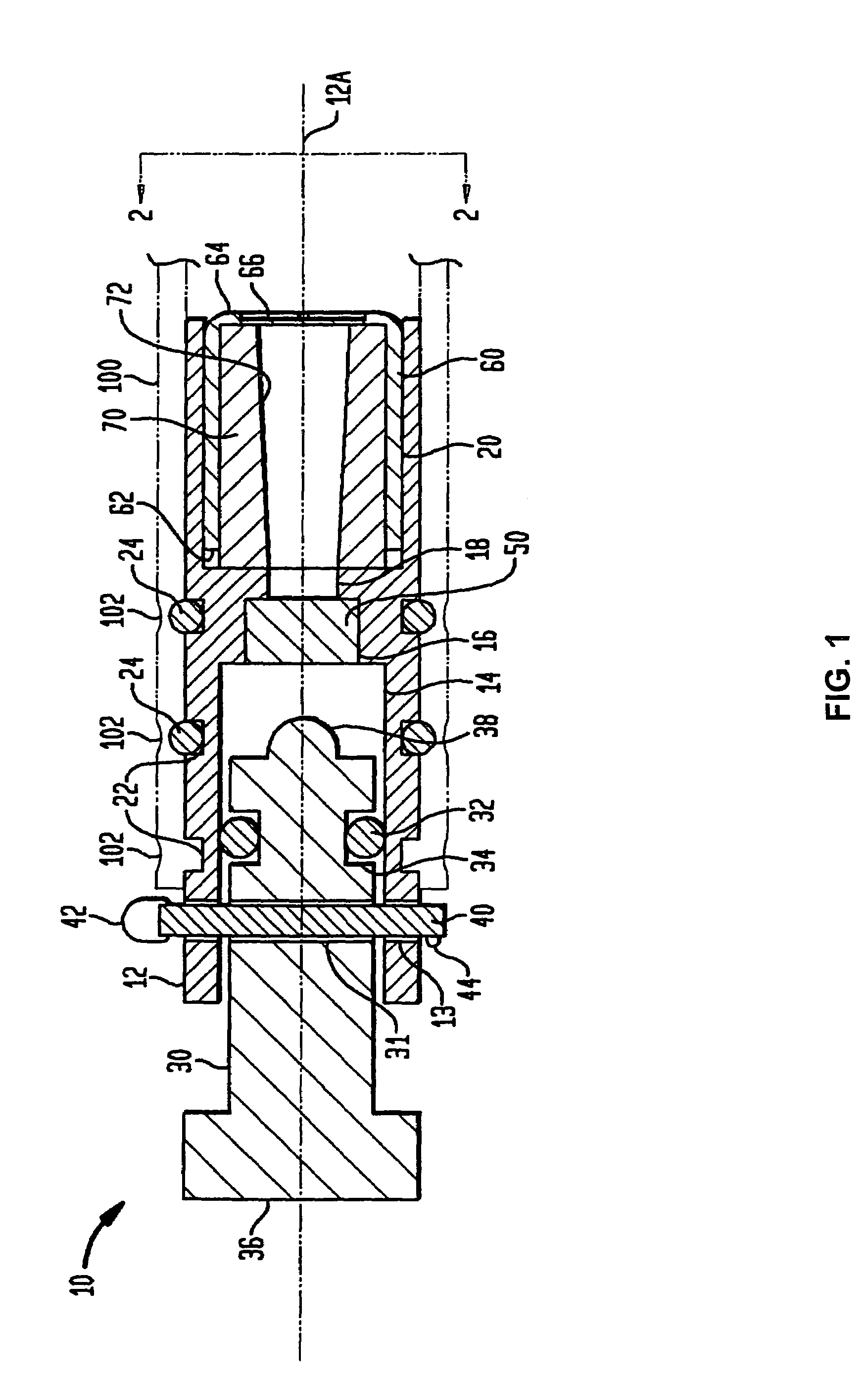
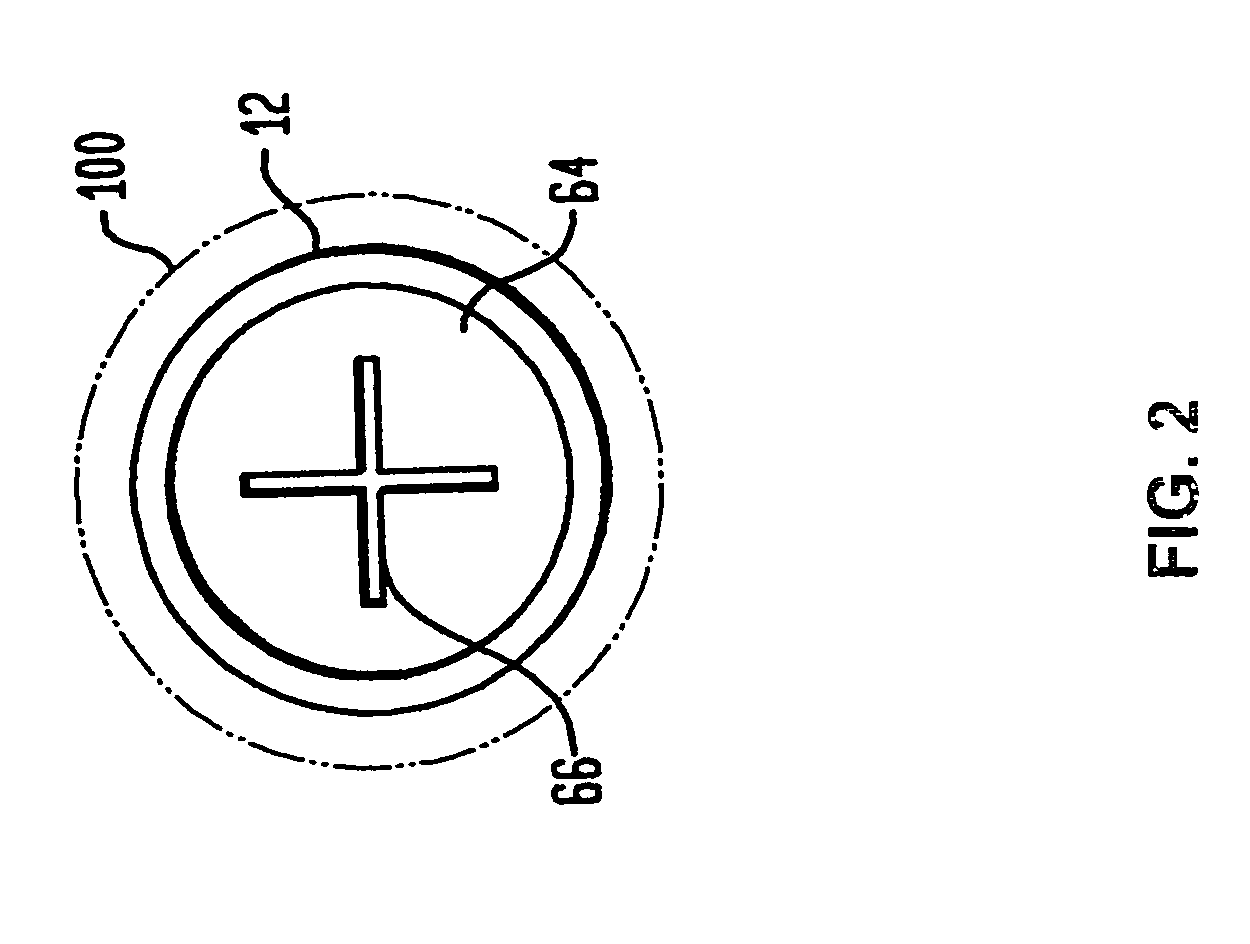
[0014]Referring now to the drawings, and more particularly to FIG. 1, an igniter in accordance with an embodiment of the present invention is shown and is referenced by numeral 10. The igniter 10 is shown installed in the aft end of a conventional torch rod 100 which is shown in phantom to indicate that torch rod 100 is not a part or limitation of the present invention. Such torch rods are well known in the art and will not be described further herein.
[0015]The igniter 10 has a rigid body or housing 12 (e.g., made of a metal such as stainless steel, a plastic, a composite, etc.) that is bored there through to define several different sized regions aligned along a central axis 12A. Typically, each bore region is cylindrical owing to the simplicity of manufacturing same in this fashion. A first bore region 14 houses a firing pin 30 (e.g., made of a metal such as stainless steel, a plastic, a composite, etc.) such that firing pin 30 can slide therein as in a piston-cylinder relationsh...
PUM
| Property | Measurement | Unit |
|---|---|---|
| weight percent | aaaaa | aaaaa |
| weight percent | aaaaa | aaaaa |
| weight percent | aaaaa | aaaaa |
Abstract
Description
Claims
Application Information
 Login to View More