
Stabilized compounds having secondary structure motifs
a technology of stabilized compounds and motifs, which is applied in the direction of p53 proteins, instruments, peptide sources, etc., can solve the problems of poor cell permeability, lack of binding specificity, and severe limitations in the use of peptides as drugs
- Summary
- Abstract
- Description
- Claims
- Application Information
AI Technical Summary
Benefits of technology
Problems solved by technology
Method used
Image

Examples
Embodiment Construction
[0032]The present invention provides stabilized compounds having specific secondary structure motifs and improved methods for generating stabilized compounds having these specific secondary structure motifs. The novel stabilized compounds of the present invention are useful where such structural motifs are advantageous; for example, in drug design and delivery, and in but a few examples, as inhibitors of p53 / MDM2 and Bak / Bcl-xL interactions..
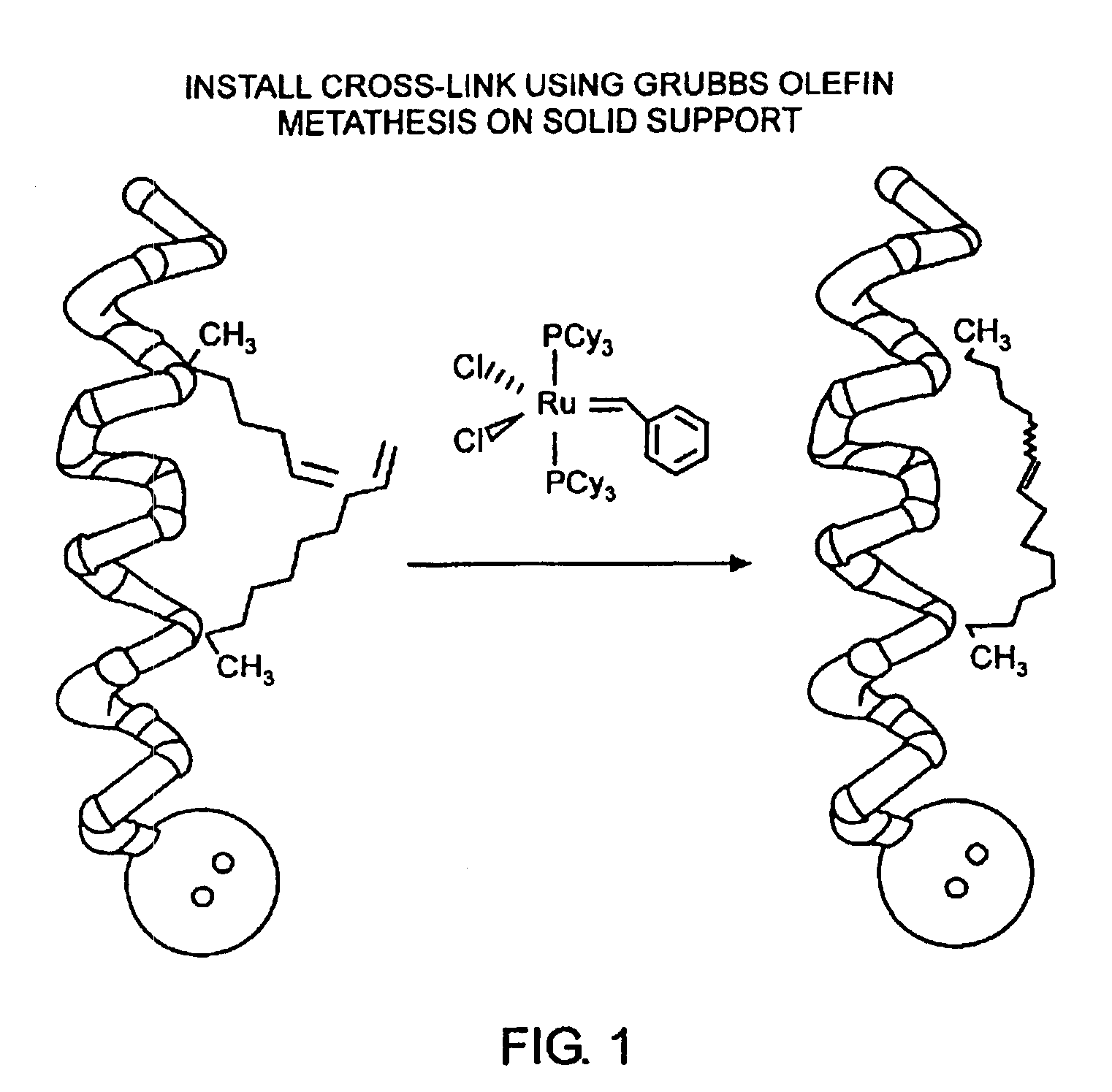
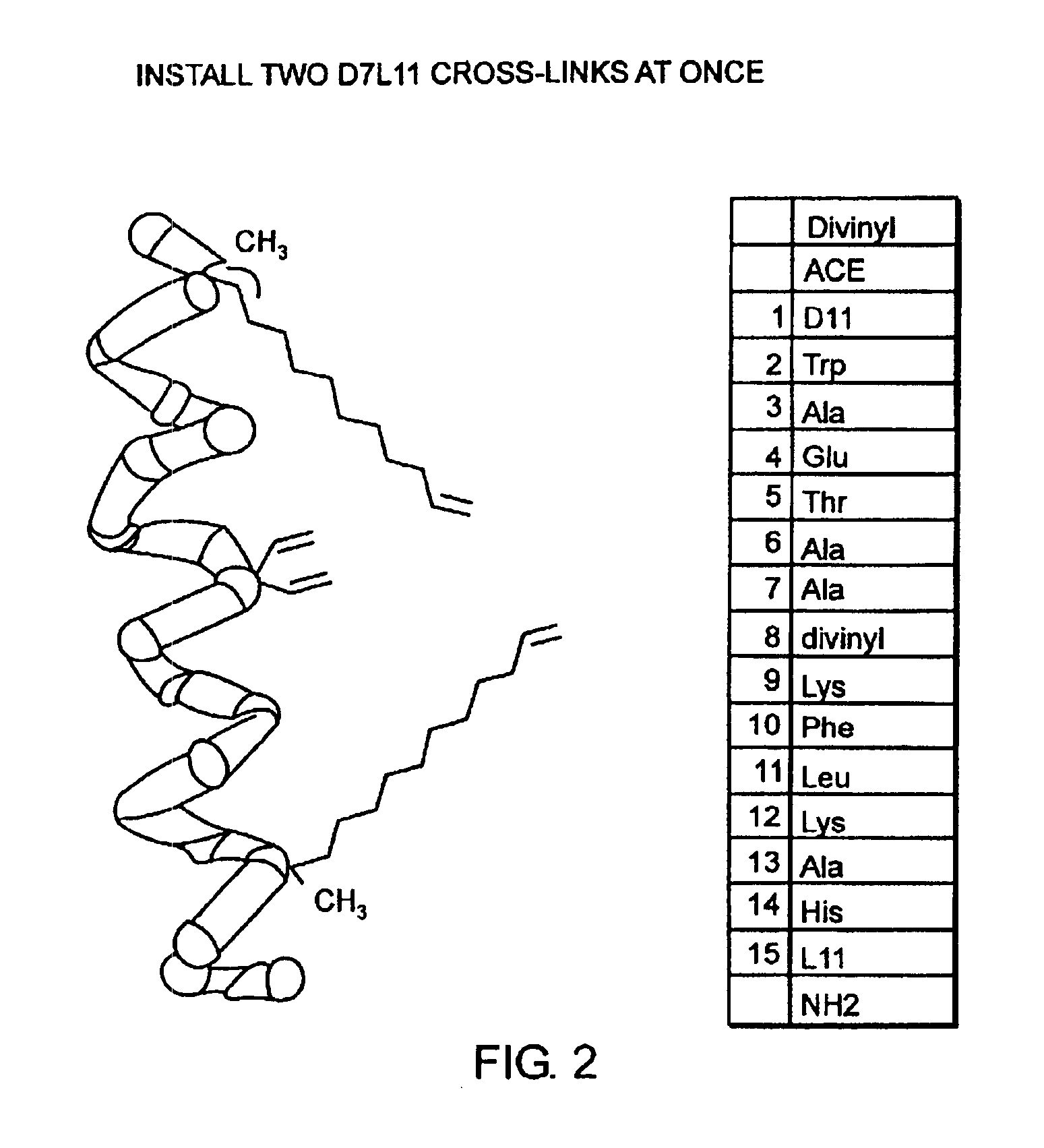
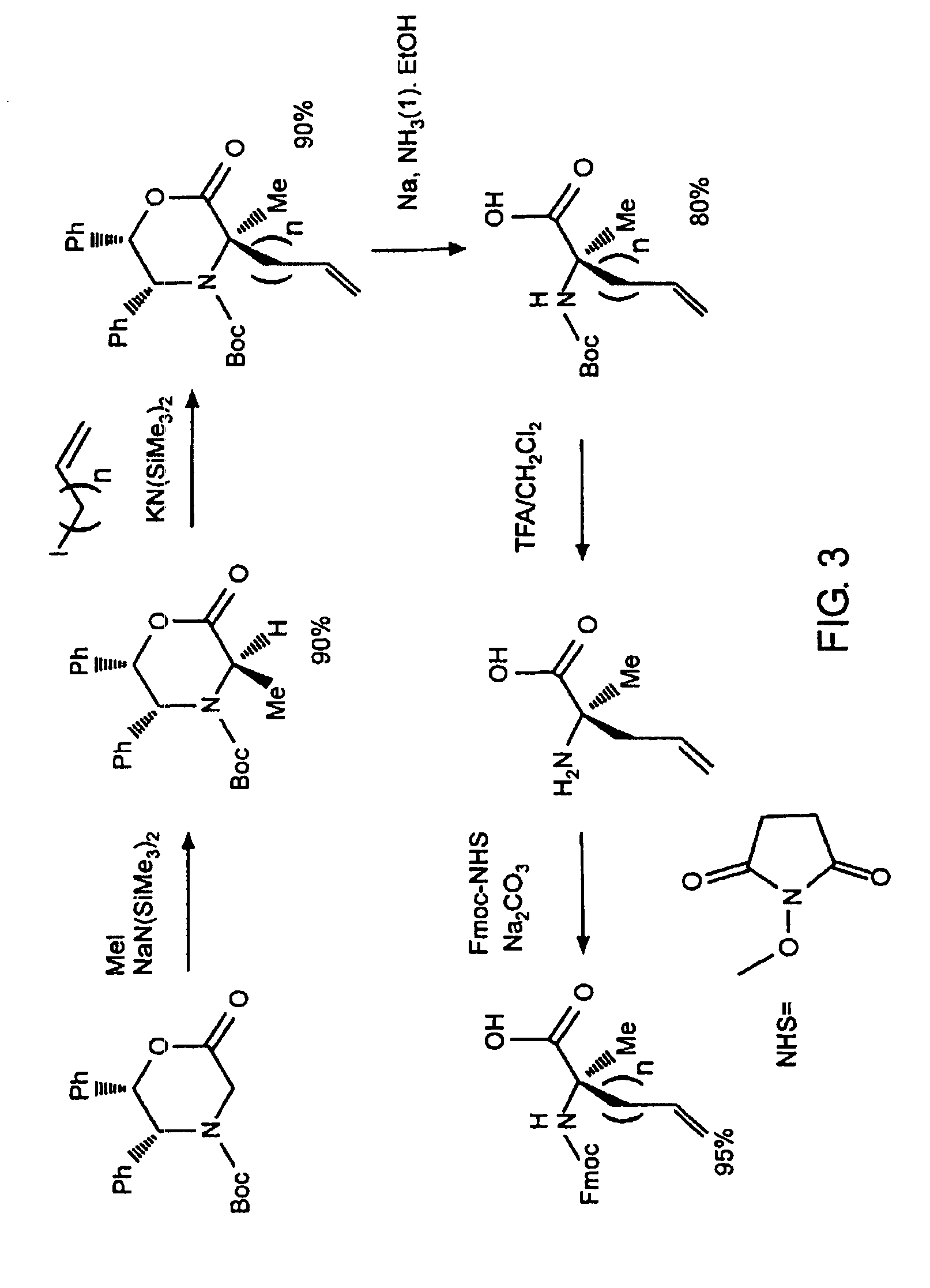
[0033]In general, the synthesis of these stabilized secondary structures involves (1) synthesizing a peptide from a selected number of natural or non-natural amino acids, wherein said peptide comprises at least two reactive moieties capable of undergoing a C—C bond forming reaction; and (2) contacting said peptide with a reagent to generate at least one crosslinker and to effect stabilization of a specific secondary structure motif. In one embodiment, the present invention provides novel alpha helix structures having stabilizing crosslinkers, li...
PUM
| Property | Measurement | Unit |
|---|---|---|
| pH | aaaaa | aaaaa |
| absorbance | aaaaa | aaaaa |
| volume | aaaaa | aaaaa |
Abstract
Description
Claims
Application Information
 Login to View More