
System and method for supporting digital rights management in an enhanced Java™ 2 runtime environment
a runtime environment and runtime environment technology, applied in the field of java digital rights management systems, can solve the problems of greater exposure to digital content, increased risk in this approach, and misappropriation of digital content and illegal redistribution
- Summary
- Abstract
- Description
- Claims
- Application Information
AI Technical Summary
Benefits of technology
Problems solved by technology
Method used
Image

Examples
Embodiment Construction
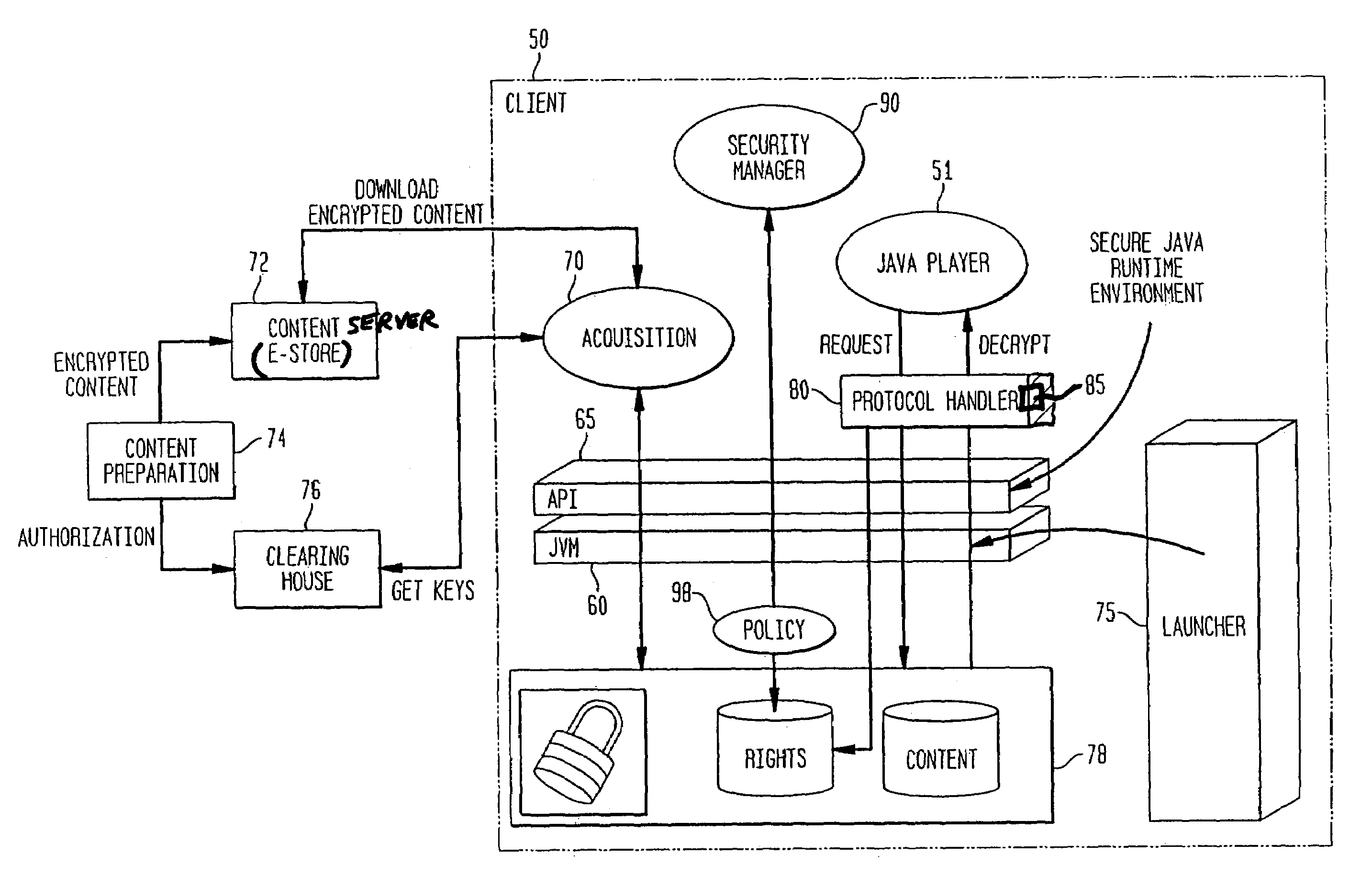
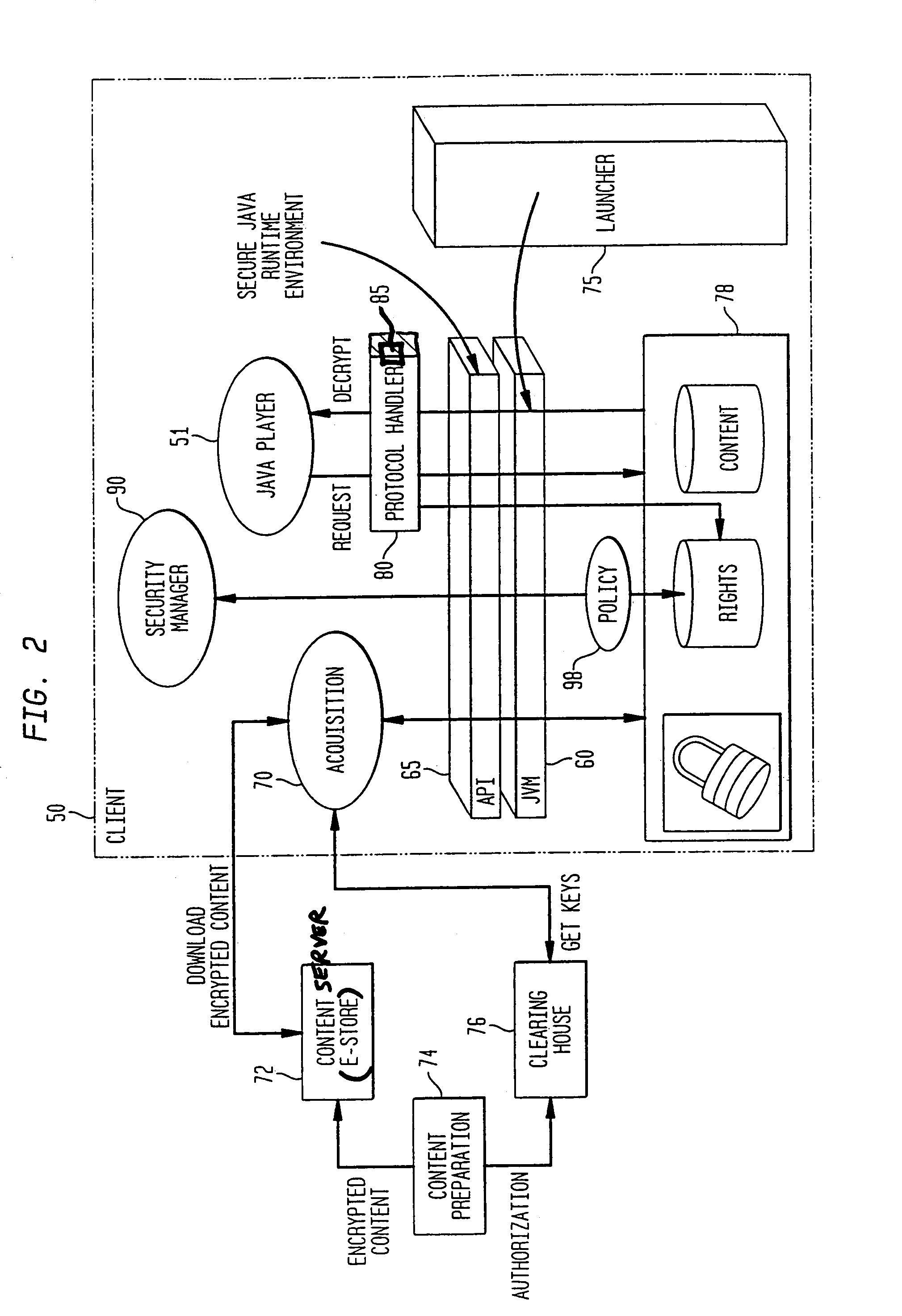
[0035]Until now, Java™ security was all about protecting client systems against malicious servers. In order to support DRM in Java™, it is necessary to introduce a new security paradigm: client systems still have to be protected against malicious servers, but now server systems also are protected against malicious clients that, once downloaded high-value contents, may steal and distribute illegal copies.
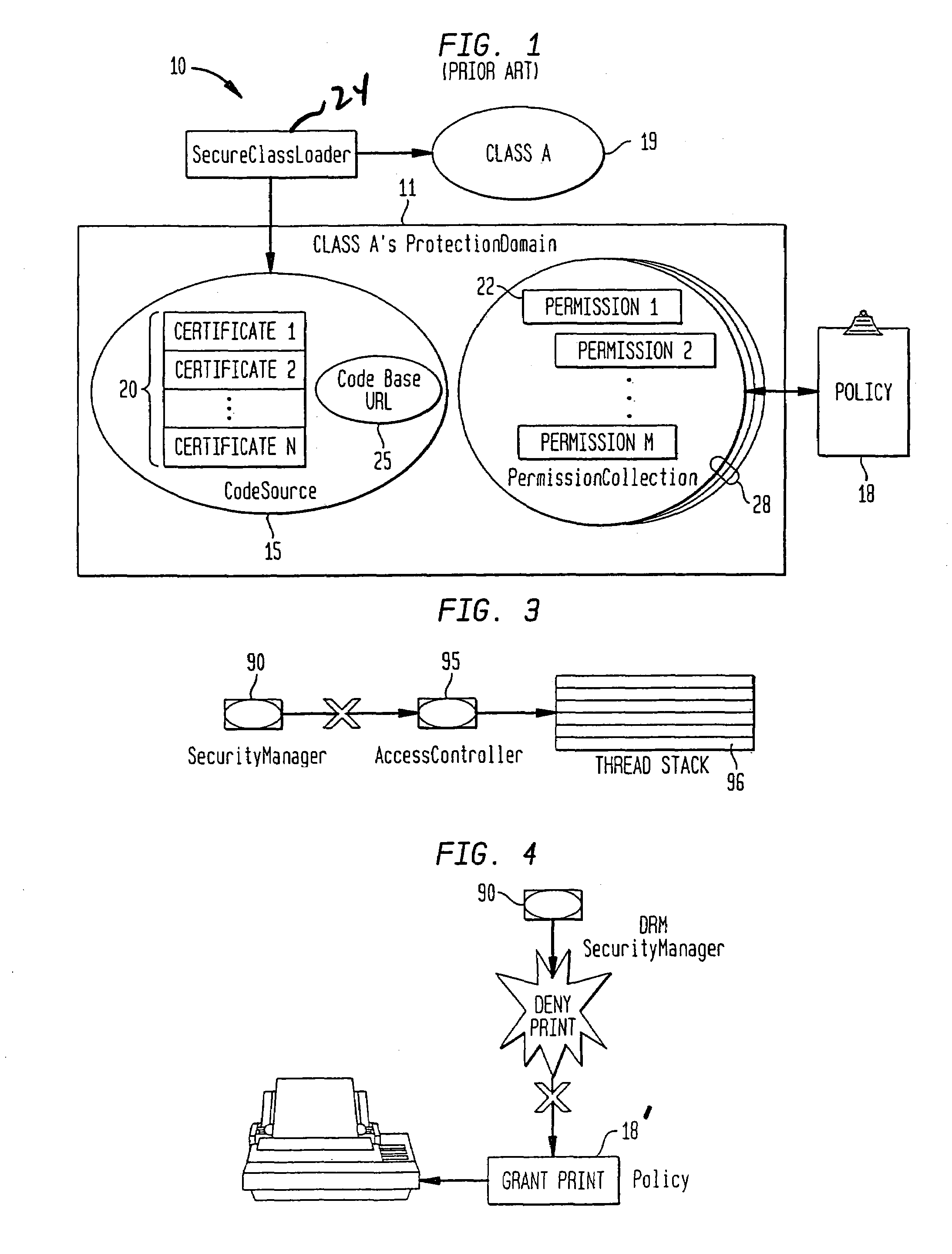
[0036]The current Java™ 2 introduces a number of security features, which make it easier to enforce access control of protected resources. Particularly, the Java™ 2 permission model is a flexible model that even permits application-defined resources to be added to the access control system. Java™ programs now have the ability to define access restrictions on sensitive resources without requiring the writing of a new SecurityManager or modifying the underlying platform. This means that applets downloaded into a browser, or servlets loaded into a Java™-enabled Web server or application...
PUM
 Login to View More
 Abstract
Description
Claims
Application Information
 Login to View More