Driven equilibrium and fast-spin echo scanning

US7339375B1Inactive Publication Date: 2008-03-04FONAR
24 Cites 2 Cited by

Patent Information

Authority / Receiving Office
US · United States
Current Assignee / Owner
Publication Date
2008-03-04
Estimated Expiration
Not applicable · inactive patent

Smart Images

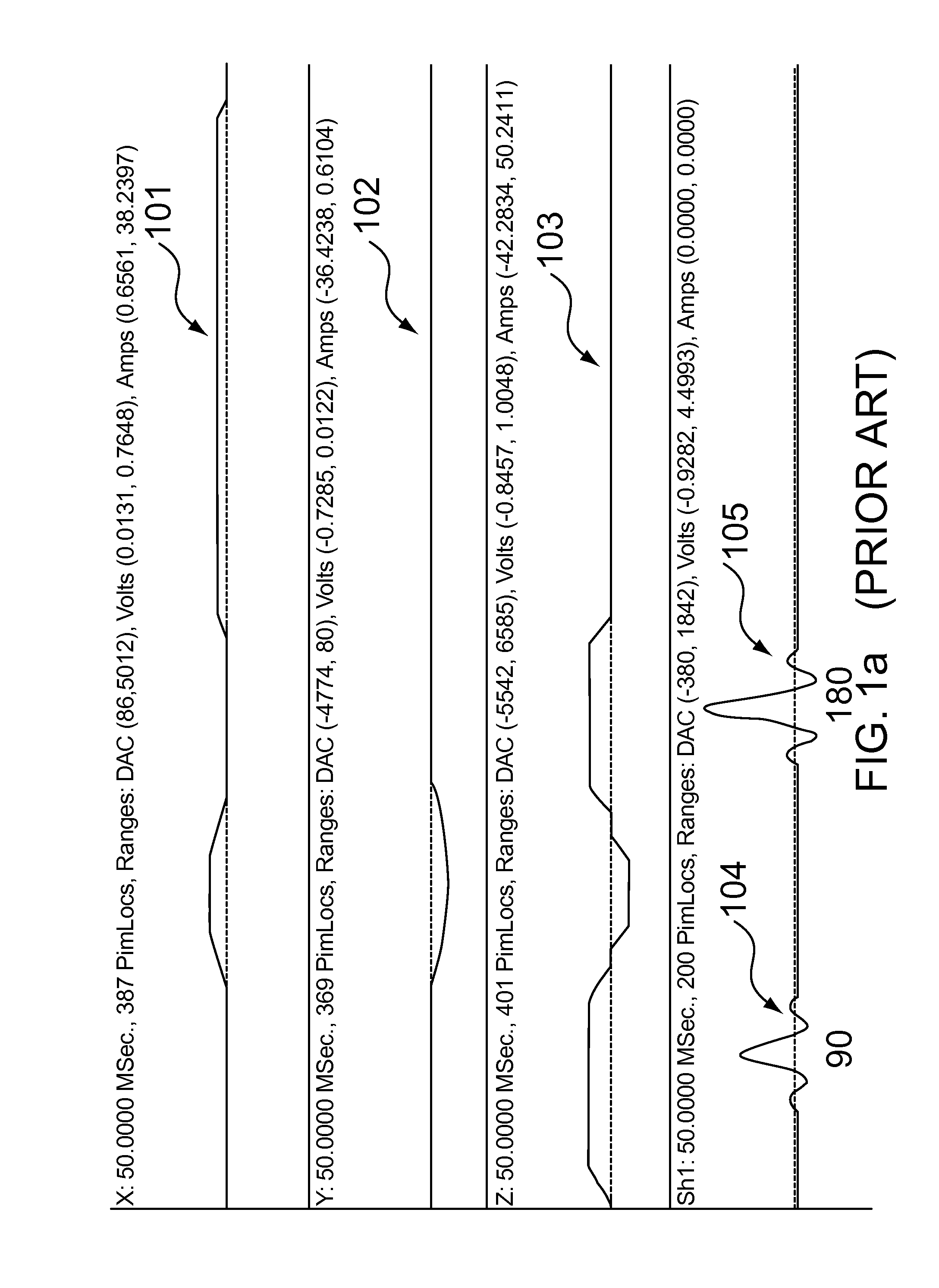
  • Figure 1
    Figure 1
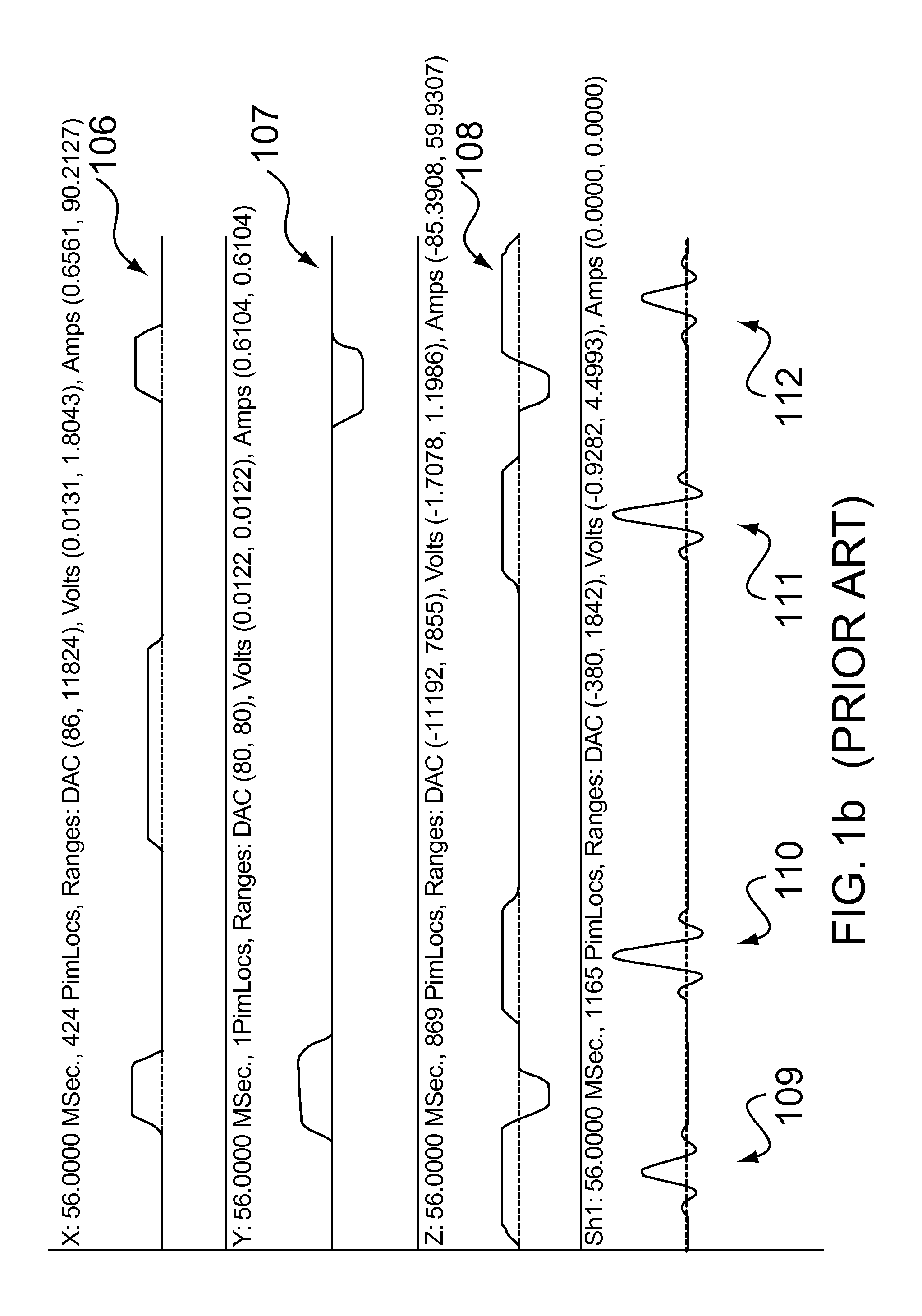
  • Figure 2
    Figure 2
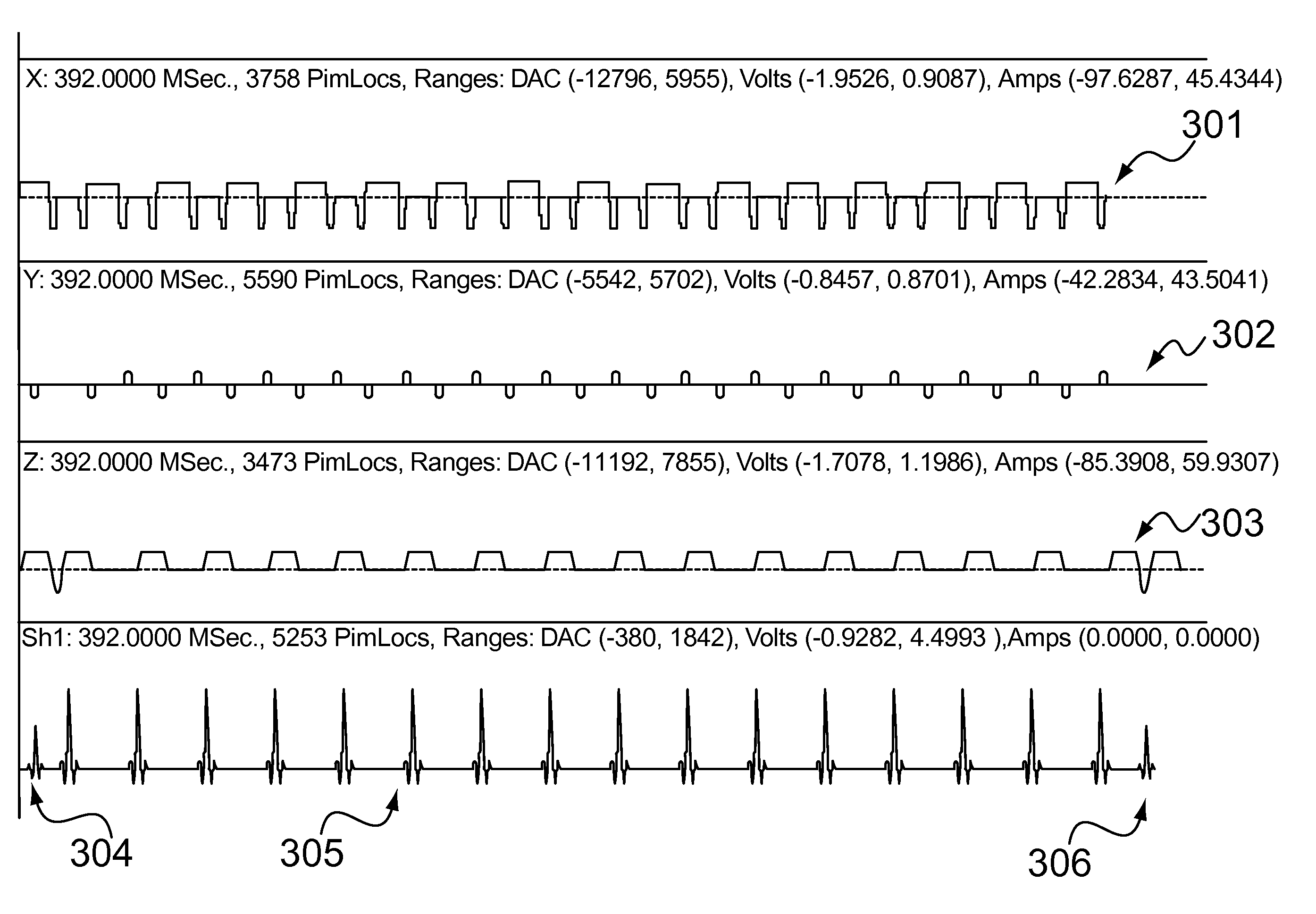
  • Figure 3
    Figure 3
Patent Text Reader

Abstract

An NMR imaging process utilizes application of both a driven equilibrium technique and a fast-spin echo technique to acquire image. The fast-spin echo technique is a multiecho NMR imaging sequence, where different echoes are encoded differently to fill the (kx, kg) space at a speed of 1 / n of the single echo speed, where n is the number of echoes in the multiecho sequence. During this echo train, a 90-degree RF pulse applied with proper phase at the center of any echo turns the magnetization back in the direction of the static magnetic field. Within a short waiting time after the 90-degree RF pulse, the spins are ready to be excited again. The multi-echo sequence has one 90-degree RF pulse at the beginning, followed by a series of n 180-degree RF pulses, followed by n echoes. A second 90-degree RF pulse is turned on exactly at the center of the nth echo, which returns all the magnetization left at this time to the static field direction. Only one frequency is used for excitation in acquiring the NMR signal in the single slice mode. Gradients are adjusted for oblique scanning. In the multislice acquisition mode, RF phases of different slices are different from one another and the final images can be constructed either by sharing the kg space or by using a transform process to separate the slices.
Need to check novelty before this filing date? Find Prior Art

Description

CROSS-REFERENCE TO RELATED APPLICATION

[0001] This is a continuation of U.S. patent application Ser. No. 11 / 319,019, which was filed on Dec. 27, 2005 now U.S. Pat. No. 7,242,190, which in turn is a continuation of U.S. patent application Ser. No. 11 / 056,082, which was filed on Feb. 10, 2005 now U.S. Pat. No. 7,034,532, which in turn is a continuation of U.S. patent application Ser. No. 09 / 769,446, which was filed on Jan. 26, 2001 now U.S. Pat. No. 7,157,909.FIELD OF THE INVENTION

[0002] In general, the present invention relates to methods of performing nuclear magnetic resonance (NMR) imaging. In particular, the present invention is a method of reducing the scan time in performing NMR imaging by utilizing driven equilibrium and fast-spin echo techniques.BACKGROUND OF THE INVENTION

[0003] Magnetic resonance imaging (MRI) is one of the most versatile and fastest growing modalities in medical imaging. Since the discovery by Dr. Raymond Damadian in the early 1970s that nuclear magnetic resona...

Examples

Embodiment Construction

[0032]As noted above, in a conventional spin echo imaging process, data is collected following the 180-degree RF pulse. Prior to each acquisition, the phase-encoding gradient is stepped according to the conventional spin warp imaging technique. The imaging data corresponding to each step of phase-encoding gradient represents a line in the k-space (kx, ky). Once the k-space is filled, a two-dimensional Fourier transform would provide the necessary information to reconstruct an image. A single spin echo pulse sequence is shown in FIG. 1a. As shown, the sequence includes X, Y, and Z gradients 101, 102, 103, and 90-degree and 180-degree RF pulses 104, 105. The single echo sequence can be expanded to a multi-echo sequence by adding a number of subsequent 180-degree pulses. The time gap between the 180-degree pulses is twice that between the 90-degree pulse and the first 180-degree pulse. This train of 180-degree pulses produces echoes at the center of those RF pulses. The T2 dependence o...