
Imaging elastic scattering spectroscopy
- Summary
- Abstract
- Description
- Claims
- Application Information
AI Technical Summary
Benefits of technology
Problems solved by technology
Method used
Image

Examples
Embodiment Construction
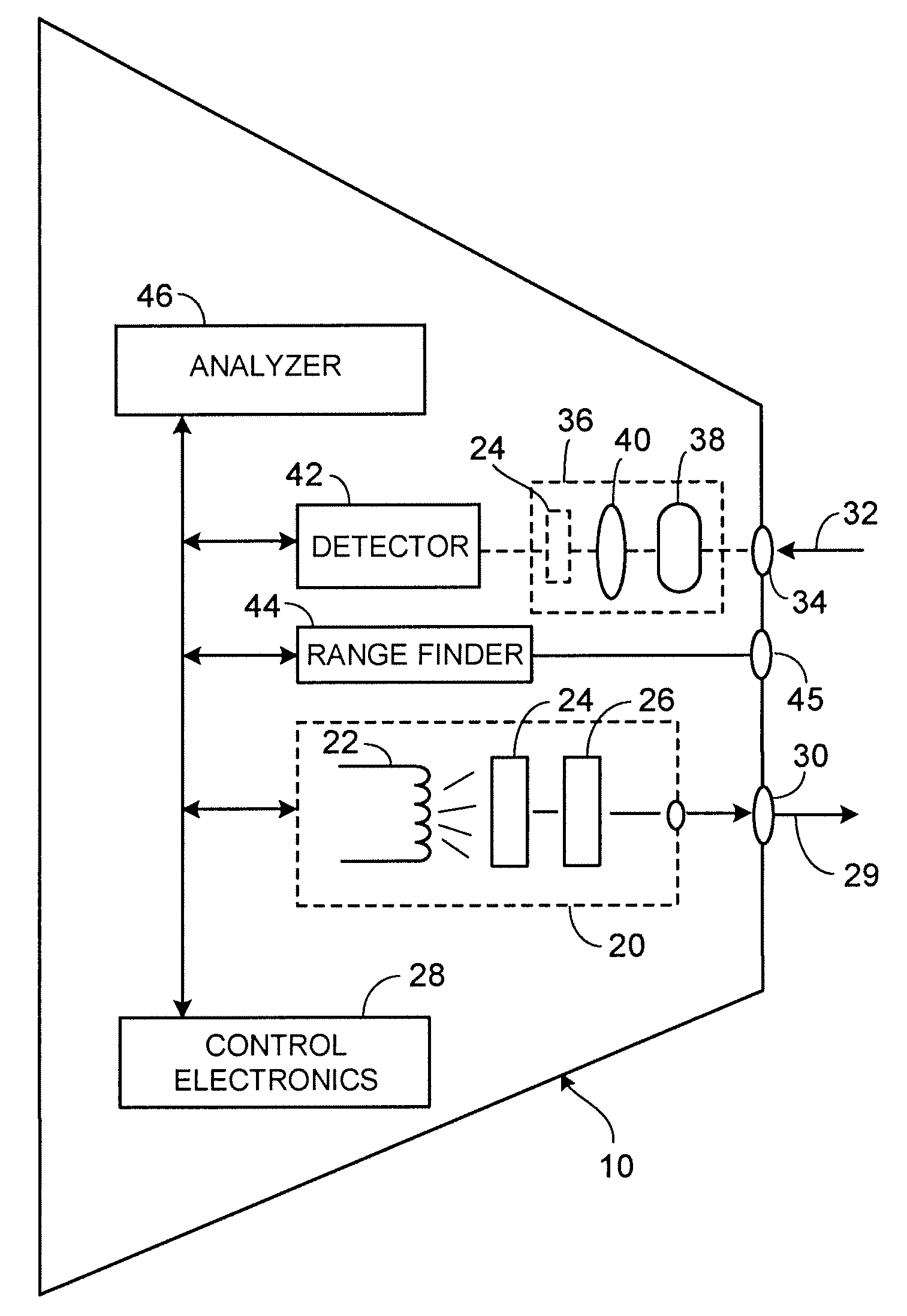
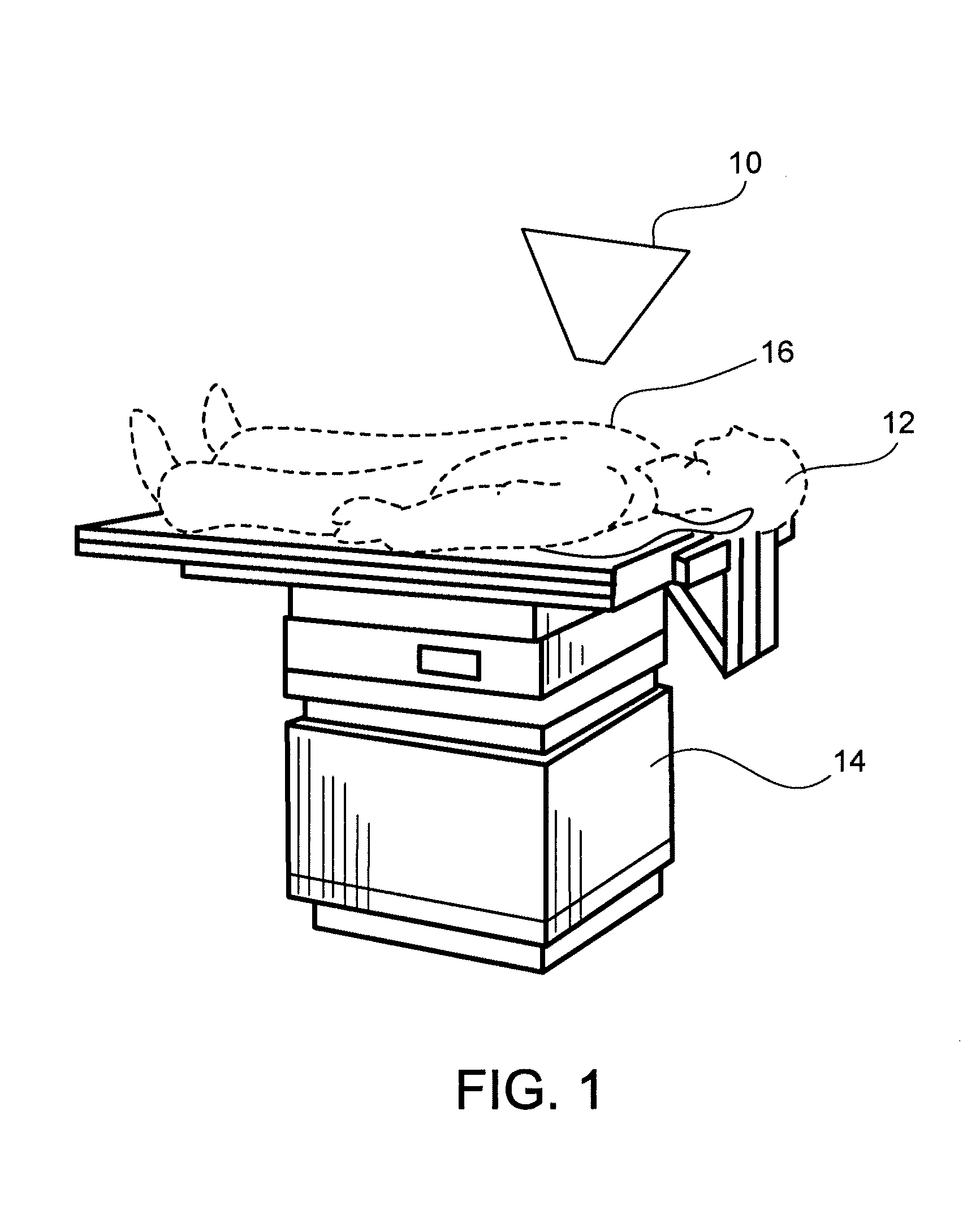
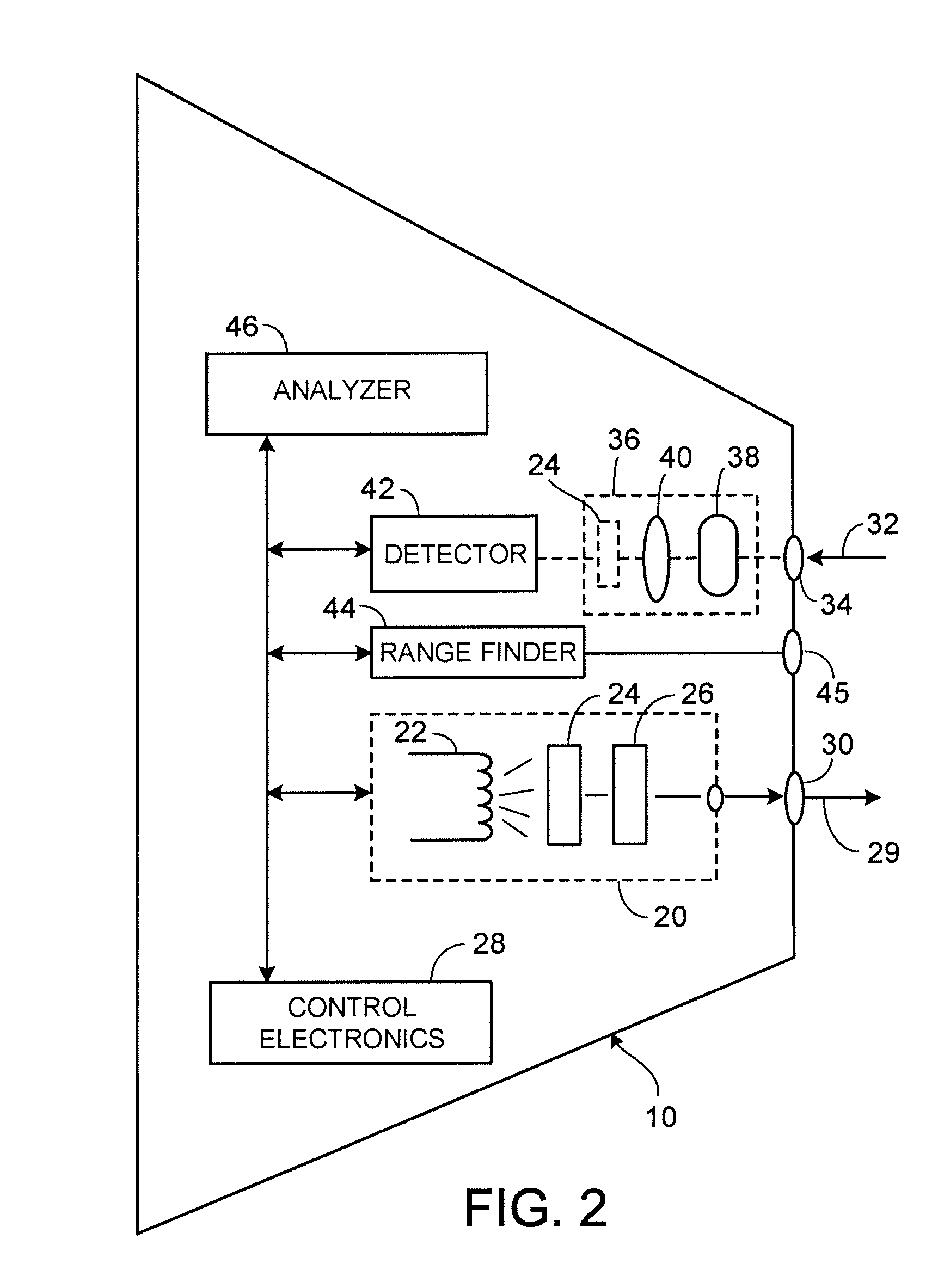
[0025]One embodiment of an apparatus 10 constructed according to the teachings of the present invention and useful for screening for abnormal cells is illustrated in FIG. 1. In FIG. 1, a patient 12 is positioned on an examining table 14. A target 16 is examined by apparatus 10 as will be described in detail below. Those of ordinary skill in the art will recognize that target 16 is meant to be exemplary and not limiting.
[0026]Most internal and external surfaces of the body are covered with a layer of cells known as the epithelium. One of the more common types of epithelial tissue is known as the “columnar epithelium”, in which a single layer of epithelial cells lies on top of the thicker sub-mucosal layer. In such a case, the epithelial nuclei can be considered as scattering spheres embedded in a surrounding uniform medium of different optical composition.
[0027]The way that light scatters in such a situation depends upon a number of factors: scattering angle, sphere size, wavelength ...
PUM
 Login to View More
 Abstract
Description
Claims
Application Information
 Login to View More