

Pintle-controlled propulsion system with external dynamic seal
a dynamic seal and propulsion system technology, applied in the field of nozzles, can solve the problems of increasing thrust, increasing the pressure upstream of the throat, and limited variation produced by such a design, and achieves the effect of small thrust chambers and greater thermal stando
- Summary
- Abstract
- Description
- Claims
- Application Information
AI Technical Summary
Benefits of technology
Problems solved by technology
Method used
Image

Examples
Embodiment Construction
[0014]While the invention is susceptible to a number of implementations and embodiments in terms of the design and construction of the propulsion system, an understanding of the full scope of invention can be gained by a detailed review of a single embodiment. One such embodiment is depicted in the drawings hereto and explained below.
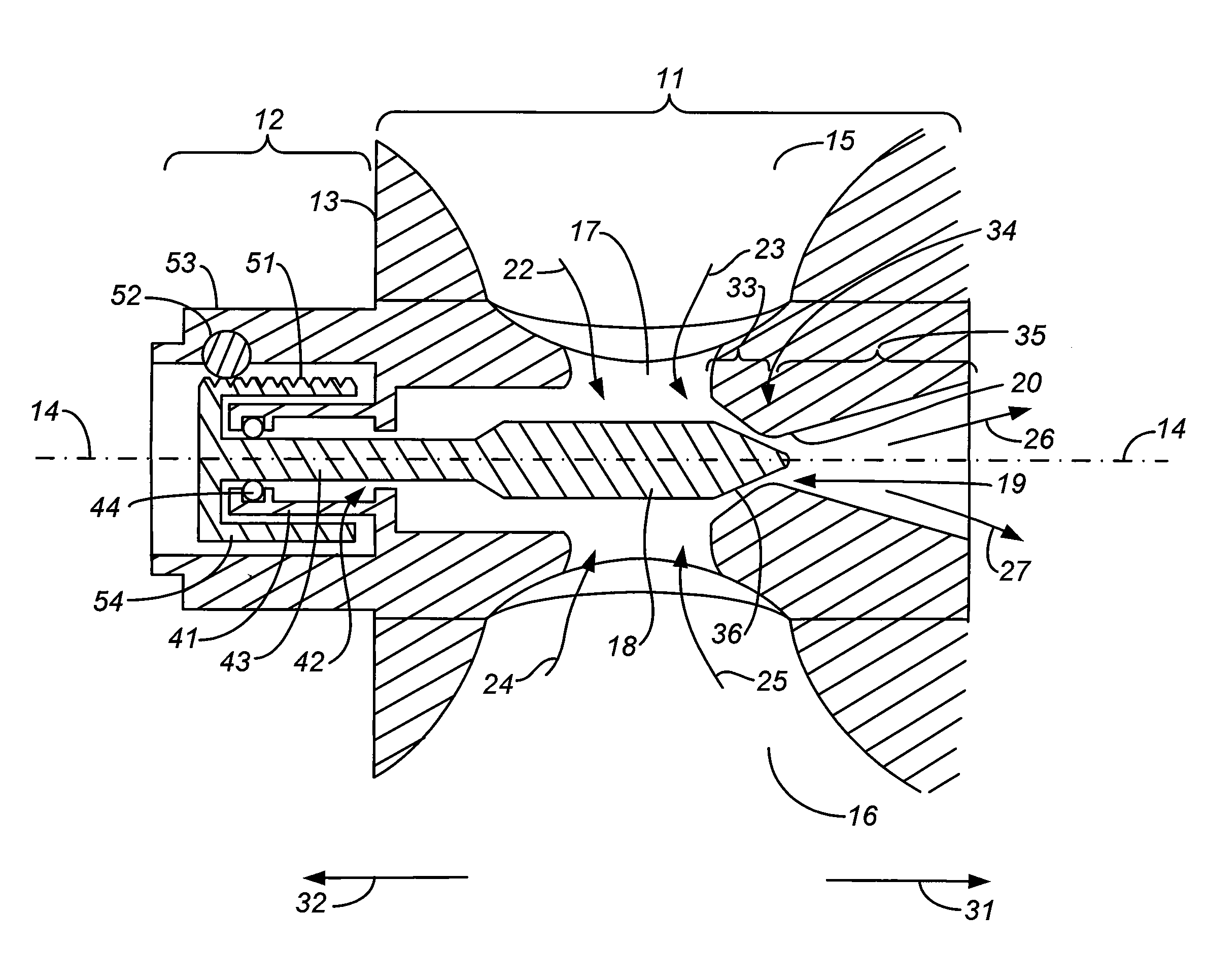
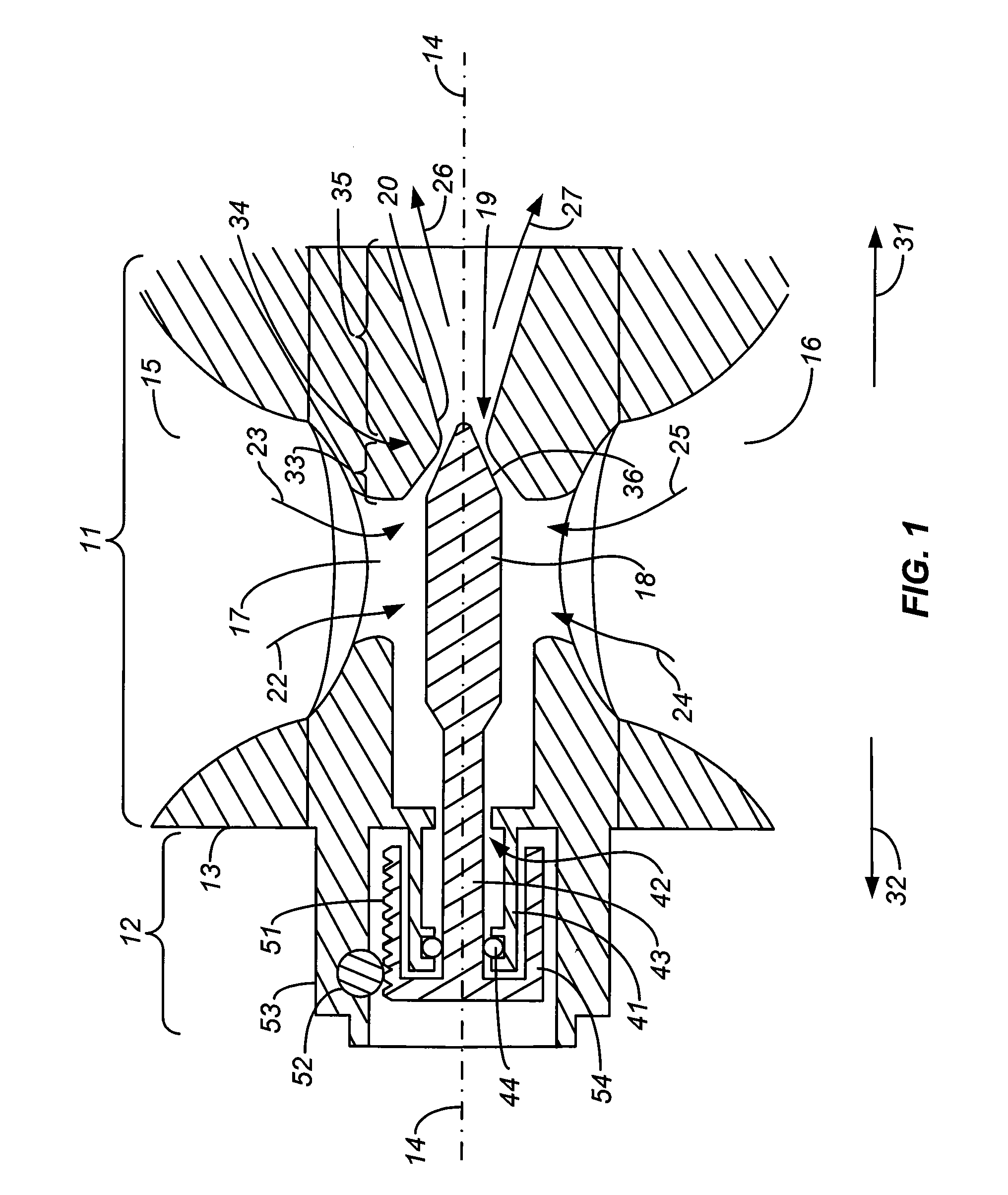
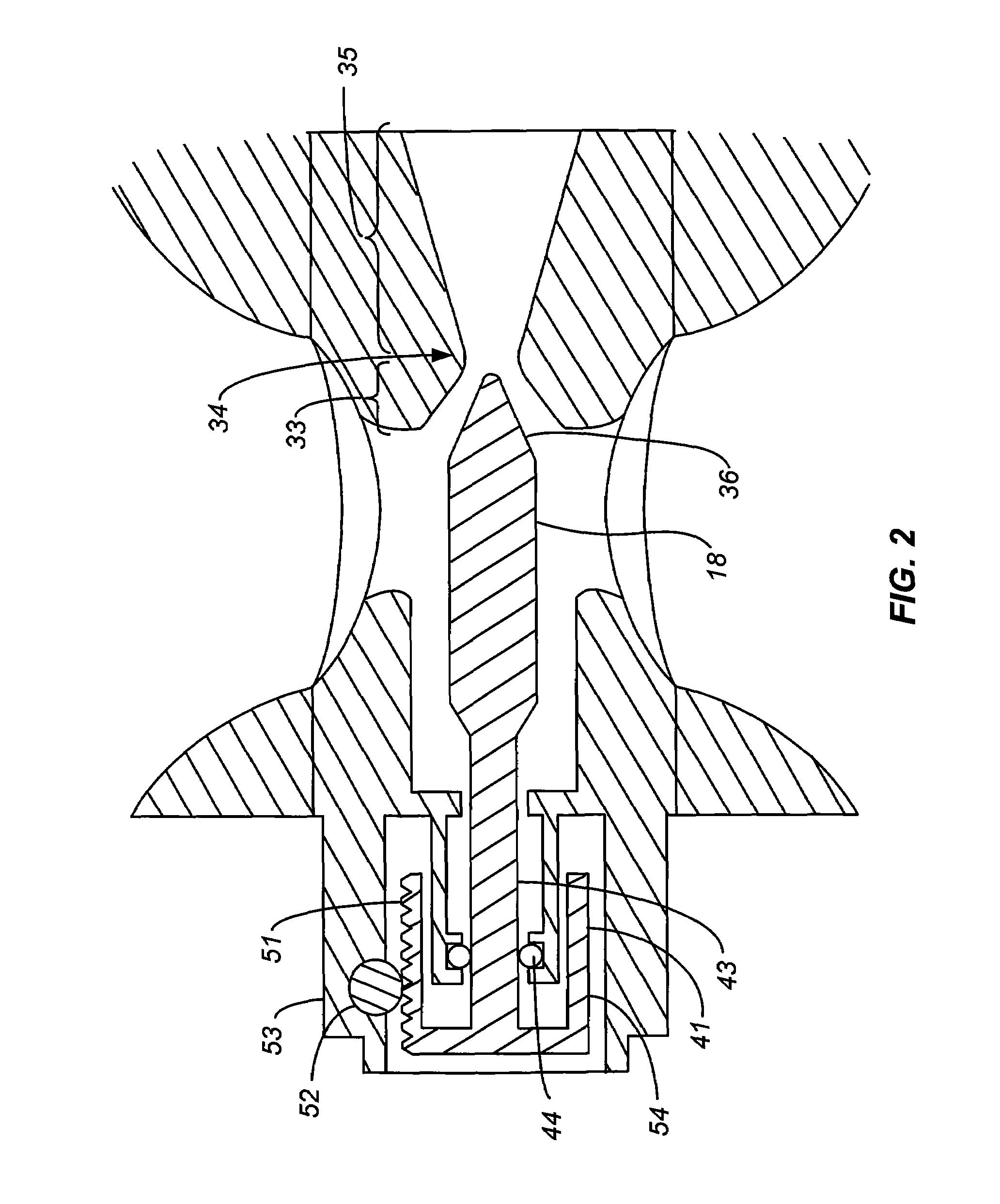
[0015]The system shown in FIGS. 1 and 2 includes a thrust chamber 11 and a seal and actuator section 12 that is mounted to the outer surface 13 of an external wall of the thrust chamber. The thrust chamber in this embodiment is a body of revolution about an axis 14. Combustion gases enter the thrust chamber 11 through lateral inlets 15, 16, the gases being either fully combusted upon entry or partially combusted to complete combustion within the thrust chamber cavity 17. Although two such inlets 15, 16 are shown, a single inlet may be sufficient in certain constructions, but preferred constructions are those that include a plurality of such inlets symme...
PUM
 Login to View More
 Abstract
Description
Claims
Application Information
 Login to View More