
Method and system for authenticated access to internet protocol (IP) multicast traffic
a multicast traffic and internet protocol technology, applied in the field of traffic multicasting, can solve the problem that the service provider network cannot use ip multicast to distribute premium services, and achieve the effect of reducing or eliminating problems and disadvantages
- Summary
- Abstract
- Description
- Claims
- Application Information
AI Technical Summary
Benefits of technology
Problems solved by technology
Method used
Image

Examples
Embodiment Construction
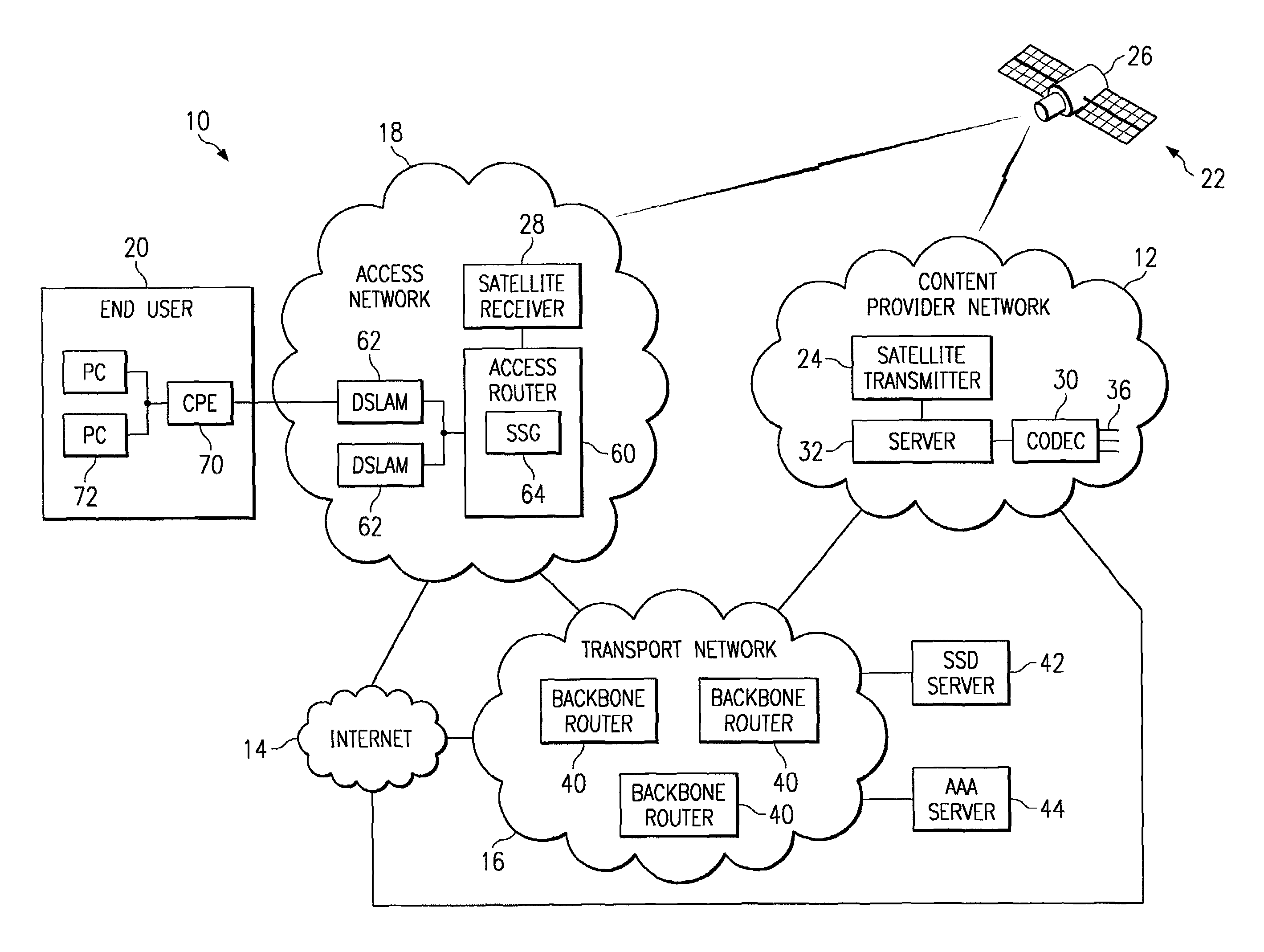
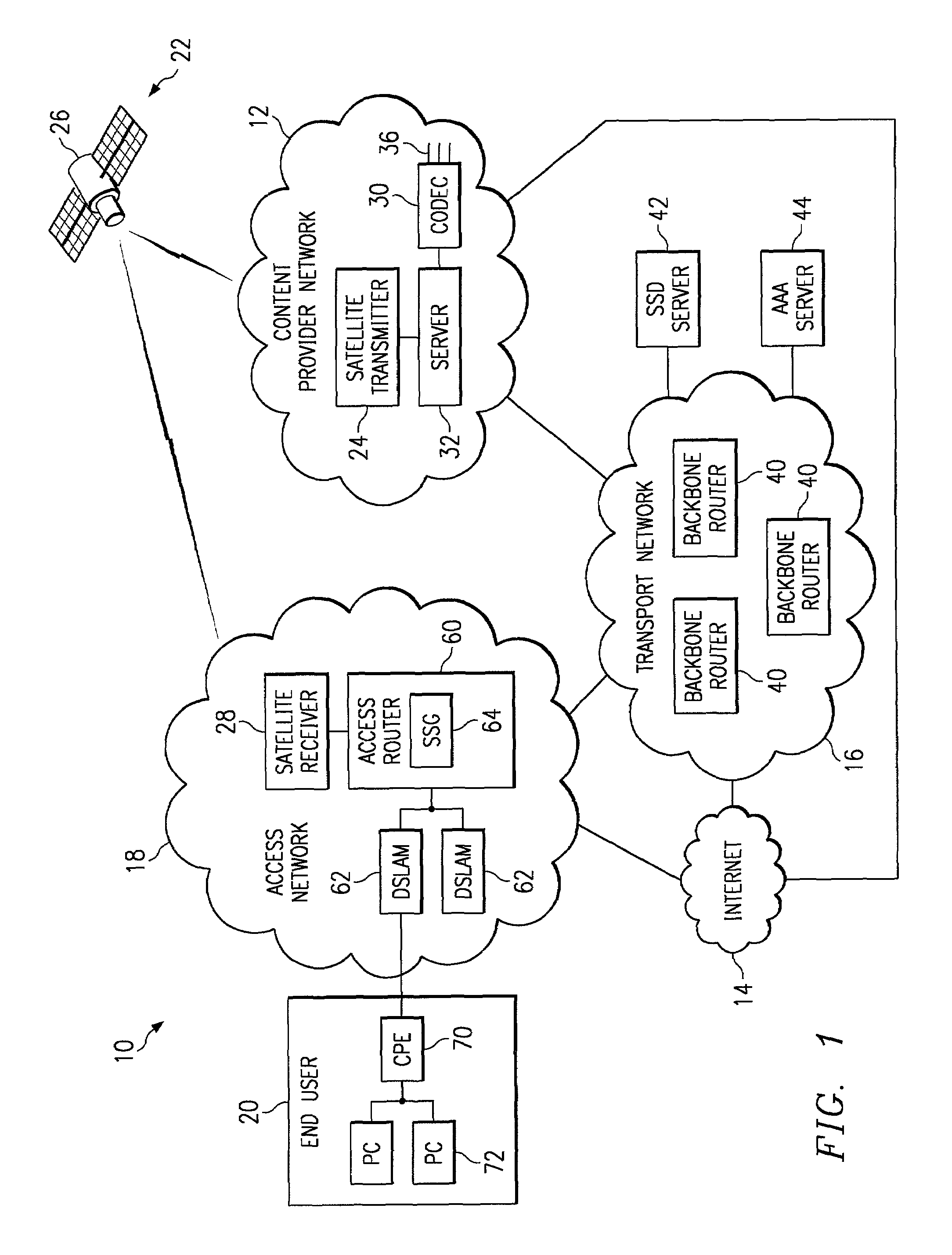
[0017]FIG. 1 illustrates a communication system 10 in accordance with one embodiment of the present invention. In this embodiment, service and / or content providers provide video services to users through multicast channels to which access is controlled to allow the providers to bill for premium content. Accordingly, some content such as basic network television channels will always be available to users free of charge, but content such as pay-per-view and premium channels are controlled to retain their value as a source of potential revenue. Other services such as Webcam, local, or other special interest group channels may be controlled for privacy and security reasons. Accordingly, service and other providers can deliver differentiated, community or other group-focused services with specific channels as part of a multicast service offering. In providing services, providers can employ content switching mechanisms to replace programming options. For example, a local news program can ...
PUM
 Login to View More
 Abstract
Description
Claims
Application Information
 Login to View More