
Method to maximize loudspeaker sound pressure level with a high peak to average power ratio audio source
a loudspeaker and peak power ratio technology, applied in the field of loudspeaker systems, can solve the problems of permanent damage or failure of the loudspeaker, affecting the reproduction of output sound, and causing the risk of overdriving the loudspeaker
- Summary
- Abstract
- Description
- Claims
- Application Information
AI Technical Summary
Benefits of technology
Problems solved by technology
Method used
Image

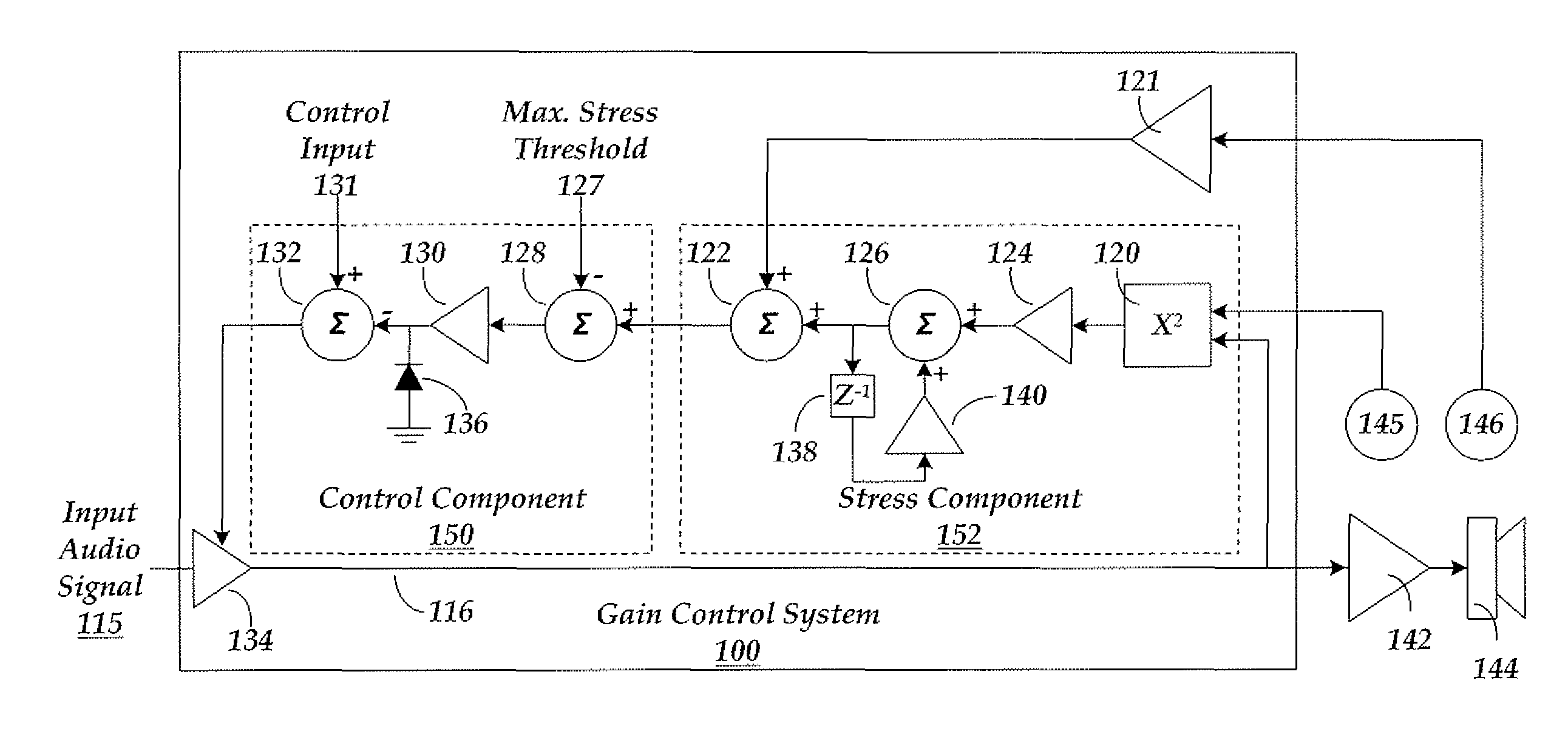
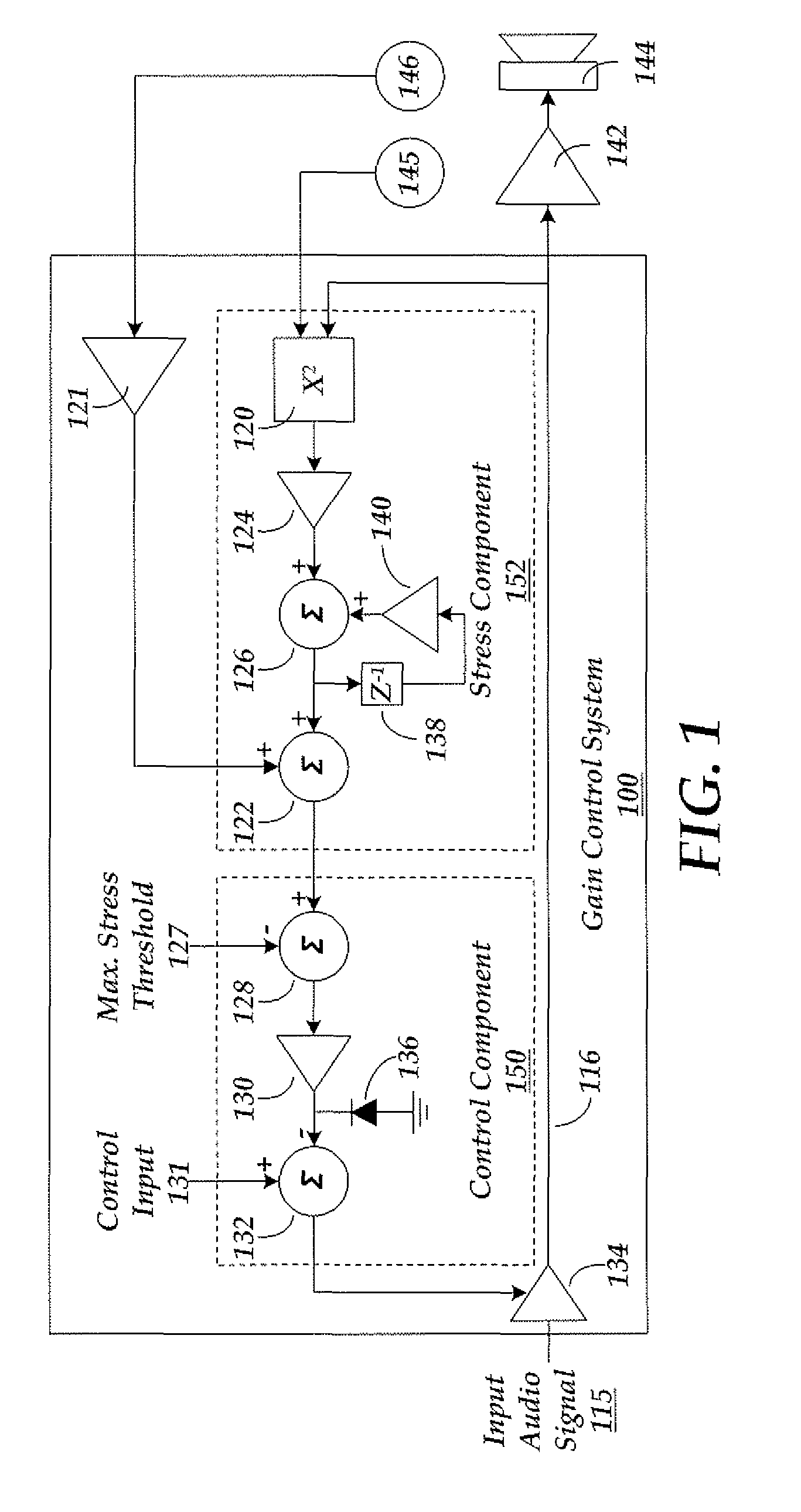
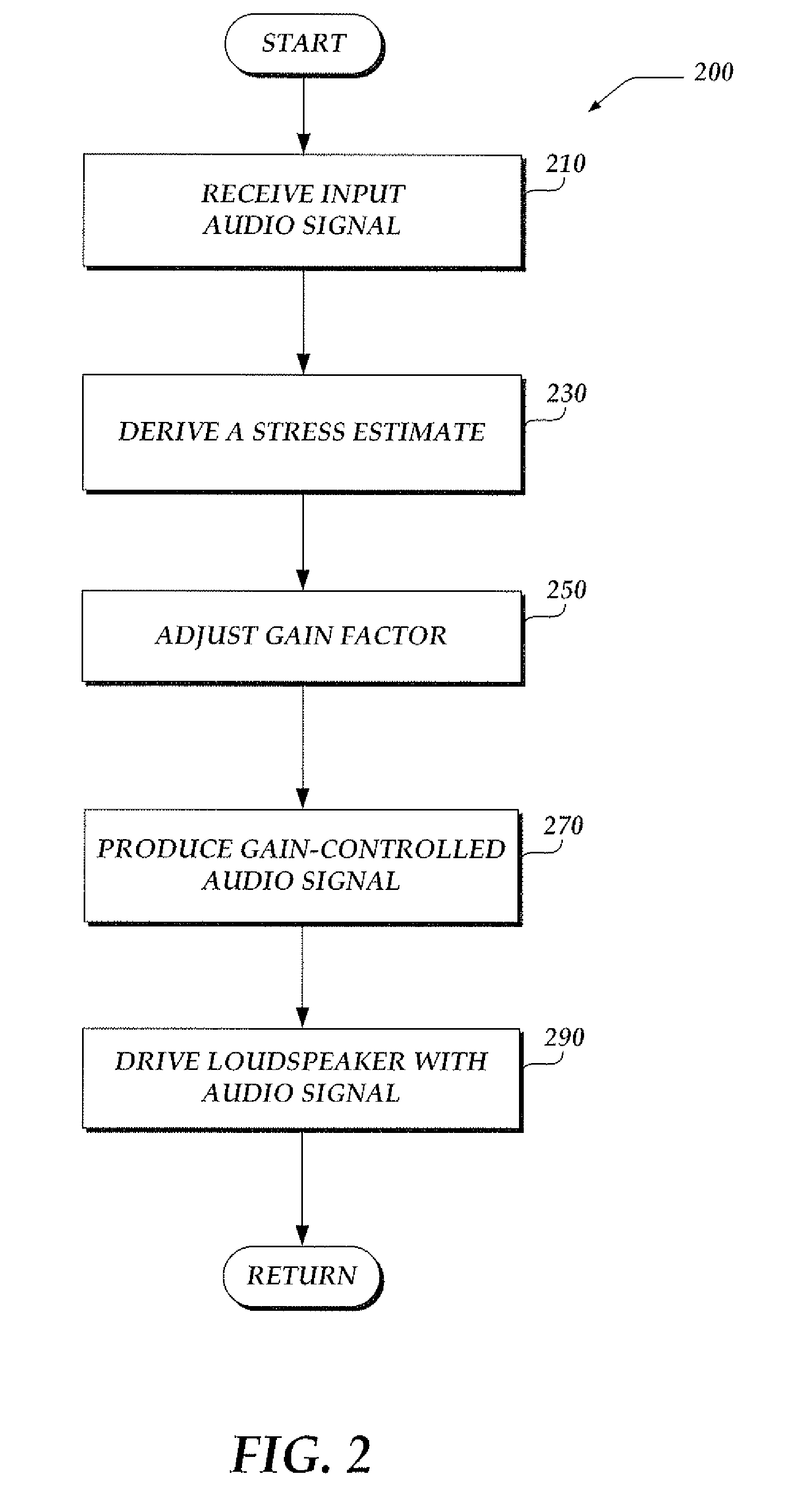
Examples
Embodiment Construction
[0019]Throughout the specification and claims, the following terms take the meanings explicitly associated herein, unless the context clearly dictates otherwise. The phrase “in one embodiment” as used herein does not necessarily refer to the same embodiment, though it may. Furthermore, the phrase “in another embodiment” as used herein does not necessarily refer to a different embodiment, although it may. Thus, as described below, various embodiments of the invention may be readily combined, without departing from the scope or spirit of the invention.
[0020]In addition, as used herein, the term “or” is an inclusive “or” operator, and is equivalent to the term “and / or,” unless the context clearly dictates otherwise. The term “based on” is not exclusive and allows for being based on additional factors not described, unless the context clearly dictates otherwise. In addition, throughout the specification, the meaning of “a,”“an,” and “the” include plural references. The meaning of “in” i...
PUM
 Login to View More
 Abstract
Description
Claims
Application Information
 Login to View More