
Constant torque propeller mechanism
a constant torque, propeller technology, applied in the direction of rotors, marine propulsion, vessel construction, etc., can solve the problems of mechanical operation, prone to failure, and fixed pitch propellers, and achieve the effect of improving the efficiency of the motor propeller combination and improving aircraft performan
- Summary
- Abstract
- Description
- Claims
- Application Information
AI Technical Summary
Benefits of technology
Problems solved by technology
Method used
Image

Examples
Embodiment Construction
[0023]A design of a constant torque propeller which changes the propeller pitch automatically based on flight condition allows the aircraft to operate at high propeller and motor efficiencies throughout the flight envelope, thus improving range, endurance or cruising speed.
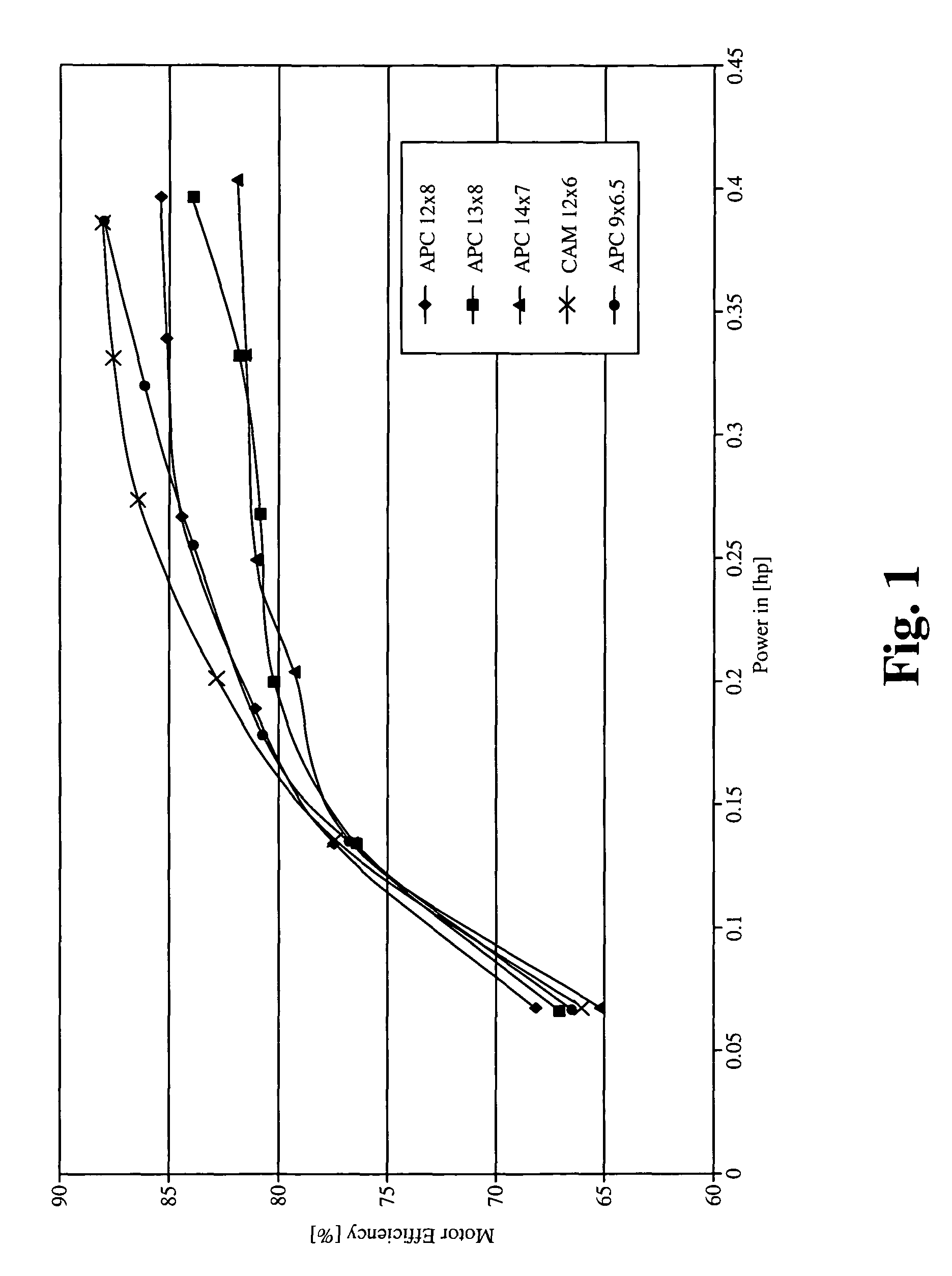
[0024]Both the variable pitch and constant speed propellers need a controller to operate the propeller based on aircraft flight condition. Applied to Unmanned Aerial Vehicles (UAVs), this means an additional system must be added, which adds to the overall complexity and weight of the aircraft. The constant torque propeller introduces a lightweight and passive propeller control system which requires no electric power to operate, but at the same time improves the efficiency of the motor propeller combination over the flight envelope. It is able to be seen from the data presented in FIG. 1, that if an appropriate propeller for a given electric motor (For example, Hacker A30-10XL) is selected, high motor efficiency le...
PUM
 Login to View More
 Abstract
Description
Claims
Application Information
 Login to View More