
Method for estimating and controlling driveline torque in a continuously variable hydro-mechanical transmission
a technology of hydro-mechanical transmission and driveline torque, which is applied in the direction of analogue processes, instruments, and specific applications, can solve the problems of potentially damaging high level of driveline torque, and achieve the effects of reducing torque, reducing engine speed, and reducing movement speed
- Summary
- Abstract
- Description
- Claims
- Application Information
AI Technical Summary
Benefits of technology
Problems solved by technology
Method used
Image

Examples
Embodiment Construction
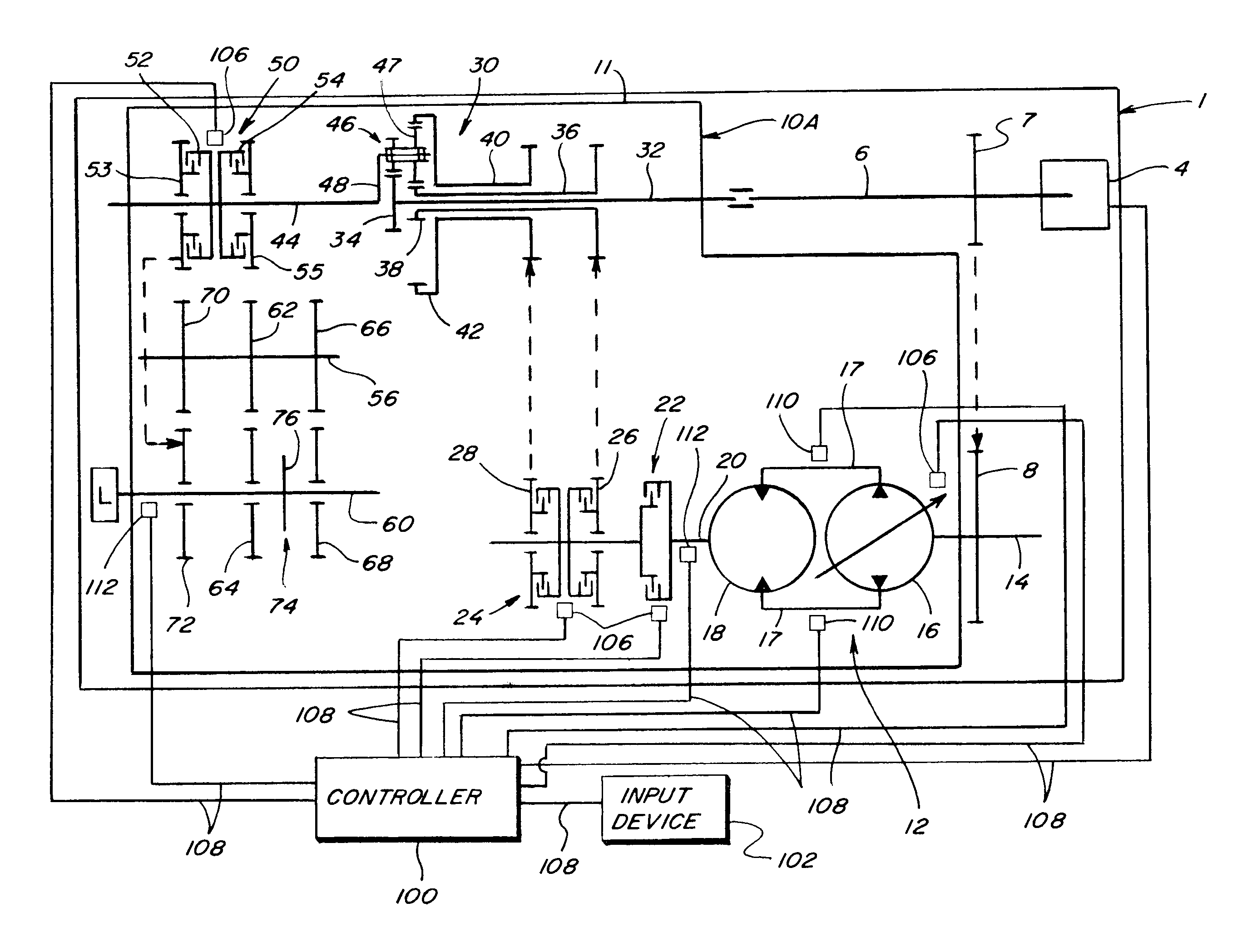
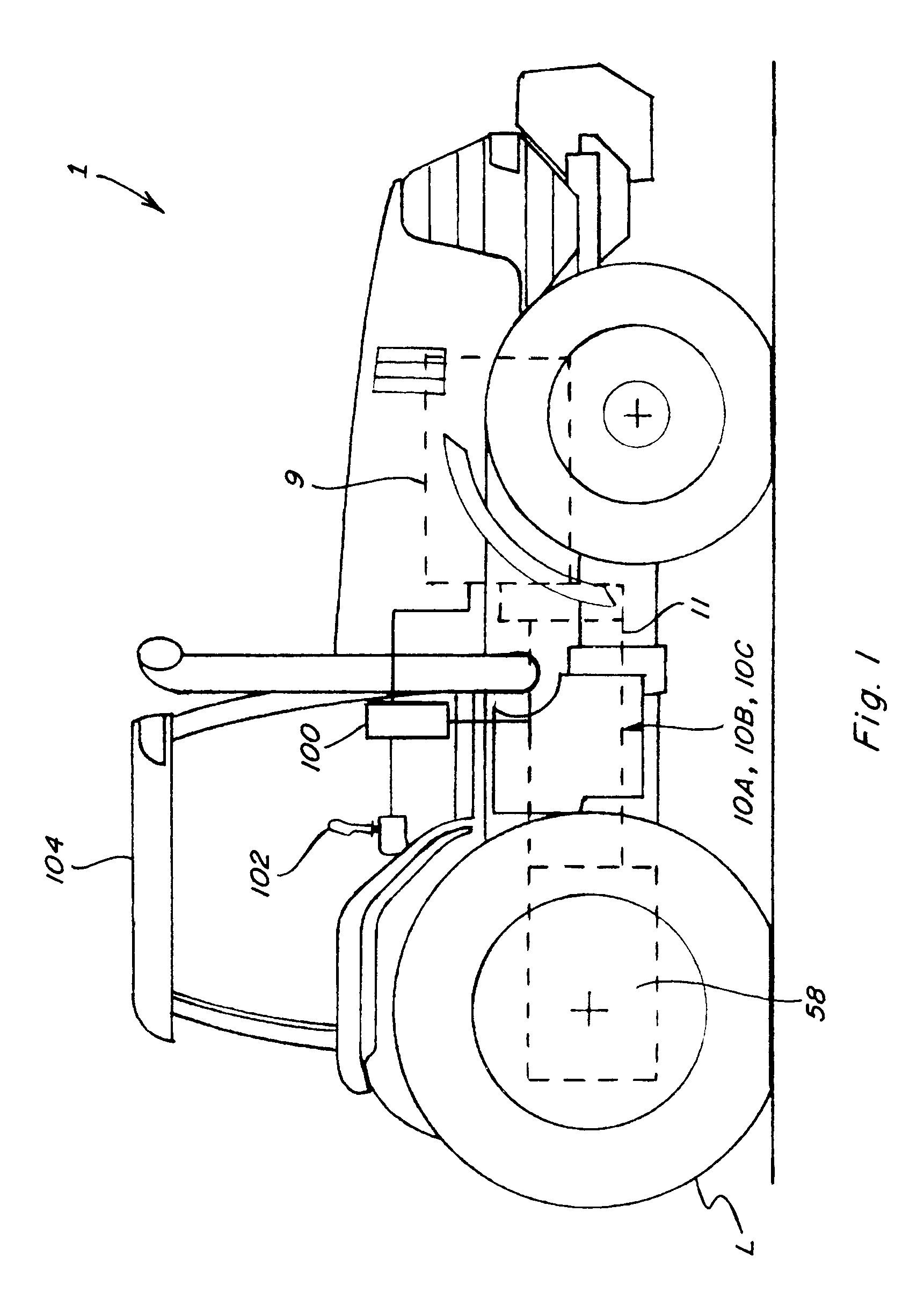
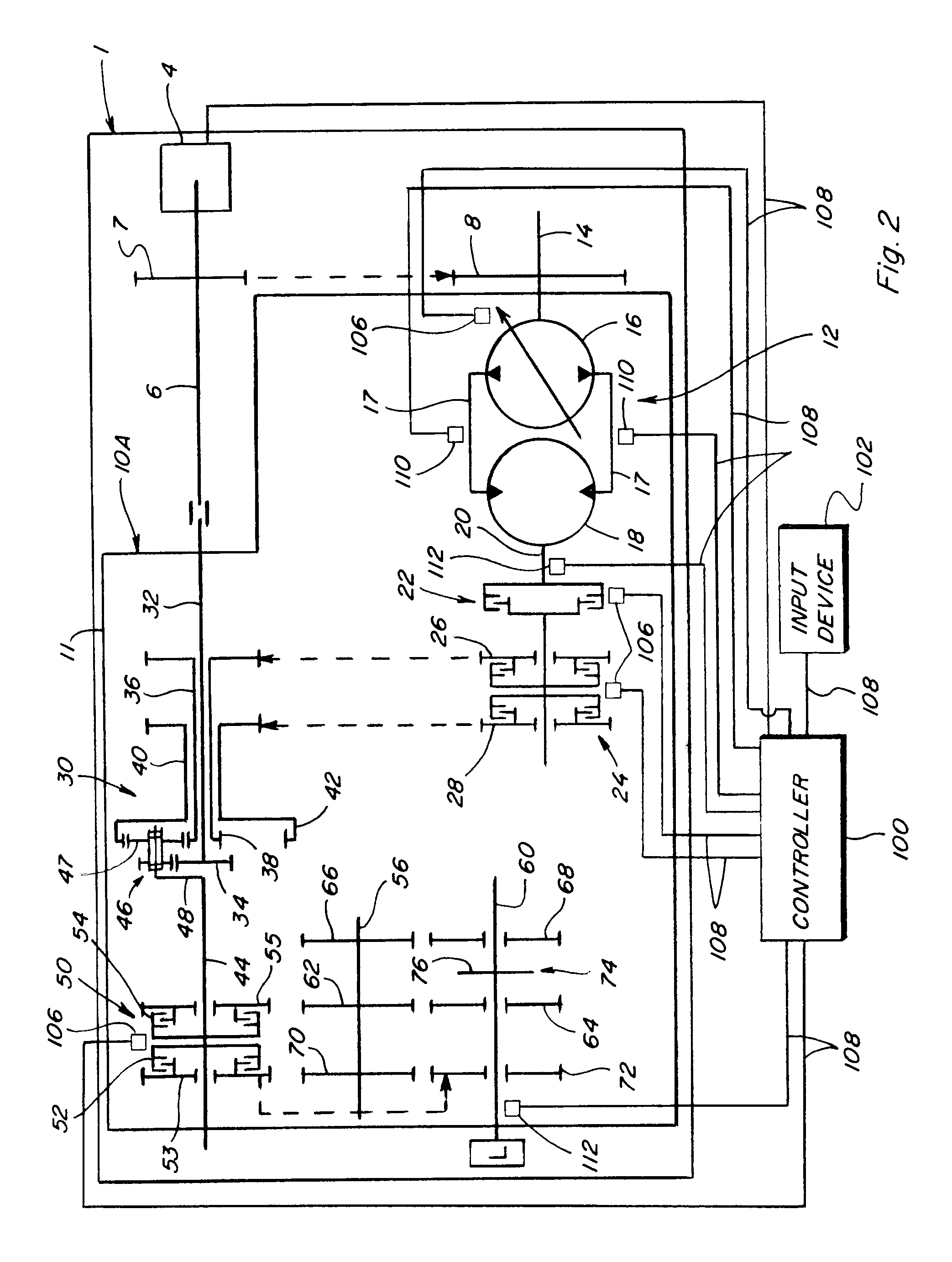
[0022]Referring now to the drawings, in FIG. 1 a work machine 1 is shown, which is a tractor representative of those that can be used for a variety of uses, including, but not limited to, agriculture, construction, earth moving and forestry. Work machine 1 includes a power source 4 which will be, for instance, an internal combustion engine, and is mechanically coupled to a continuously variable hydro-mechanical transmission, three representative variants or embodiments of which are represented by numbers 10A, 10B and 10C, like parts of which being identified by like numbers. Each of transmissions 10A, 10B and 10C is controllably operable according to the method of the invention, for estimating and limiting driveline torque of the transmission, and the transmissions shown are intended to be exemplary of a wide range of possible hydro-mechanical architectures wherein the power is split between paths and different ranges are used, with which the present invention can be used.
[0023]Refe...
PUM
 Login to View More
 Abstract
Description
Claims
Application Information
 Login to View More