AI technical title is built by Patsnap AI team. It summarizes the technical point description of the patent document.
A nanotube, titanate technology, applied in the field of titanate, to achieve the effect of increasing the specific surface area
Inactive Publication Date: 2009-01-28
HENAN UNIVERSITY
View PDF4 Cites 2 Cited by
Summary
Abstract
Description
Claims
Application Information
AI Technical Summary
This helps you quickly interpret patents by identifying the three key elements:
Problems solved by technology
Method used
Benefits of technology
Problems solved by technology
At present, nanotube sodium titanate has been widely studied because of its unique tubular structure. The existing preparation methods include sintering, hydrothermal and low-temperature reflux methods, etc., but these methods cannot be used to prepare lithium titanate, potassium titanate, Rubidium titanate, cesium titanate, silver titanate, nickel titanate, thallium titanate, copper titanate, zinc titanate, cobalt titanate, etc.
Method used
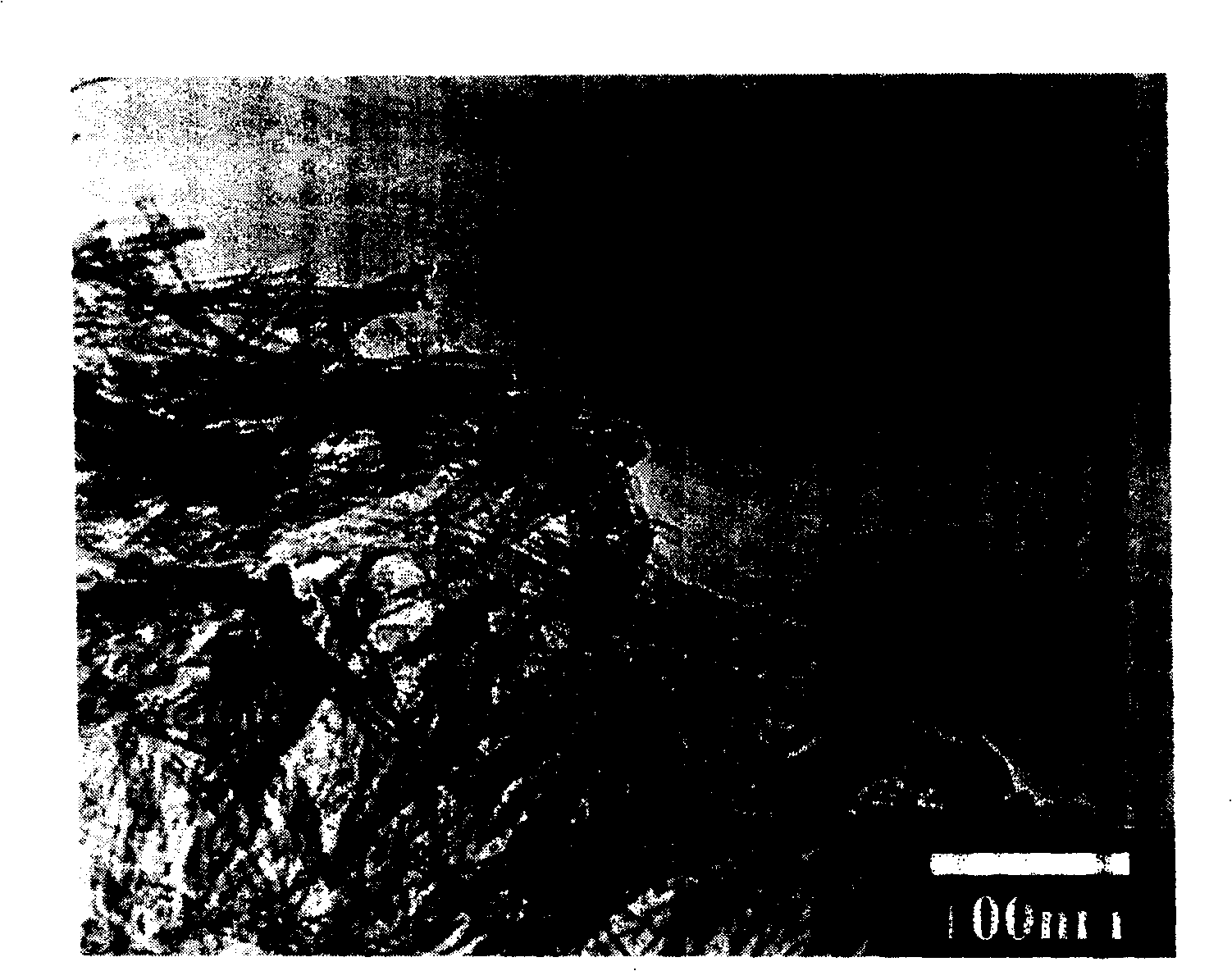
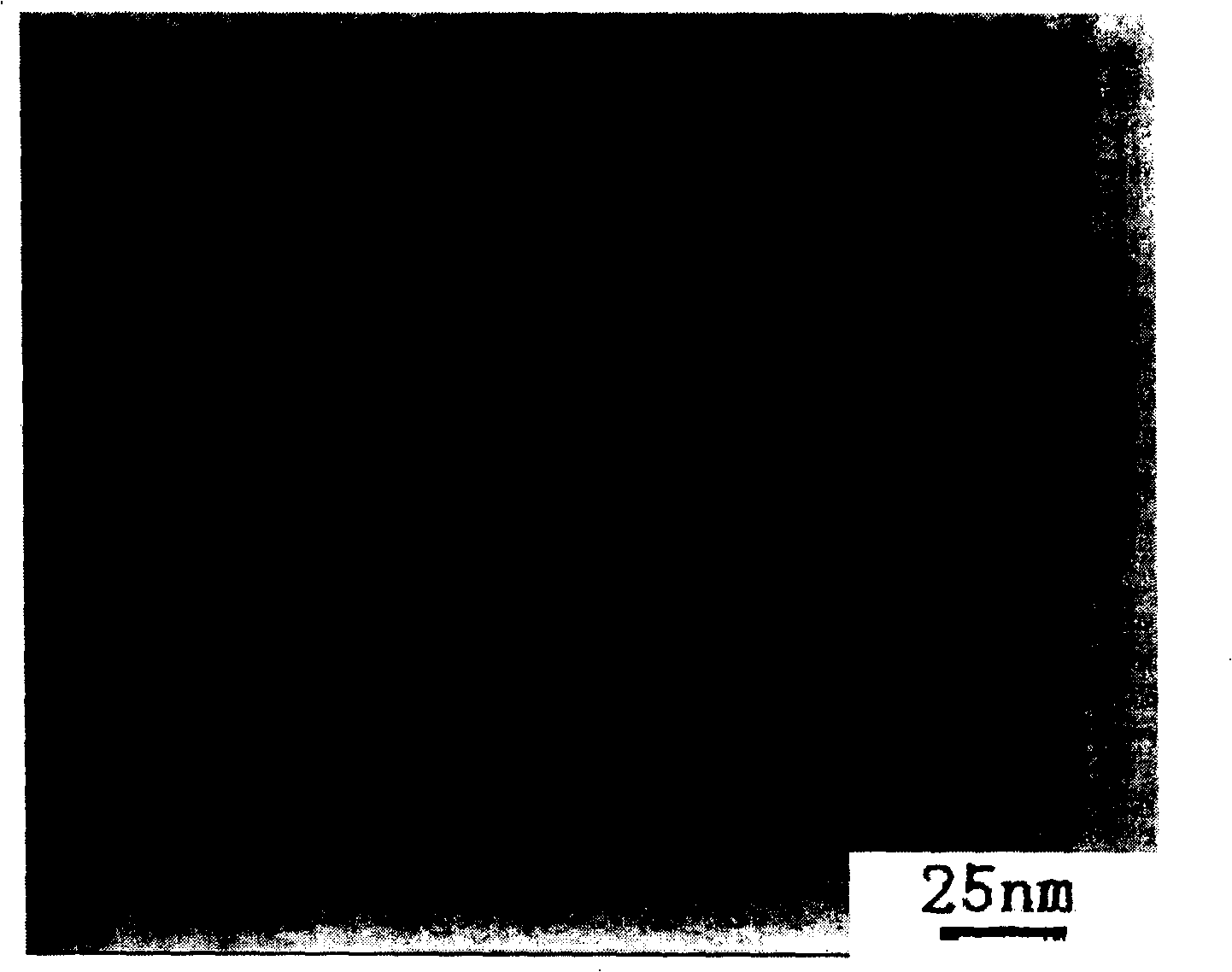
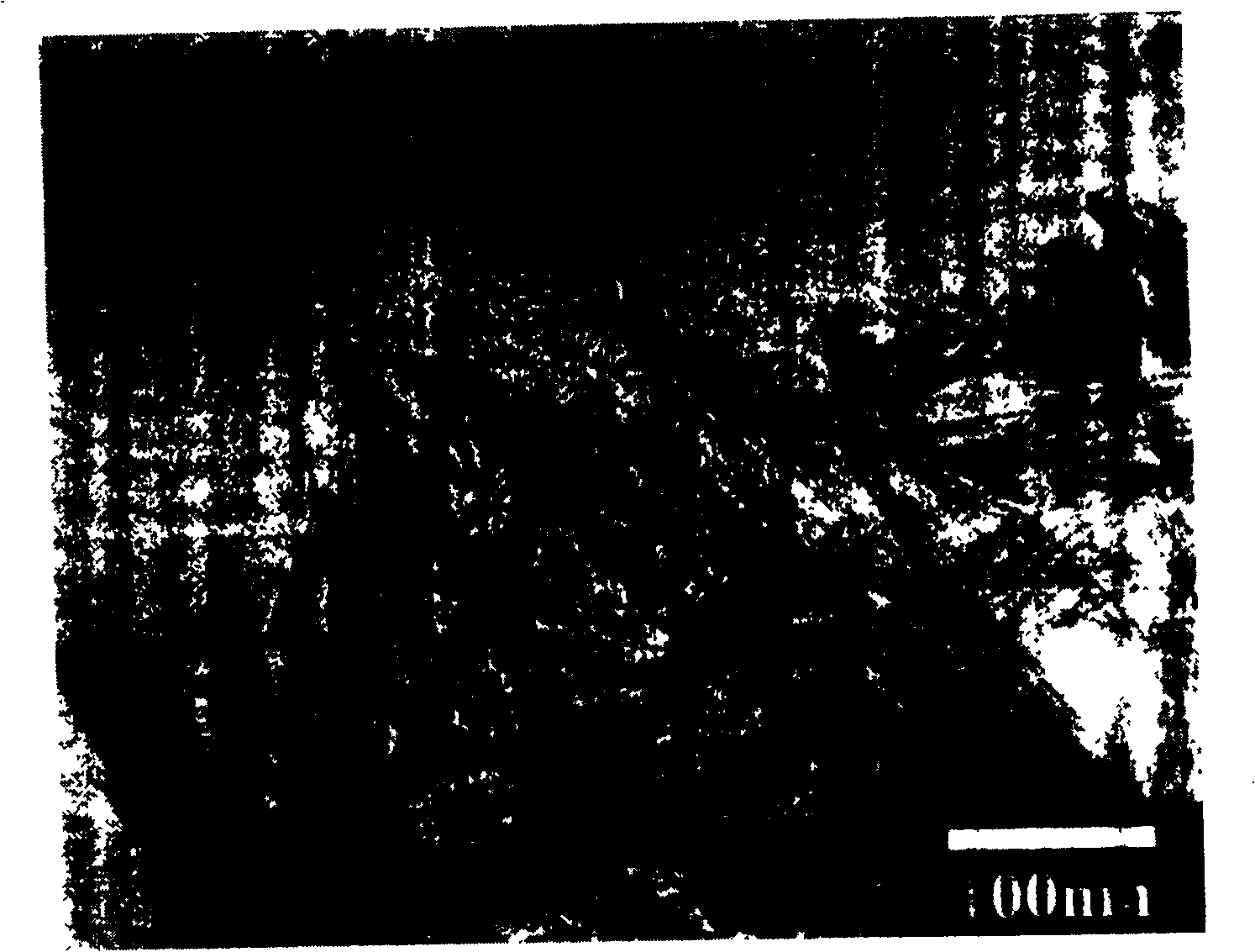
the structure of the environmentally friendly knitted fabric provided by the present invention; figure 2 Flow chart of the yarn wrapping machine for environmentally friendly knitted fabrics and storage devices; image 3 Is the parameter map of the yarn covering machine
View more
Image
Smart Image Click on the blue labels to locate them in the text.
Viewing Examples
Smart Image
Click on the blue label to locate the original text in one second.
Reading with bidirectional positioning of images and text.
Smart Image
Examples
Experimental program
Comparison scheme
Effect test
Embodiment 1
[0019] Embodiment 1, get 3g TiO 2 Slowly add anatase into a polytetrafluoroethylene container filled with 150ml of 10M NaOH aqueous solution, control the temperature at 120°C, stir and add a reflux condenser, and react for 24h. After 24 hours, the reacted mixture was cooled and settled, and washed until the pH value was about 12, filtered and dried to obtain the precursor nanotube sodium titanate.
[0020] Lithium nitrate crystals and dry precursor nanotube sodium titanate are uniformly mixed at a lithium-sodium molar ratio of 10:1, and the mixture is allowed to react at 260°C for 3 hours, cooled to room temperature, washed, and dried to obtain nanotube titanate lithium.
Embodiment 2
[0021] Embodiment 2, get 3g TiO 2 Slowly add anatase into a polytetrafluoroethylene container filled with 150ml of 10M NaOH solution, control the temperature at 100°C, stir and add a reflux condenser, and react for 12h. After 12 hours, the reacted mixture was cooled and settled, washed by sedimentation until the pH value was about 12, filtered and dried to obtain the precursor nanotube sodium titanate.
[0022] Mix potassium nitrate crystals and dry precursor nanotube sodium titanate uniformly at a potassium-sodium molar ratio of 10:1, let the mixture react at 360°C for 48 hours, cool to room temperature, wash, and dry to obtain nanotube titanate potassium.
Embodiment 3
[0023] Embodiment 3, get 3g TiO 2 Slowly add anatase into a polytetrafluoroethylene container filled with 150ml of 5M NaOH solution, control the temperature at 140°C, stir and add a reflux condenser, and react for 72h. After 72 hours, the reacted mixture was cooled and settled, washed by sedimentation until the pH value was about 12, filtered and dried to obtain the precursor nanotube sodium titanate.
[0024] Mix silver nitrate crystals and dry precursor nanotube sodium titanate uniformly at a silver-to-sodium molar ratio of 5:1, let the mixture react at 220°C for 6 hours, cool to room temperature, wash, and dry to obtain nanotube titanate silver.
the structure of the environmentally friendly knitted fabric provided by the present invention; figure 2 Flow chart of the yarn wrapping machine for environmentally friendly knitted fabrics and storage devices; image 3 Is the parameter map of the yarn covering machine
Login to View More
PUM
Property
Measurement
Unit
length
aaaaa
aaaaa
length
aaaaa
aaaaa
Login to View More
Abstract
This invention discloses a method for preparing titanate nanotubes. The method comprises: uniformly mixing nitrate and power of sodium titanate nanotubes at a mol ratio of (5-100):1, performing melt-reaction at 50-450 deg.C for 3-48 h, cooling, washing to remove unreacted nitrate, and drying to obtain titanate nanotubes. The nitrate is lithium nitrate, and drying to obtain titanate nanotubes. The nitrate is lithium nitrate, potassium nitrate, rubidium nitrate, cesium nitrate, silver nitrate, nickel nitrate, thallium nitrate, copper nitrate, zinc nitrate or cobalt nitrate. The precursor of sodium titanate nanotubes is prepared by: reacting titanium dioxide, metatitanic acid or titanate ester in 20-80 wt. % NaOH aqueous solution at 100-140 deg.C for 12-72 h, washing with water, filtering and drying. This invention can prepare titanate nanotubes with large specific surface area by melt-exchange method.
Description
technical field [0001] The invention relates to a new method for preparing titanates with various nanotube structures by using nanotube sodium titanate as a precursor-melting exchange method. Background technique [0002] Titanates have attracted much attention due to their wide range of uses and special properties. For example, barium titanate is a good ferroelectric material and dielectric, potassium titanate fiber can be used as ion exchange material, dielectric material, friction material, reinforcement material, etc., and lithium titanate is a new generation of lithium ion Electrode materials for batteries. In recent years, with the development of nanotechnology, titanates with one-dimensional nanostructures have received widespread attention. Compared with micron-sized titanate materials, they have a large specific surface area, so they are used as lithium battery electrode materials, catalysts or catalysts. There is great potential for development in the fields of c...
Claims
the structure of the environmentally friendly knitted fabric provided by the present invention; figure 2 Flow chart of the yarn wrapping machine for environmentally friendly knitted fabrics and storage devices; image 3 Is the parameter map of the yarn covering machine
Login to View More
Application Information
Patent Timeline
Application Date:The date an application was filed.
Publication Date:The date a patent or application was officially published.
First Publication Date:The earliest publication date of a patent with the same application number.
Issue Date:Publication date of the patent grant document.
PCT Entry Date:The Entry date of PCT National Phase.
Estimated Expiry Date:The statutory expiry date of a patent right according to the Patent Law, and it is the longest term of protection that the patent right can achieve without the termination of the patent right due to other reasons(Term extension factor has been taken into account ).
Invalid Date:Actual expiry date is based on effective date or publication date of legal transaction data of invalid patent.



 Login to View More