
Compounds for proteasome enzyme inhibition
A compound, alkyl technology for enzyme inhibition-based therapeutics addressing issues of lack of specificity, stability or potency
Patent Information
- Authority / Receiving Office
- CN · China
- Current Assignee / Owner
- Publication Date
- 2007-07-25
Smart Images
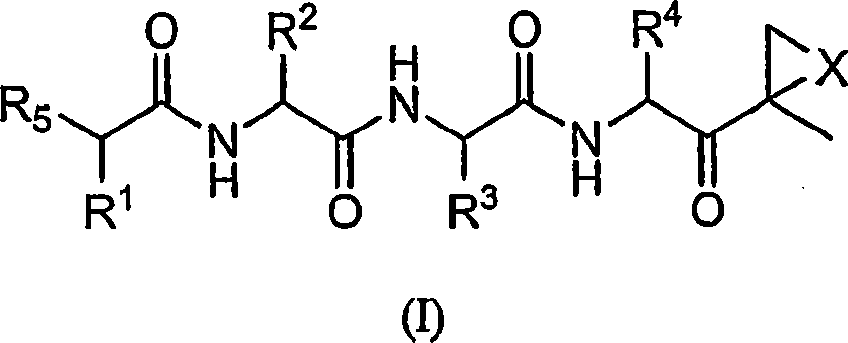
Figure 1 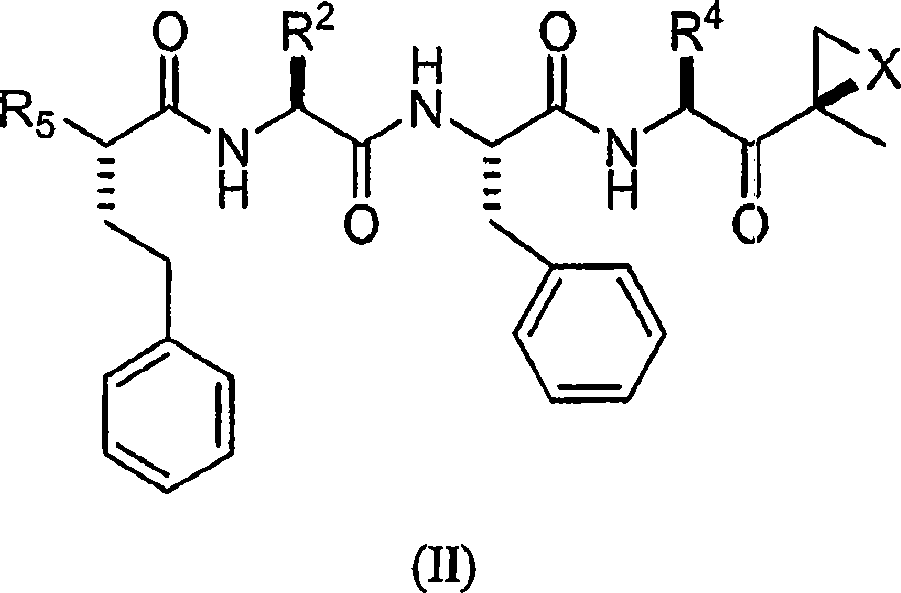
Figure 2 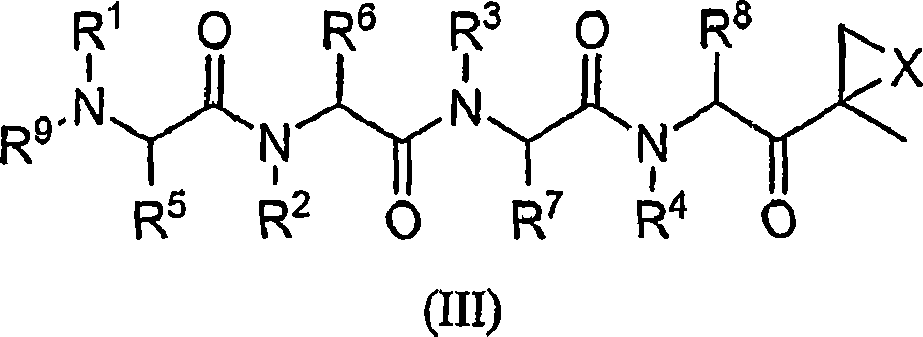
Figure 3
Abstract
Description
technical field
[0001] The present invention relates to compounds and methods for inhibiting enzymes. In particular, the invention relates to therapeutic methods based on enzyme inhibition. Background of the invention
[0002] In eukaryotes, protein degradation is mainly mediated through the ubiquitin pathway, in which the target protein for degradation is linked to the 76 amino acid polypeptide ubiquitin. Once targeted, ubiquitinated proteins become substrates for the 26S proteasome, a multicatalytic protease that cleaves proteins into short peptides through its three main proteolytic activities. Proteasome-mediated degradation, while having a general function in intracellular protein turnover, is critical in processes as diverse as class I major histocompatibility complex (MHC) presentation, apoptosis, cell differentiation, and NF-κB activation. also play an important role.
[0003] The 20S proteasome is a 700kDa cylindrical multi-catalytic protease complex that contain...
Examples
Embodiment
[0222] Scenario 1: Example 1 Synthesis
[0223]
[0224] (B) Synthesis
[0225]HOBT (10.81 g, 80.0 mmol) and DIEA (200.0 mmol, 25.85 g , 35mL). The mixture was cooled to 0°C in an ice bath, and BOP (80.0 mmol, 35.38 g) was added in portions over 5 minutes. The reaction solution was placed under an argon atmosphere and stirred overnight. The reaction was diluted with brine (1000 mL), and extracted with ethyl acetate (5 x 200 mL). The combined organic layers were washed with water (10 x 100 mL) and brine (2 x 150 mL), dried over magnesium sulfate. Magnesium sulfate was removed by filtration and volatiles were removed under reduced pressure to afford (A) (18.17g). BocNHLeuPheOMe (45.86 mmol, 18.0 g) was added to 50 mL of 80% TFA / DCM solution cooled at 0°C. The solution was stirred and allowed to warm to room temperature over 2 hours. The volatiles were removed under reduced pressure to give an oil. To this oil was added BocNHhPhe (45.86 mmol, 12.81 g), DMF (500 mL), H...