[0002] At present, in order to improve the energy saving of buildings, the construction method of wall insulation is generally adopted for building houses, and wall insulation is divided into two forms: internal wall insulation and
external wall insulation. The traditional internal insulation is completed after the main body of the house is completed. Then heat-insulate the walls in the house, so the joints such as the floor and the joints of the inner and outer walls close to and extending into the wall cannot be insulated, forming thermal bridges, resulting in corners, floors, and roofs and walls. Condensation,
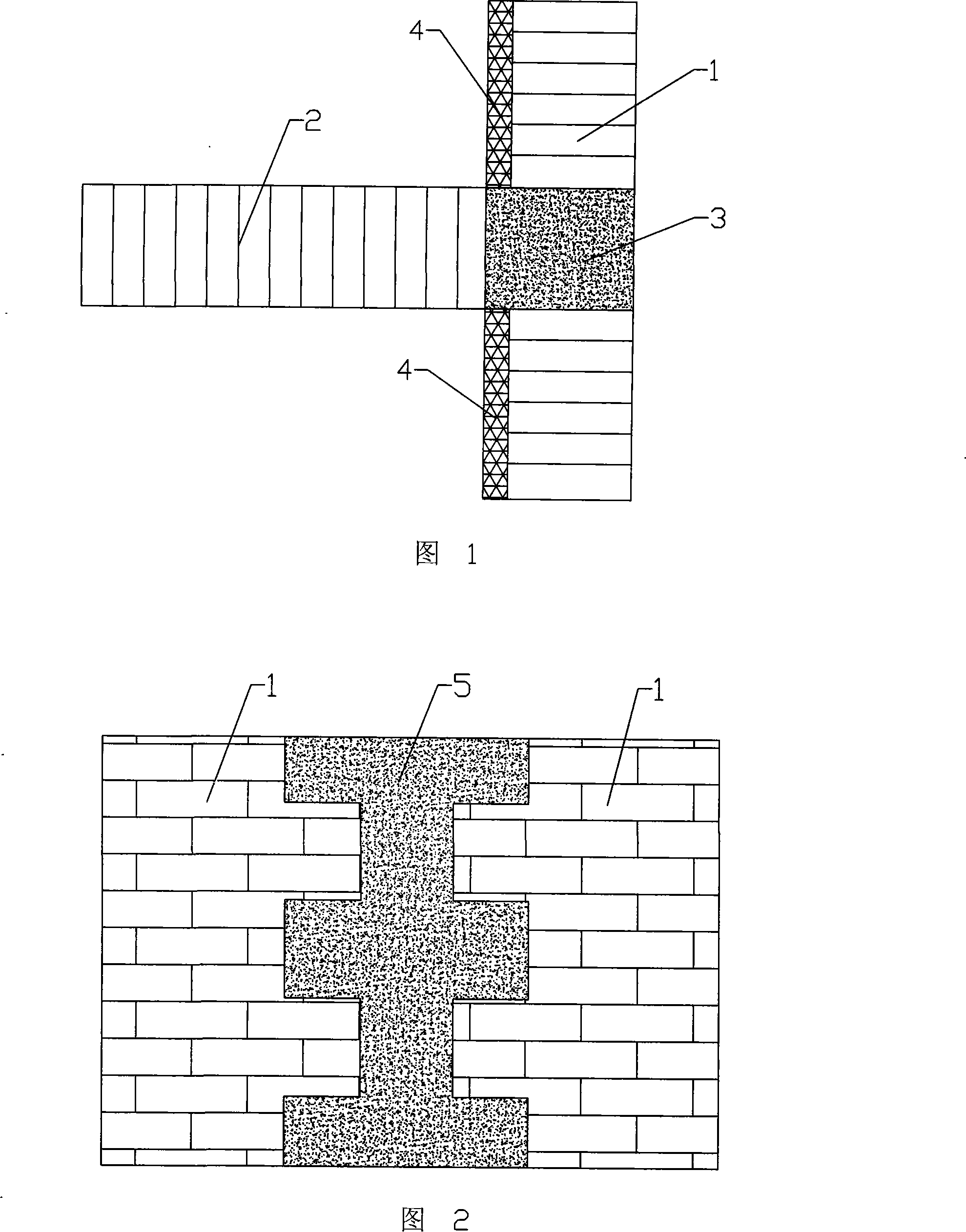
hair growth, alkali peeling and other phenomena appear at the corners of the surface intersection. For the connection of the T-shaped wall, as shown in Figure 1, the traditional method is due to the requirements of the house structure. The outer wall 1 and the inner wall 2 must pass through concrete. The structural column 3 is integrally connected and cannot be disconnected, so the
thermal insulation layer 4 can only be provided on the inner side of the outer wall 1, and the connection between the inner and outer walls cannot be insulated to form a
thermal bridge; for the joint of the structural column, as shown in Figure 2, The traditional method is to build the outer wall 1 on both sides of the structural column node 5 into a mosaic structure, and then pour the structural column node 5 with concrete, so that the structural column node 5 poured with concrete cannot be insulated and form a
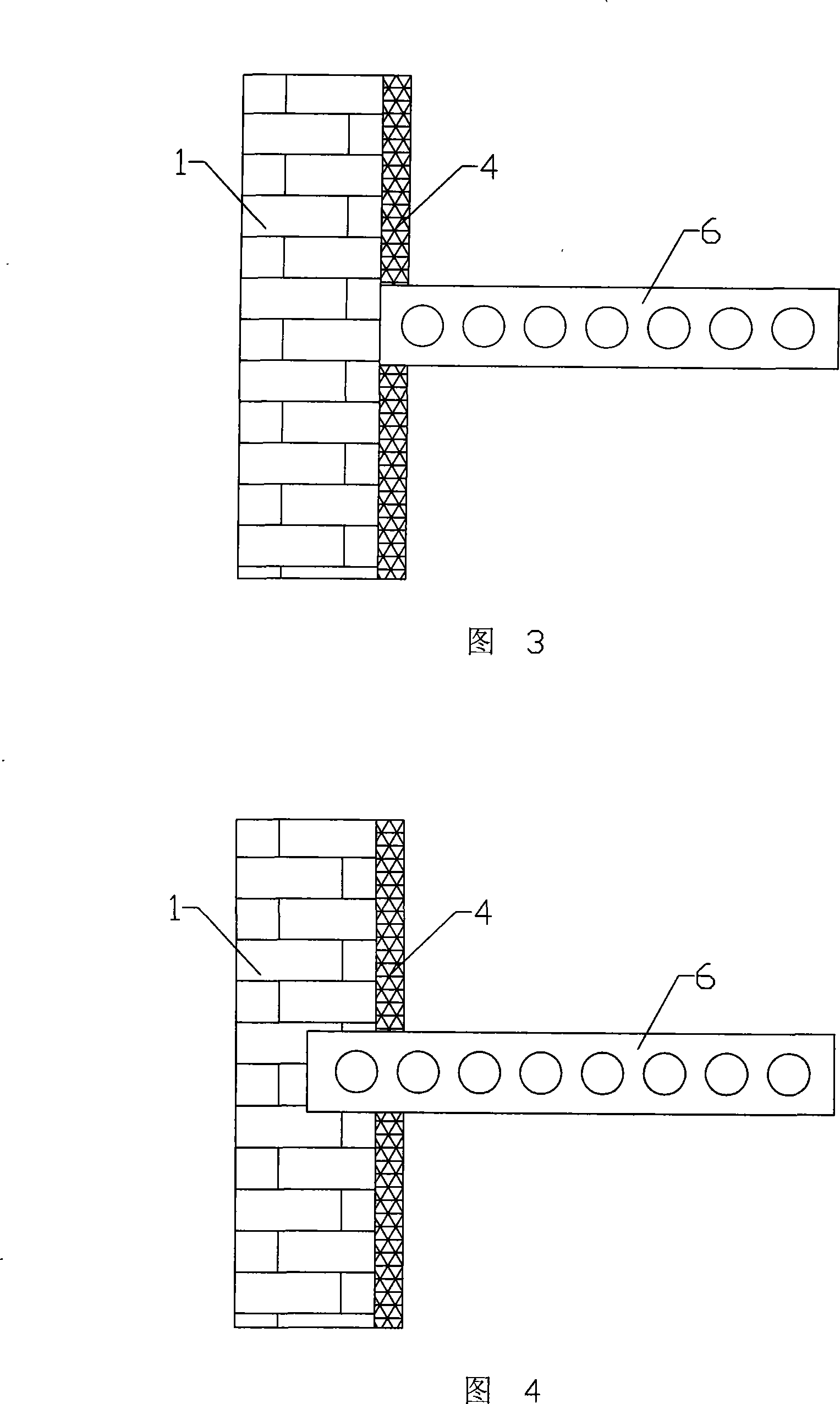
thermal bridge ; As shown in Figure 3, when the floor is along the wall, the connection between the floor 6 and the exterior wall 1, the traditional way is to wait for the main body to be completed before the inner side of the exterior wall 1 can be used as an
insulation layer 4, so the floor 6 is close to an end of the wall It is impossible to process the
insulation layer, forming a thermal bridge; as shown in Figure 4, when the floor 6 is embedded in the wall, the connection between the floor 6 and the outer wall 1, the traditional method is to wait until the main body is completed before the inner side of the outer wall 1 As the
insulation layer 4, the place where the floor 6 is placed cannot be treated with the insulation layer to form a thermal bridge; in addition, the
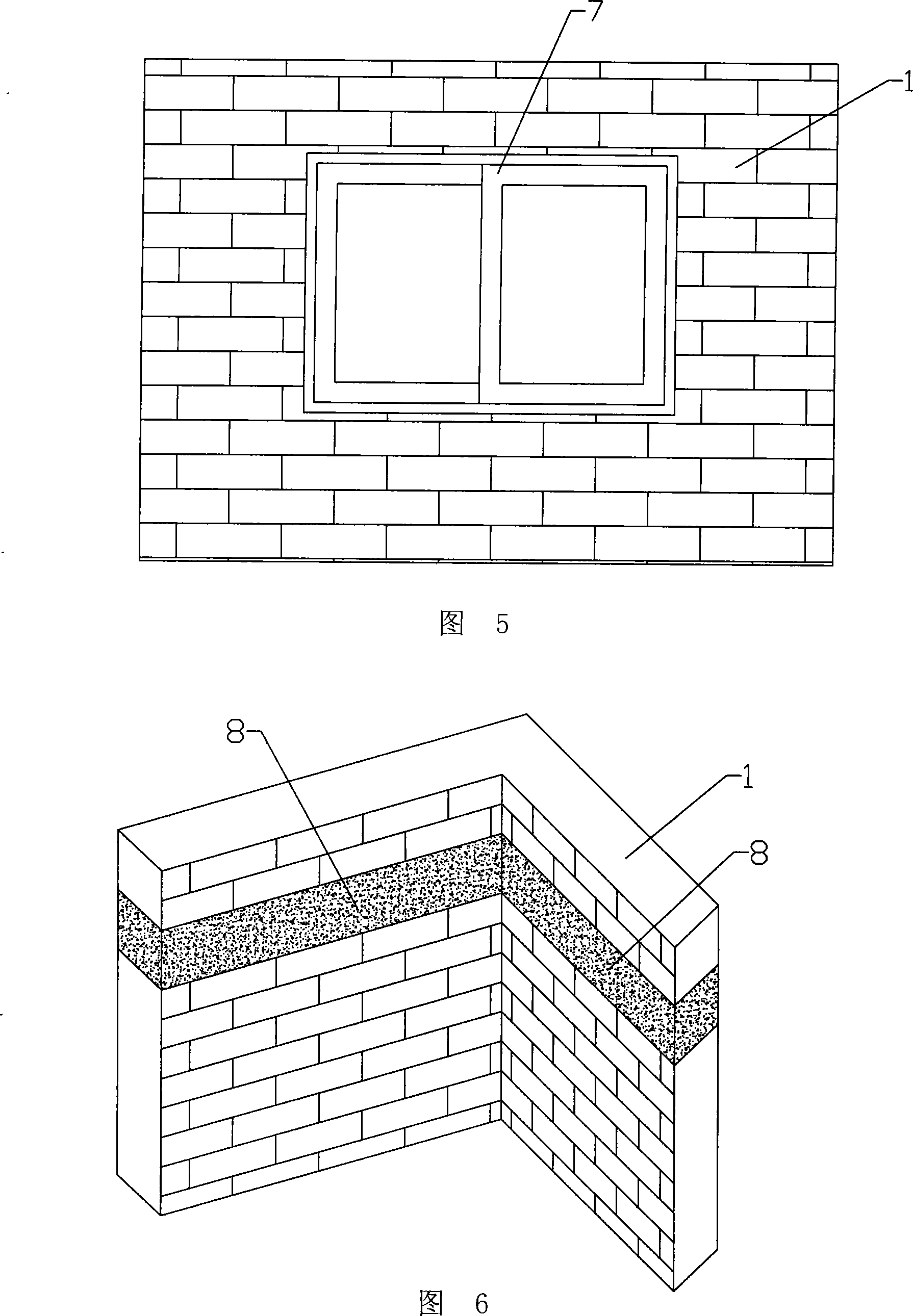
doors and windows of most buildings are now
metal structures, as shown in Figure 5, the inside of the frame of the
doors and windows 7 is connected to the outer wall 1 wall The direct contact between the bodies forms a thermal bridge; as shown in Figure 6, there are still parts such as the ring beam 8. The traditional method is to wait for the main body to be completed before insulation can be done, and the thickness of the insulation
brick has been limited, so when the main body is completed When used for
thermal insulation, the thickness of the ring beam will be increased, resulting in uneven walls; because of the above-mentioned problems in traditional internal
thermal insulation, which affect the
living environment and use functions of the home, so now the thermal insulation construction of projects tends to be outside the outer wall Insulation, but because the exterior wall decoration layer of the insulation layer is exposed outside, it is greatly affected by the temperature. Therefore, according to the external insulation projects in recent years, the wall surface cracks, bulges, cracks,
water seepage, insulation boards are moldy, and the external insulation falls off. At the same time, due to the existence of exposed thermal bridges such as window covers, awnings, and
parapet walls, the difficulty and cost of construction have been greatly increased. In addition, the service life of the
external wall insulation system is only about 20 years, while the construction of houses The service life of the building is more than 50 years, so the external wall insulation needs to be replaced at least 2 to 3 times in the life cycle of the building, which greatly increases the construction cost of the building.


 Login to View More
  Login to View More